Introduction
It wasn’t until 8 PM when we arrived at Paradise Bay because of the late start that morning. Fortunately, we were so far south that it would stay light for a long time. It wasn’t south of the Antarctic Circle, however, so we would not see the midnight sun. But what we did see was spectacular.
Landing on the Antarctic Continent
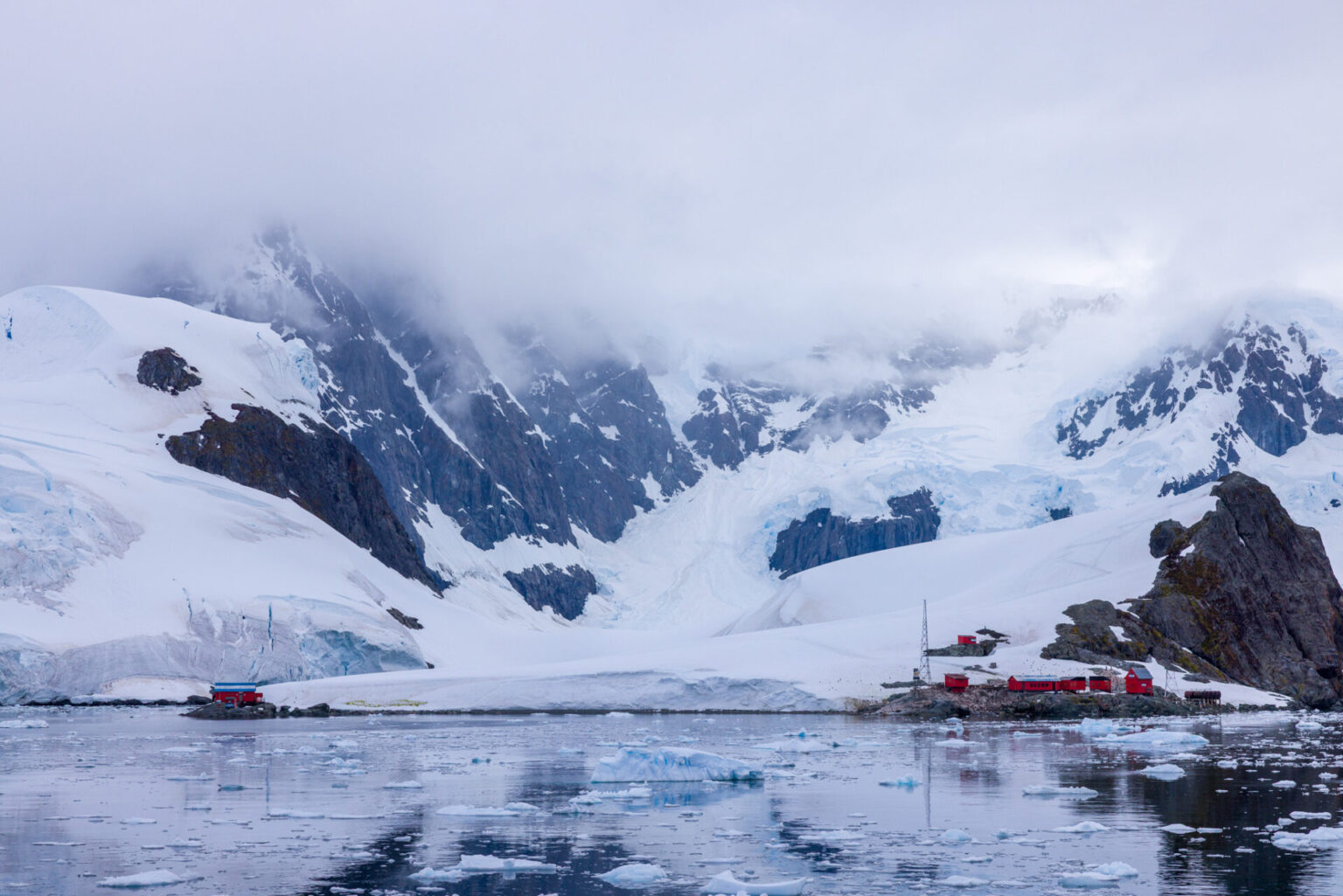
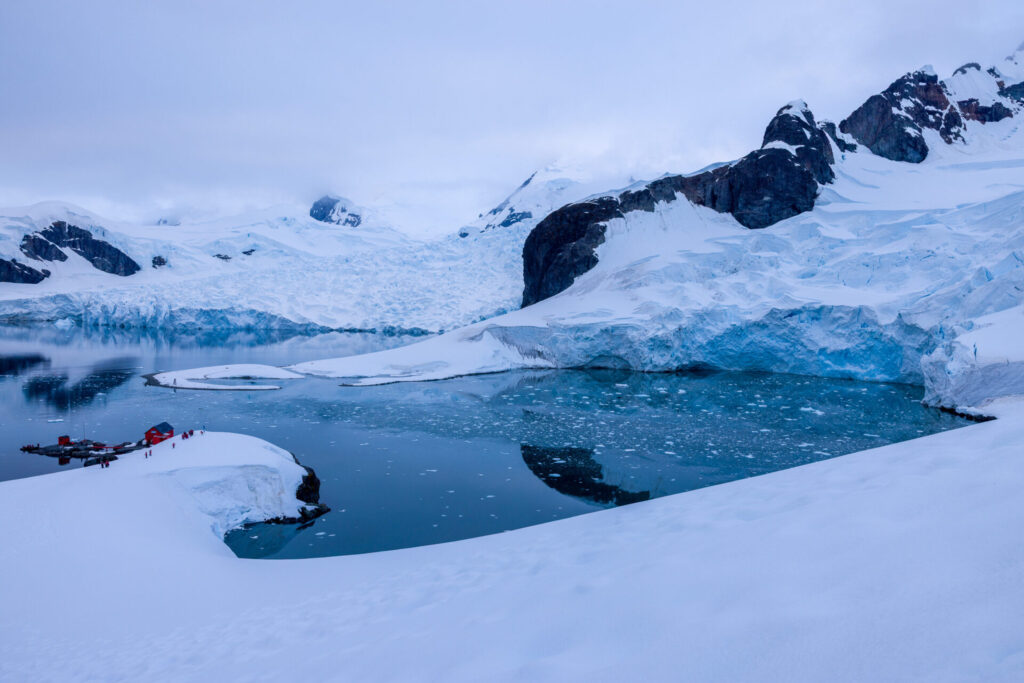
Today was the day we would land on the Antarctic Continent itself, not just islands in the Archipelago. This is also the location of Brown Station, an Argentine Antarctic base and research station. It is surrounded by towering peaks and spectacular glaciers.
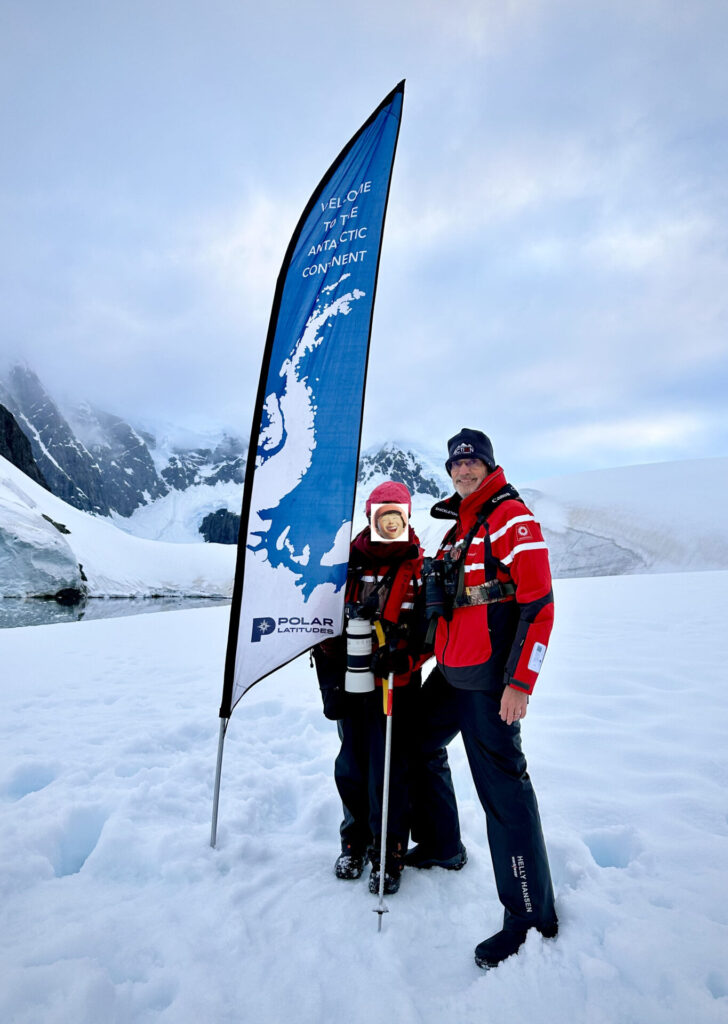
We would land at the building on the left in the photo above and hike and hike up the snow ramp above Brown Station on the right, then follow the faint winding trail to a fantastic overlook. Along the trail, Polar Latitudes placed a “Welcome to Antarctica” flag. Of course, my wife and I got a tourist shot there. (Sorry, my wife is camera shy, so I had to put a sticker over her face.)
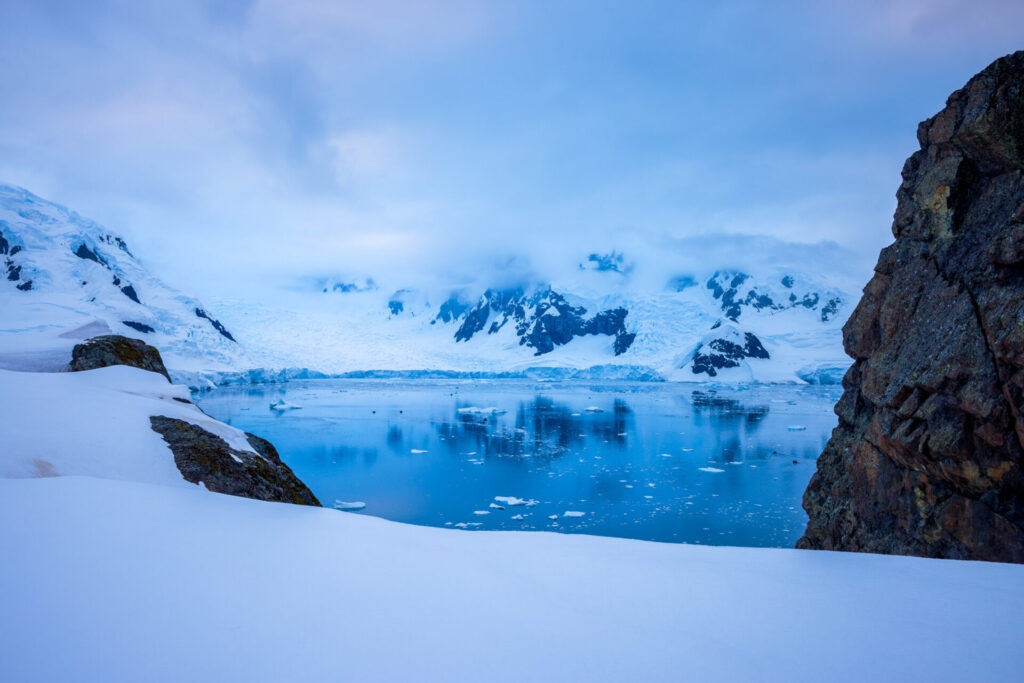
We then continued up to the overlook. It really was a great view in both directions.
Widlife in Paradise Bay
Before we hiked up to the overlook, however, we took a zodiac cruise in the bay. The wildlife was amazing and the photography stunning!
Birds
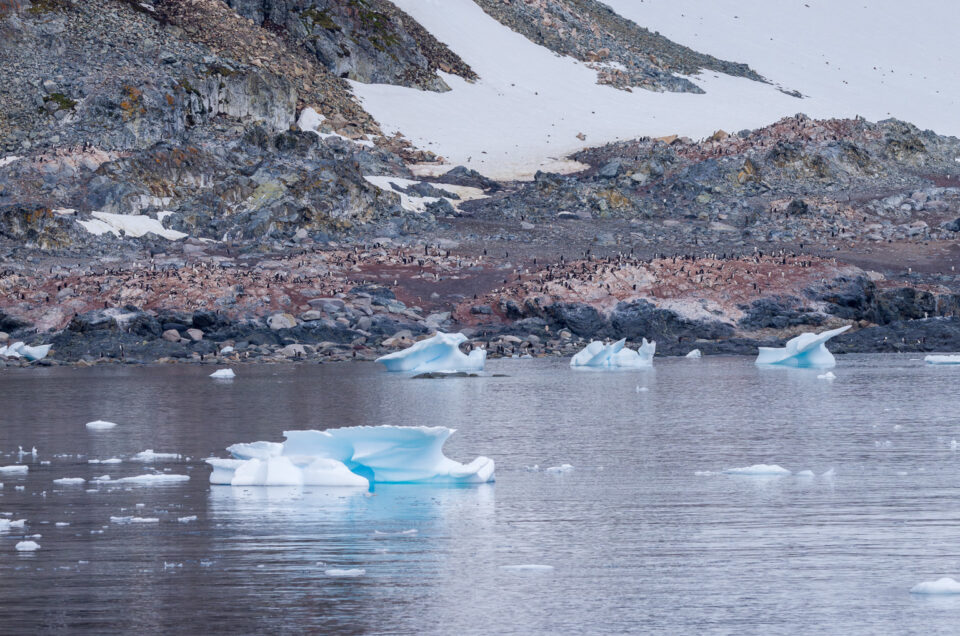
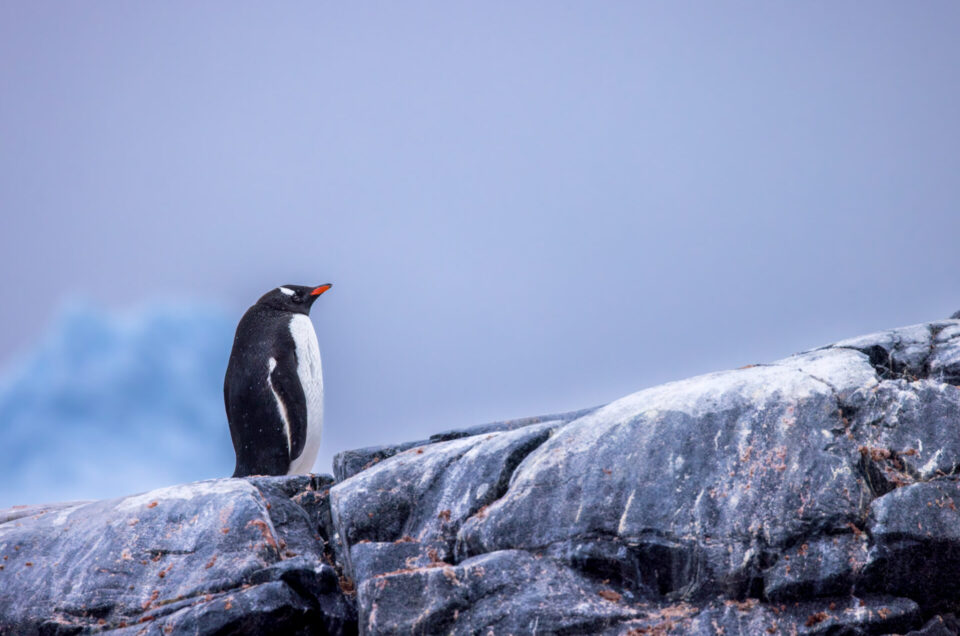
There were several species of birds around the area including two species of Penguins, Antarctic Shags, Antarctic Terns, as well as Cape Petrels.
Penguins
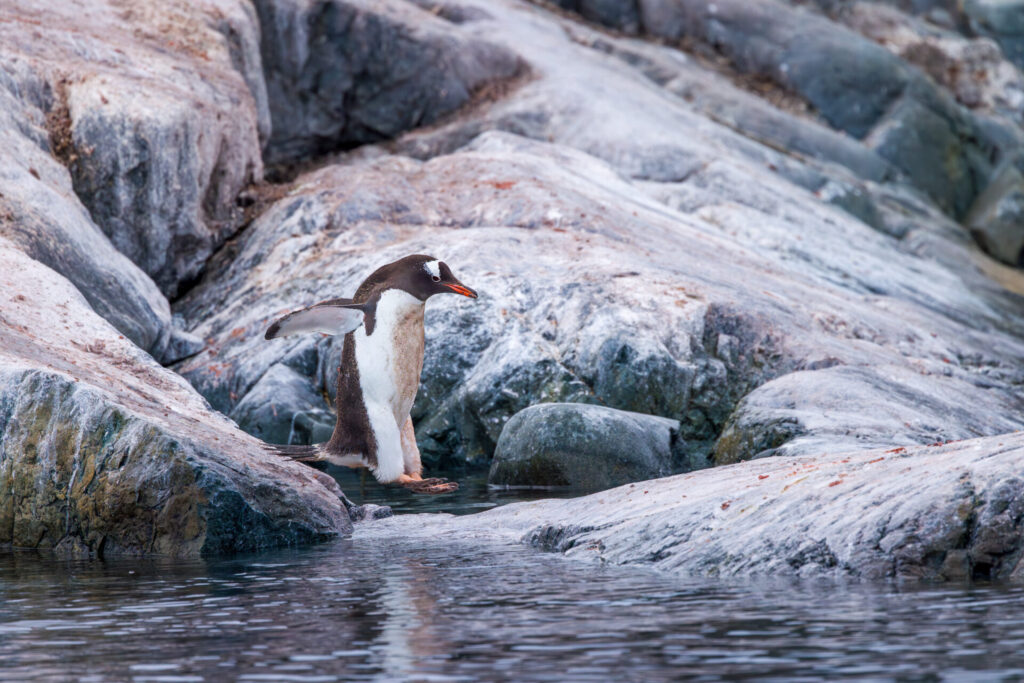
A lone Gentoo Penguin walked along the rocks just above the water line. He would hop from one rock to the next.
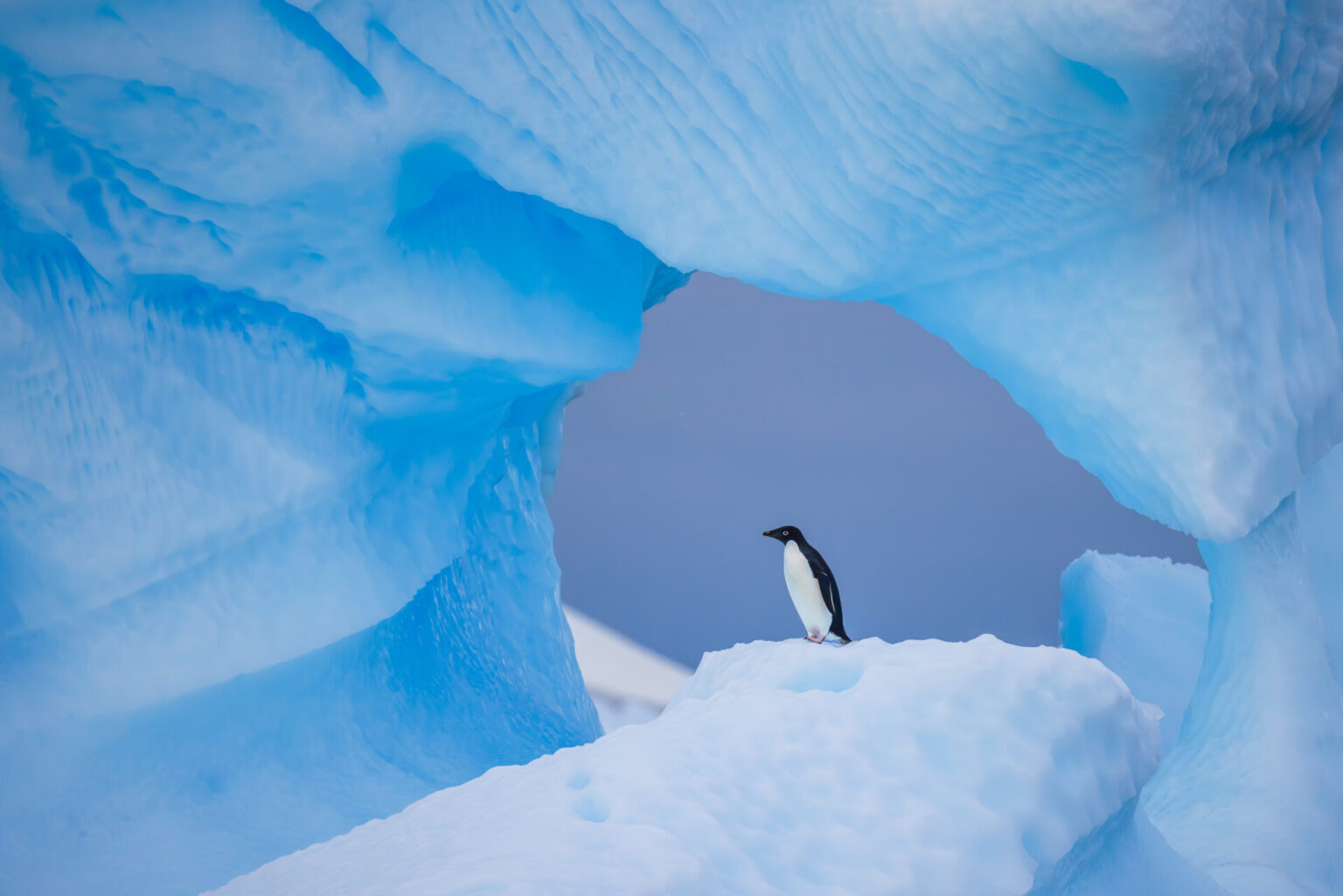
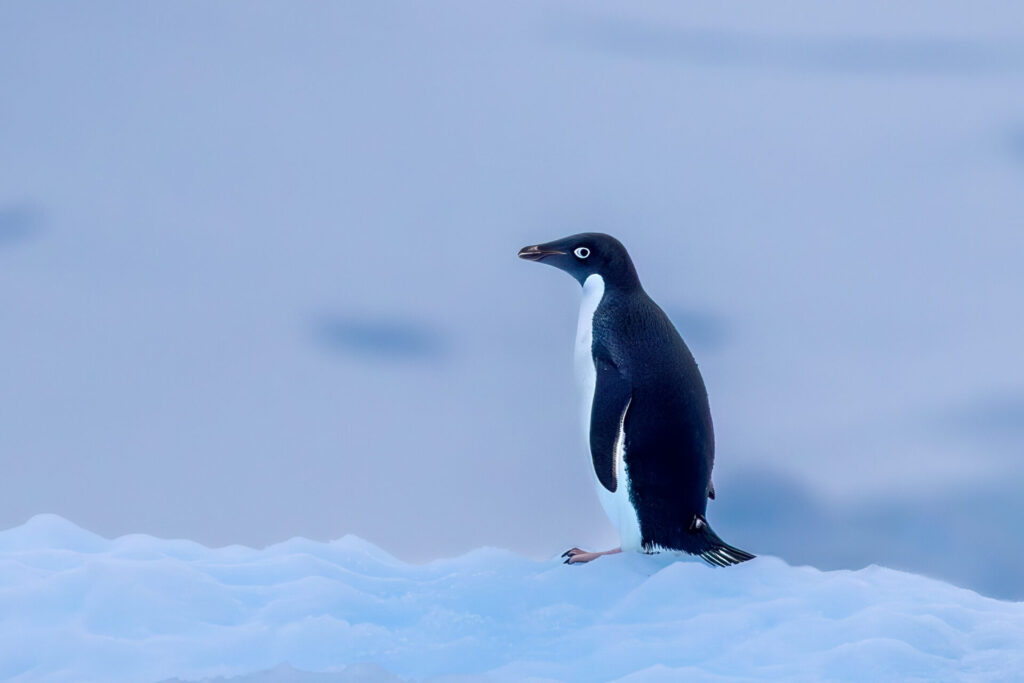
Similarly, a lone Adélie Penguin sat atop an iceberg perfectly framed by a beautiful ice arch.
Adélie Penguin in Ice Arch: Fine Art Photographic Print (Click image to Purchase)
By the way, the Adélie Penguins are one of my favorites. They have beautiful light blue eyes encircled by by a tear-drop shaped ring as you can see in the closeup photo below. The blue matches the ice they are often found on.
Antarctic Shags
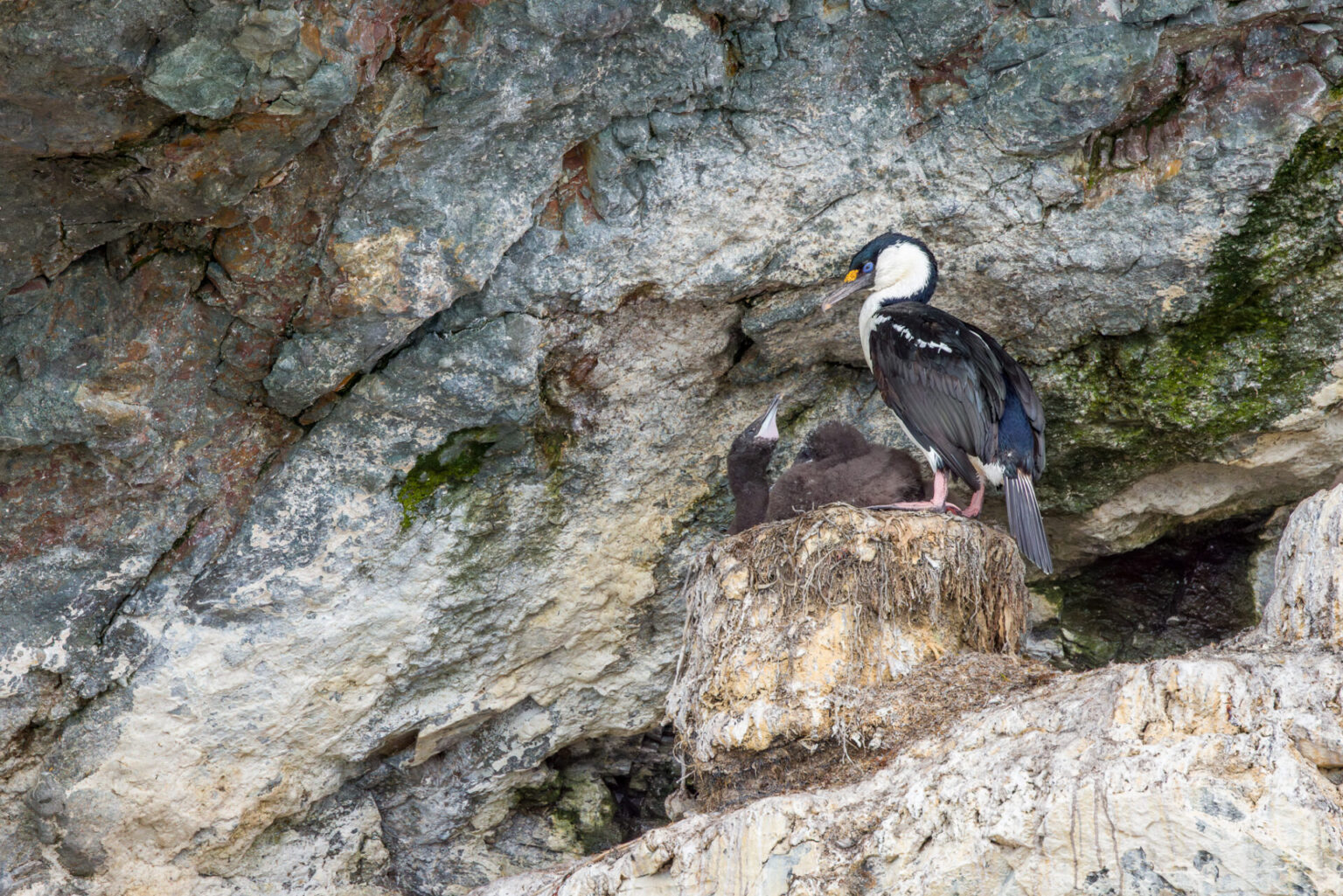
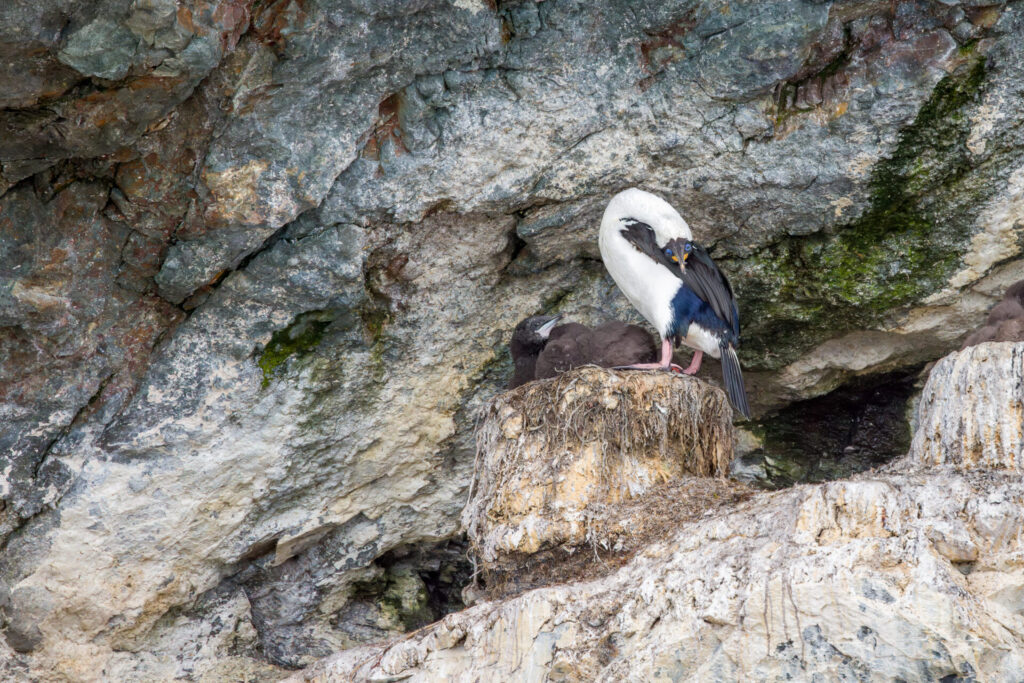
A little further on, was a small breeding colony of Antarctic Shags. Another name for Shag you are probably more familiar with, is Cormorant. The specific species in the area is the Imperial Cormorant, but just to make it confusing, it is also sometimes called King Cormorant, Imperial Shag, Blue-eyed Shag, or Antarctic Cormorant. It is the only species of Cormorant that lives in Antarctica. Its range also covers South George, Falkland Islands, and southern South America.
A key feature of the Antarctic Shag are the beautiful blue eyes (not actually the eye, but a patch of skin surrounding the eye) and the bright orange above its beak. As you can see in the photo below, their neck is quite flexible.
Antarctic Tern
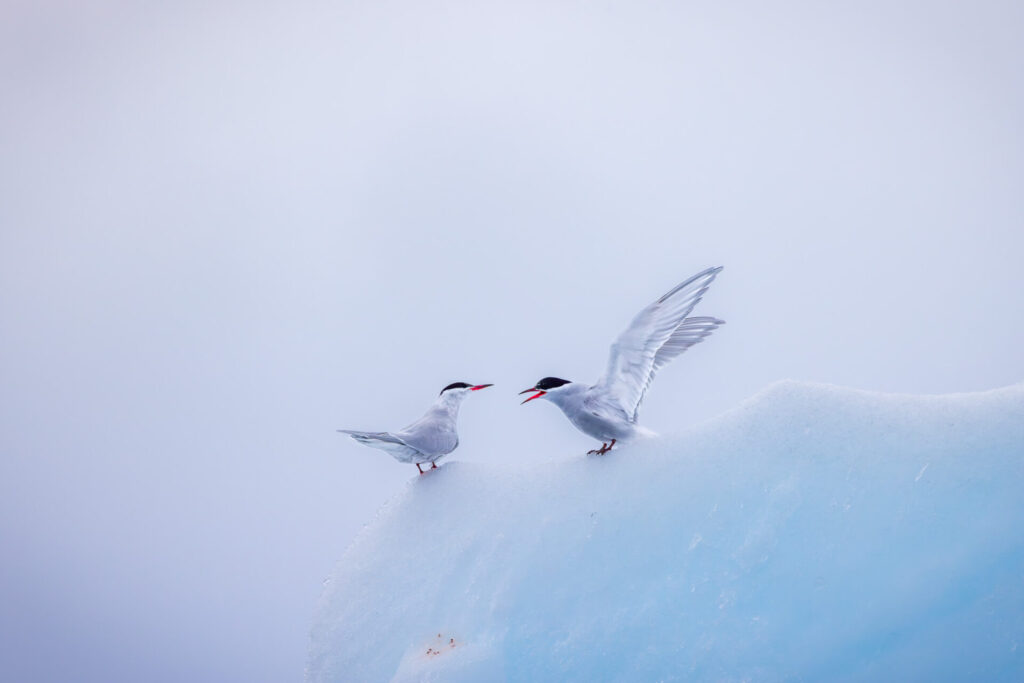
There were several Antarctic Terns here as well. In the photo below I was able to isolate an interacting pair on top of an iceberg. Unfortunately, I don’t know what they were saying to each other.
Seals
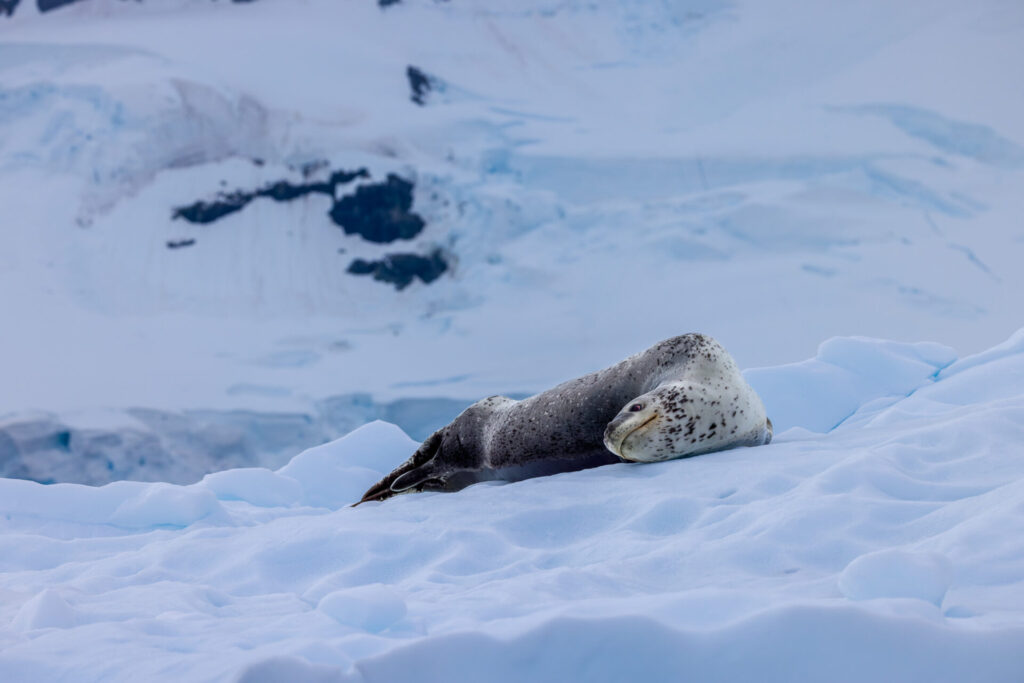
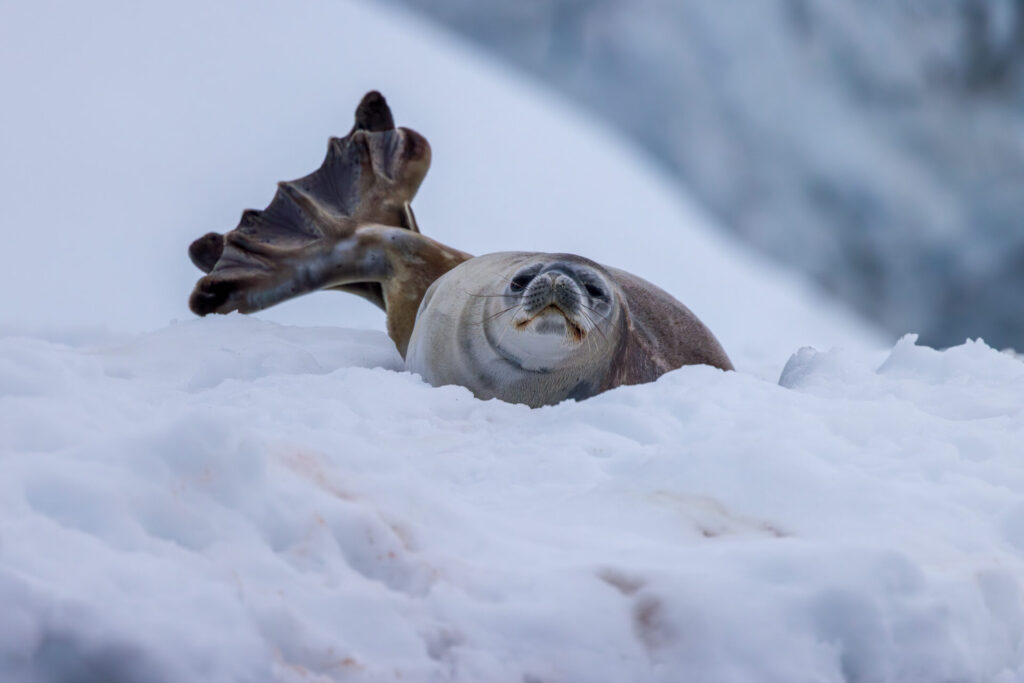
There were two different kinds of seals we came across in the bay. The first was a Weddell Seal. The second was a Crabeater Seal. Both were, as usual, lounging on the ice, though the Crabeater did lift its flippers off the ice to show us how huge his flippers are. No wonder seals can swim so well.
Whales
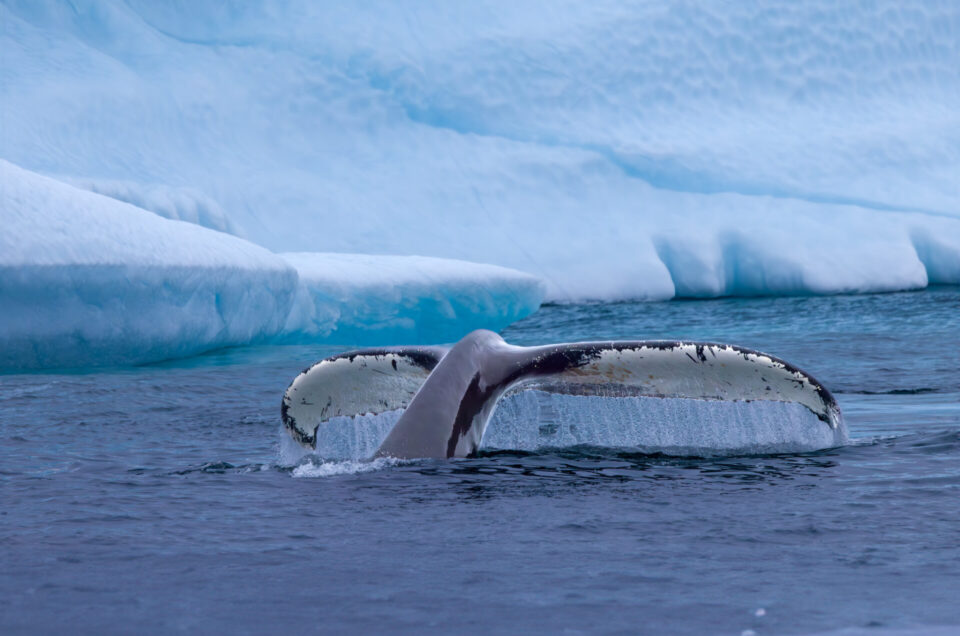
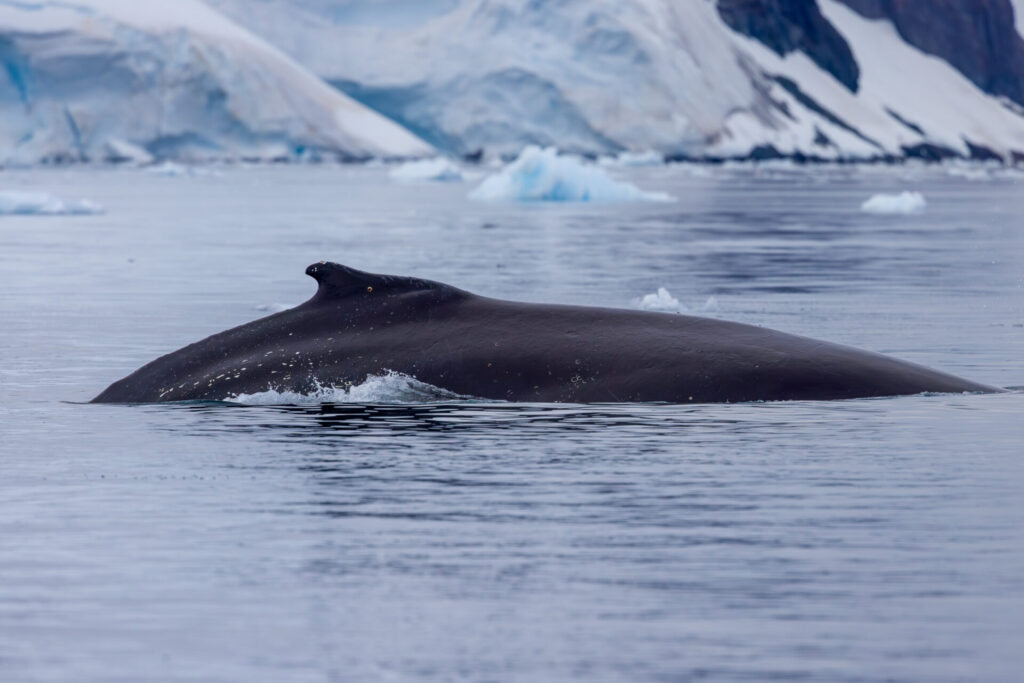
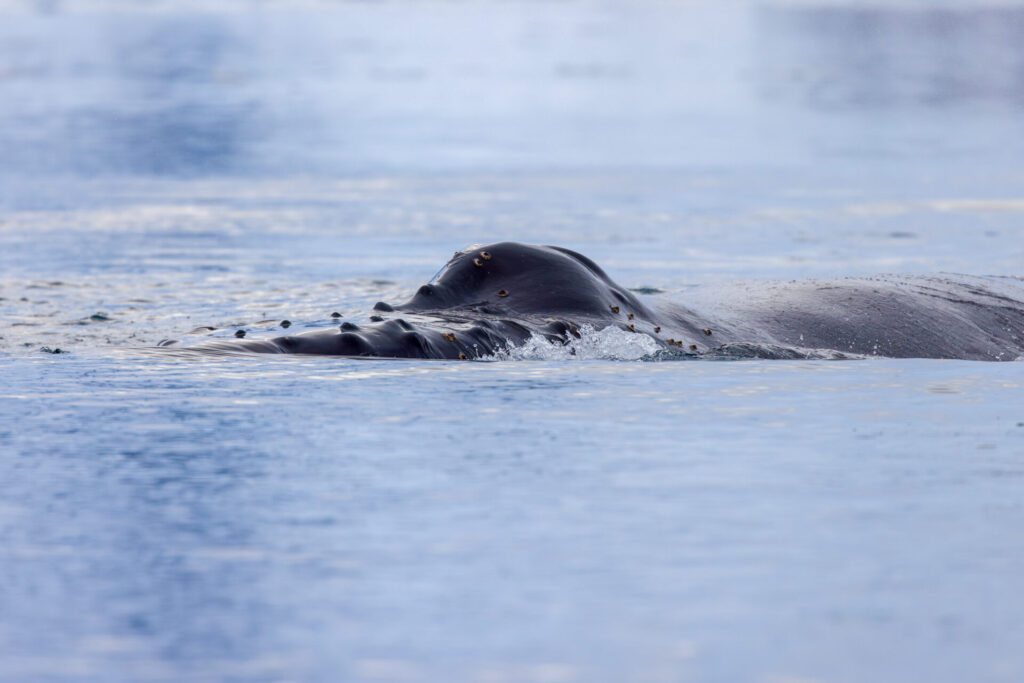
But the real stars of the bay were the Humpback Whales. There were several individuals in the bay swimming, rolling, lunging, diving, and feeding. I have never seen so much whale activity in one location before. And much of this took place very close to the zodiac, sometimes so close I couldn’t fit the whale into the field of view of the camera lens.
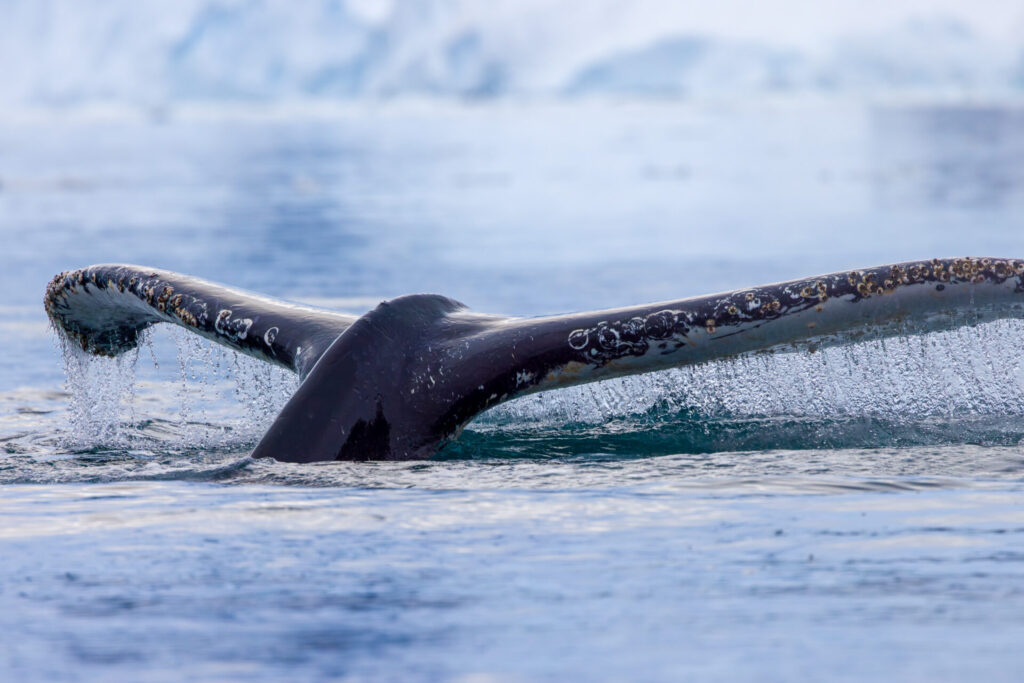
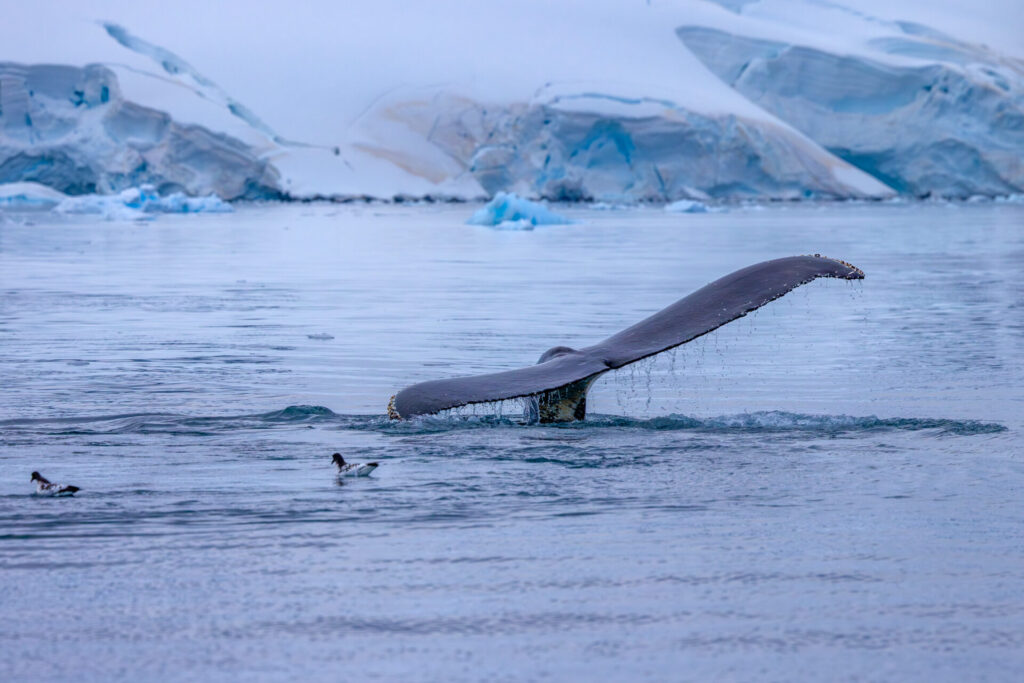
Of course, there were the tail shots as they would dive.
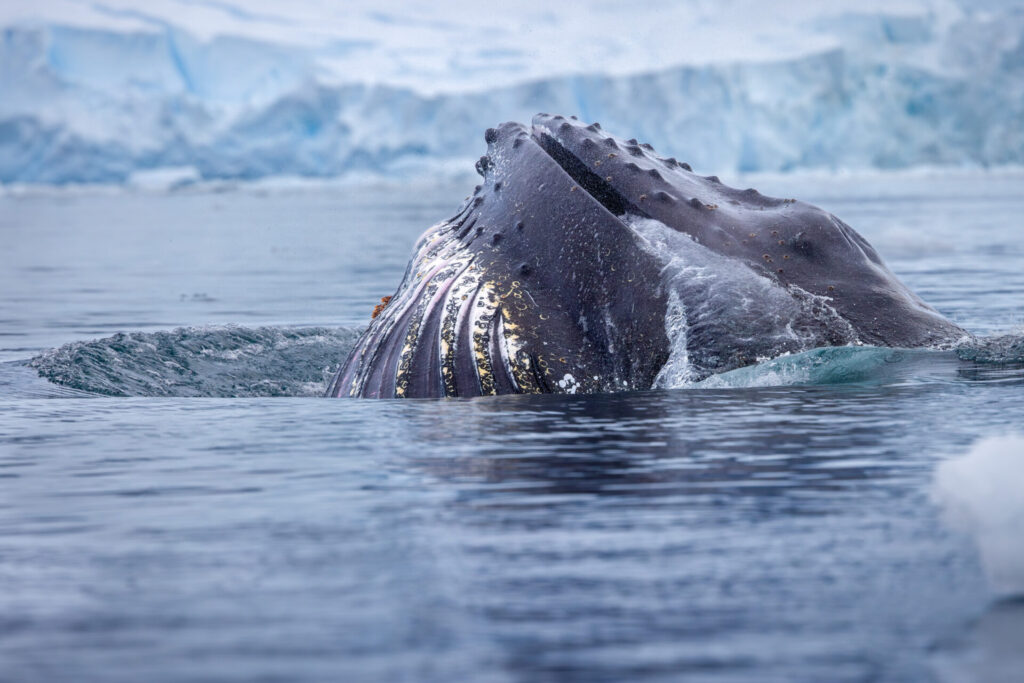
But more spectacularly, they were doing quite a bit of feeding where they would roll and lunge. Whales and most animals here eat krill. The krill in turn feed off of phytoplankton, zooplankton, and algae. So all this whale action indicates there is good upwelling bringing rich nutrients to the surface to feed the krill and in turn feed the larger animals.
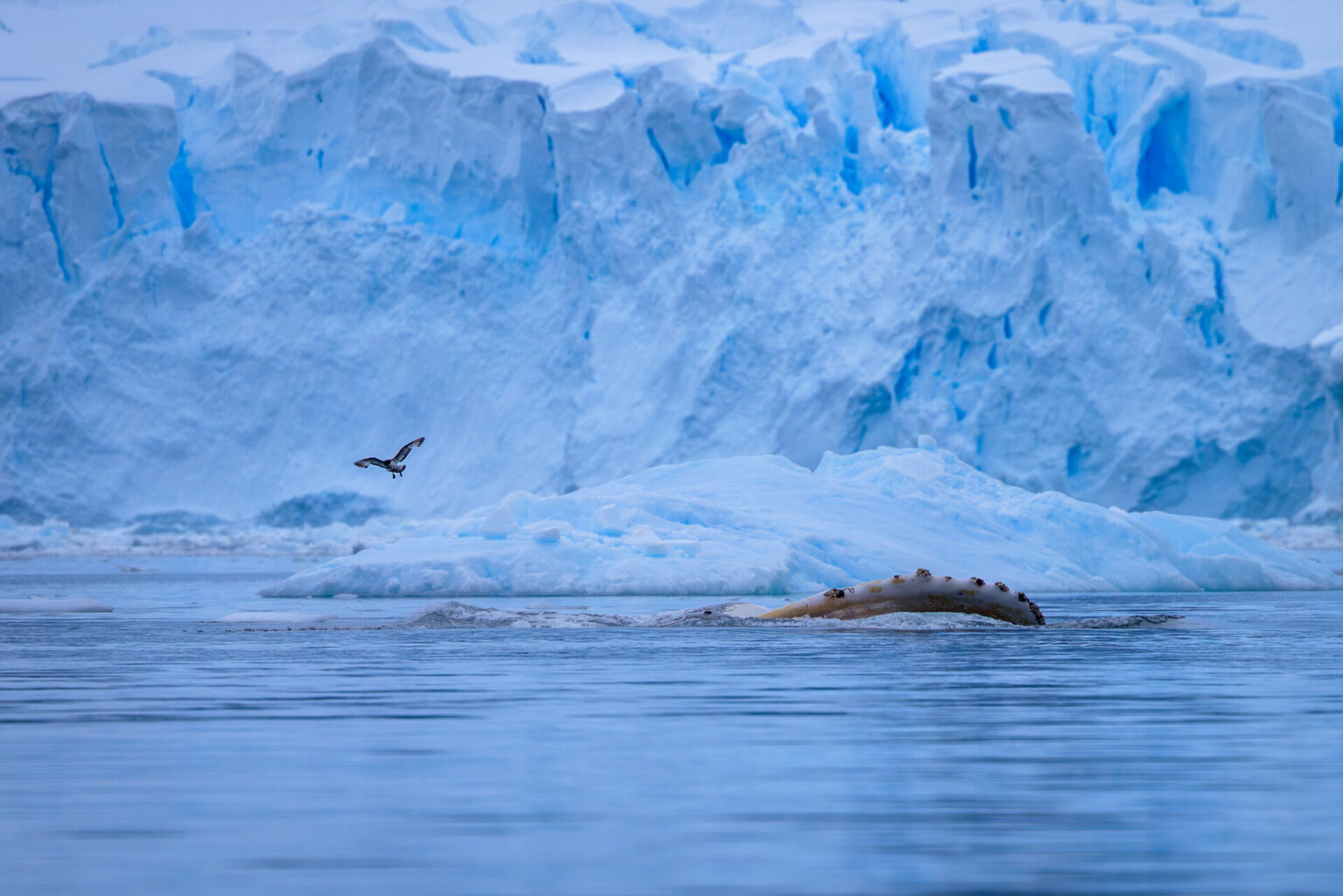
You will also see in many of the photographs, like the one below, the Cape Petrels following them to pick off krill brought up by the whales. In the photo below, the whale is on its side with one pectoral fin extended above the water.
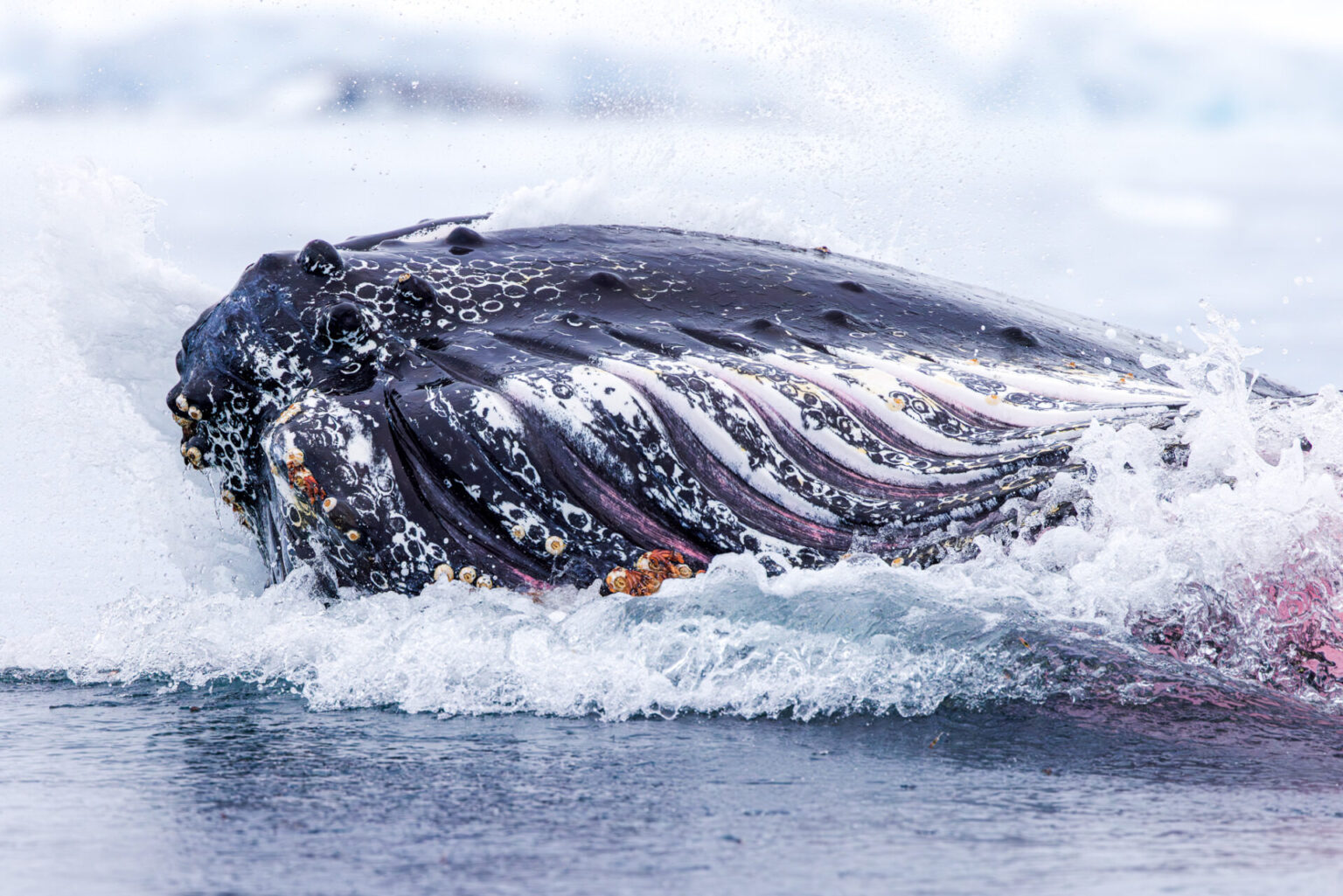
When they feed, they take a huge gulp of water, extending the ventral pleats in their lower jaw to maximize the amount of water they can take, and then push the water using their tongues out of the mouth filtering it through their baleen to trap the krill in the mouth.
Often, when they take a big gulp of water, they do what is called lunge feeding where they propel themselves through a thick concentration of krill to maximize the amount of krill they can catch.
Humpback Whale Lunge Feeding: Fine Art Photographic Print (Click image to Purchase)
Have you ever seen a whale sleeping? We did. And we learned that they basically sleep on the surface, but only half of their brain sleeps at one time. It is a process called unihemispheric sleeping. This is important in order to keep breathing properly in the water as well as to avoid predators. It is quite amazing actually.
Overall, I have to say that I was not prepared for experiencing all this in Paradise Bay. Seeing all this richness of life here was quite an awe-inspiring experience. It speaks to the richness and health of the area and is quite exciting to see how well the marine life has recovered from the whaling and sealing of past years.
Conclusion
That concludes this post about Paradise Bay and the most wonderful New Year’s Day ever! Can you believe it? This was only the second day in Antarctica. The next post will cover a zodiac cruise in Charlotte Bay (hint: more whales) and a visit to a breeding colony of Chinstrap penguins at Palaver Point.


Leave a reply