White Pocket Reflection Introduction
In a previous post titled The Magic of Monsoon Season in Arizona, I wrote about traveling to White Pocket in the Vermillion Cliffs in northern Arizona during monsoon season of 2023. Last year, in 2024, I made a return visit to this location. This blog post is about this second visit and will introduce my latest fine art print from that trip titled White Pocket Reflection.
Grand Canyon North Rim
This was actually part of a three day trip that my wife and I took, going first to the north rim of the Grand Canyon. We spent the night in one of the historic cabins. Sadly, fire this year burned many of the buildings including the historic lodge.
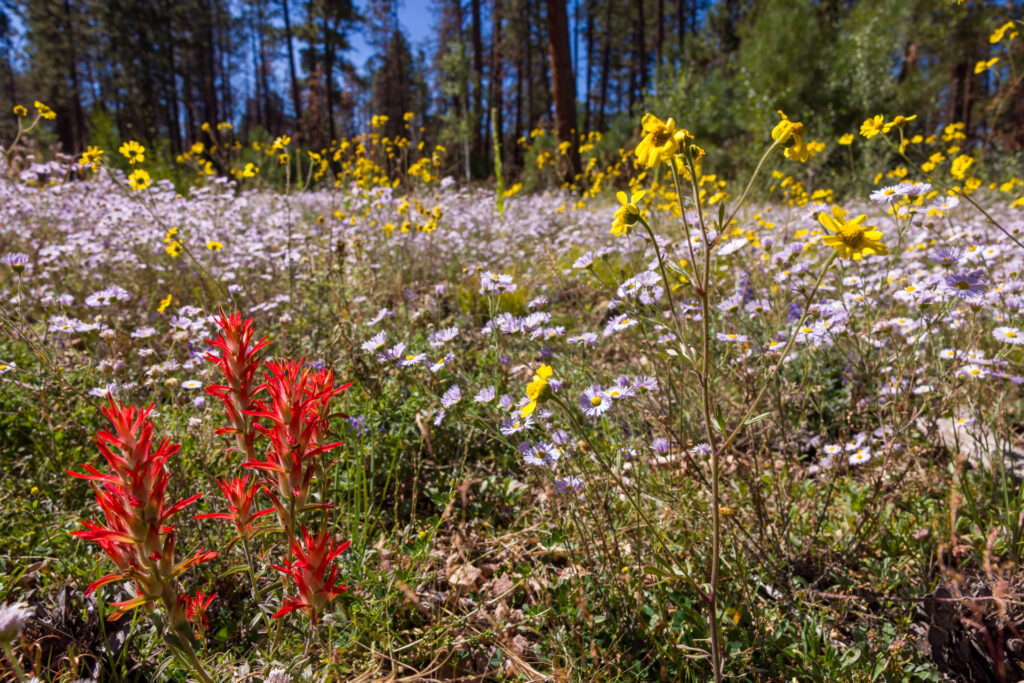
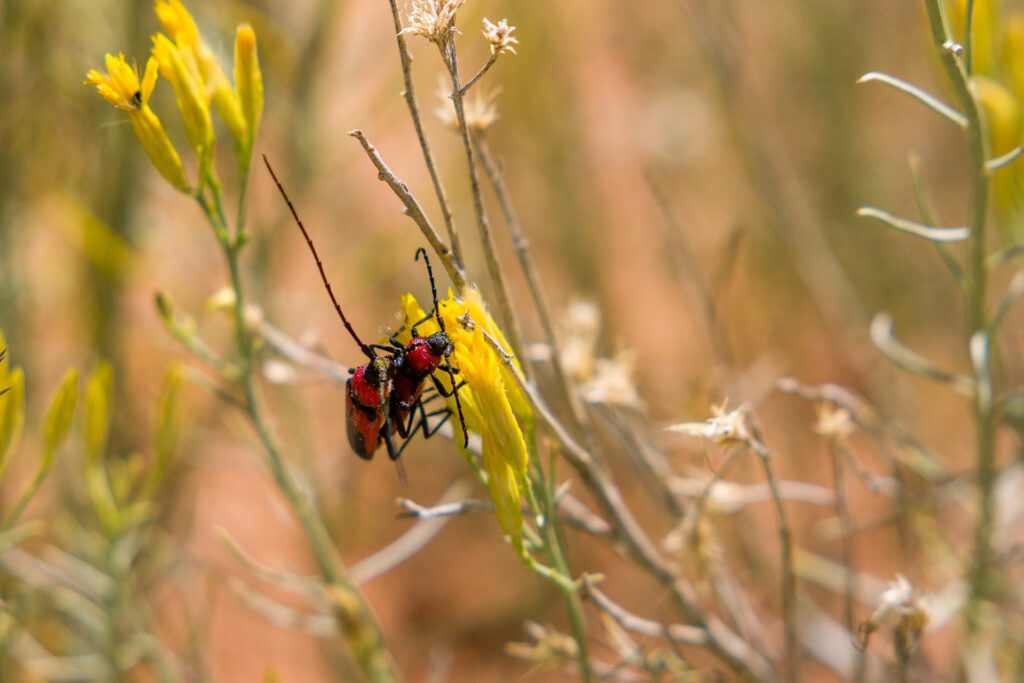
When it is not closed, going to the north rim this time of year is always a pleasure. At the high altitudes the wildflowers are so nicely in bloom. And the insects are doing what insects do, including these two red and black Longhorn Beetles.
The purple Spreading Fleabane flowers were everywhere and especially pretty. Below is a closeup of the fleabane flowers.
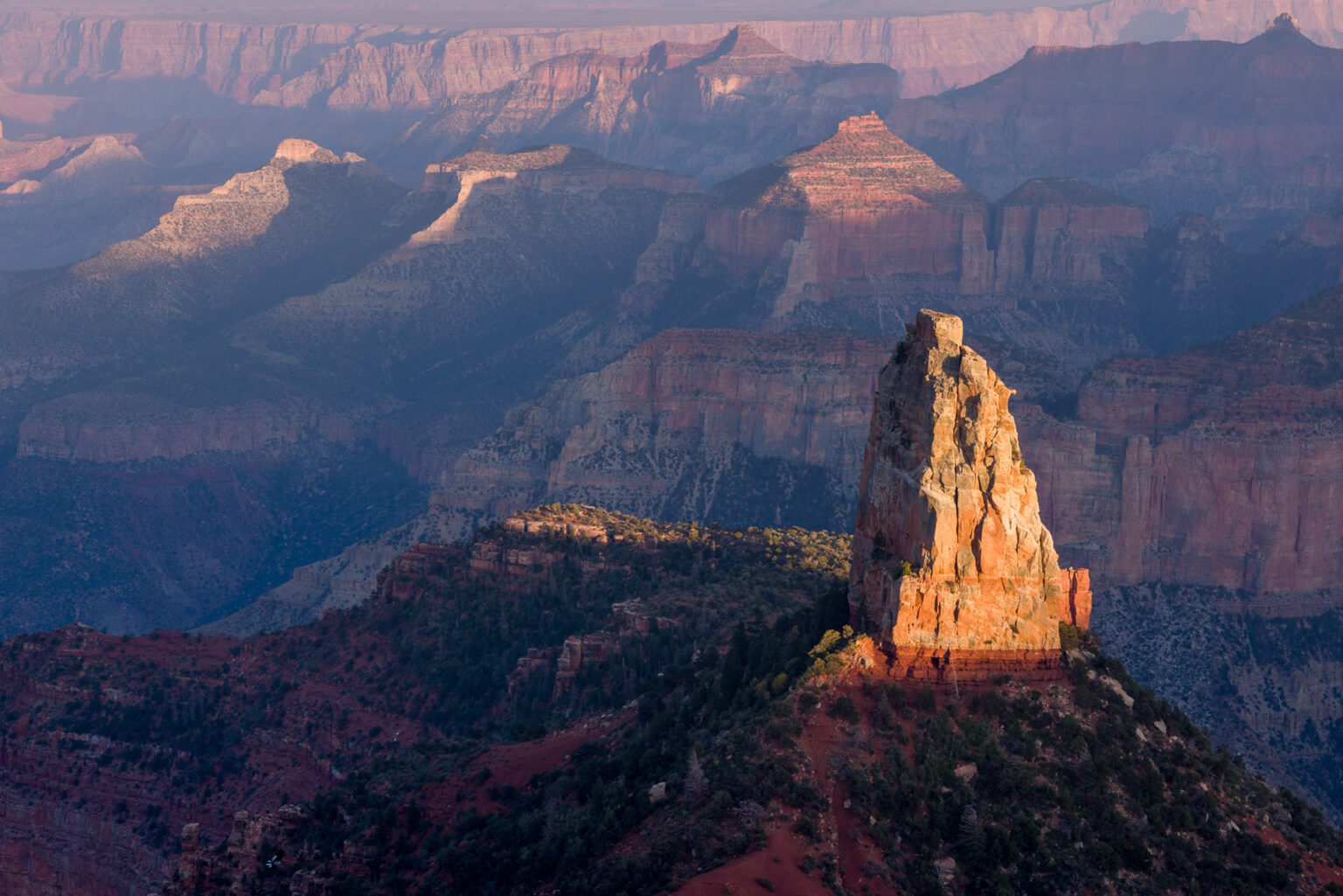
At sunset, we headed over to the Point Imperial viewpoint to catch the fading light as it just lights the top of Mount Hayden. This mountain peak is 8,362 feet high and 5,000 feet above the bottom of the canyon below. For geology buffs, the spire is composed of Permian Coconino Sandstone caprock deposited 265 million years ago.
Onwards to White Pocket
On the second day, we made our way slowly to White Pocket in the Vermillion Cliffs National Monument. It was a sunny, albeit windy day. The drive was fairly easy except for sand and we took our time. A good portion of the drive does go through deep sand that you need to be wary of.
Despite driving my X-Terra with 12-inch clearance, I could often feel the bottom of the vehicle dragging on the sand. The ruts in the sand were so deep 12-inch clearance was not always enough. But we made it, set up camp and headed out to photograph.
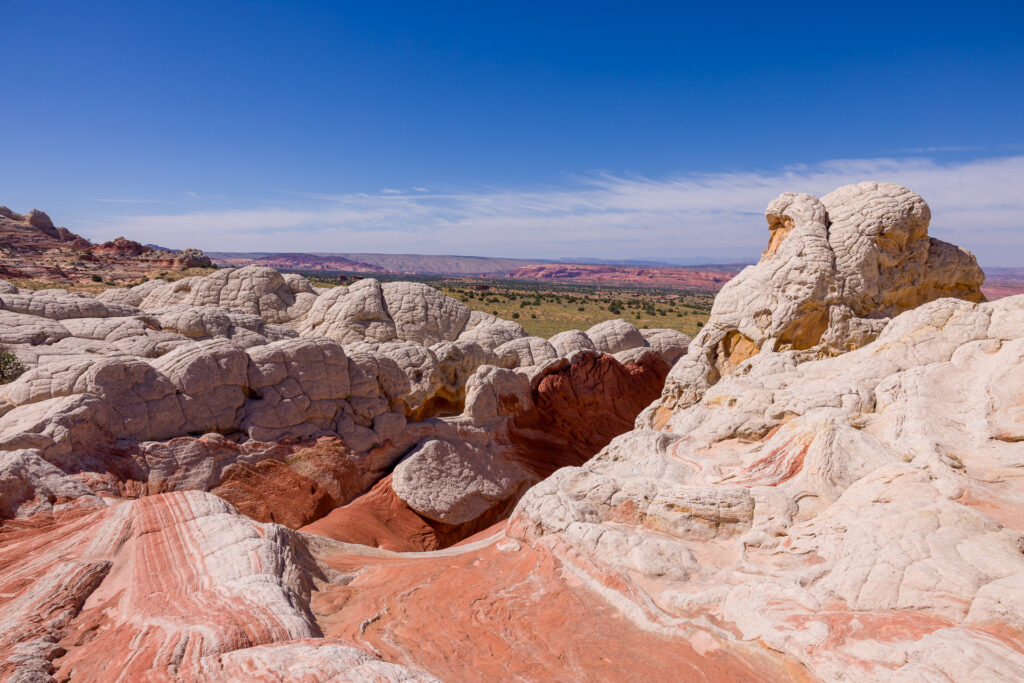
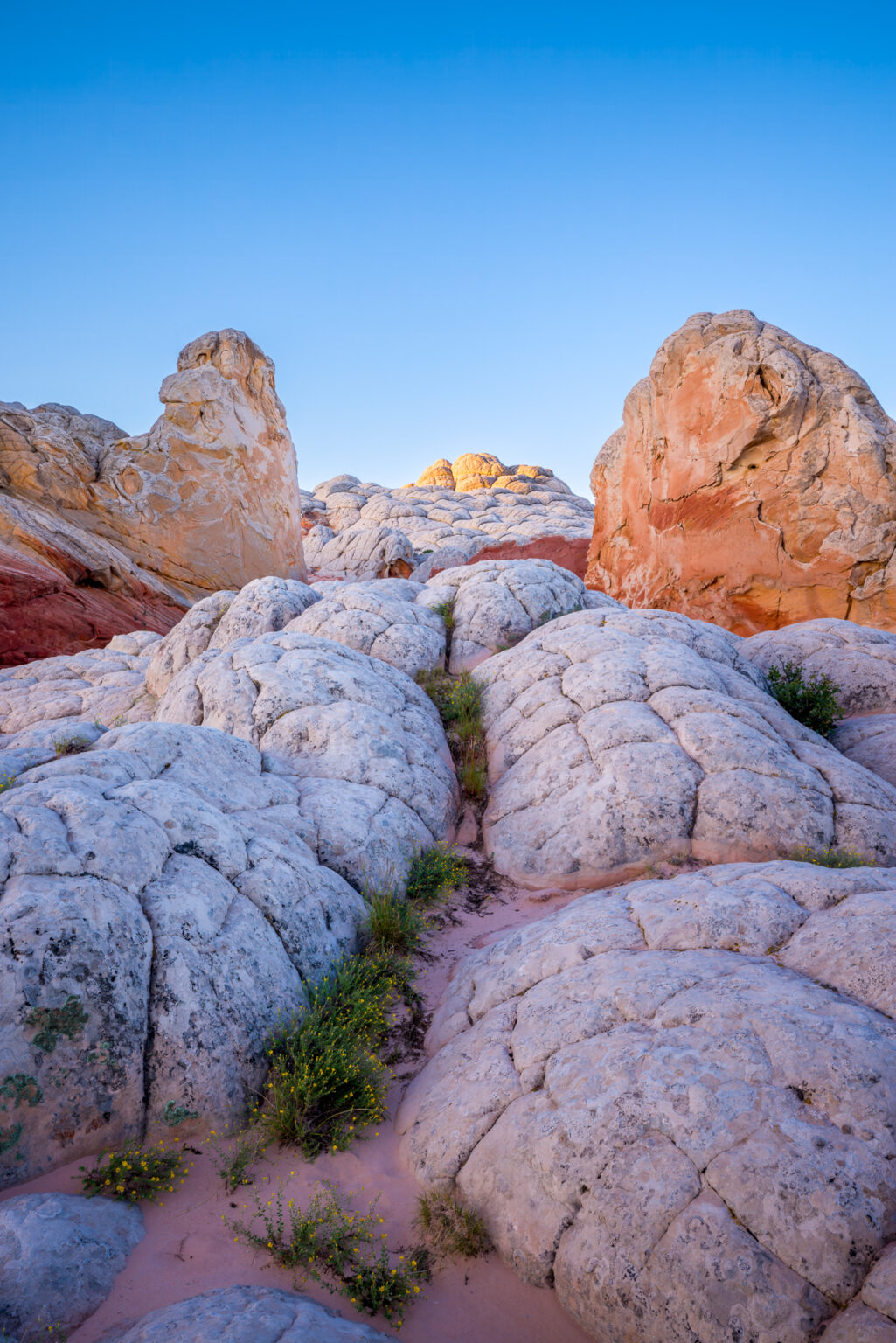
The thing White Pocket is known most for is the brainy texture of much of the rock here, especially the white sandstone. You can see this in the photo above, as well as most of the other photos here.
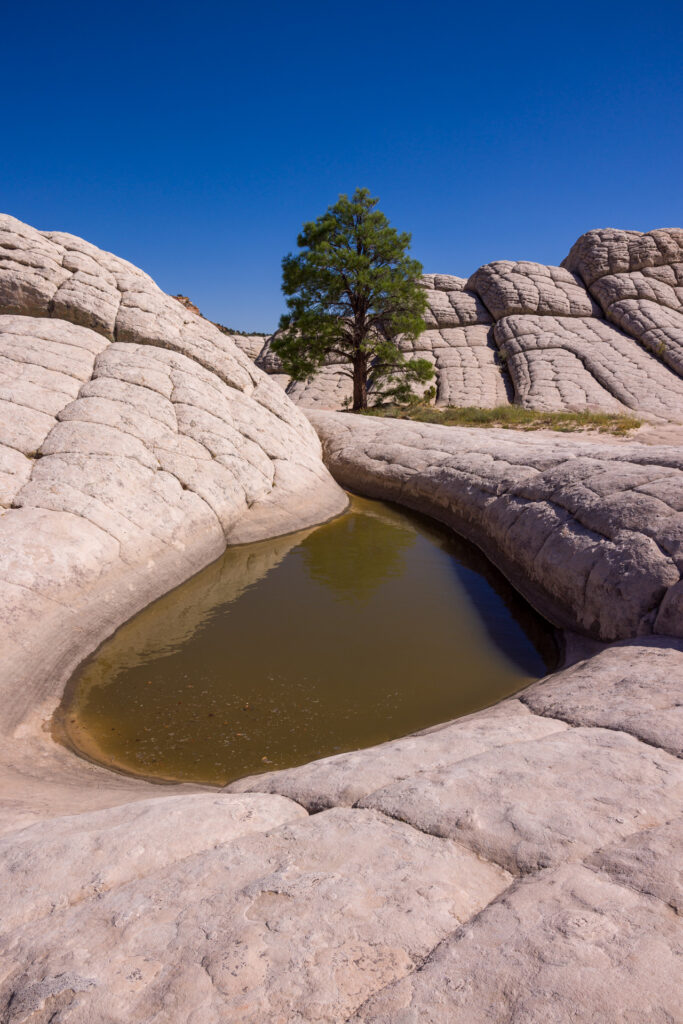
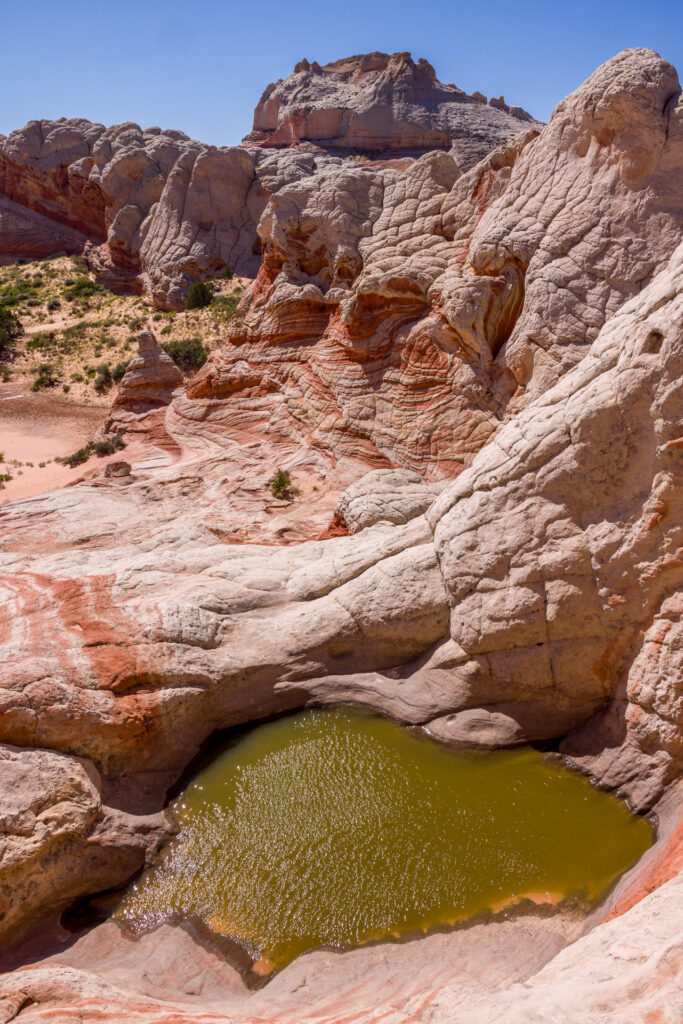
Although the sky was clear, there had been some rains not too long ago so there were a number of pools. In lower, sheltered areas the wind was not too strong. But in higher, unprotected areas the wind was howling. You can see the difference in the two photos below.
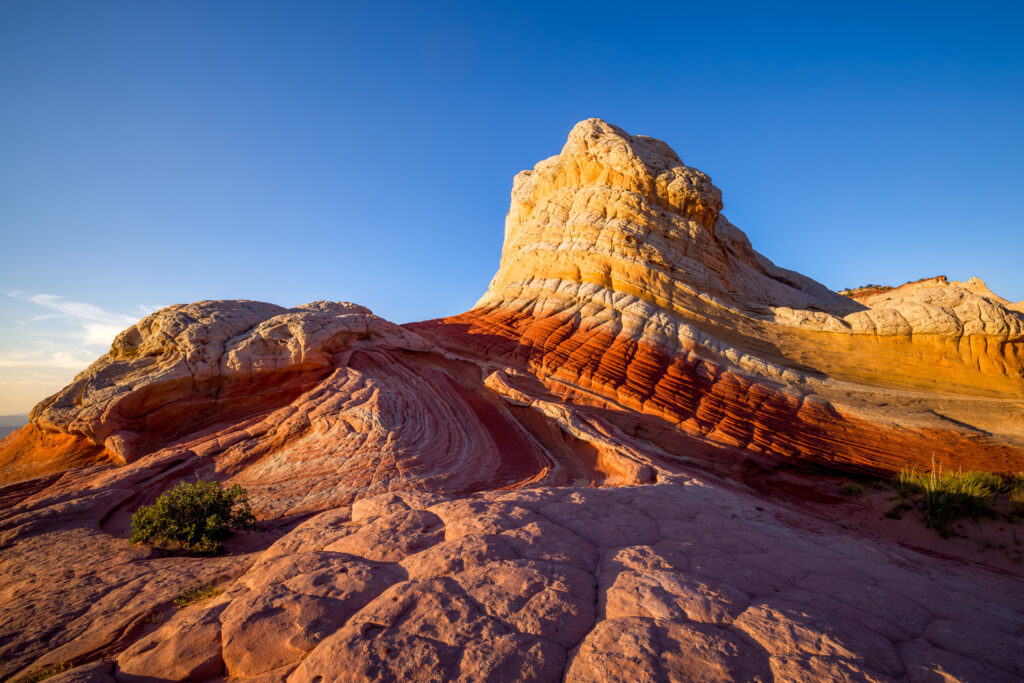
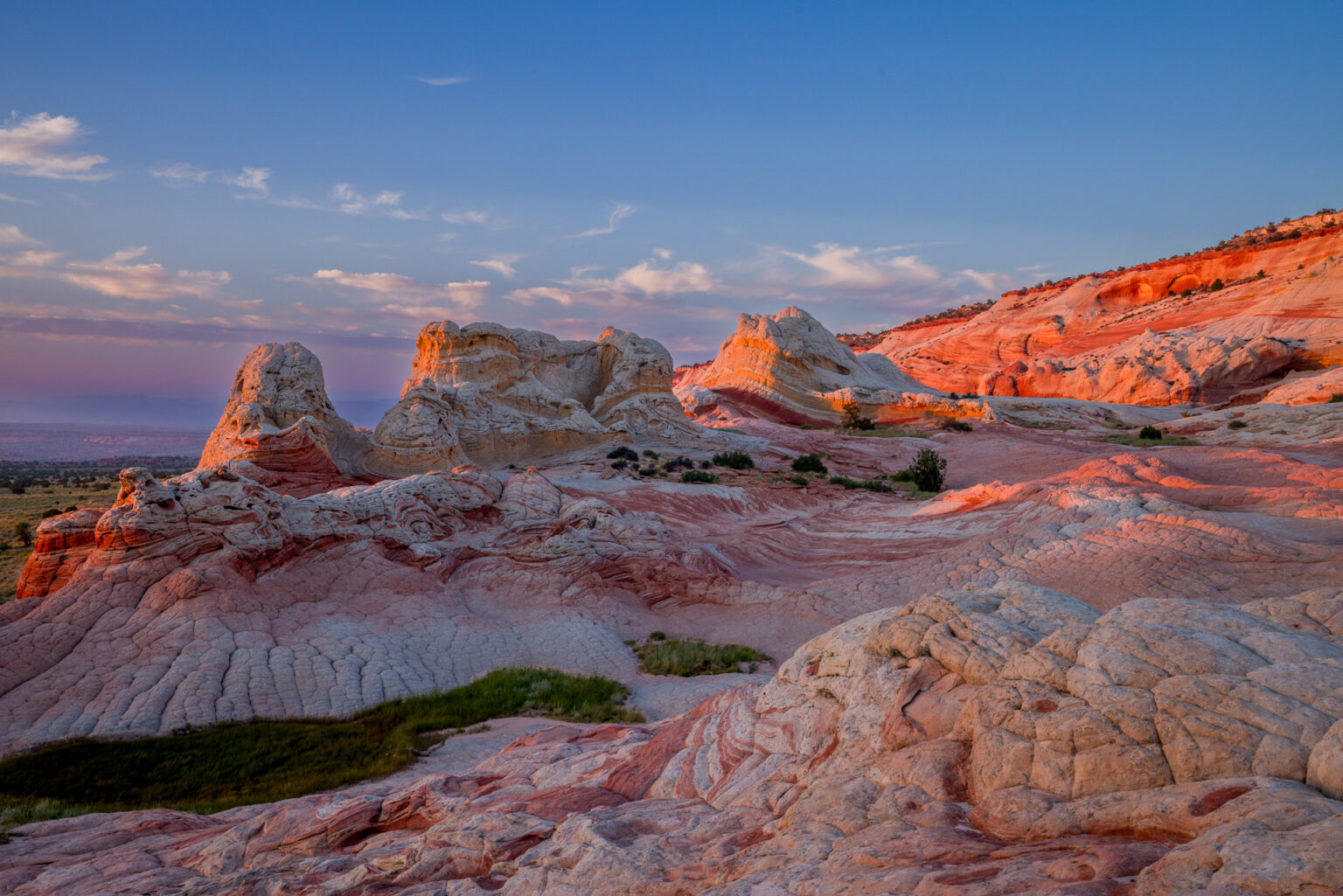
Another thing White Pocket is known for are the twisted, folded, and jumbled sandstone outcroppings. It truly is a fascinating spot which makes me marvel at how this came to be.
As always, late afternoon brings out the best colors in the rock. The warm light brings a warm glow to everything.
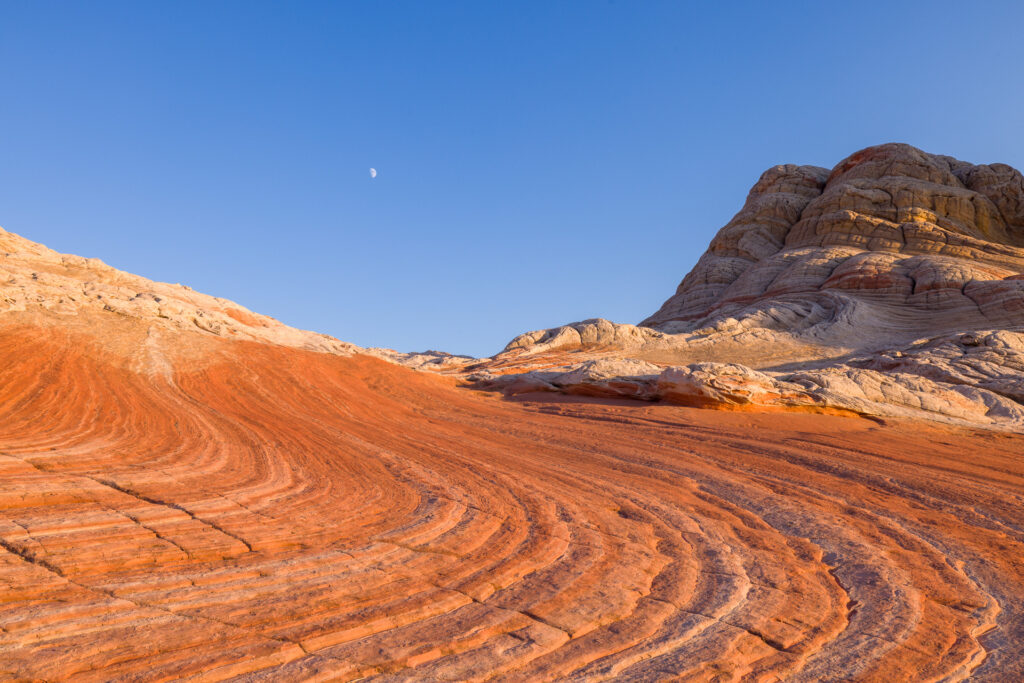
Look for long curving lines like in the photo below with the half-moon in the sky.
Sunset itself brings out interesting details, like the low angled light obliquely illuminating the sandstone with soft warm light and casting long shadows.
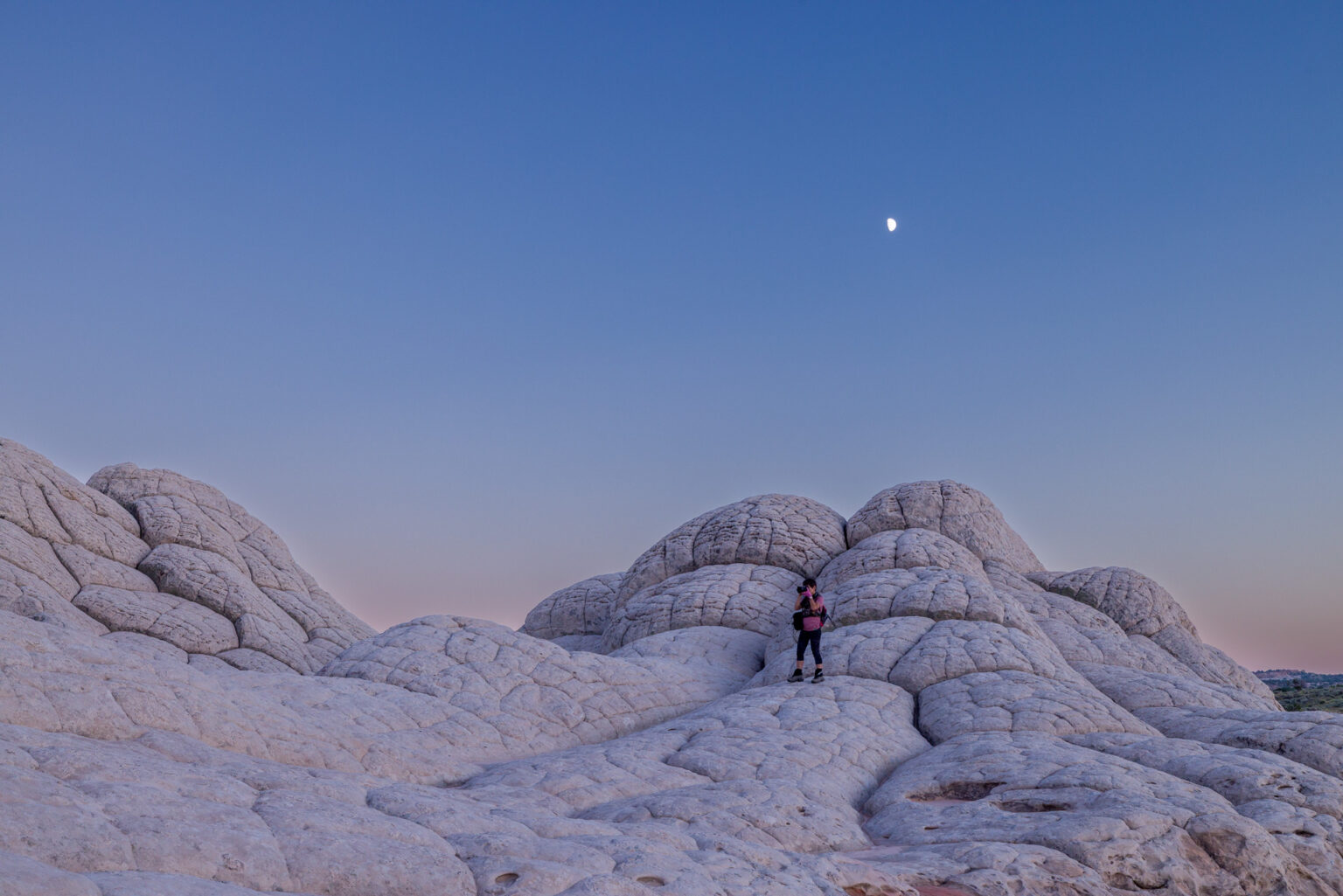
Early twilight also brings an interesting look. In the photo below, my wife stands on the brainy textured rocks shortly after sunset, below a half-moon.
Before it got totally dark, we made our way back to camp for dinner and to bed early so we could wake up very early in the morning.
On the Rocks Before Sunrise
The next morning we headed out well before sunrise to catch the best early morning light. The sky was still clear, but now the winds were much calmer than the night before.
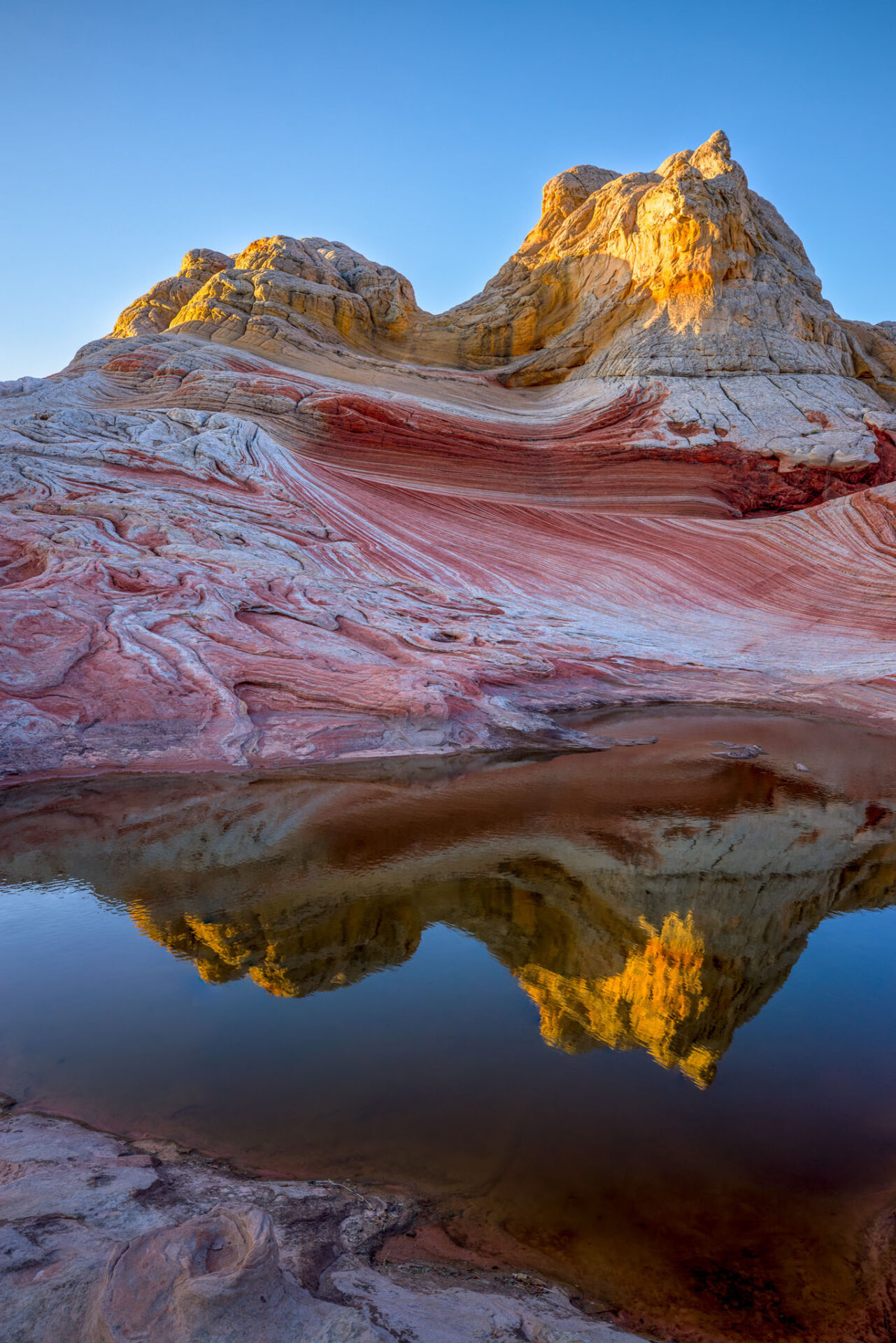
It was during this early morning light that I got the best photograph of the entire trip. Titled White Pocket Reflection, it captures beautiful warm light high up on the rocks with a reflecting pool below, reflecting the lit peaks. You can make out little ripples on the surface of the pool from the light wind that was still around. Below the highest peaks are some wonderful striped textured lines of red and white sandstone.
This photo was truly a labor of love. It took a long time to come together. It was a multi-shot composite to capture sharp detail in the foreground and throughout. I did my initial edits and it got to where I knew this would make a wonderful print, yet something still wasn’t quite right. I had to leave it for a while, then come back.
I probably started over from the beginning several times. At each iteration I learned a little more about what was needed until finally, everything turned out perfect, from the sky, to the lit peaks, to the colors and textures in the striped rock, and finally to the details and brightness of the reflections in the pool. I had a 24×36 inch print made which I really love.
Leaving White Pocket
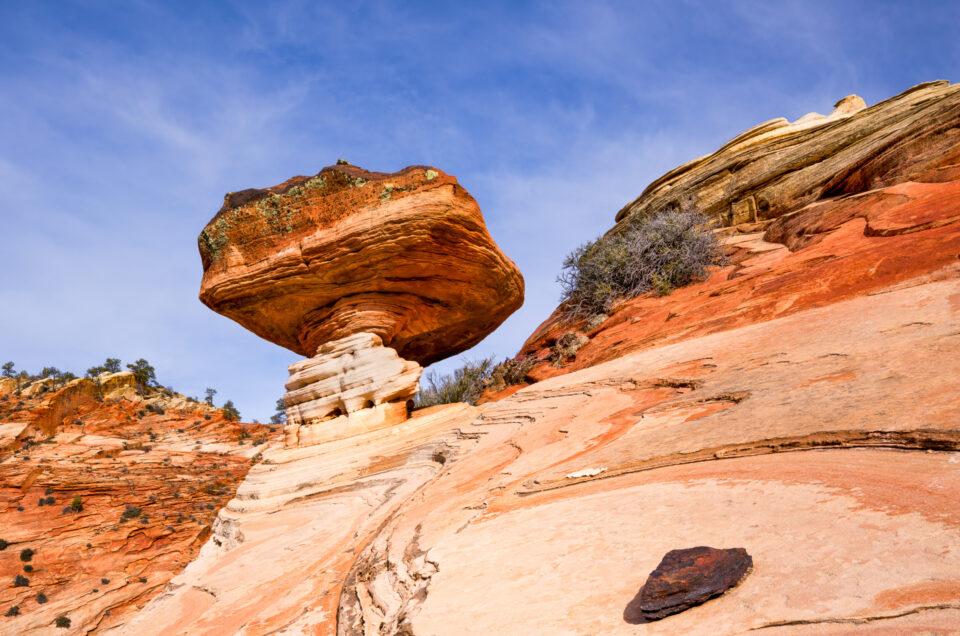
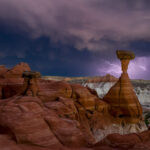
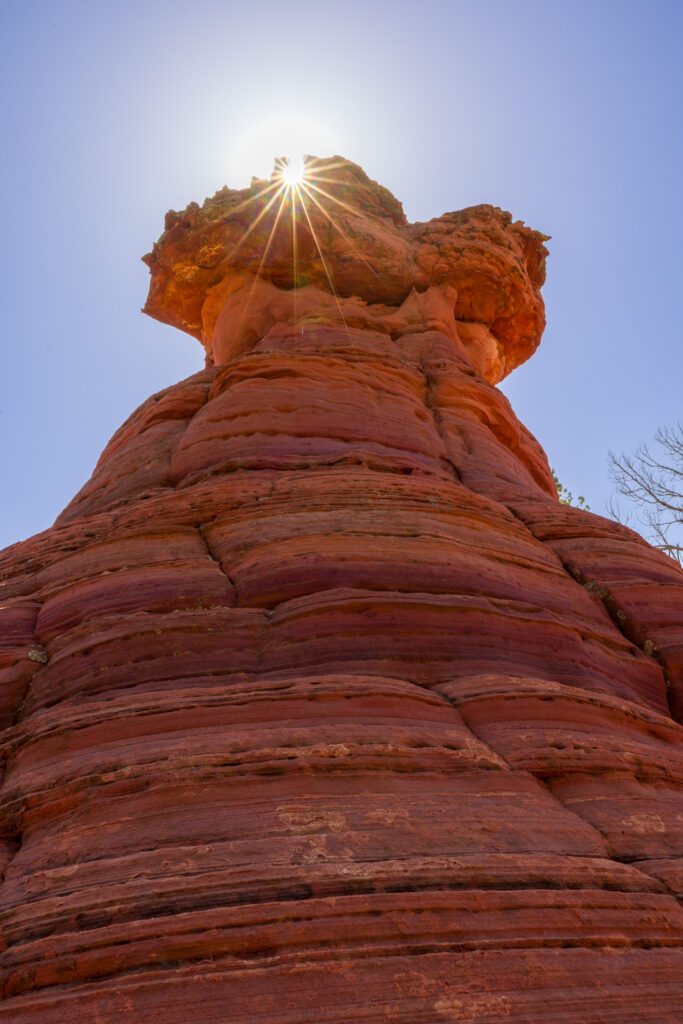
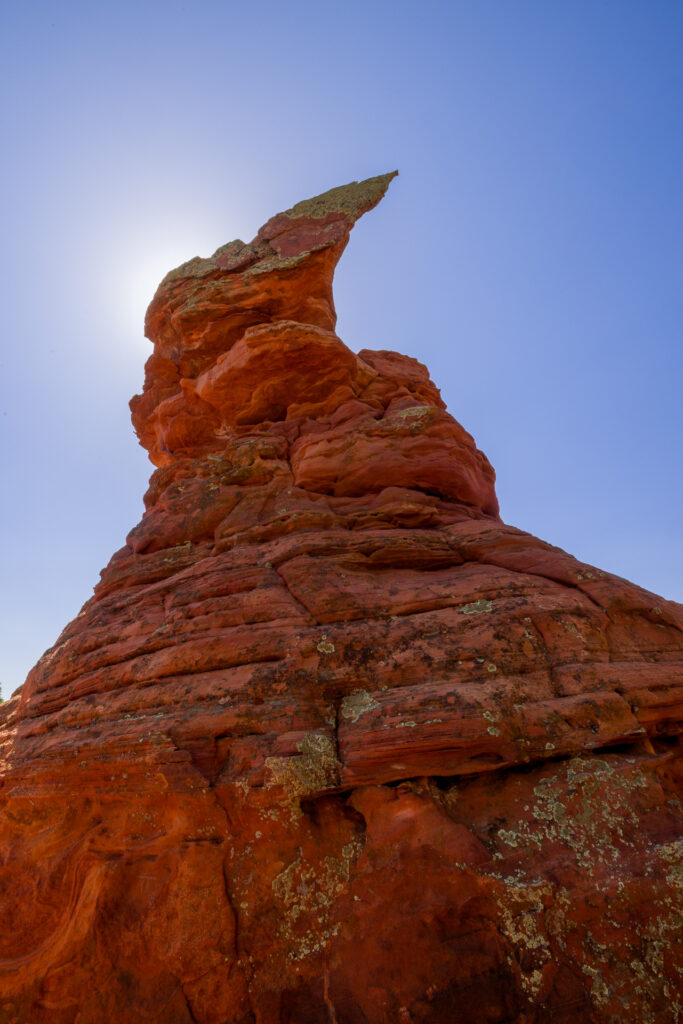
Soon the good morning light ended. It was time to have a good breakfast of freeze-dried scrambled eggs (I’m not much of a cook) and then pack up for home. Going back on the dirt road that we came in on, I decided to stop at a place with two hoodoos standing seemingly in the middle of nowhere. Both are approximate 20 – 30 feet high.
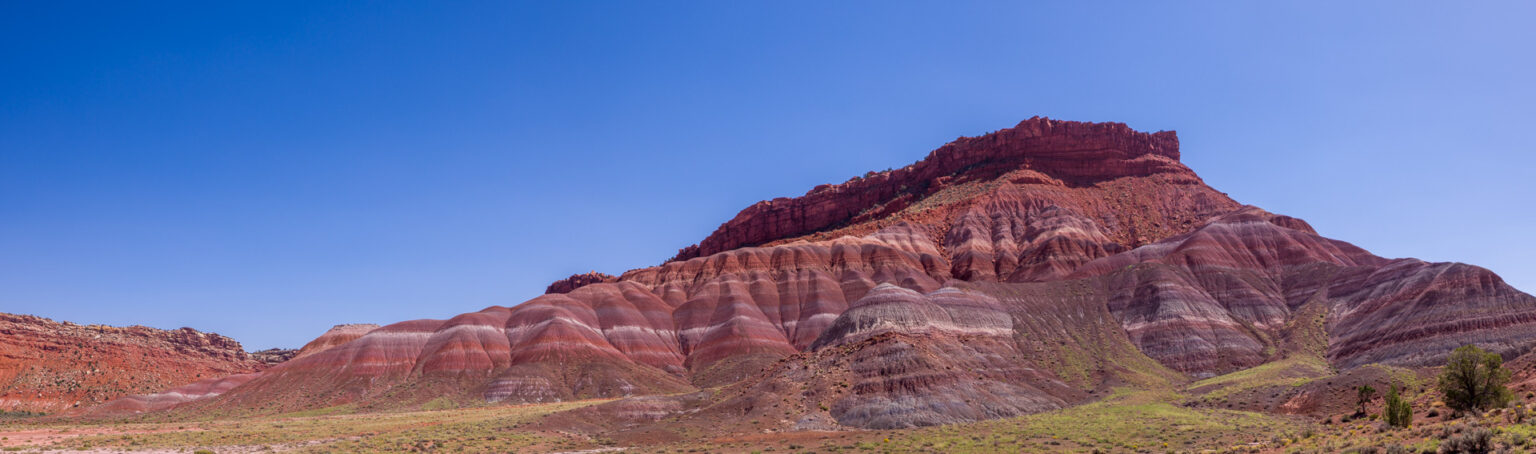
We continued north so we could stop by the Paria Townsite and explore for a bit. We had been here once before, but had very little time to spend. The colors in the rock are quite spectacular in this area. We drove down the road past where the townsite was. I got out of the car and hiked further down to the old cemetery.
Finally, it was time to get back in the car and make the long drive back home.
A Warning About Driving
Should you decide to drive out to White Pocket, beware of deep sand. The most likely difficulty you may run into is to get stuck. You will need a high-clearance vehicle and 4-wheel drive. Experience driving in sand is highly recommended.
I did not run into problems on the drive, but a few days after the trip, I saw oil on my garage floor. Oh, no! It turns out there was a slow leak of oil coming out of the transfer case. Dragging the bottom of my vehicle along the sand must have weakened it just enough to start a slow drip.


Leave a reply