Shackleton Expedition and Elephant Island
On December 5, 1914, Sir Ernest Shackleton, one of the early Antarctic explorers, set sail from South Georgia on his ship, the Endurance, for an ill-fated expedition with 28 men on board. The goal was to complete the first land crossing of the Antarctic continent. The expedition failed, but it was this voyage that led to a tale of extreme hardship and heroism in the wake of this failure.
The Endurance made it to the Weddell Sea and nearly to the continent, but thick pack ice closed in around the ship locking it in place. The ship and its crew were left to drift northward with the ice. Thinking that they might be able to shelter in place during the southern winter and continue in the spring, they stayed in place until October 1915.
By this time, however, the ship was slowly being crushed by the ice. Shackleton finally gave the order to abandon ship. They had time to remove supplies and three lifeboats (small whaling boats). But eventually the ship sank below the ice into the depths of the southern ocean. The expedition was abandoned and survival became the goal.
It was now April 1916, and after several failed attempts trying to reach other destinations, Shackleton determined their best option was to sail in the three lifeboats to Elephant Island.
Now on Elephant Island, with the austral winter approaching, Shackleton further determined he needed to somehow rescue his men. So he and five other men set sail in one of the lifeboats on a 720 nautical mile harrowing journey through stormy weather and rough seas to get to the whaling station at South Georgia and set about to mount a rescue operation.
Meanwhile, 22 men led by Frank Wild, Shackleton’s second in command, stayed on Elephant Island, turning the two lifeboats upside down and placed on short stone walls to make a crude shelter. They survived off penguins and seals for four and a half months. Then on August 30, 1916 Shackleton finally arrived on a Chilean navy cutter, the Yelcho, piloted by Captain Luis Pardo Villalón, to rescue them.
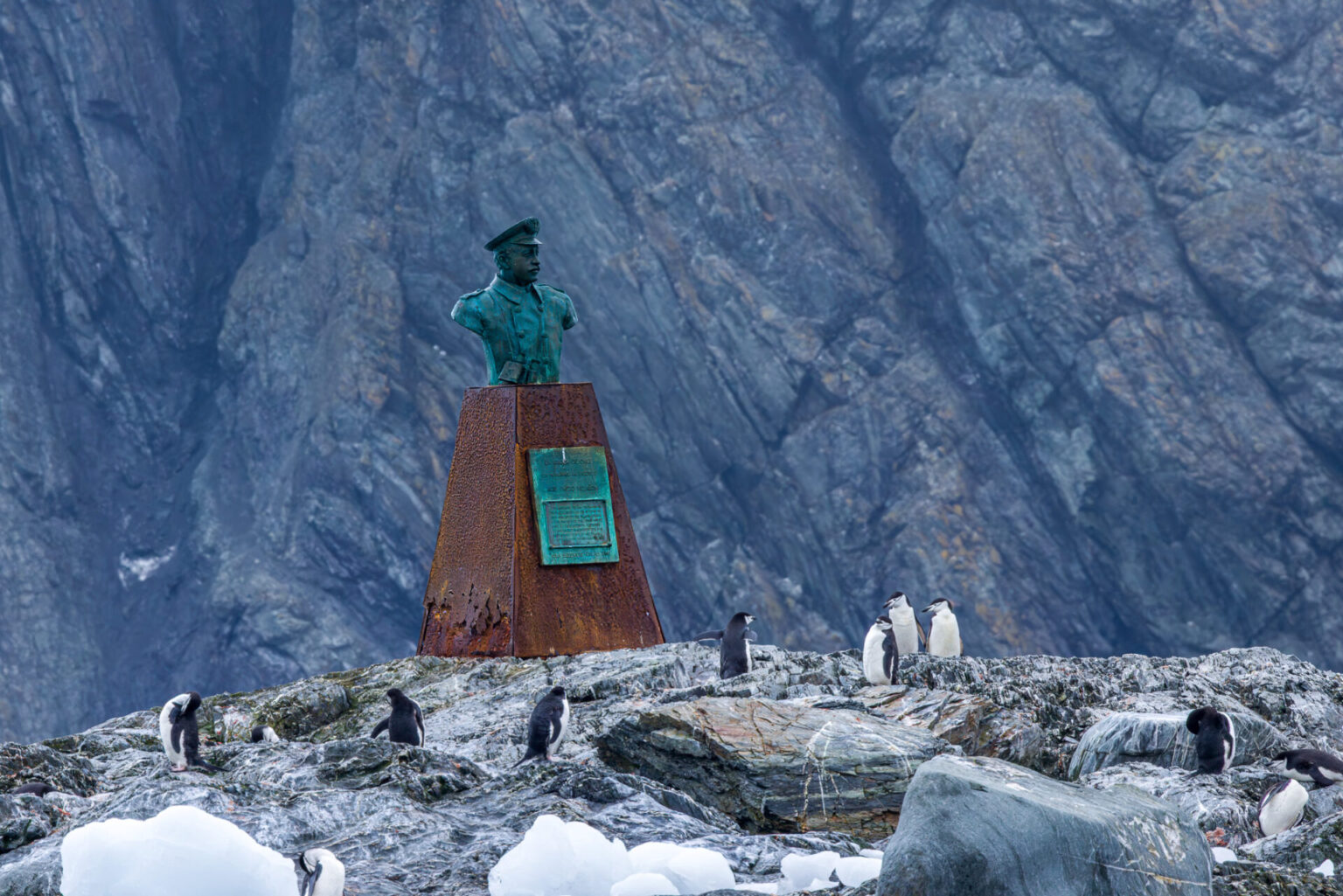
A monument with plaque and bust was erected on the island, at what has become known as Point Wild, to honor Captain Luis Pardo Villalón of the Chilean navy cutter. On the plaque are the words:
“Here on August 30th, 1916, the Chilean Navy cutter Yelcho commanded by Pilot Luis Pardo Villalón rescued the 22 men from the Shackleton Expedition who survived the wreck of the ‘Endurance’ living for four and one half months in this Island”.
Up to this point, we had heard much of the history told to us by historian and lecturer Paul Hart on our Expedition ship. Elephant Island is where we would finally meet up with the history of Shackleton’s expedition. We would learn more about the Shackleton expedition, as well as more history of Antarctic exploration, throughout the remainder of our voyage.
Arriving at Elephant Island
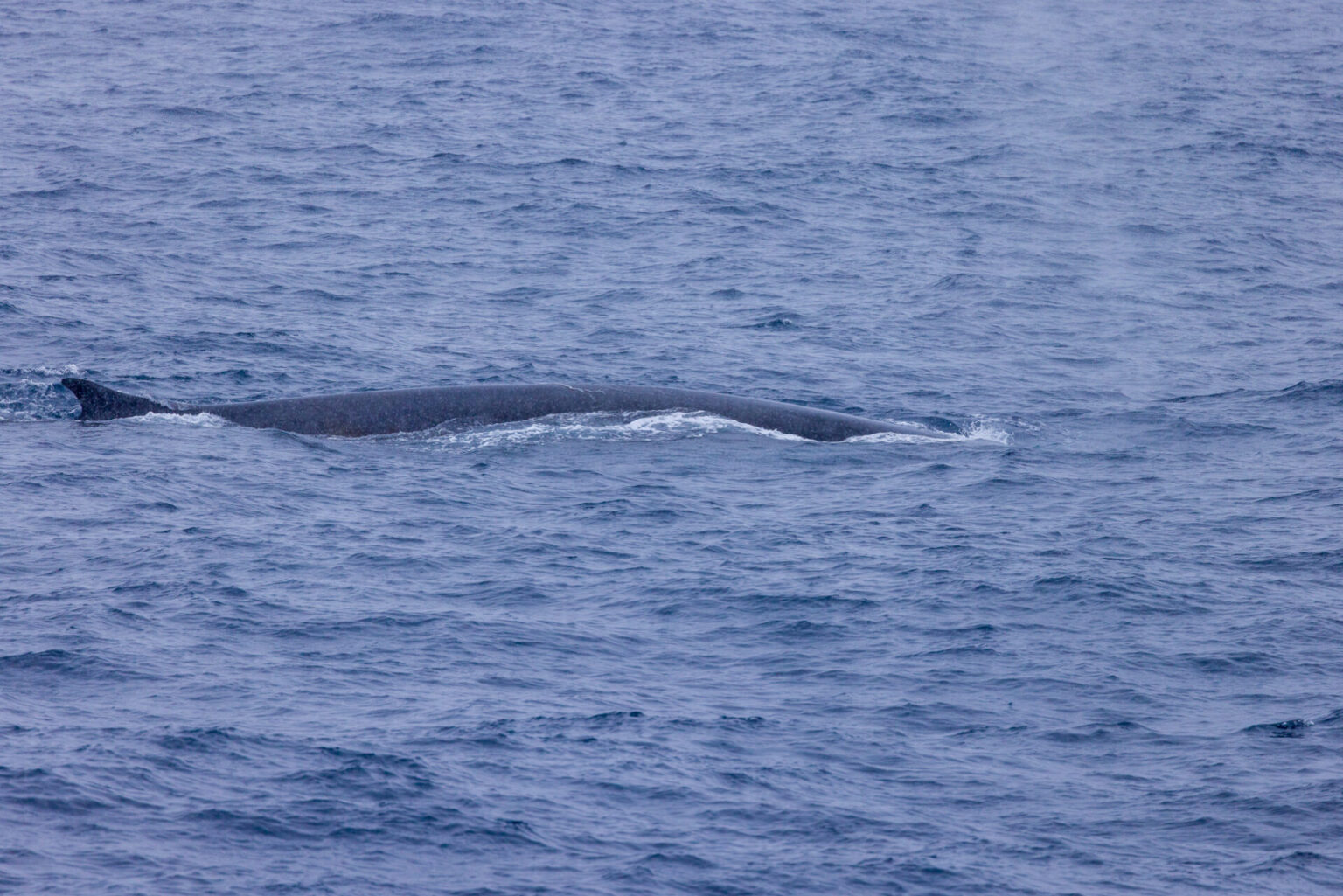
After leaving the pack ice in the Bransfield Strait the previous afternoon, we had spent the night and the following morning sailing to Elephant Island. Along the way, I got my first good look at a Fin Whale. I must say, it was good to see a different species of whale besides Humpback whales.
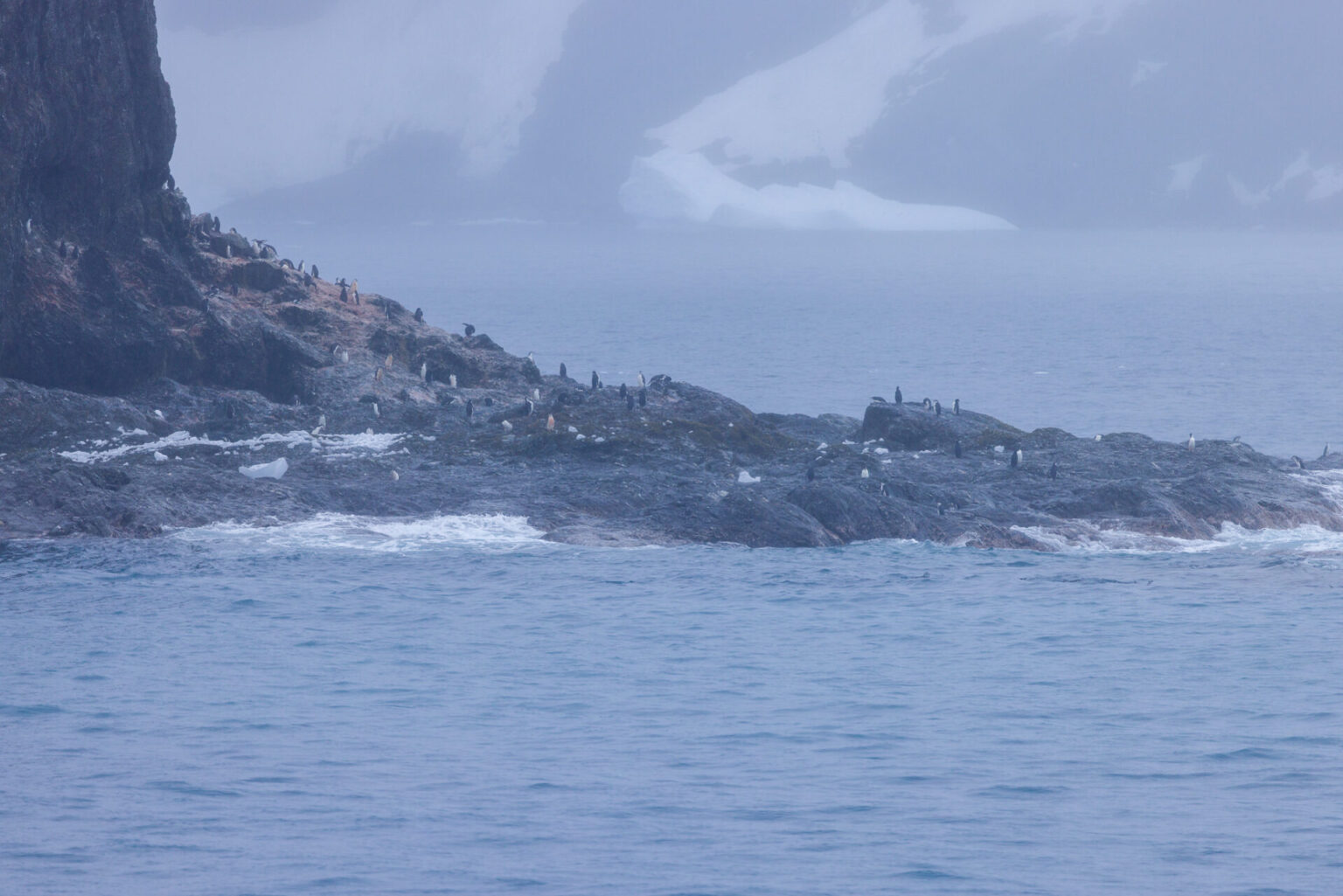
We arrived at the island around noon when our ship dropped anchor. There was a light mist hanging in the air giving it moody look. Through the mist we got our first look at the island and some of its inhabitants.
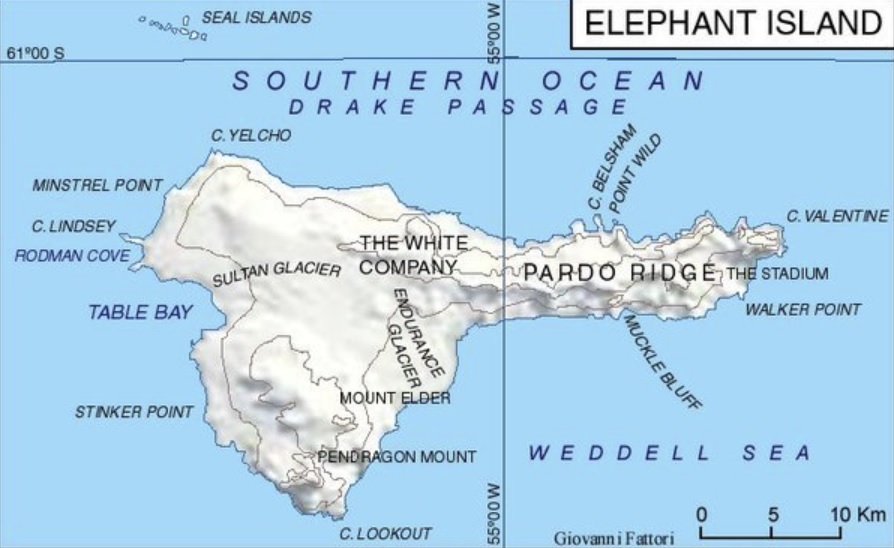
You may have wondered why it is called Elephant Island. This is because the island’s shape looks sort of like the head and trunk of an elephant as is evident in the map below. The map also shows Point Wild, where our ship anchored.
Zodiac Cruise at Point Wild
A couple hours after arriving, we embarked from the ship for a zodiac cruise at Point Wild. The swells were a little too rough to land on the island that day.
Penguin Colony
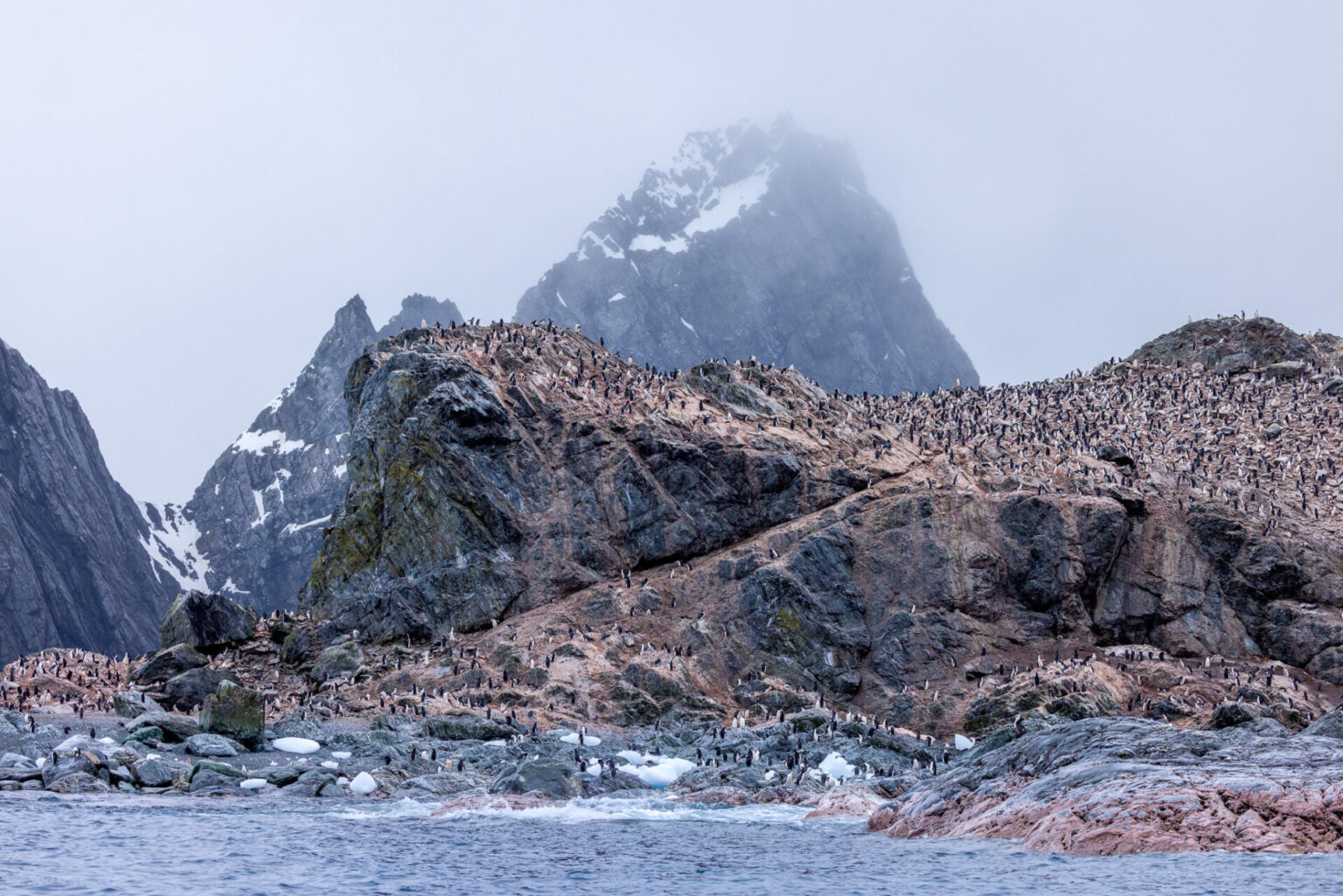
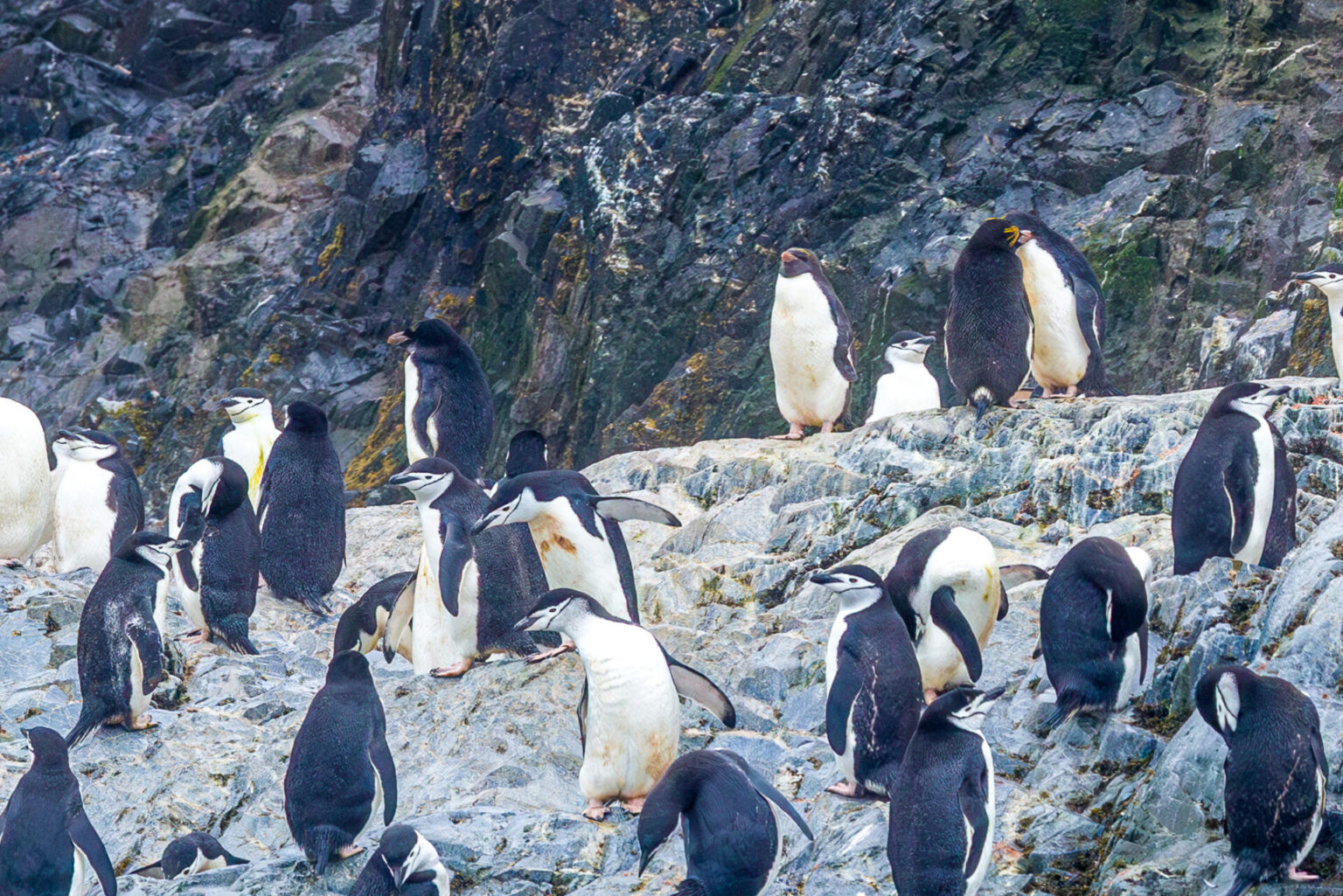
From a distance, you could see many penguins in a colony covering the rock from bottom to top. They were quite numerous at the top. It is kind of amazing how well they can climb.
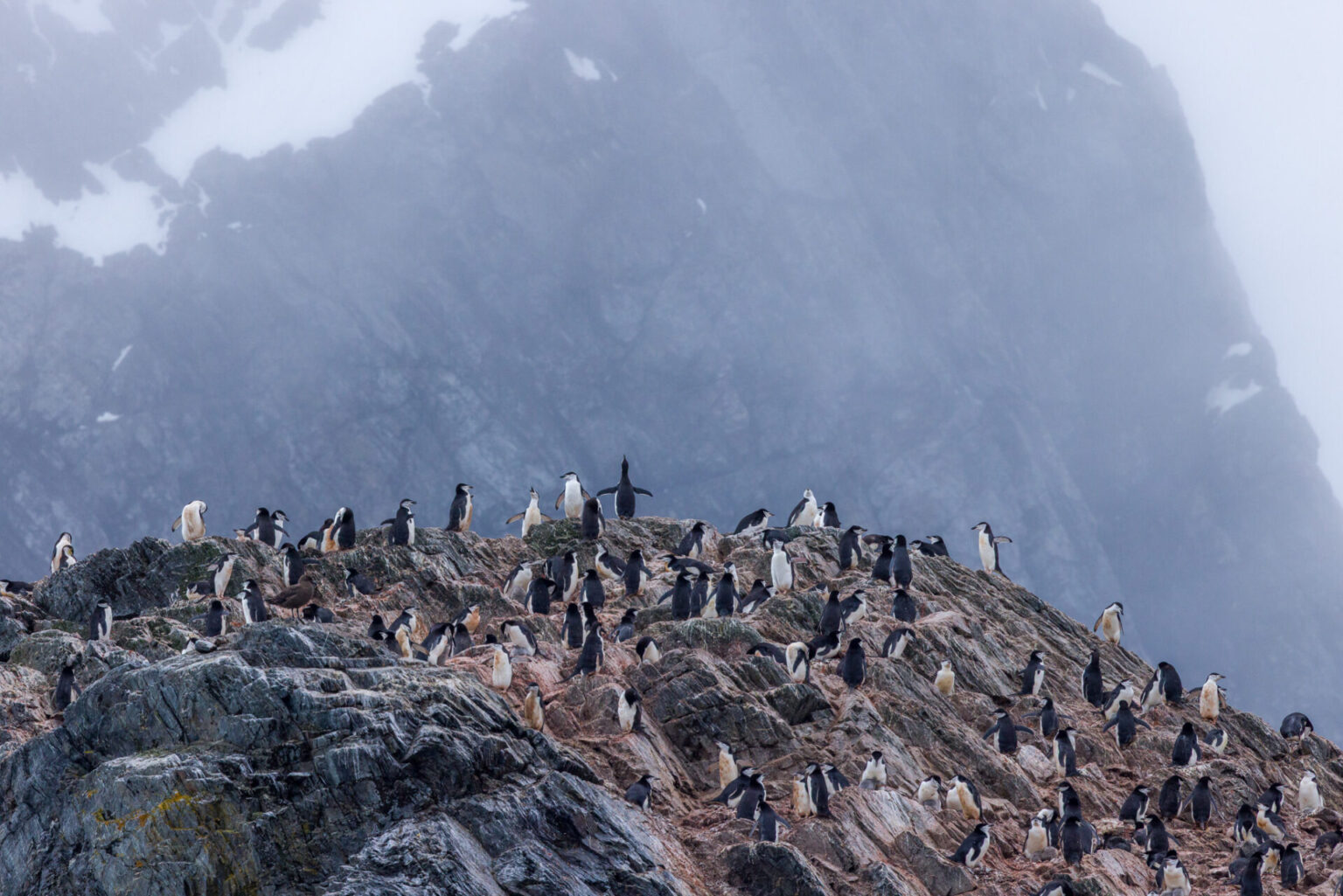
A closeup shot of the highest point on the left of the rock in the above image shows more detail. From this we can identify the colony as a Chinstrap Penguin colony.
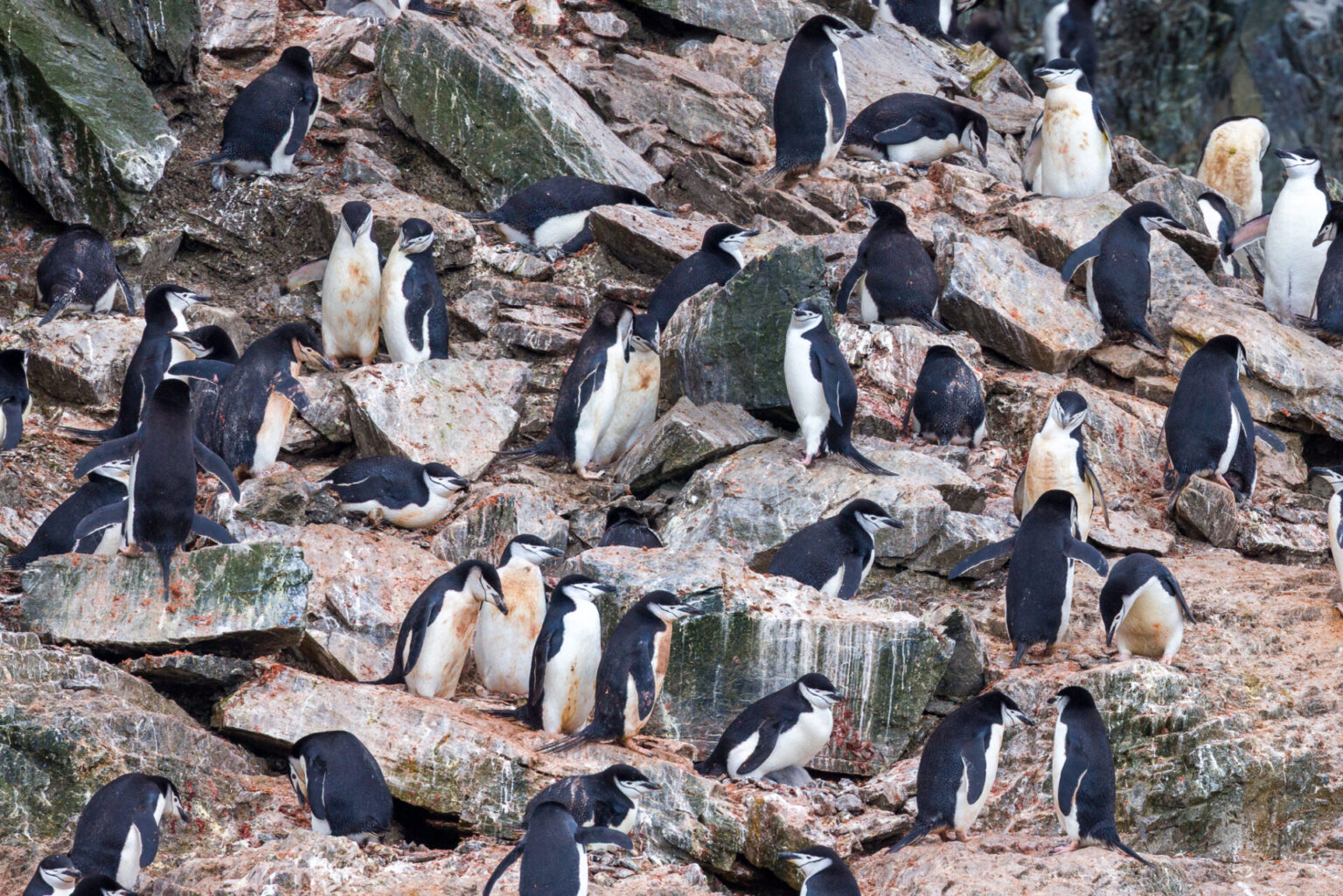
Looking in another direction with an even more closeup view lets us see that these penguins also have chicks. One chick is visible towards the bottom center of the image below, but the posture of others suggests there may be more and that some may be incubating eggs still.
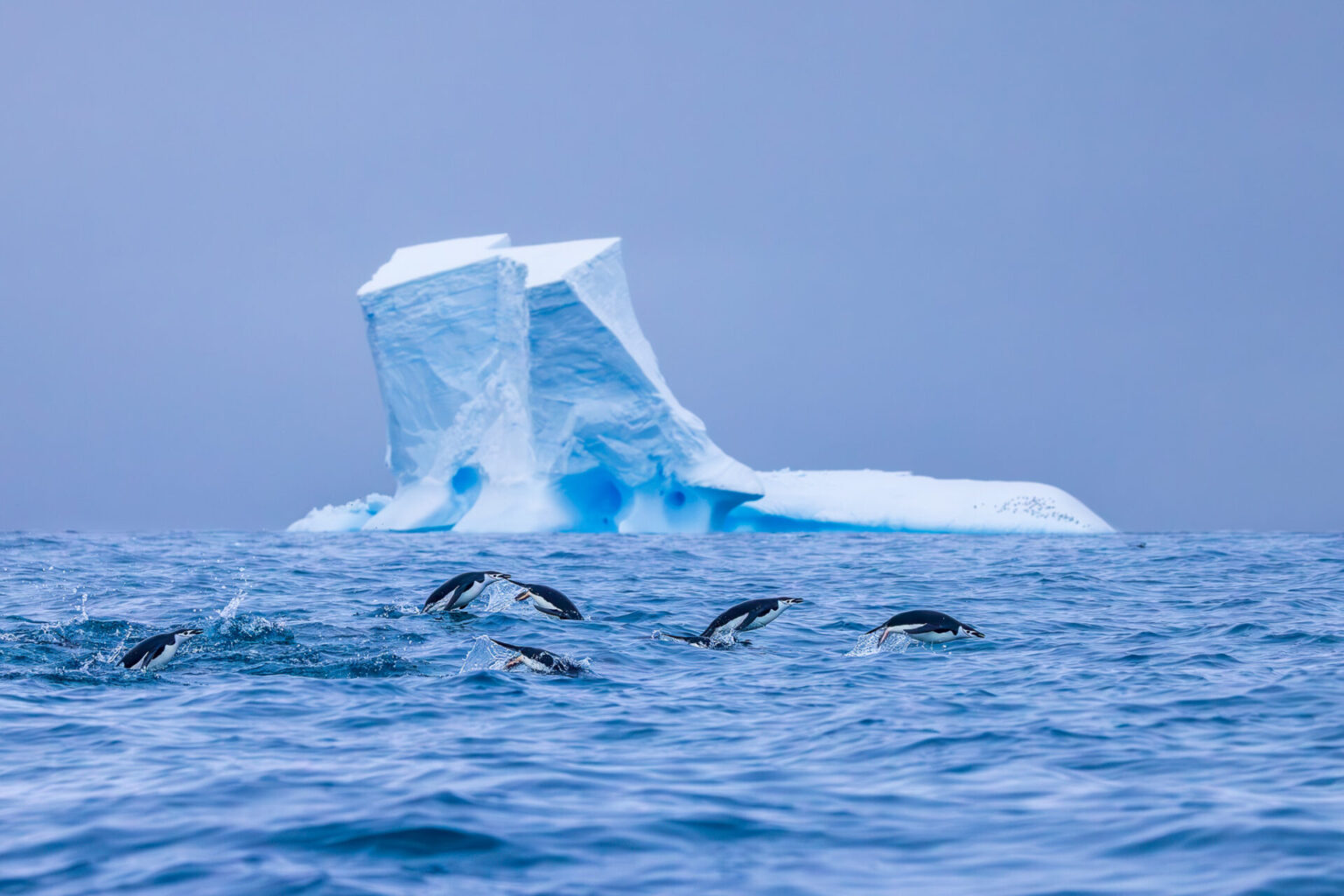
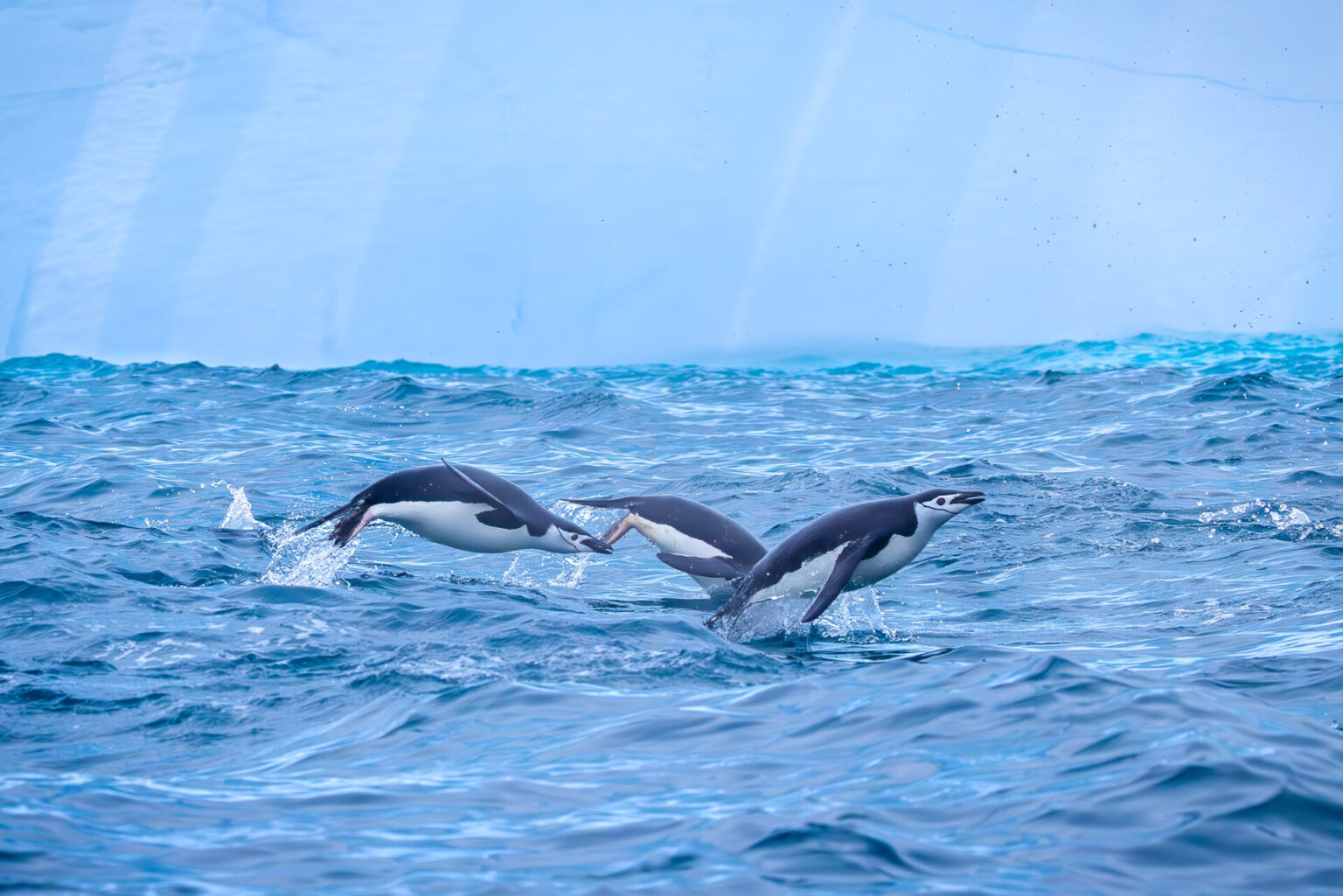
In the water, many Chinstrap penguins were swimming looking for food. They do what is called porpoising when they jump out of the water to breathe. In the photo below, a group of porpoising penguins swim in front of a large iceberg further back in the distance (Click image to purchase).
Antarctic Shags
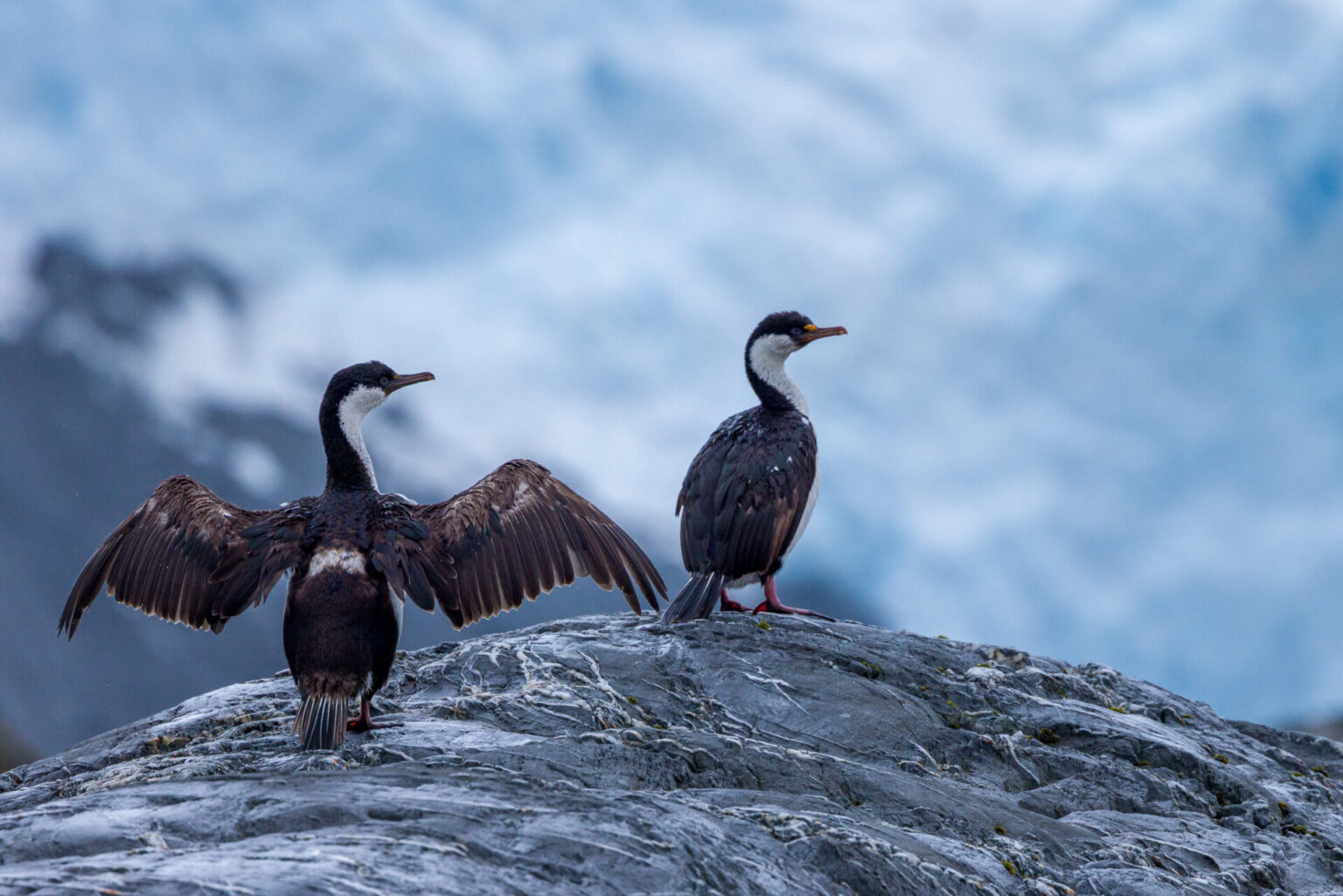
Up on a rock were several Antarctic Shags. Two sit on this rock in the image below, one with its wings stretched out.
Icefall Off the Glacier
Closer to the shore underneath a glacier, the sea was filled with chunks of ice. Except for the squawking sounds from the colony, it was mostly quiet in the ice. But occassionally the silence would be broken with the sounds of ice falling off the glacier.
In the 3-second video below, a stream of small ice chunks can be seen streaming off the glacier. It is also evident in the video how rough the swells were. I shot this as a series of still pictures in the zodiac rocking up and down with my 500 mm zoom. It took some work, but I managed to stabilize the video quite well.
Leopard Seal
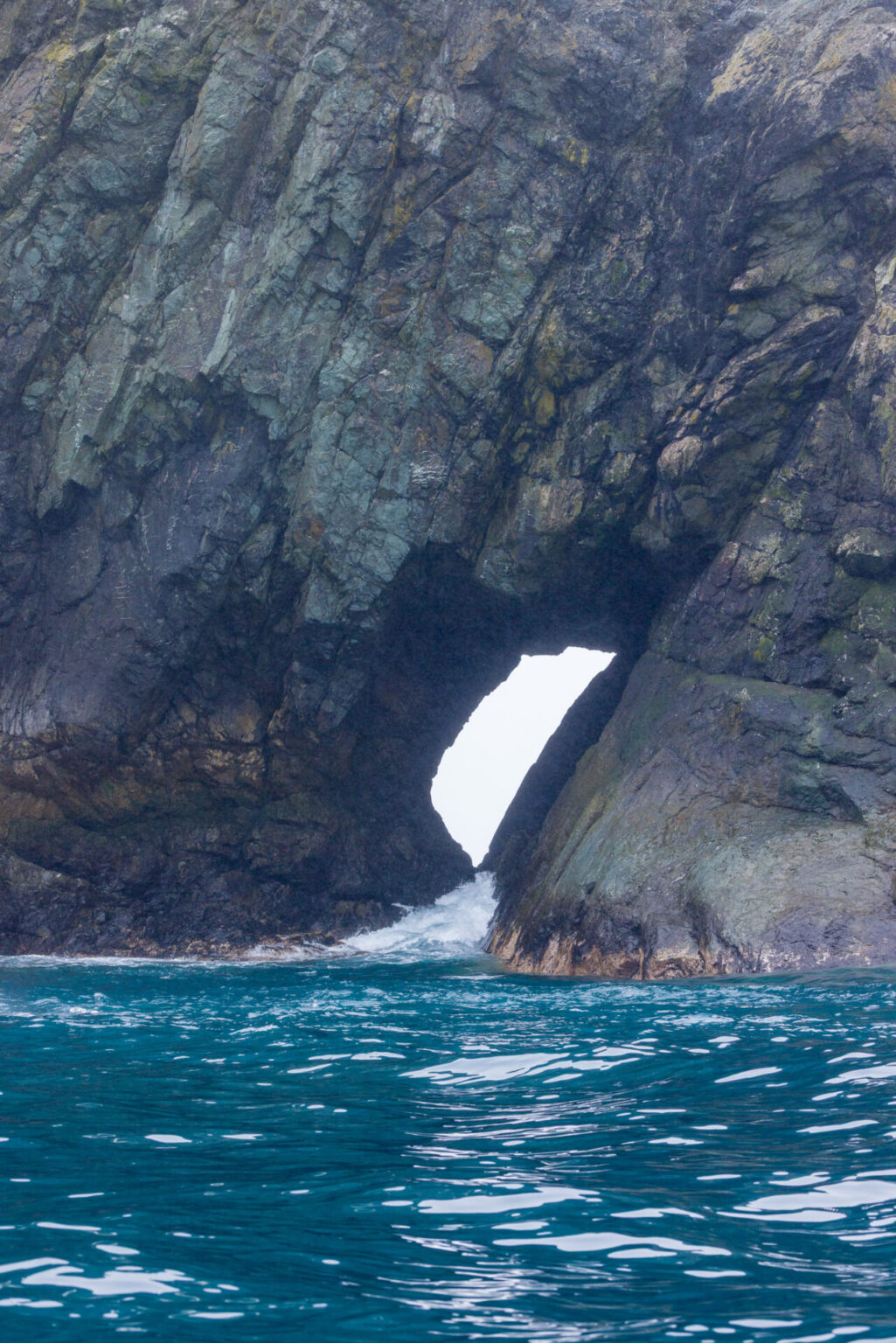
While in the ice, we heard about a Leopard Seal a little distance away at another location of the island. So the zodiac driver zoomed over to where it was. On the way, we passed a large rock wall that had a hole cut through it. I imagine under the right weather and lighting conditions, this could look amazing. Too bad it is not easy to get to.
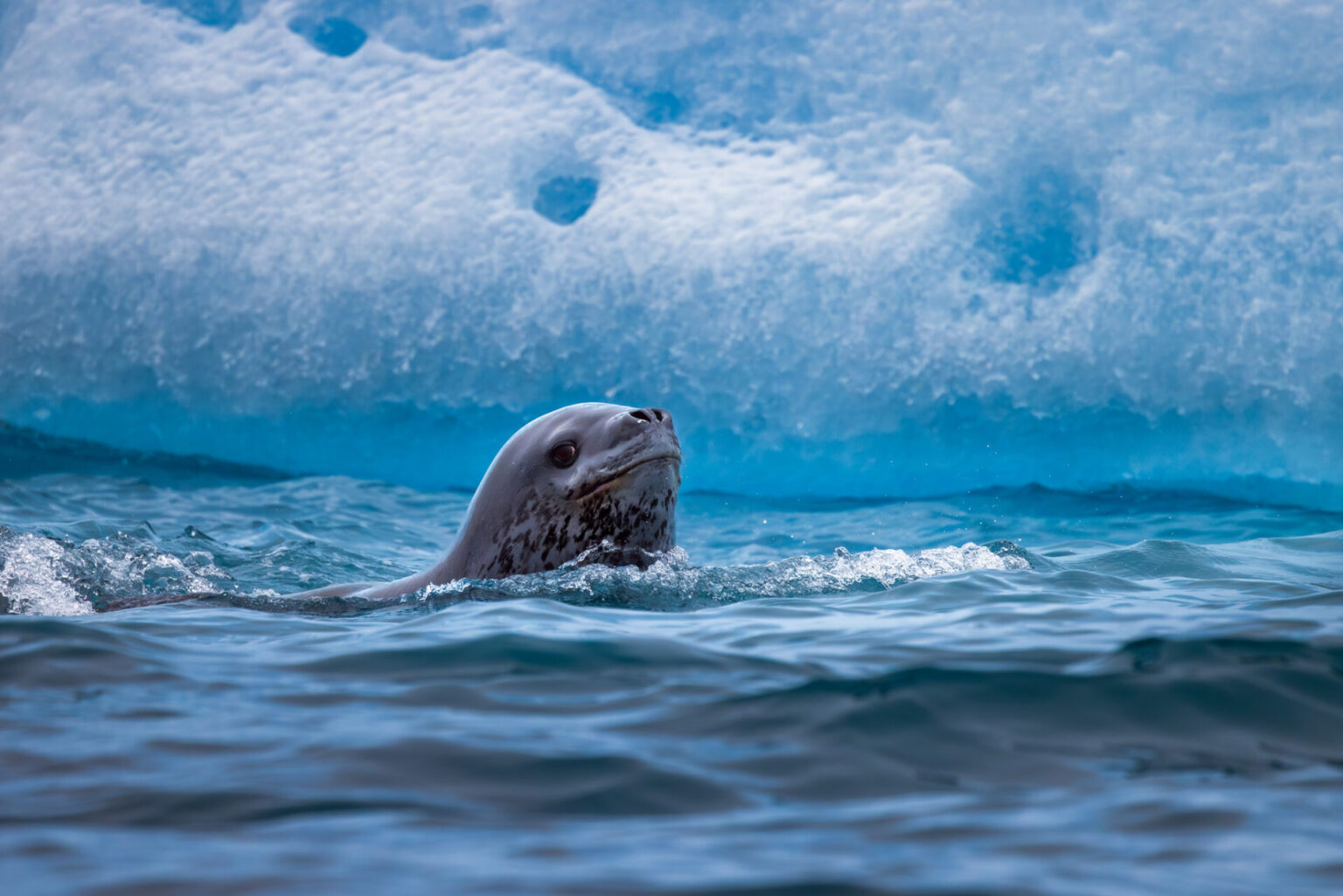
Finally, we got to the Leopard Seal, a powerful predator found in Antarctic waters. Larger females can grow as long as 11 1/2 feet. This was probably a male and therefore a little smaller. He was swimming around a nice looking iceberg. He was mostly underwater, but would occassionally poke his head up to investigate us. He looked so cool by this iceberg and it is the first and only time I have seen a Leopard Seal in its natural environment. (Click image to purchase).
While he swam around us, he also serenaded us. The sound was really quite mesmerizing. It was breeding season when males do make vocalizations to either attract females or to defend his territory. The video below (with one of my still images) includes a sound recording of his serenade made by one of the other passengers. Unfortunately, I didn’t get the name of the person who recorded it, so I can’t give them an attribution. Hopefully one day I can rectify this.
Macaroni Penguins
As I mentioned, this was a Chinstrap penguin colony, but there were just a few individuals of another species of penguin hanging out with them. These were Macaroni penguins, the first time we would encounter them. I didn’t even know they were there until I looked through all my photos in detail after returning home. You can see four Macaroni penguins in the photo below up along the top of the ridge.
Finally, it was time to get back to the ship when another few porpoising penguins swam between the zodiac and an iceberg. Thanks penguins, for one more nice shot.
Goodbye Antarctica, South Georgia Here We Come
That was the last we would see of Antarctica on this voyage. But what a wonderful way to end it. The ship was now enroute to South Georgia, following the route Shackleton and five of his men had taken on his 720 nautical mile harrowing voyage across the Drake Passage.
Thinking back on what we had learned about Shackleton’s crossing made me realize what an amazing difference 100 years makes. His journey was in a tiny wooden lifeboat powered by the wind in terrible weather, rough seas with huge waves, only enough food to keep them alive, and just a sextant to navigate with if they could even see the sky.
Whereas our voyage more than 100 years later, powered by huge diesel engines, had great weather, calm seas, plenty of wonderful food, and modern GPS technology to navigate by. It is humbling to realize how strong and tough that crew was.
Iceberg B-15AB
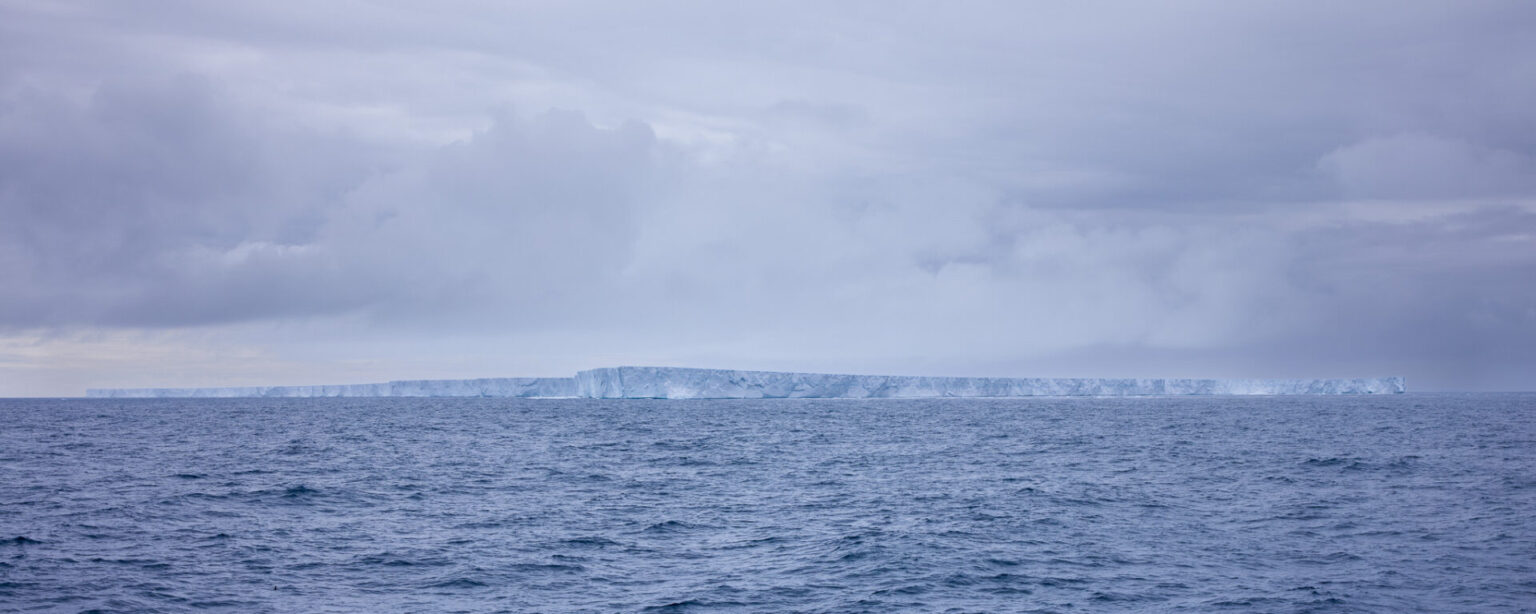
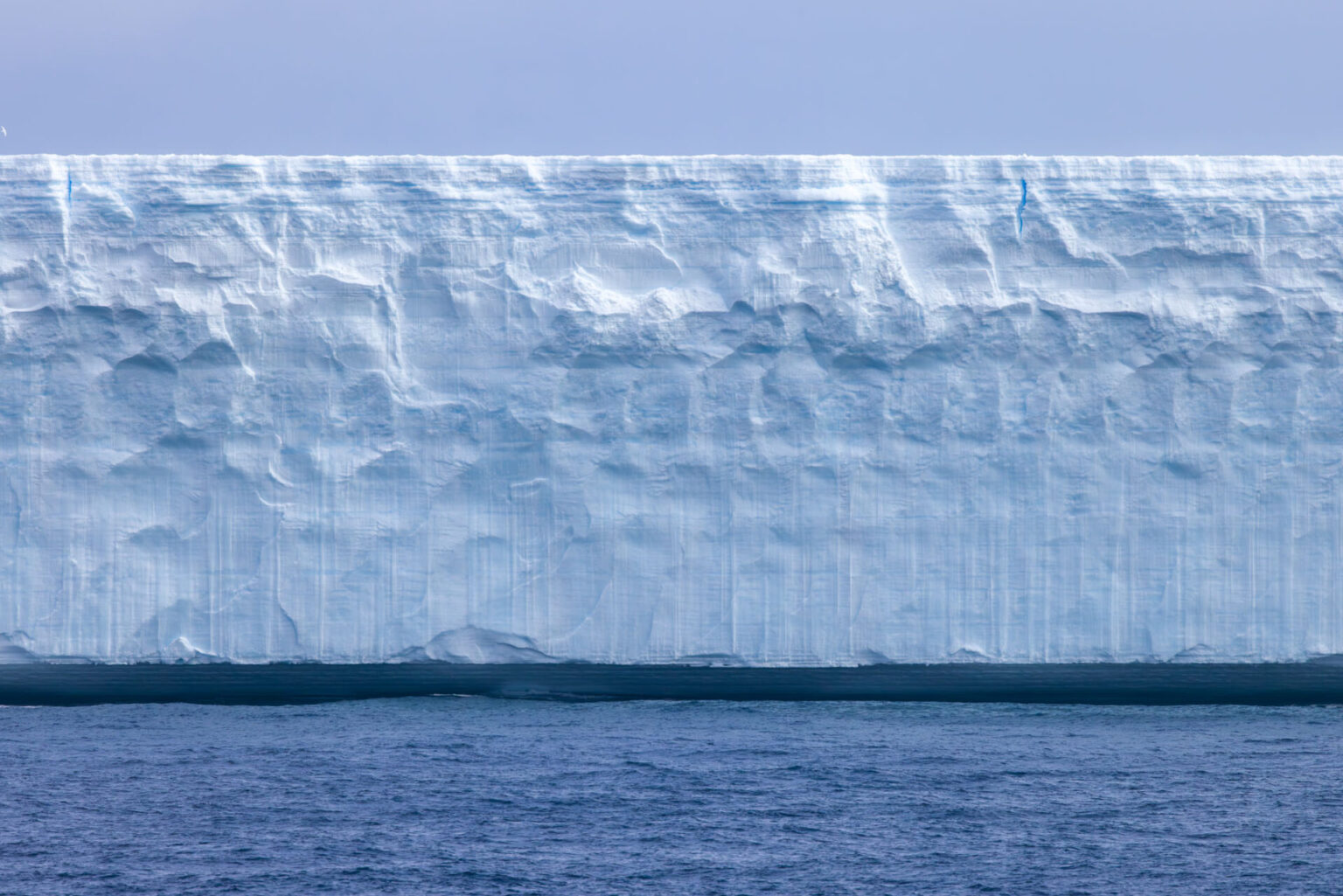
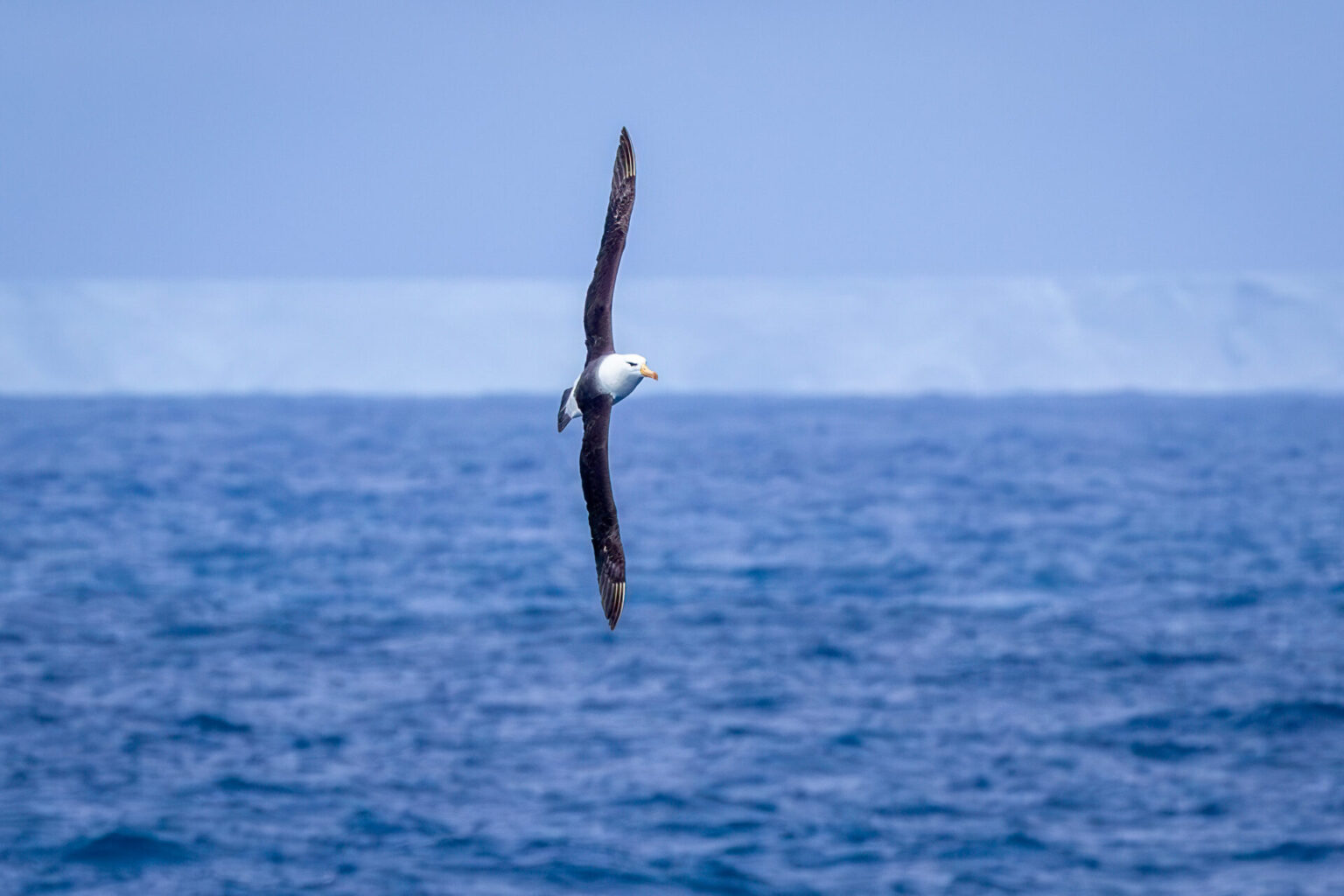
I’ll leave you with one fascinating thing we saw in the Drake Passage on the way to South Georgia. On the second morning we woke early to see an immense iceberg designated as B-15AB. It was not by accident, however. Because it is so big, NASA actually tracks this iceberg and other large ones like it as they break off from the Antarctic icesheet and travel through the southern ocean.
This iceberg B-15AB, 20 km long by 7 km wide (~70 square km) and hundreds of feet high, is just a small piece of what used to be B-15 which originally broke off from the Ross Iceshelf in the year 2000. B-15 was (and remains) the largest iceberg ever observed measuring ~11,000 square km.
Over time, B-15 fragmented into many smaller chunks, the largest of which was B-15A. Then B-15A catastrophically broke into nine pieces, the largest of which is B-15AB. B-15AB is now the only remaining chunk large enough to continue tracking. After an iceberg drops below 10 km on its longest side, NASA no longer tracks it.
Thanks for reading, and catch you next time in South Georgia.


Leave a reply