We left Stanley the night before, and by morning the ship was approaching New Island — a place that felt instantly wilder and more remote than anything we saw at Stanley. The Falklands can shift quickly between human and wild landscapes, and New Island sits firmly on the wild end of that spectrum. As we rounded the southern route toward the western edge of the archipelago, the coastline rose into view: rugged, windswept, and full of bird life.
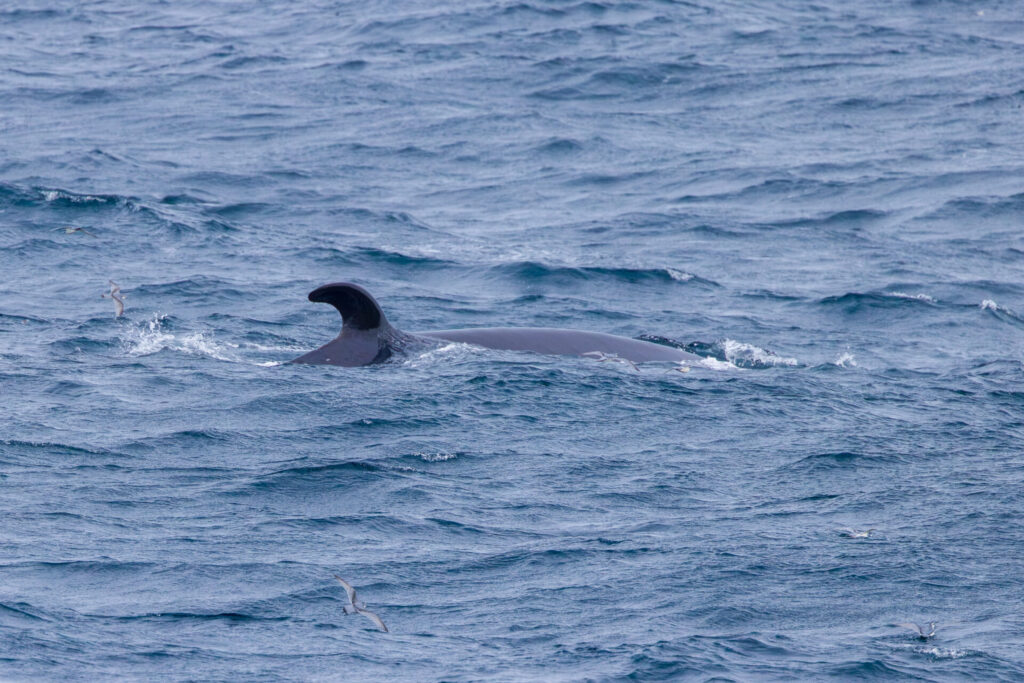
Just before landing, a tall, dark shape surfaced near the ship — a Sei Whale. It was the only one I saw on the entire voyage, and strangely, it never appeared on the official wildlife list for the day. Perhaps I was the only one looking in the right direction at the right moment.
Sei Whale in the Falklands
We landed at North Harbour and crossed a stretch of white sand toward the trail that climbs to Sabina Point.
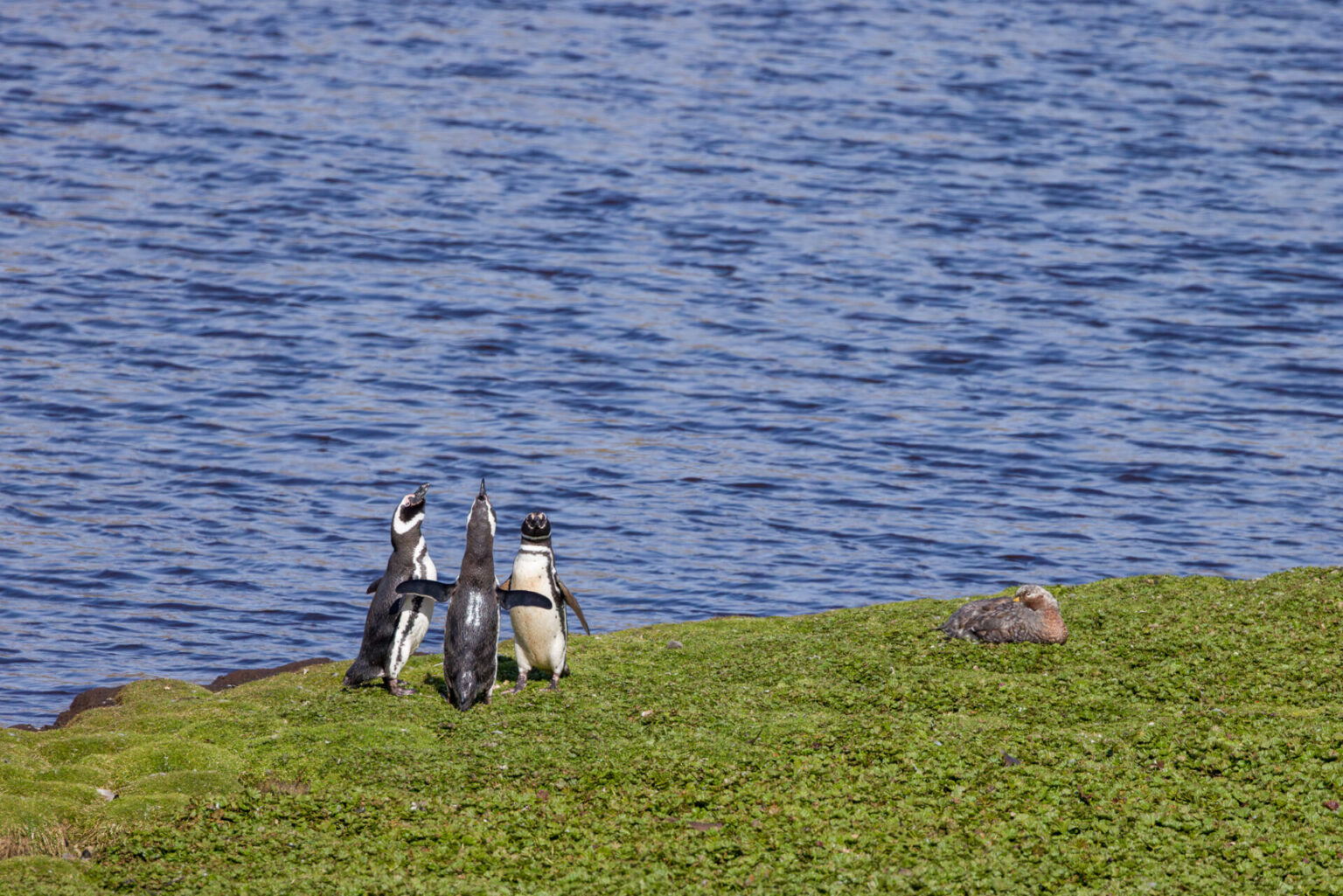
Almost immediately, a trio of Magellanic Penguins greeted us, standing together as if deep in conversation.
Magellanic Penguin Trio
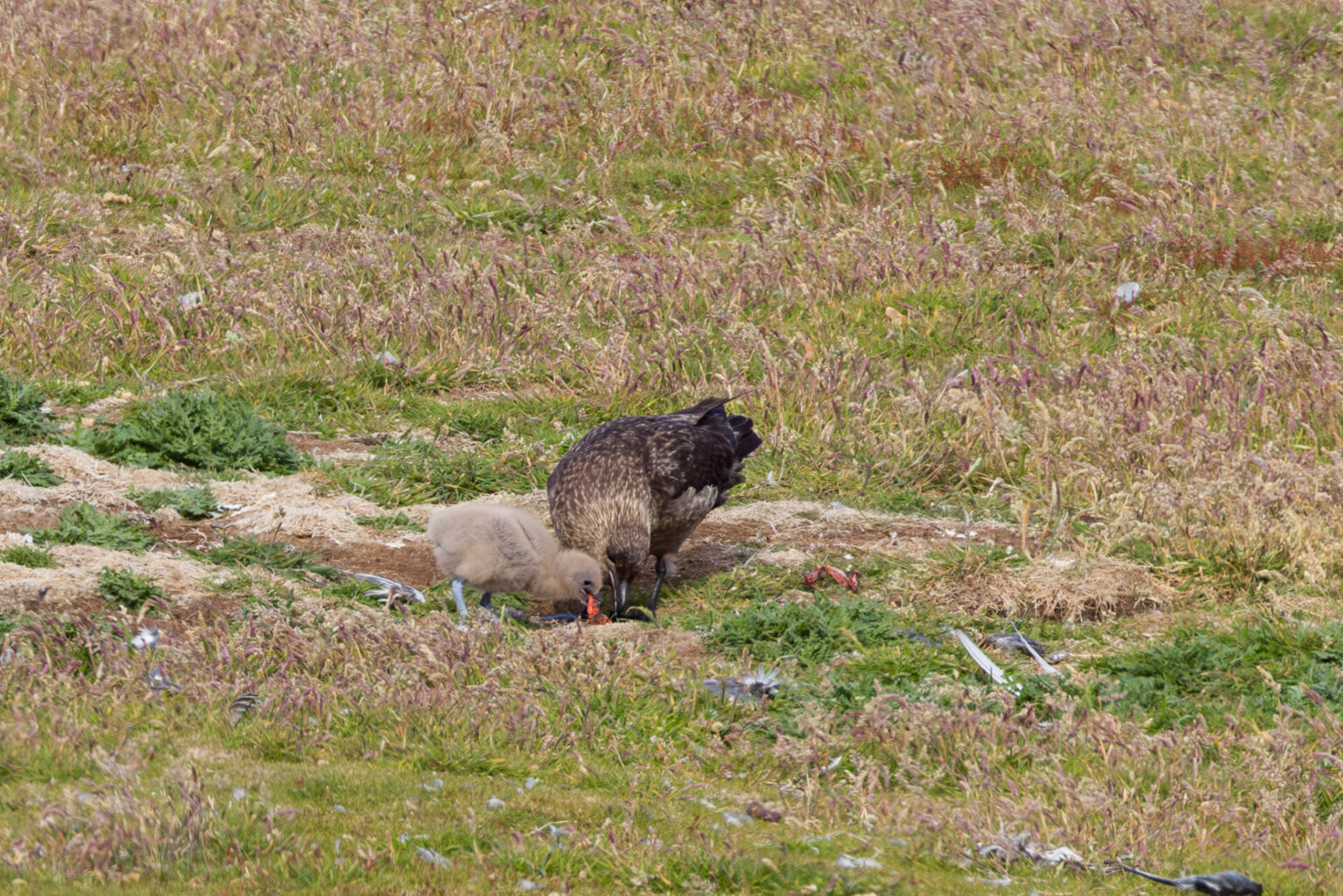
A little farther up, a Brown Skua and its chick were busy tearing into something unidentifiable, the chick gulping down pieces with enthusiastic determination.
Brown Skua and Chick Eating
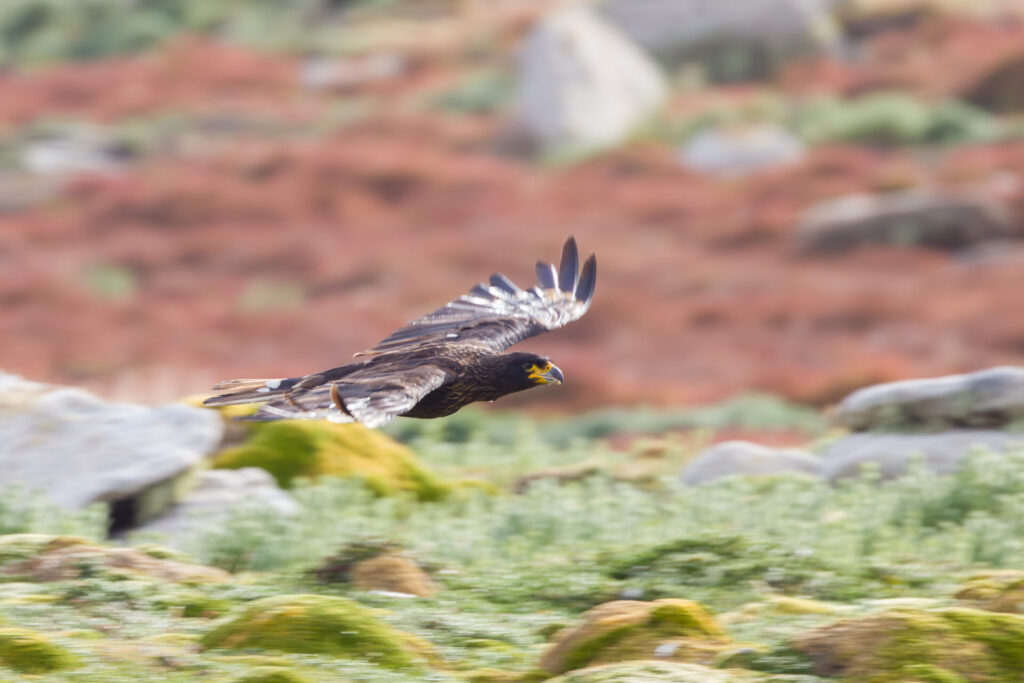
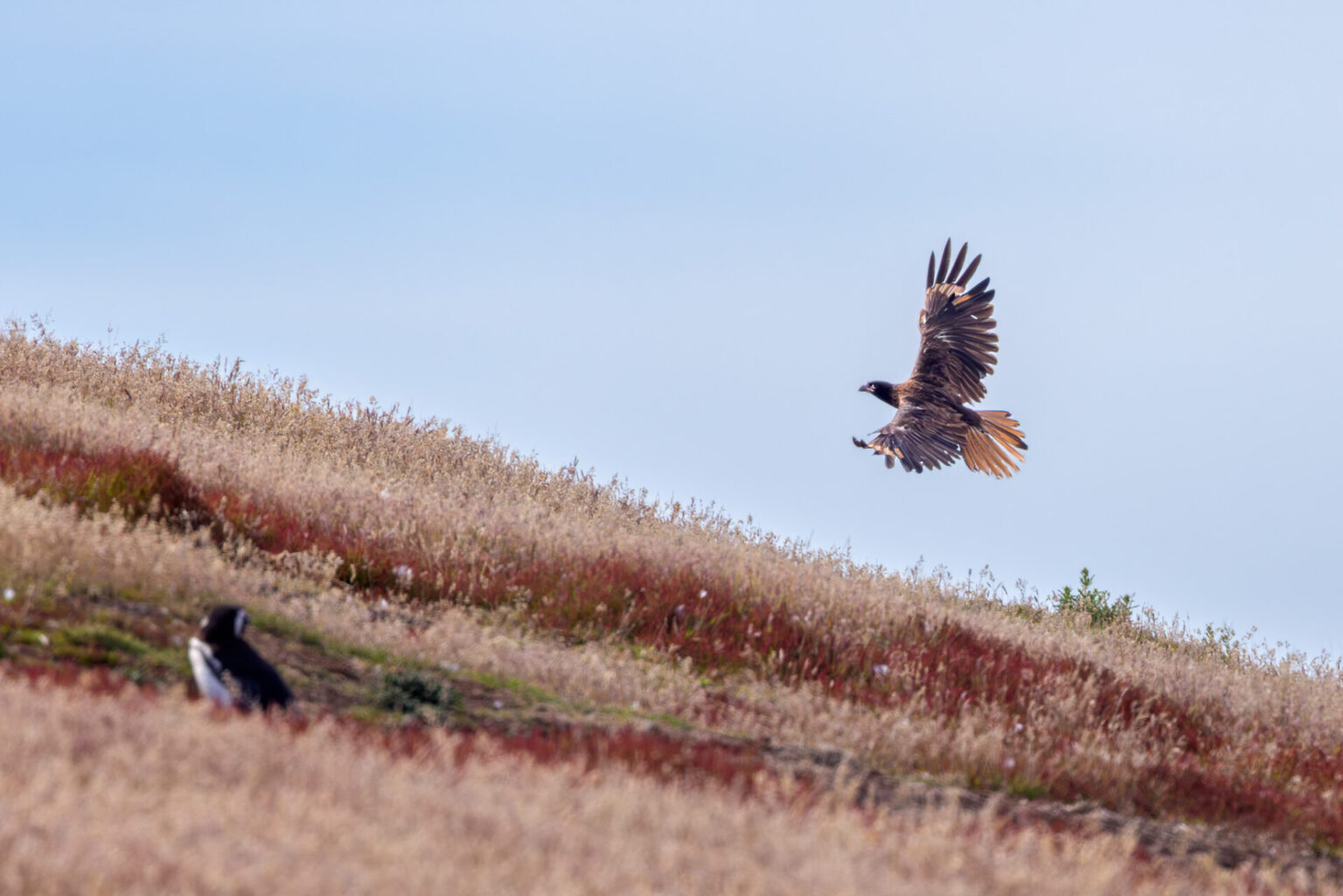
Then a sudden shadow swept across the ground — fast, low, and silent. A Striated Caracara.
Striated Caracara Flying Low
It circled the area with the unmistakable confidence of a predator, and even the penguins watched it with wary eyes.
Striated Caracara Flying Over Magellanic Penguin
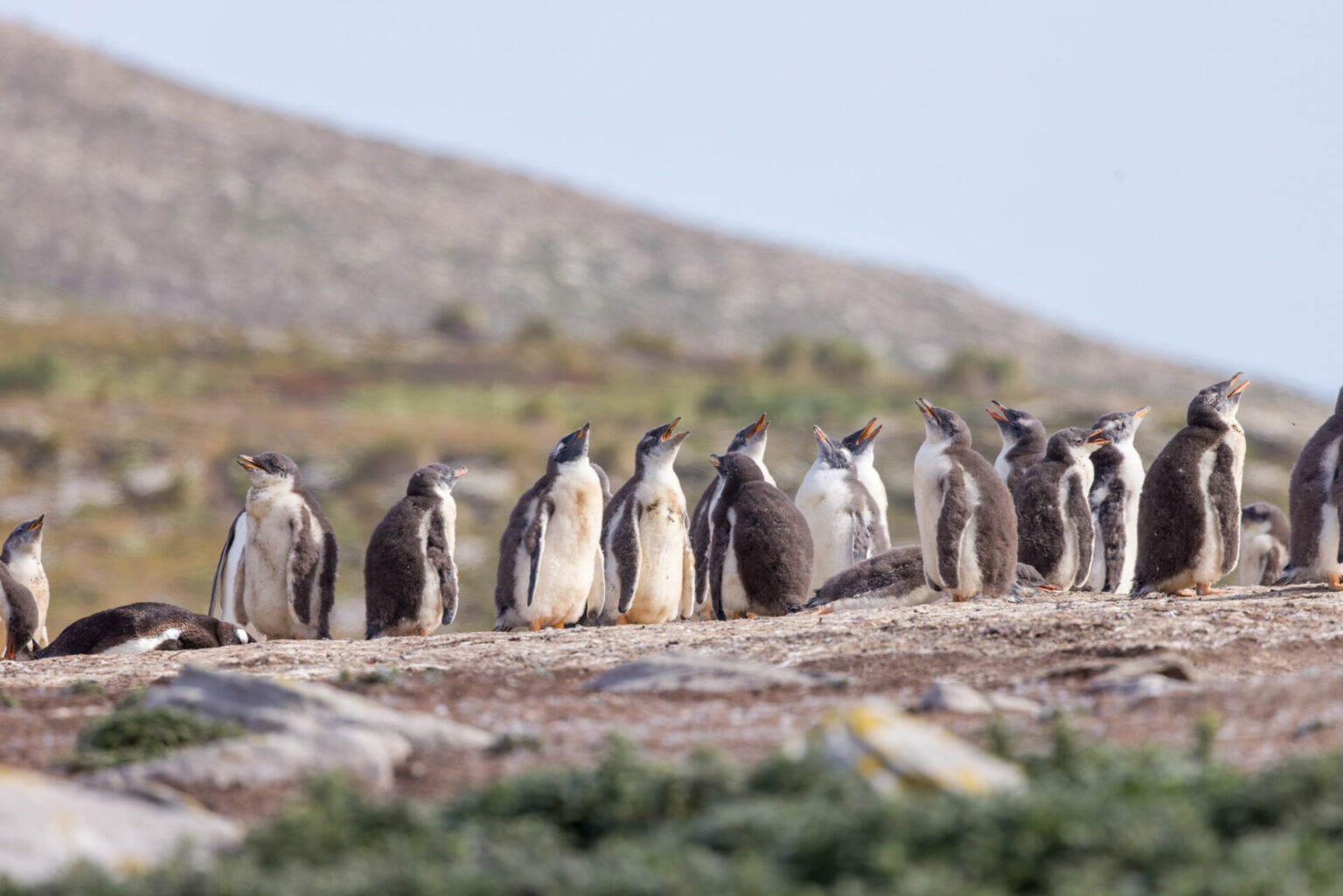
As we continued uphill, we reached a crèche of Gentoo chicks beside a small colony. These youngsters were far older than the tiny newborns we’d seen in Antarctica, fluffy and curious.
Crèche of Young Gentoo Penguins
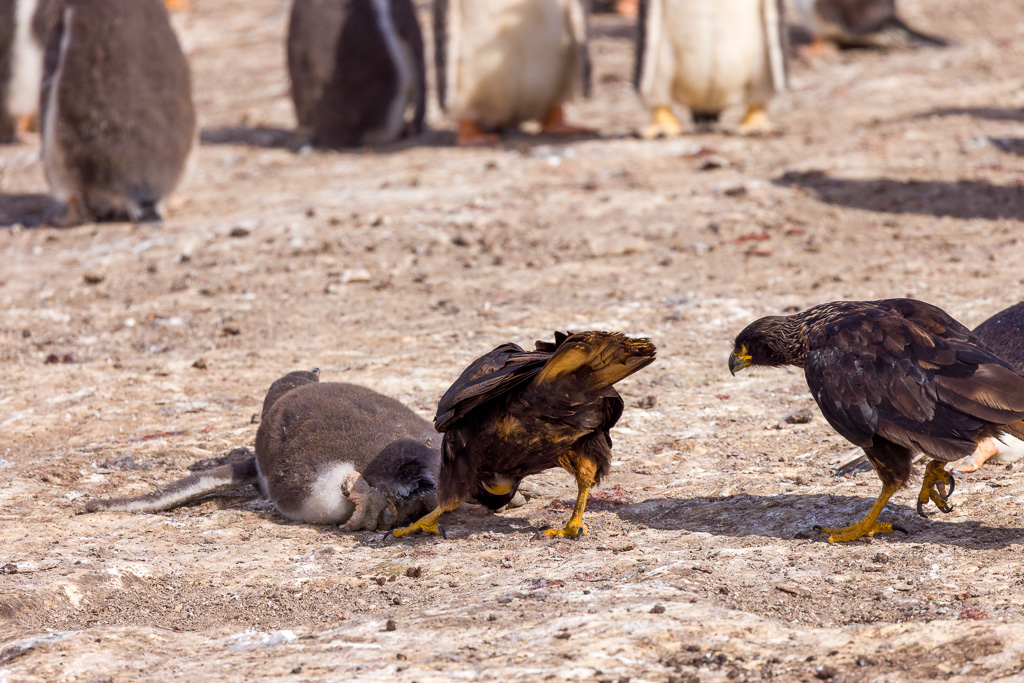
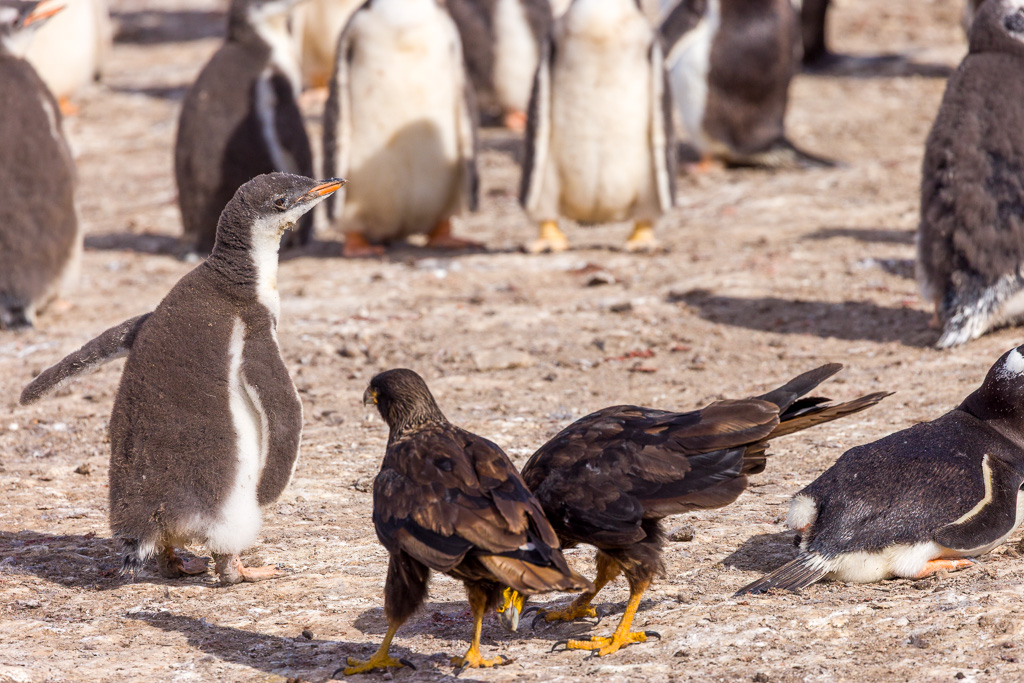
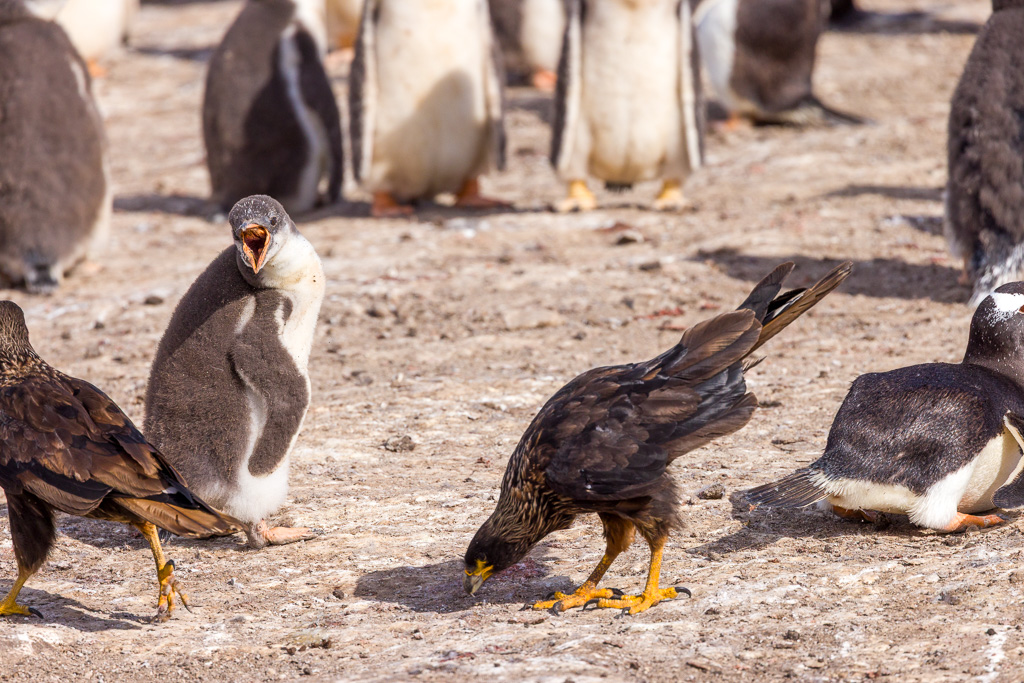
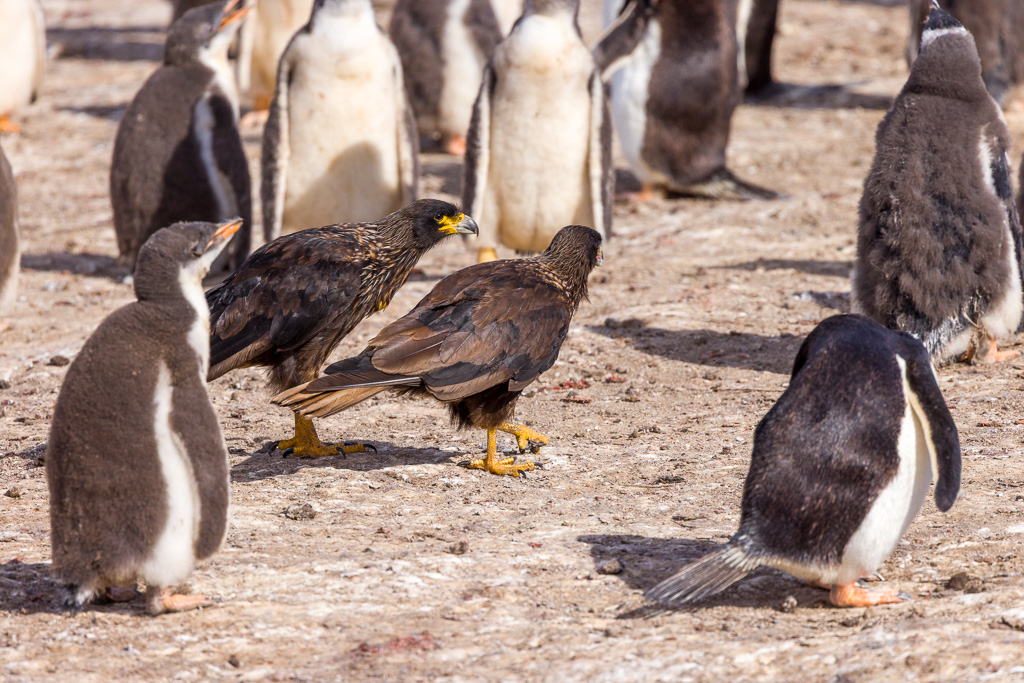
The Caracaras weren’t done with us yet. A pair strutted boldly into the colony, eyeing a resting chick. One lunged, but the chick sprang up and chased them off with surprising authority.
Striated Caracara Bites Penguin Chick
Penguin Chick Gets Up
Penguin Chick Tells Them to Go Away
They Go Away
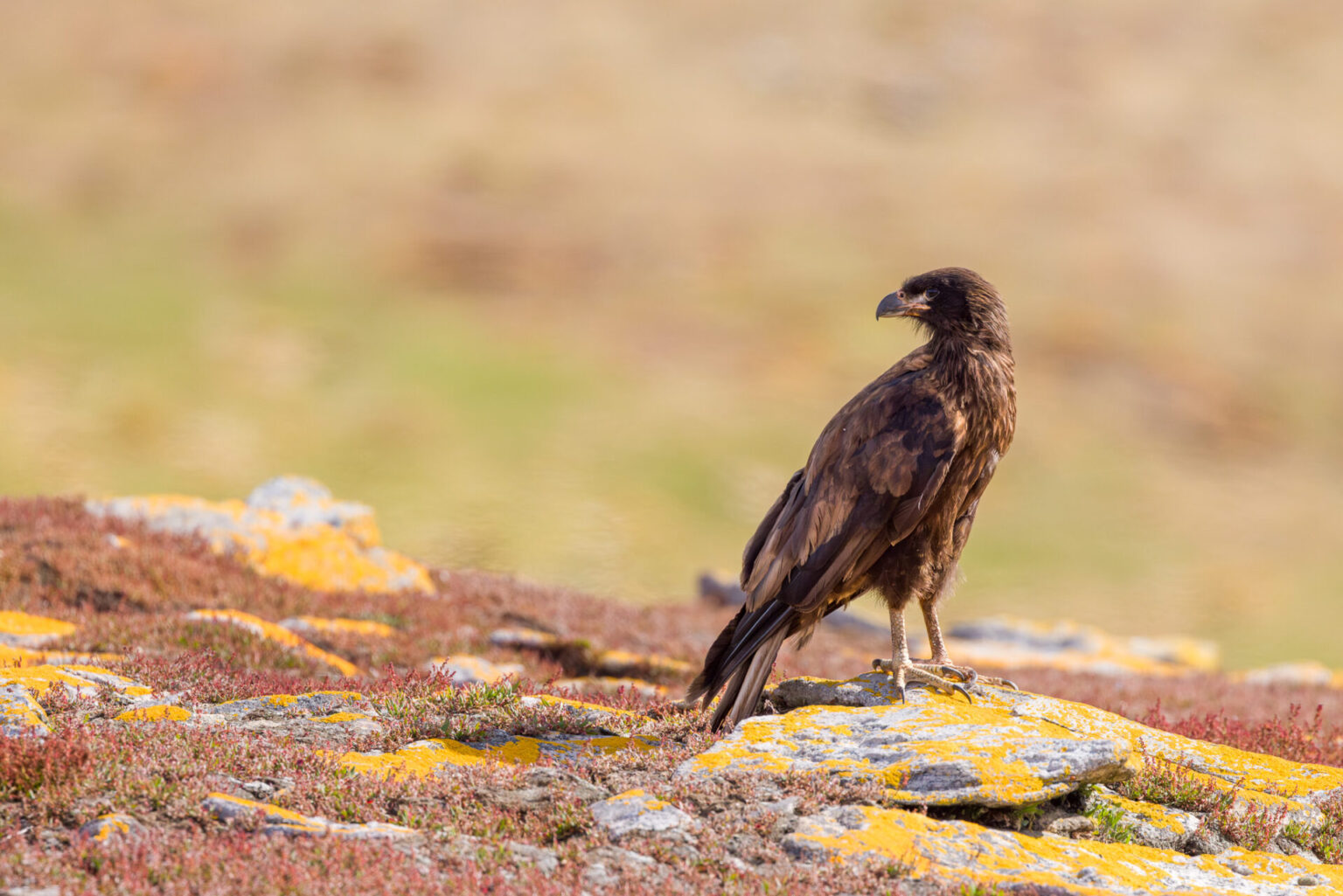
Elegant as they are, Caracaras clearly make themselves unwelcome guests.
Striated Caracara
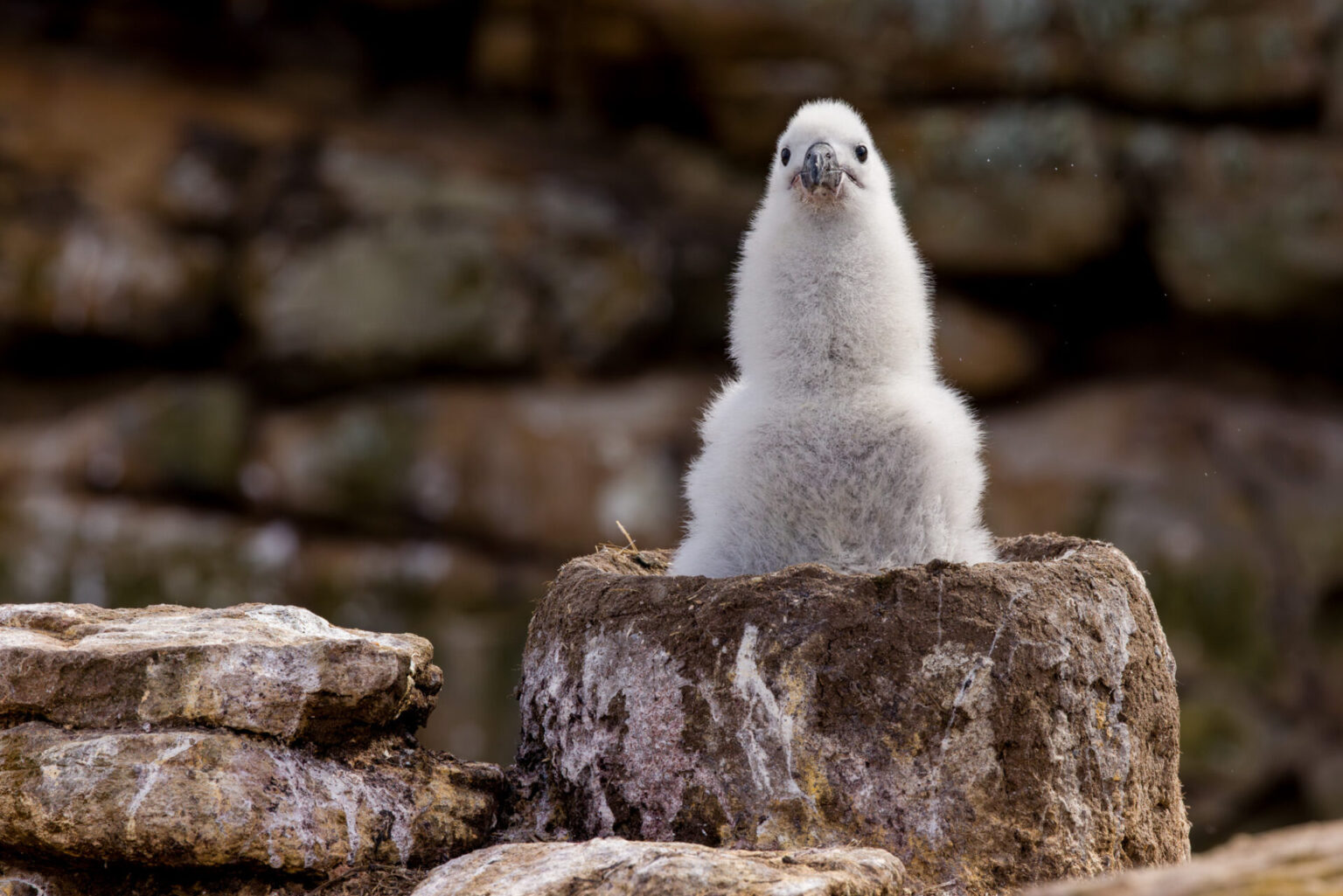
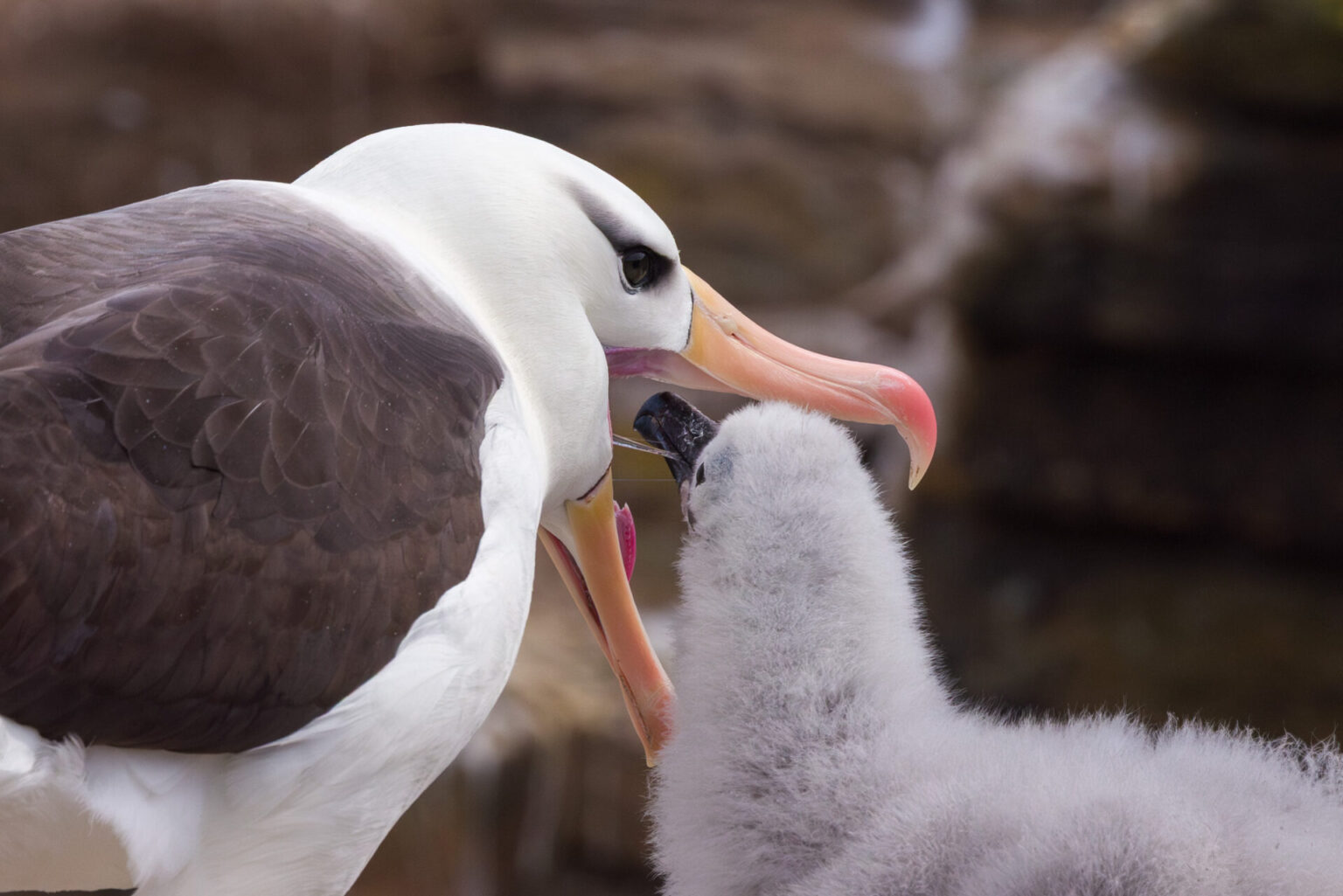
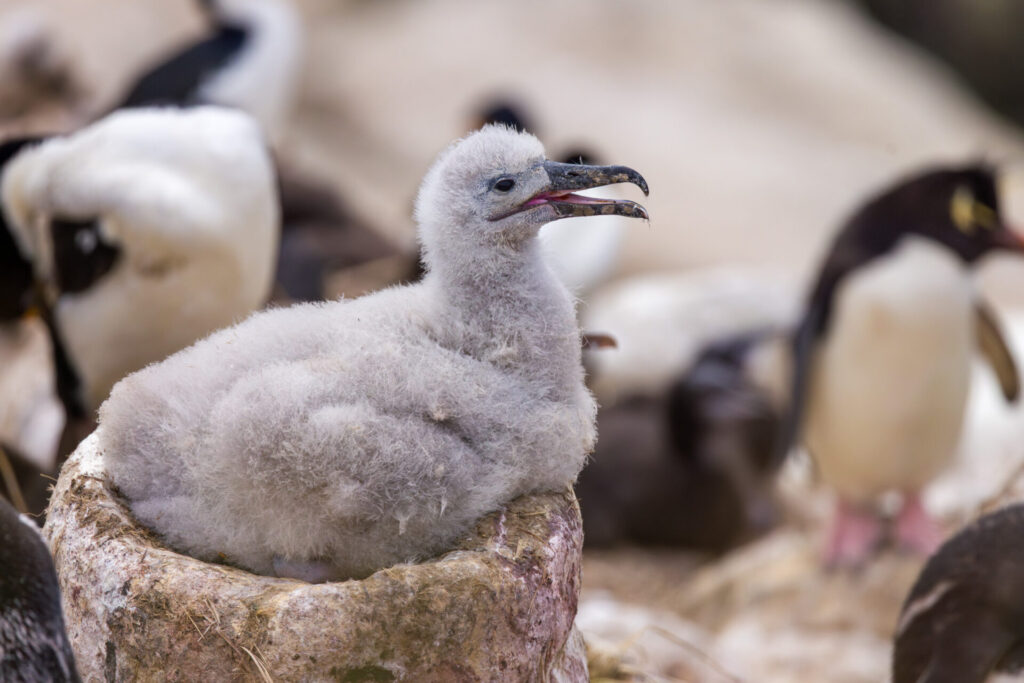
Higher up the trail, the landscape opened into one of the most remarkable nesting sites of the voyage. Black‑browed Albatross chicks sat in tall, barrel‑shaped mud nests, their heads poking above the rims as parents fed them. The air was filled with calls — a constant, raucous chorus.
Black-browed Albatross Chick in Nest
Black-browed Albatross Feeding Chick
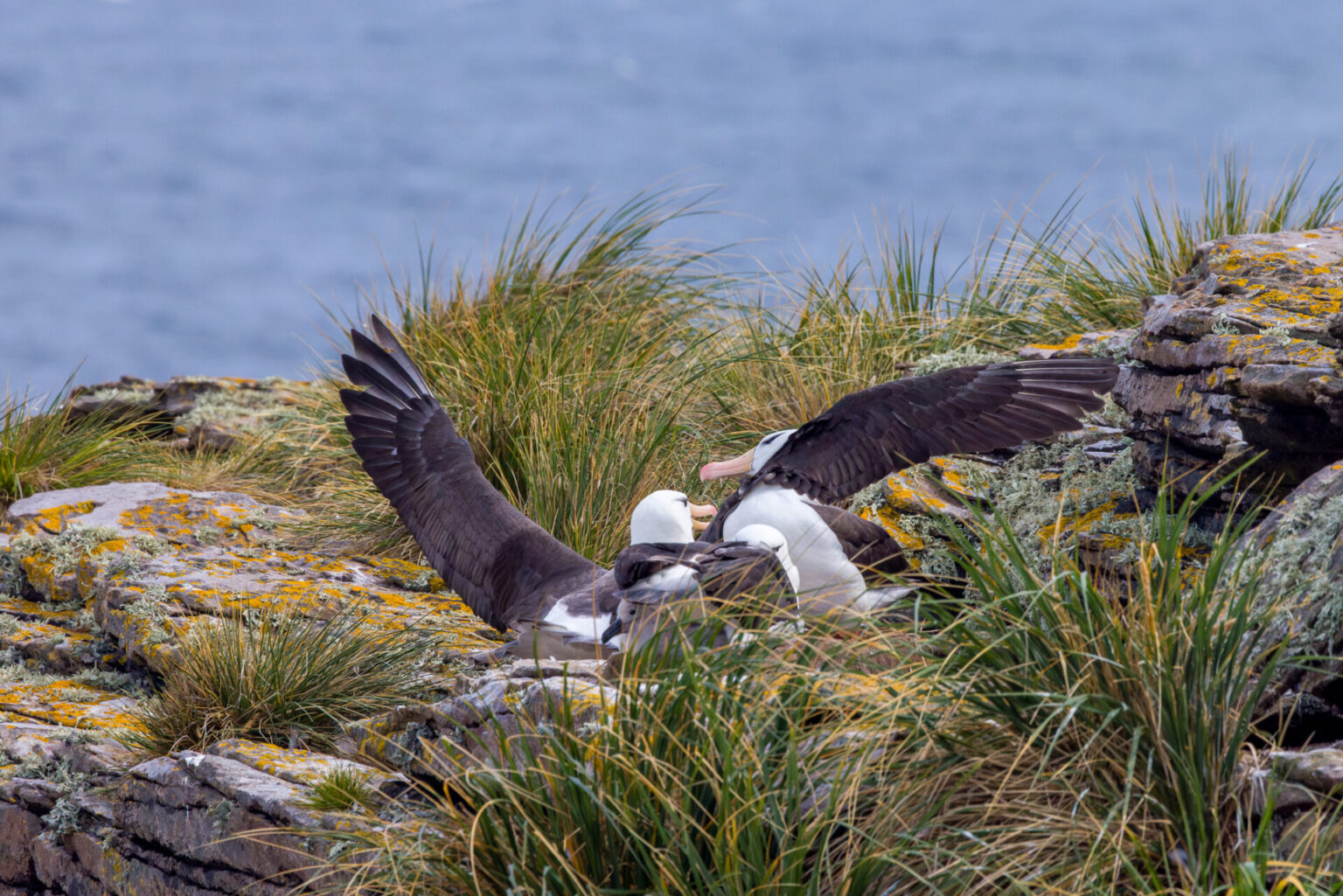
At one point, two adult Albatrosses began flailing their wings and squawking behind a parent shielding its chick. I couldn’t tell if it was a territorial dispute or something more romantic, but it was dramatic either way.
Black-browed Albatross Pair Interacting
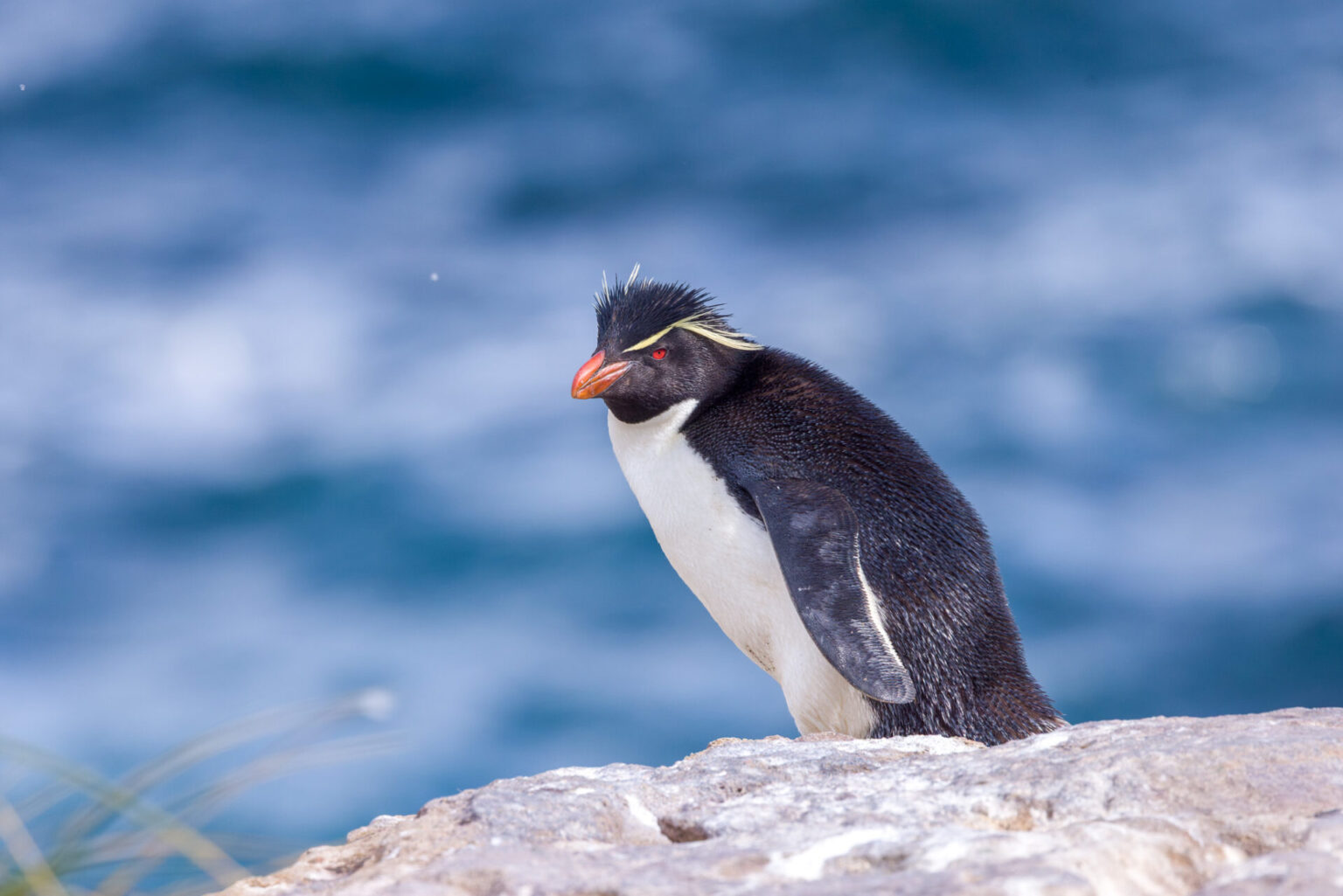
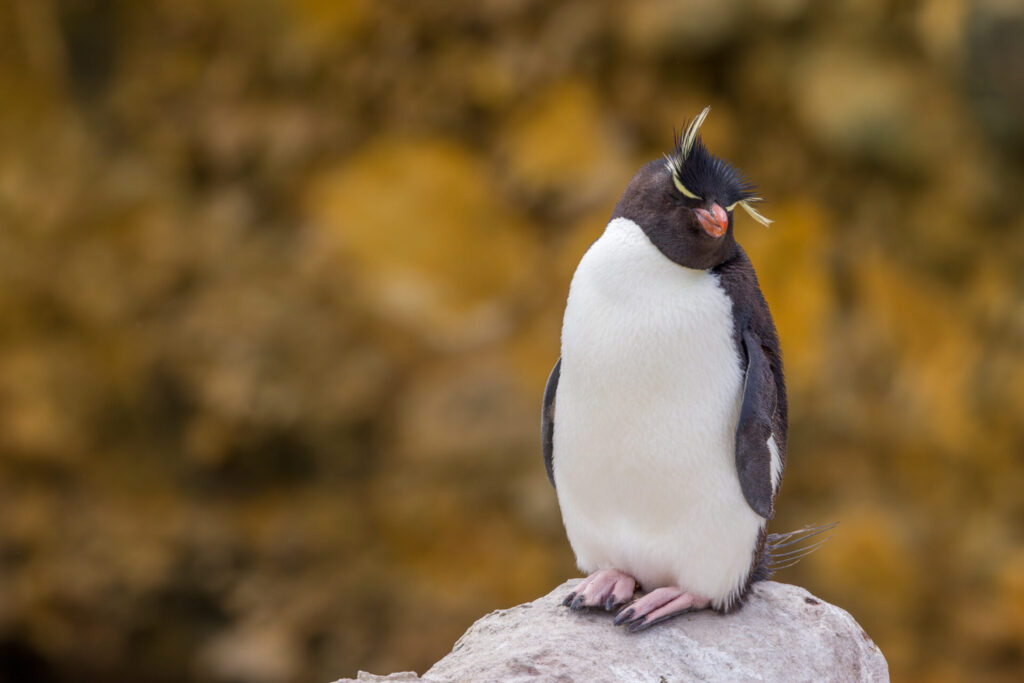
Mixed among the albatrosses were Rockhopper Penguins, the seventh and final penguin species of the voyage. Seeing them perched high on the cliffs with the deep blue ocean behind them looked dramatic and felt like a perfect finale.
Rockhopper Penguin
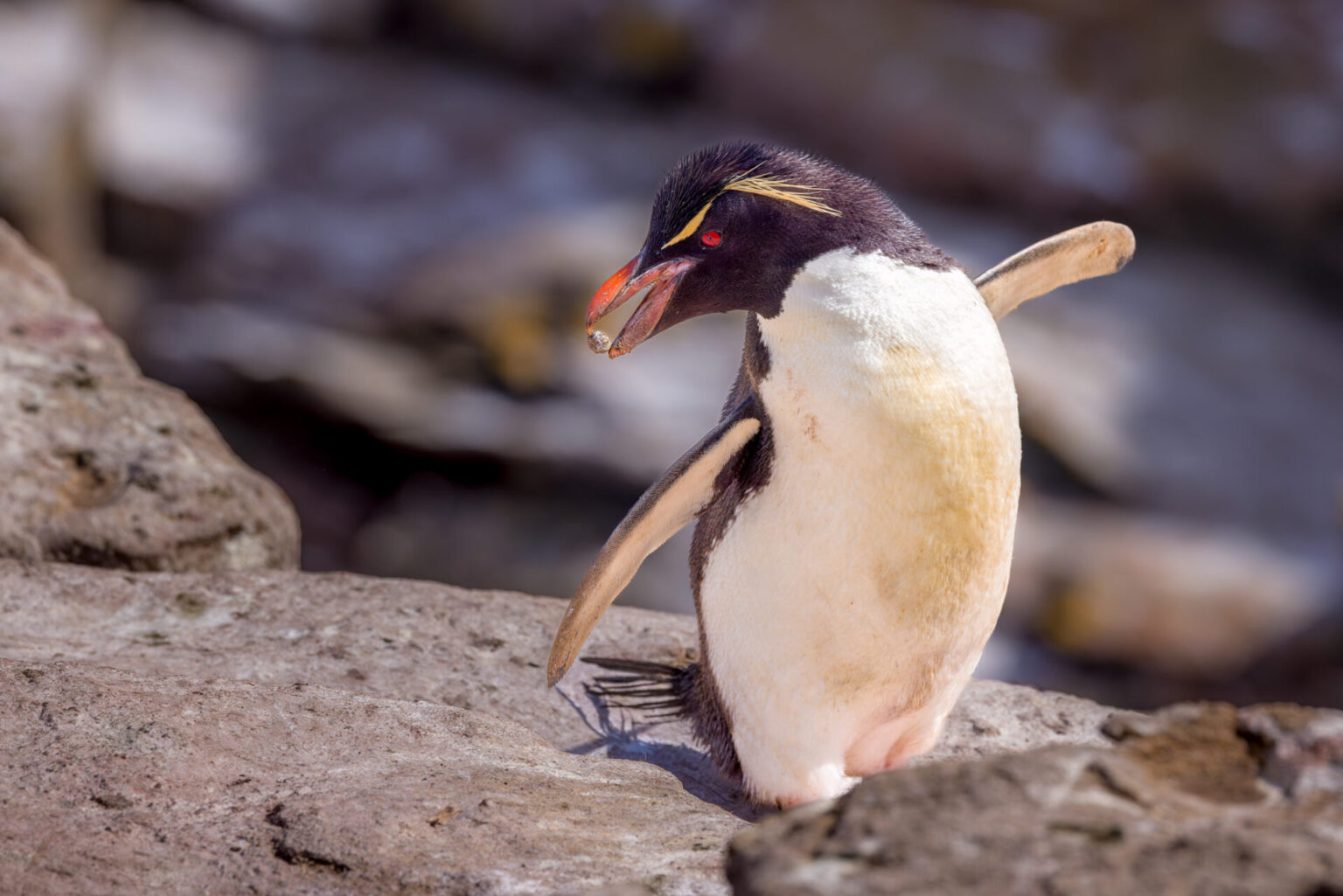
One Rockhopper wandered around picking up objects, discarding them, and finally selecting a small rock. He hopped proudly with it in his beak, pausing to strike a perfect profile pose before disappearing — presumably to deliver the rock to his mate.
(The image below is available as a fine art print. Click the image to visit the product page.)
Rockhopper Holding Rock (Click image for product page.)
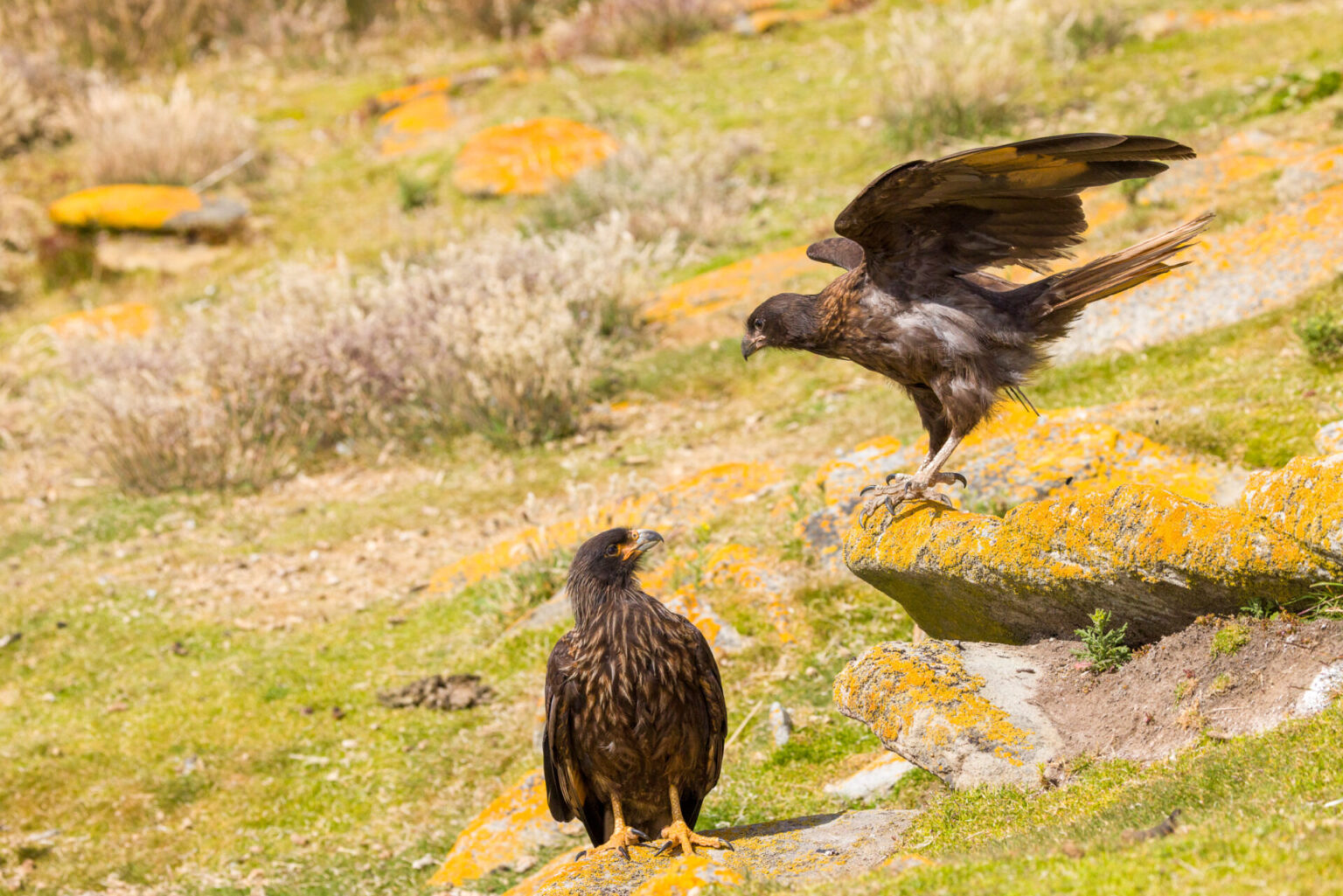
On the way back down, we passed another pair of Caracaras deep in conversation.
Striated Caracara Pair
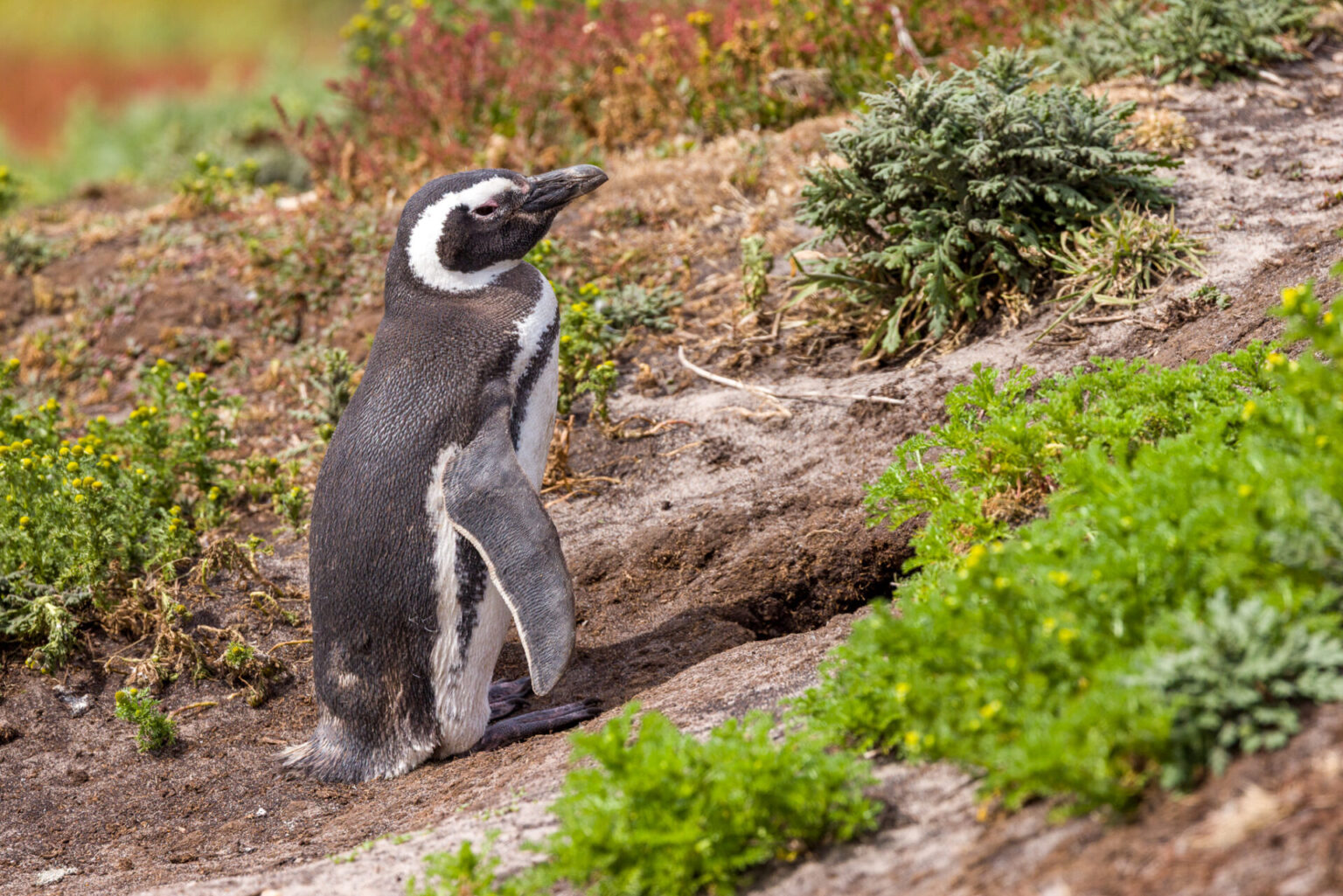
Then a Magellanic Penguin standing calmly beside its burrow.
Magellanic Penguin by Burrow
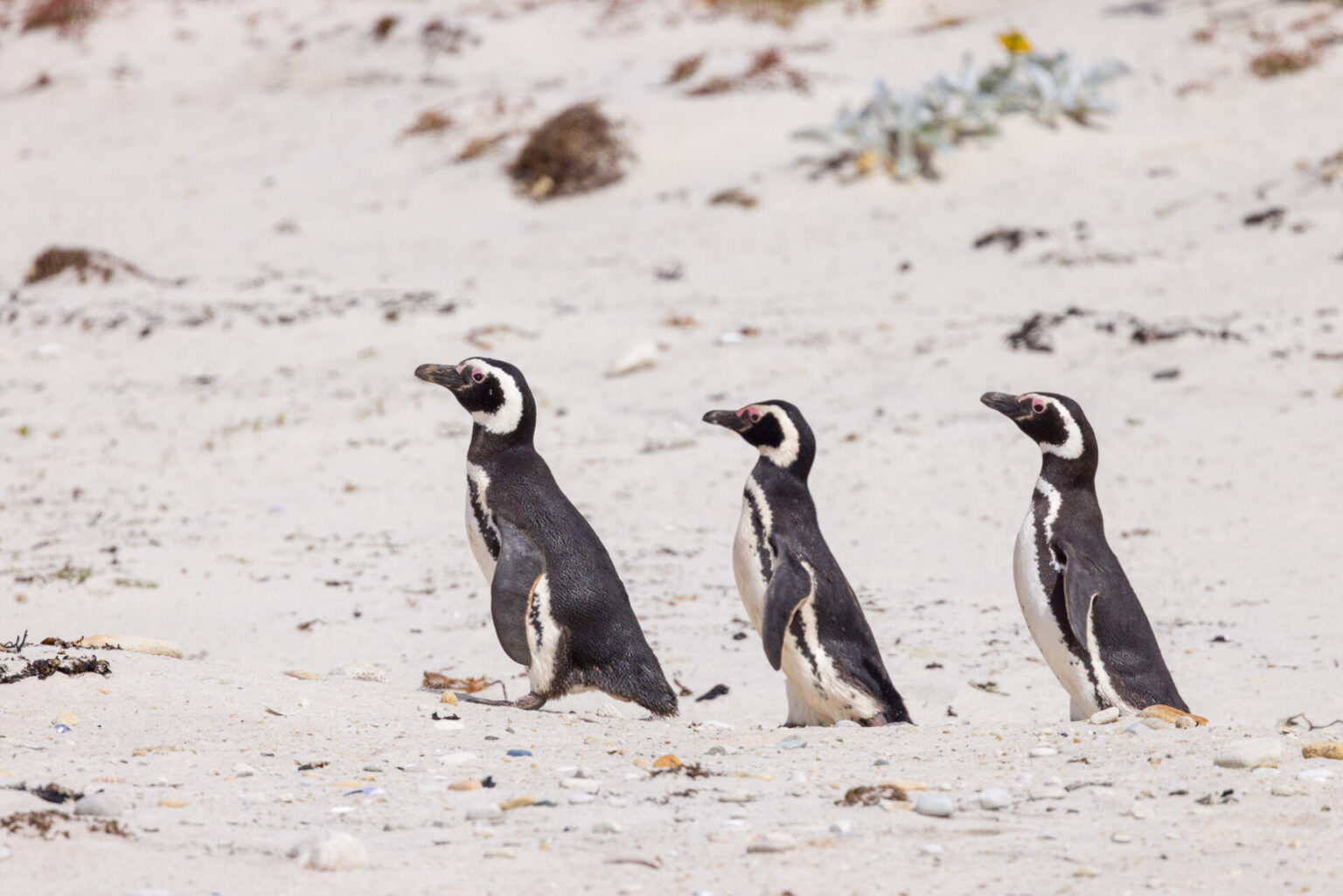
At the beach, three Magellanic Penguins marched across the sand parallel to us.
Magellanic Penguins Walking to Shore
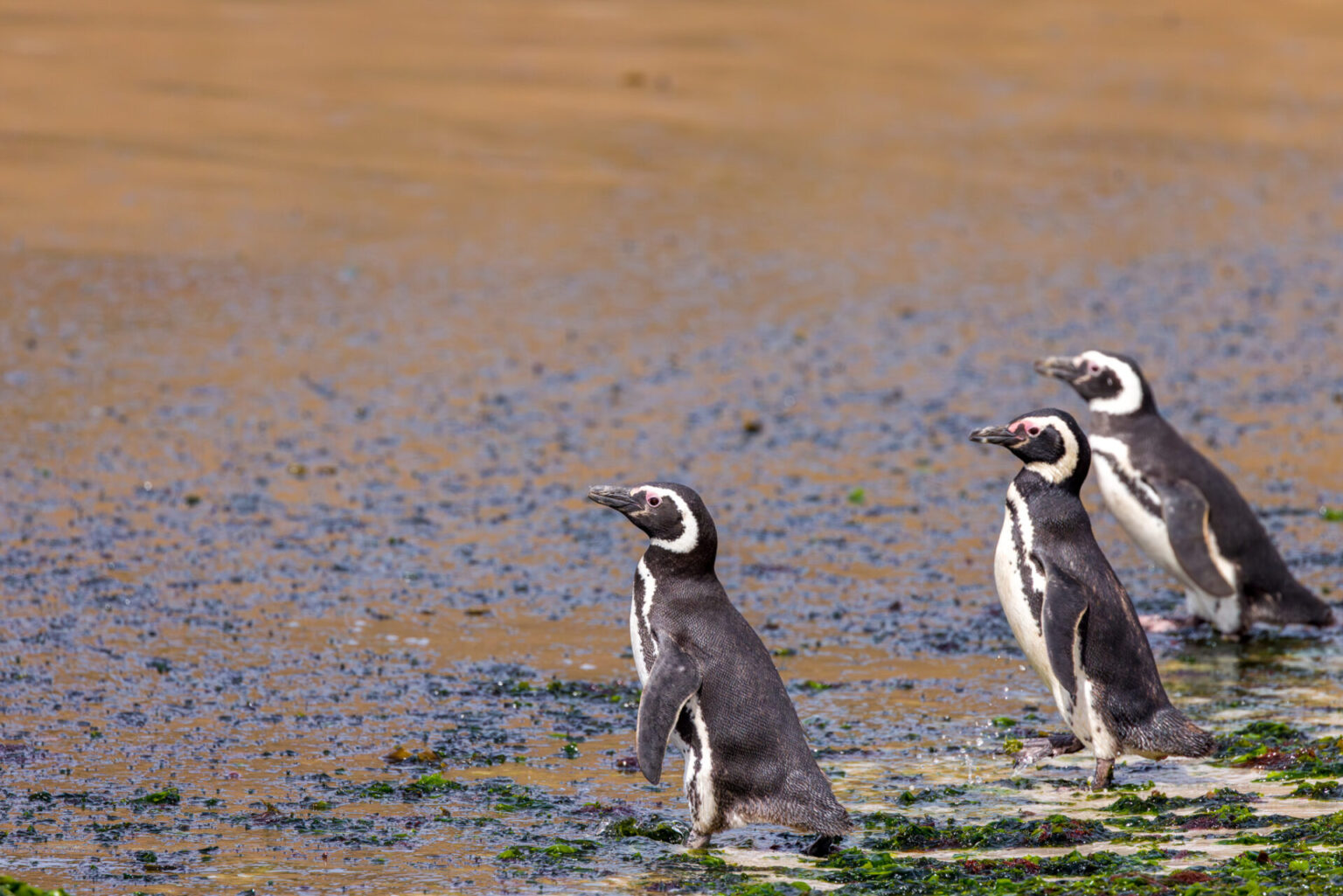
Then reached the water and dove in with perfect timing — our cue to board the zodiacs and return to the ship for lunch.
Magellanic Penguins Going Out to Sea
New Island Settlement
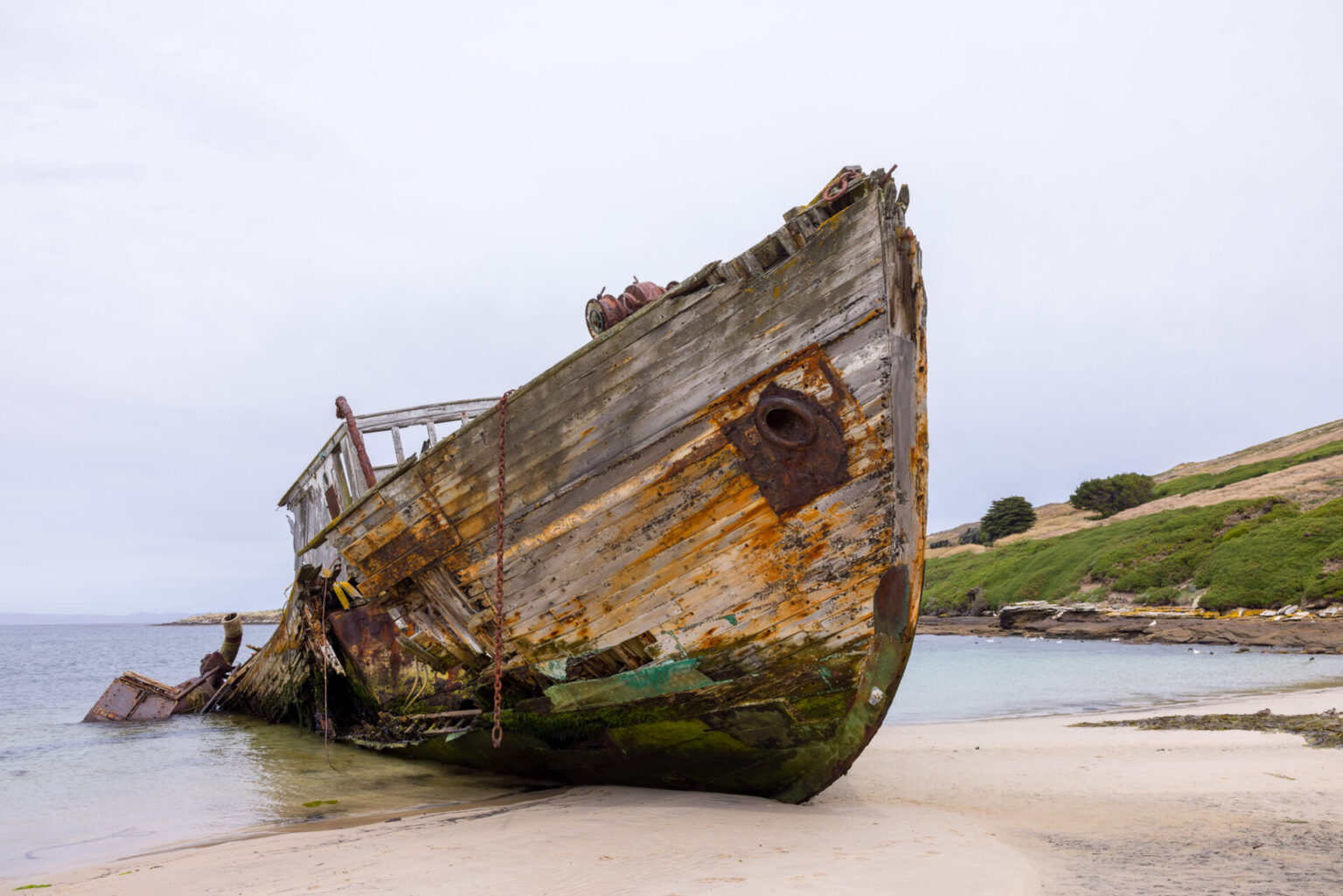
In the afternoon we made a short hop to the New Island Settlement, landing at Coffins Harbour. Despite the name, the settlement was little more than a few scattered buildings, a small museum with a gift shop, and the rusting remains of the Protector III shipwreck resting on the shore.
The Protector III was a small Falklands fishing vessel built in the mid‑20th century and used locally for coastal work around the islands. It was eventually abandoned after running aground at Coffins Harbour, where its hull remains today. The wreck has been left in place for decades, slowly deteriorating in the salt air. Although no longer seaworthy, it serves as a visible reminder of the region’s long reliance on small fishing boats and the challenges of operating in the harsh, windy waters around New Island.
Shipwreck - Protector III
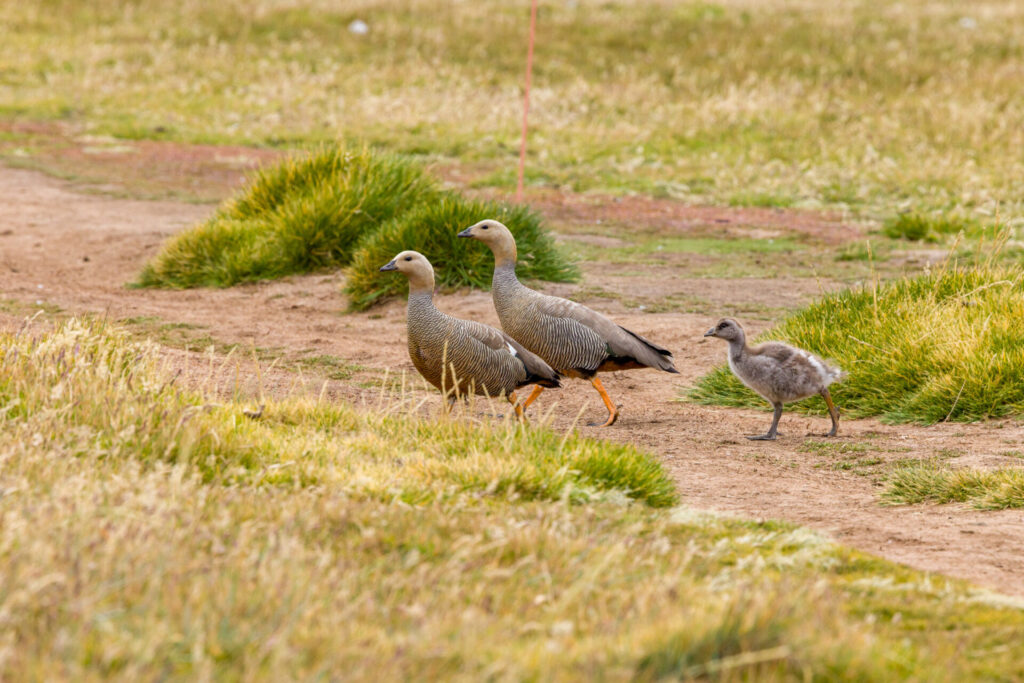
Kelp Geese wandered near the landing site, and as we climbed the long hill toward the overlook, Upland Geese appeared frequently along the trail.
Two Female Upland Geese and chick at New Island Settlement
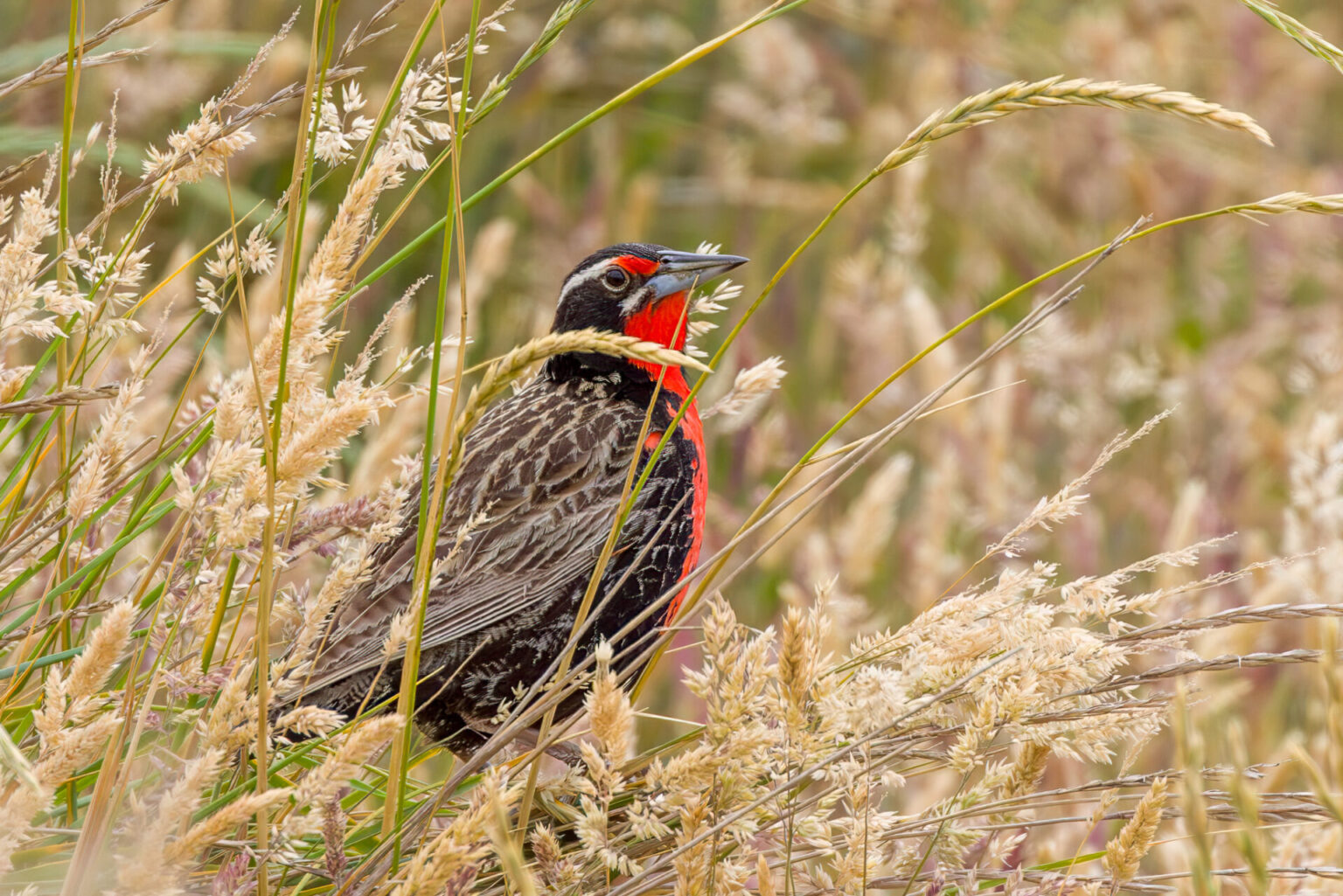
Hidden deep in the grass was a beautiful surprise — a Long‑tailed Meadowlark with a vivid red chest. I’m used to Meadowlarks with yellow chests, so seeing one with such striking coloration felt special. He sang from the grass, popping into view only occasionally.
Long-tailed Meadowlark
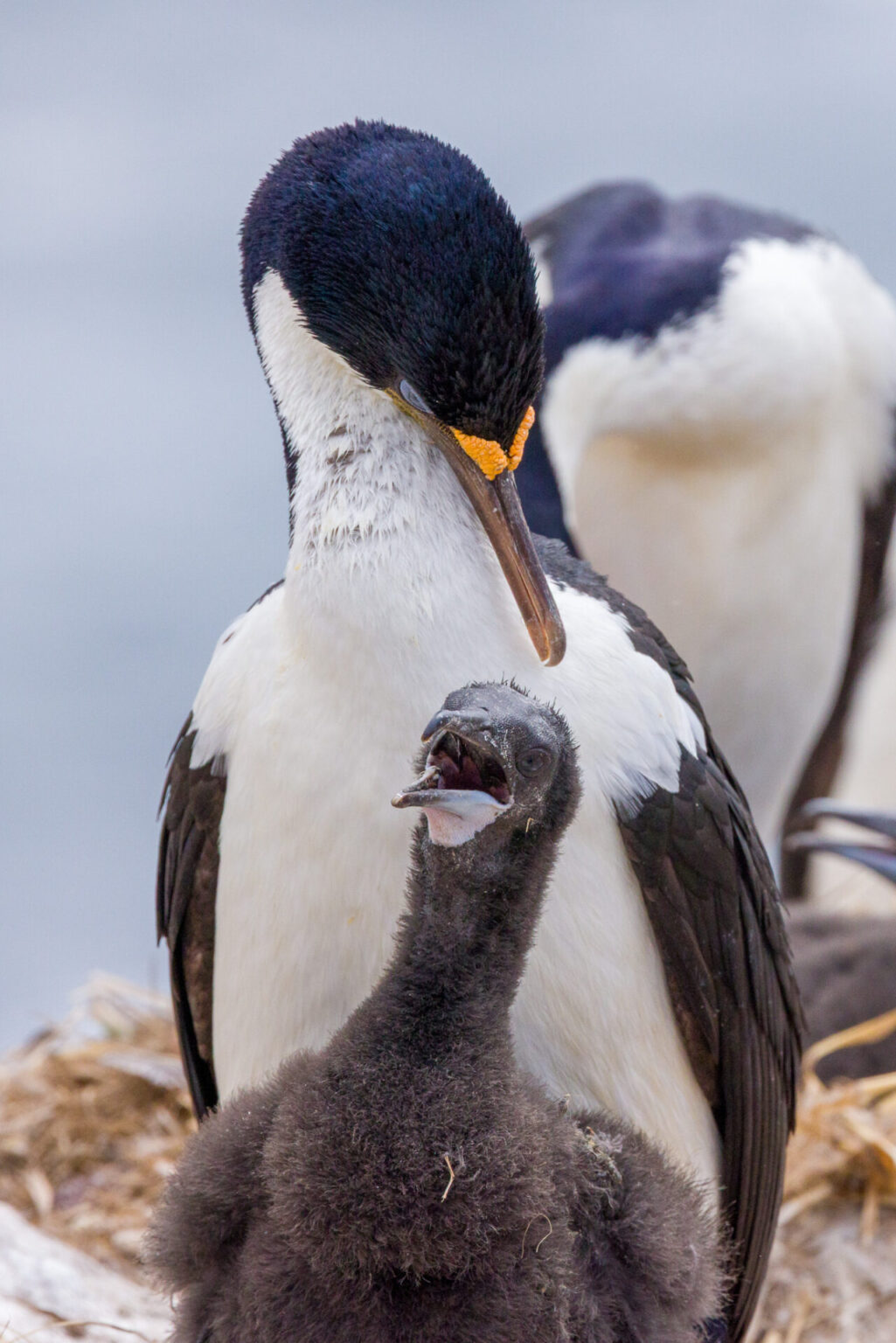
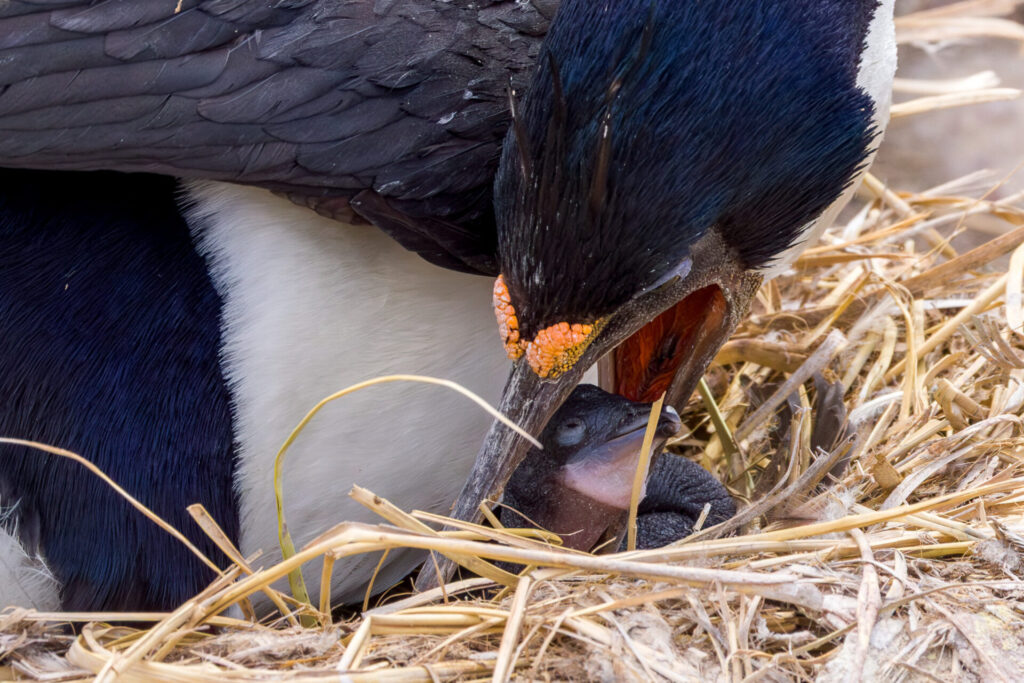
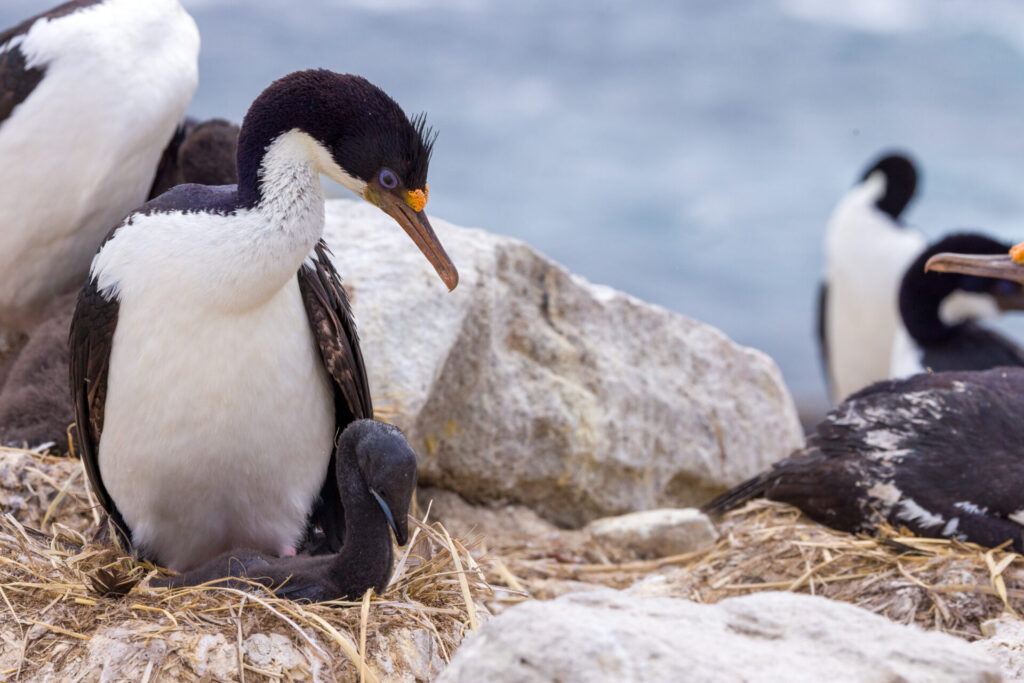
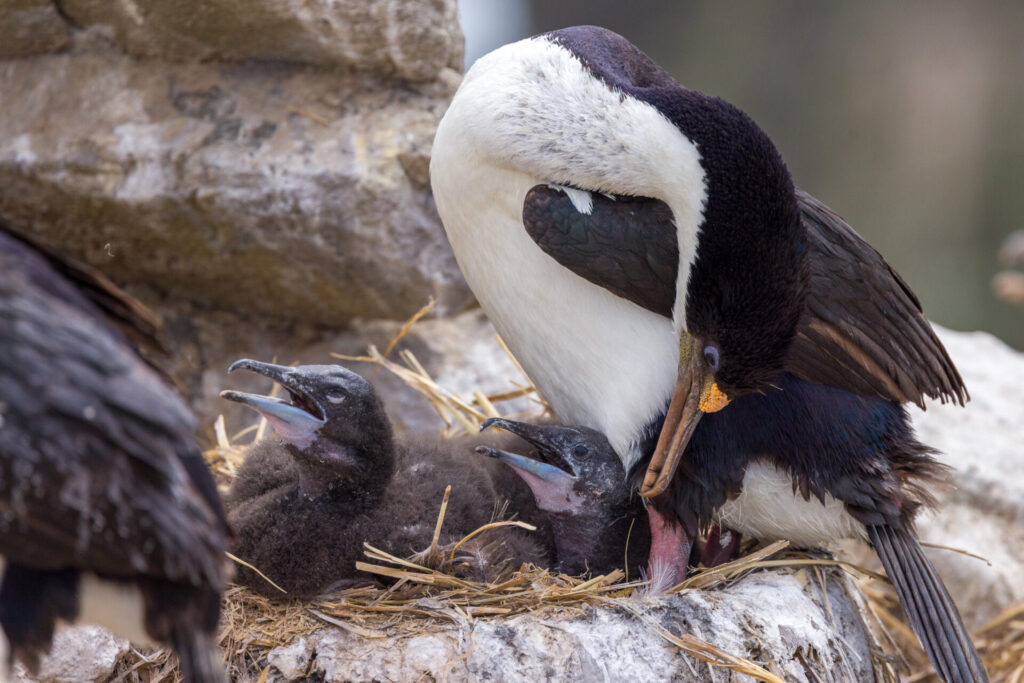
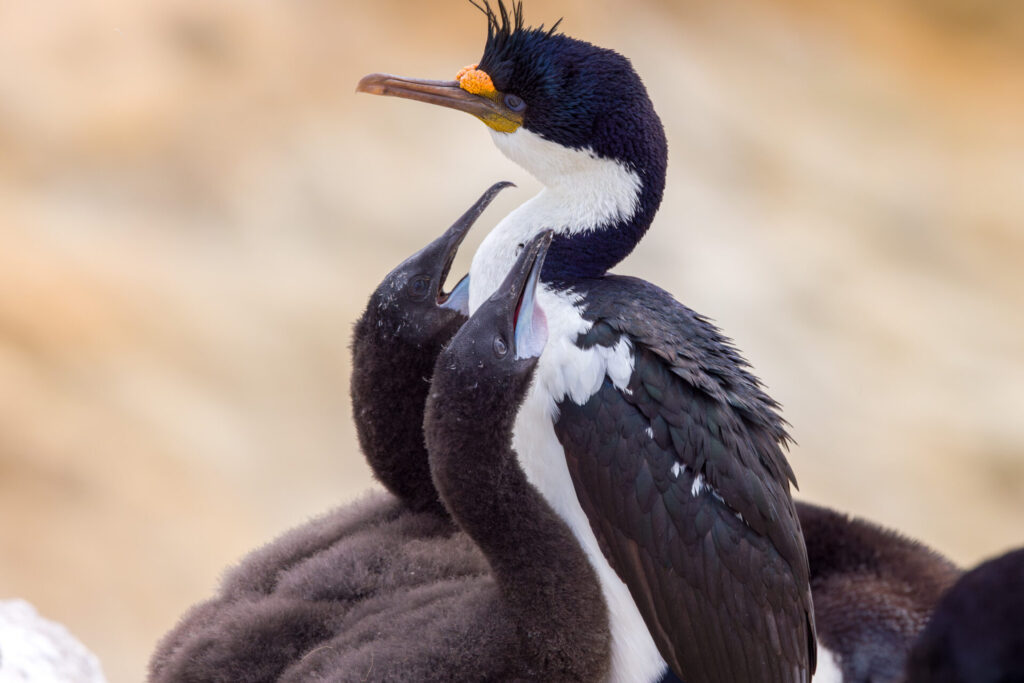
At the top of the trail, the overlook revealed a breathtaking nesting site. Antarctic Shags covered the cliffs, each nest holding chicks of different ages — from tiny newborns to nearly fledged juveniles. The birds were astonishingly tolerant of our presence; we could stand quite close without disturbing them.
Antarctic Shag Parent and Chick
Antarctic Shag with Tiny Chick
Antarctic Shag Parent and Small Chick
Antarctic Shag with Mid-size Chicks
Two Large Hungry Mouths to Feed
One parent fed a tiny chick by enveloping the chick’s entire head inside its beak, a feeding method that looked dramatic but clearly worked.
Antarctic Shag Feeding Tiny Chick
Sometimes, however, a parent just becomes exasperated with two large chicks constantly begging her for food. In the video below, two large chicks continually try to shove their beaks into their parent’s mouth as the parent keeps trying to avoid their attempts.
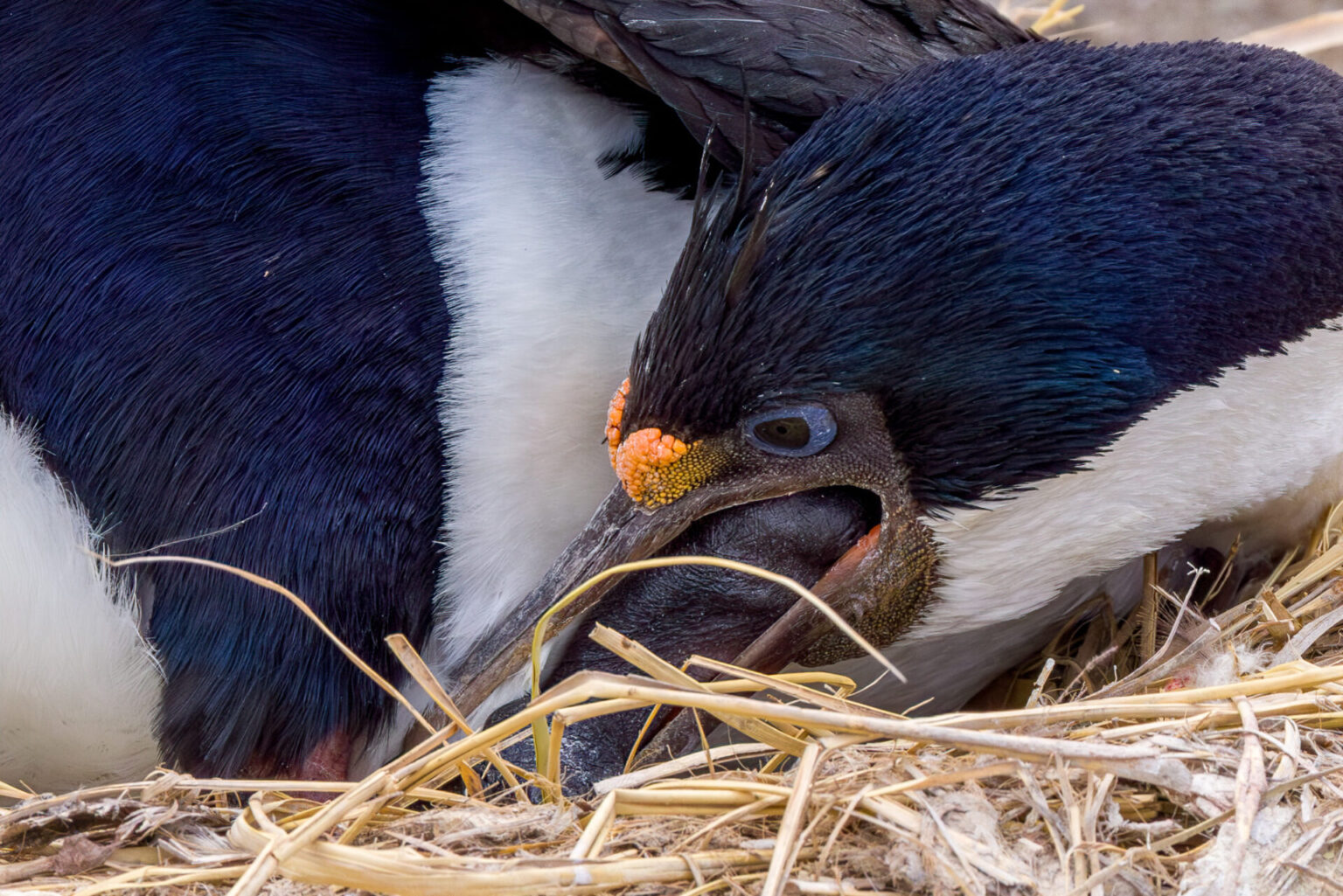
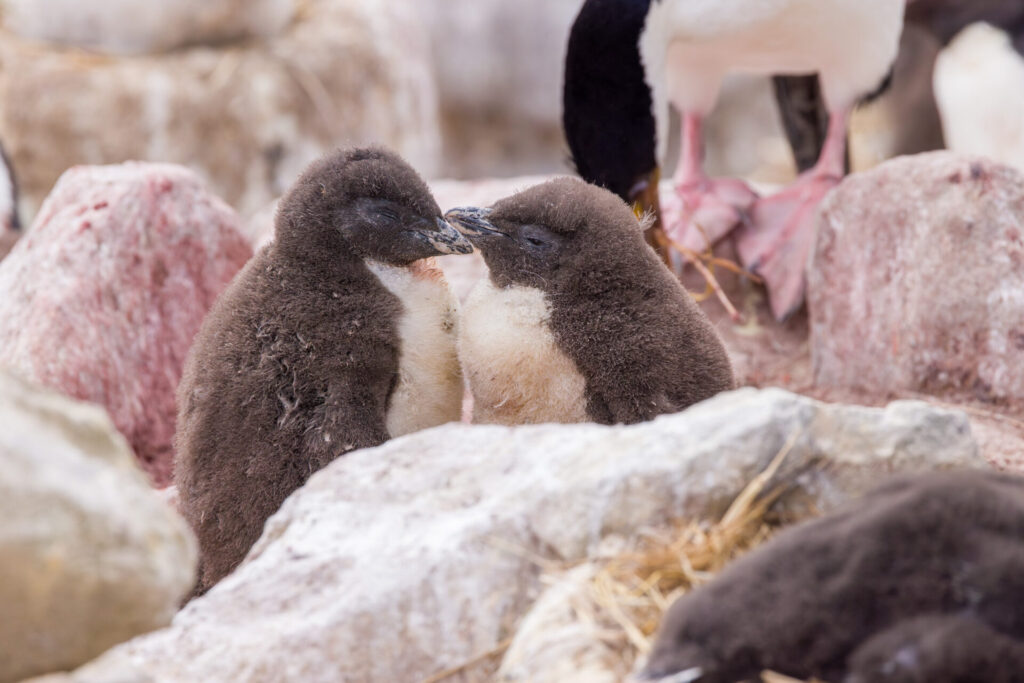
Rockhopper Penguins nested among the shags, their own chicks demanding attention.
Two Rockhopper Penguin Chicks
Rockhopper Penguin
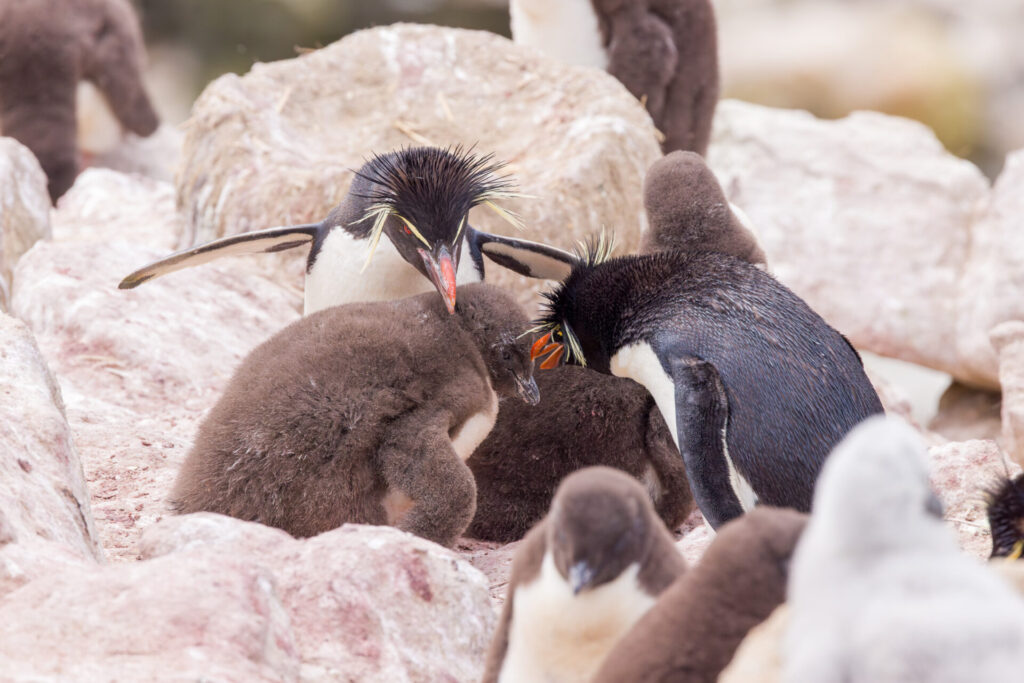
Many parents seemed to be scolding their youngsters, though the reason was anyone’s guess.
Rockhopper Parents Scolding Chicks
Albatrosses nested here too, completing a remarkable mix of species all sharing the same cliffside.
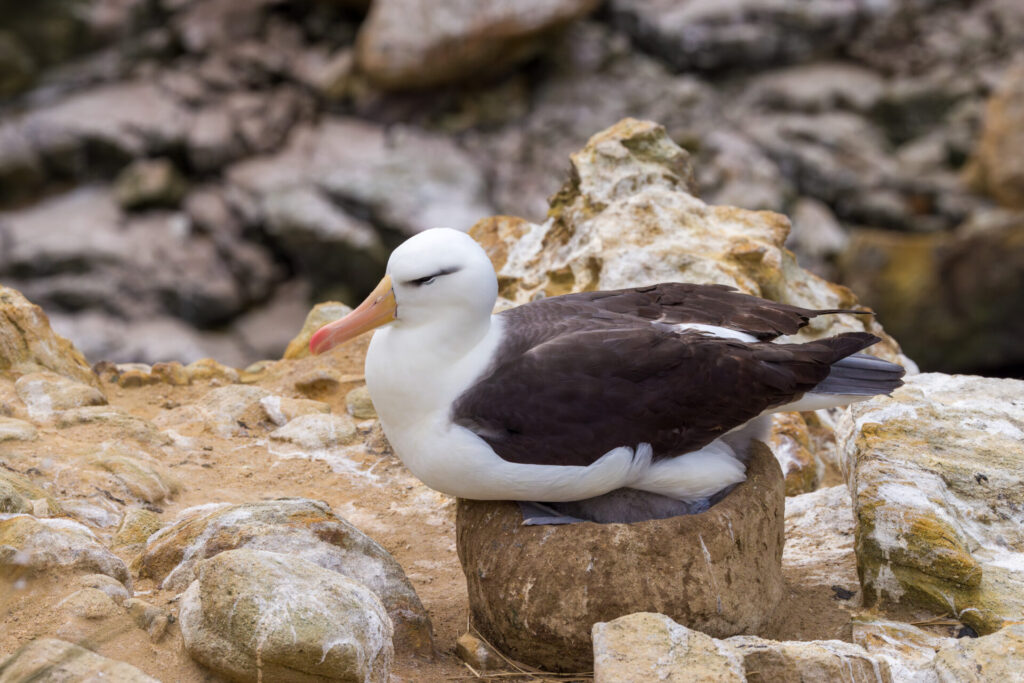
Albatross Chick in Nest
Albatross Sitting on Chick in Nest
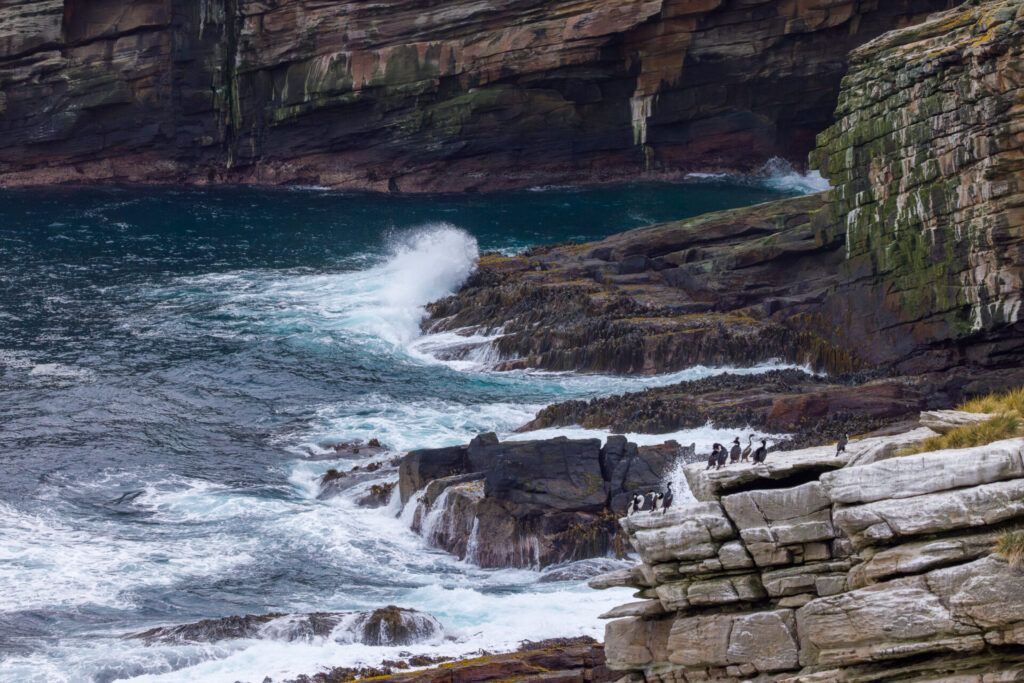
Below us, waves crashed against the rocks with a deep roar, mixing with the calls of thousands of birds. Watching the surf rise and fall against the cliffs was hypnotic — a moment of calm amid the noise and motion of the colony.
View of the Ocean Below the Nest Site
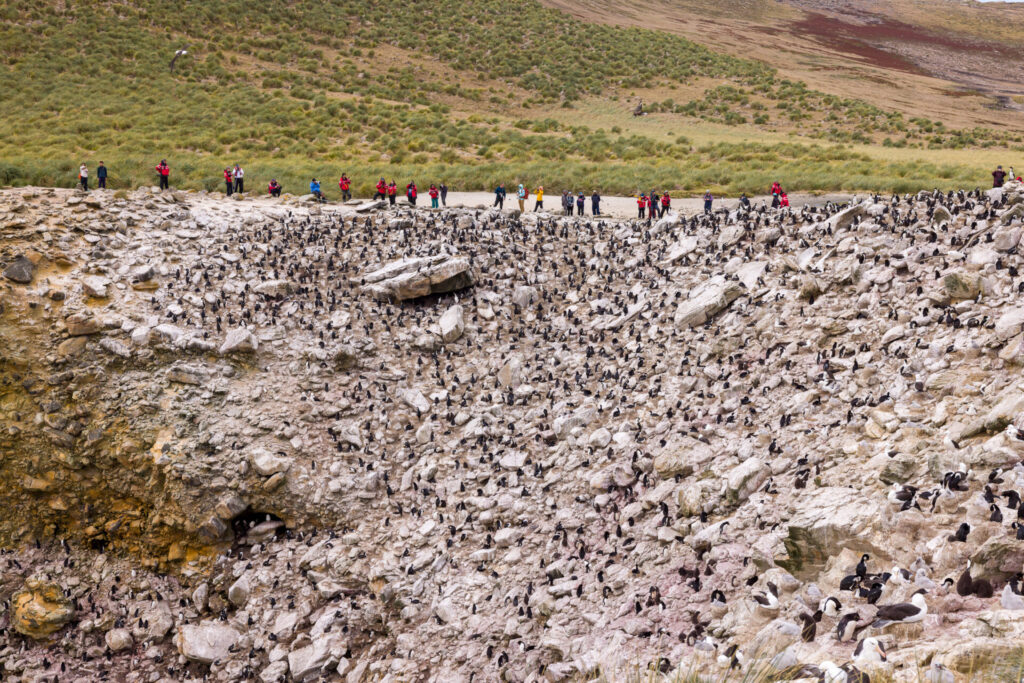
As we circled the overlook, we could see how far the nesting site extended down the cliff face. It was quite impressive.
The Full Nesting Site
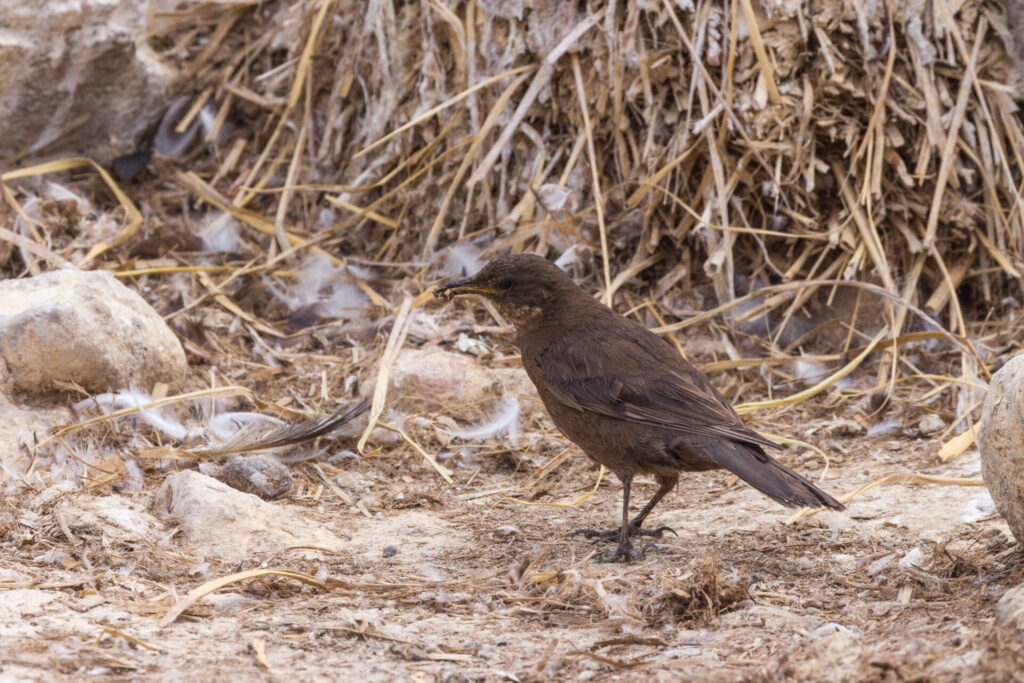
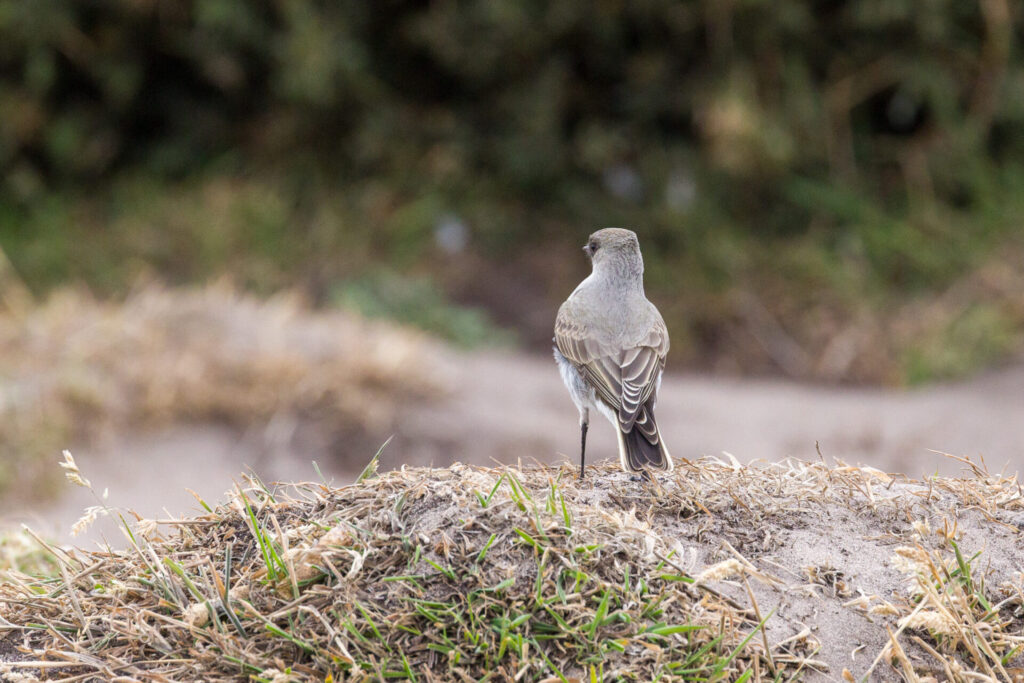
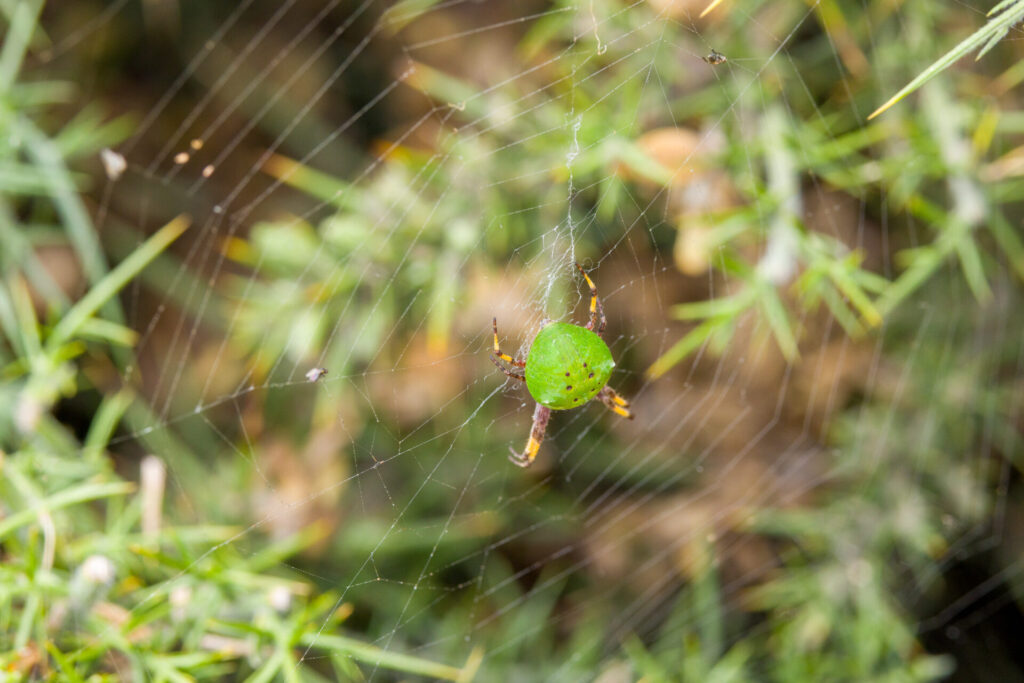
As we made our way back along the trail, two more songbirds appeared — a Blackish Cinclodes and a Dark‑faced Ground‑Tyrant — and near the end, a Green Orb Weaver spider added one last unexpected detail to the day.
Blackish Cynclodes
Dark-faced Ground-Tyrant
Green Orb Weaver Spider
Return to the Beagle Channel and Ushuaia
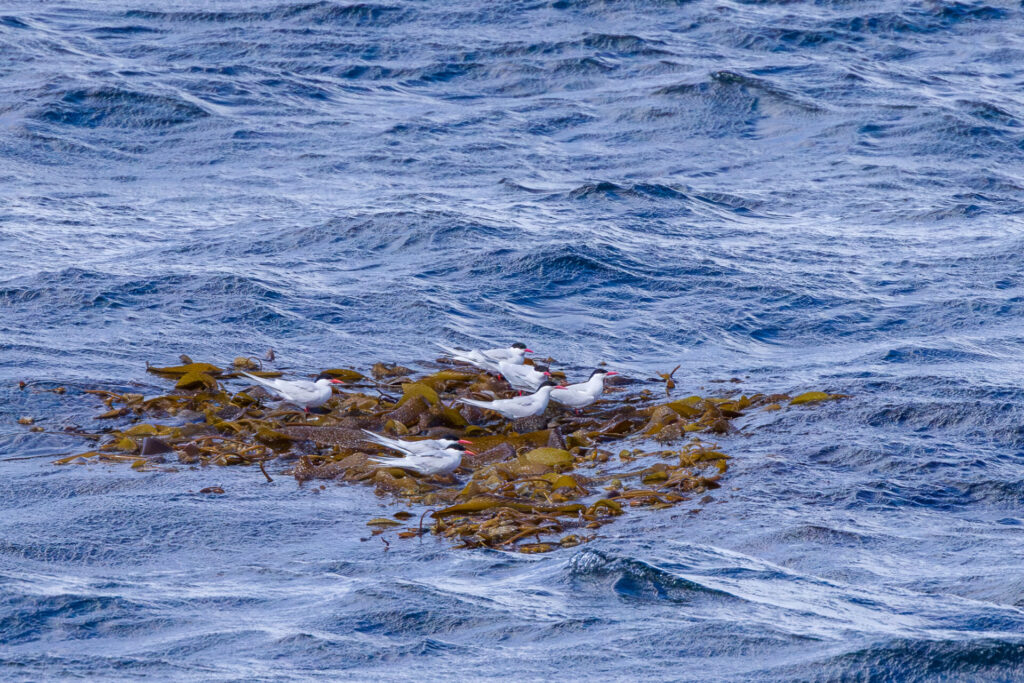
The next afternoon, the ship began its final journey back toward Ushuaia. As we entered the Beagle Channel, a raft of South American Terns rested on a patch of kelp.
South American Terns on Kelp Raft
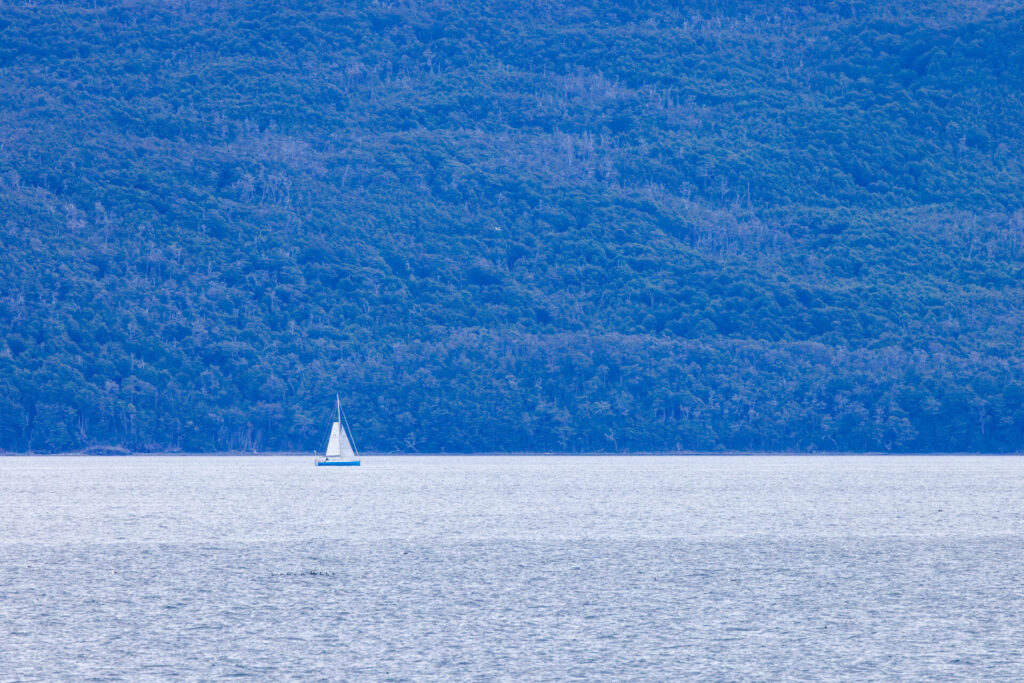
A lone sailboat passed by — possibly even the same one we’d seen on our first day, now heading in the opposite direction.
Sailboat in the Beagle Channel
When the ship finally docked in Ushuaia, the reality of the voyage ending settled in. After three weeks of photographing remote seas, penguin colonies, albatross cliffs, and landscapes shaped entirely by wind and weather, returning to normal life felt strangely heavy.
Ahead lay 40 hours of travel — five flights, a bus ride from Salt Lake City to St. George — and the enormous task of sorting through more than 30,000 images made during the voyage. But those photographs are what remain: thousands of moments of wildlife, light, and wild places that I’m grateful to have witnessed and preserved. This journey was unlike any other, and I’m thankful for every frame captured in the far south.



Leave a reply