Onward to the Falkland Islands
Crossing the open ocean from South Georgia to the Falkland Islands felt like slipping out of one world and drifting toward another. After days surrounded by glaciers, penguin colonies, and the raw quiet of South Georgia, our ship pointed west and began the long, two‑and‑a‑half‑day crossing. The ocean opened around us—wide, empty, and restless—and for a while it felt as if we were the only thing moving across its surface.
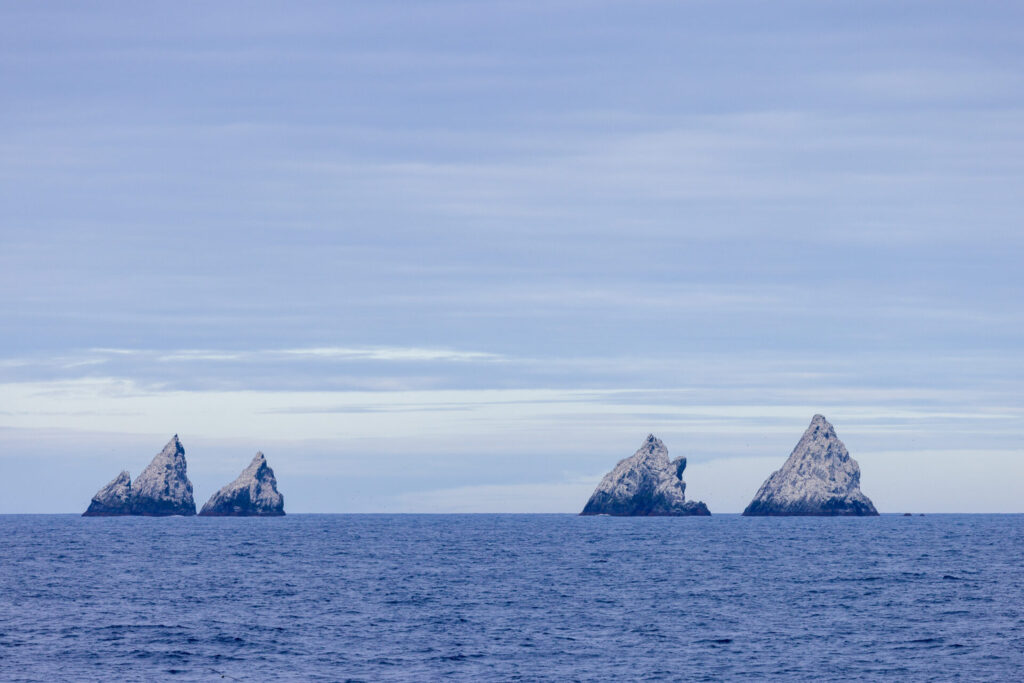
But the open ocean is never truly empty. As we pushed farther from land, signs of life began to appear: distant birds, scattered blows on the horizon, and eventually the jagged silhouette of Shag Rocks rising straight out of the sea.
Shag Rocks
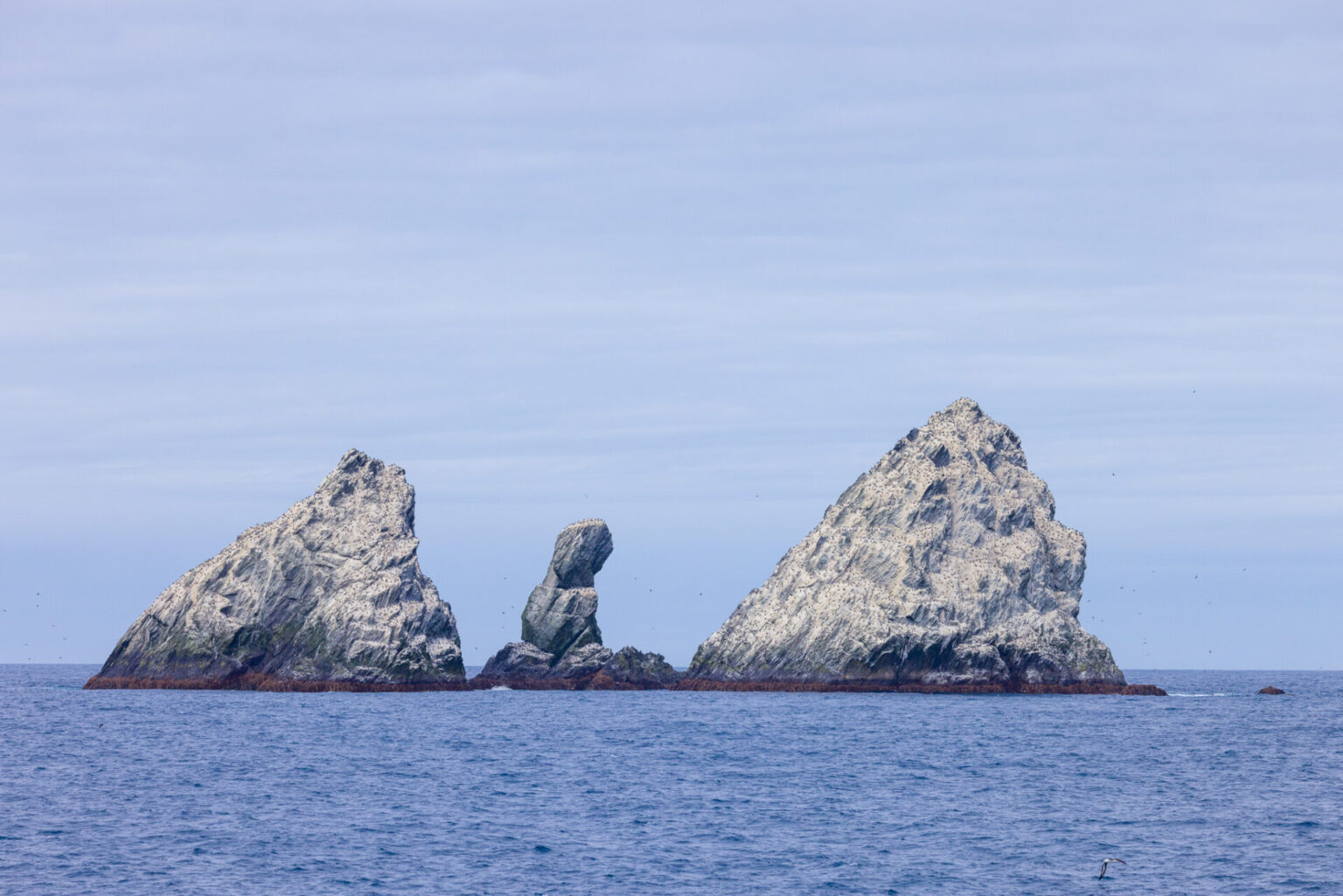
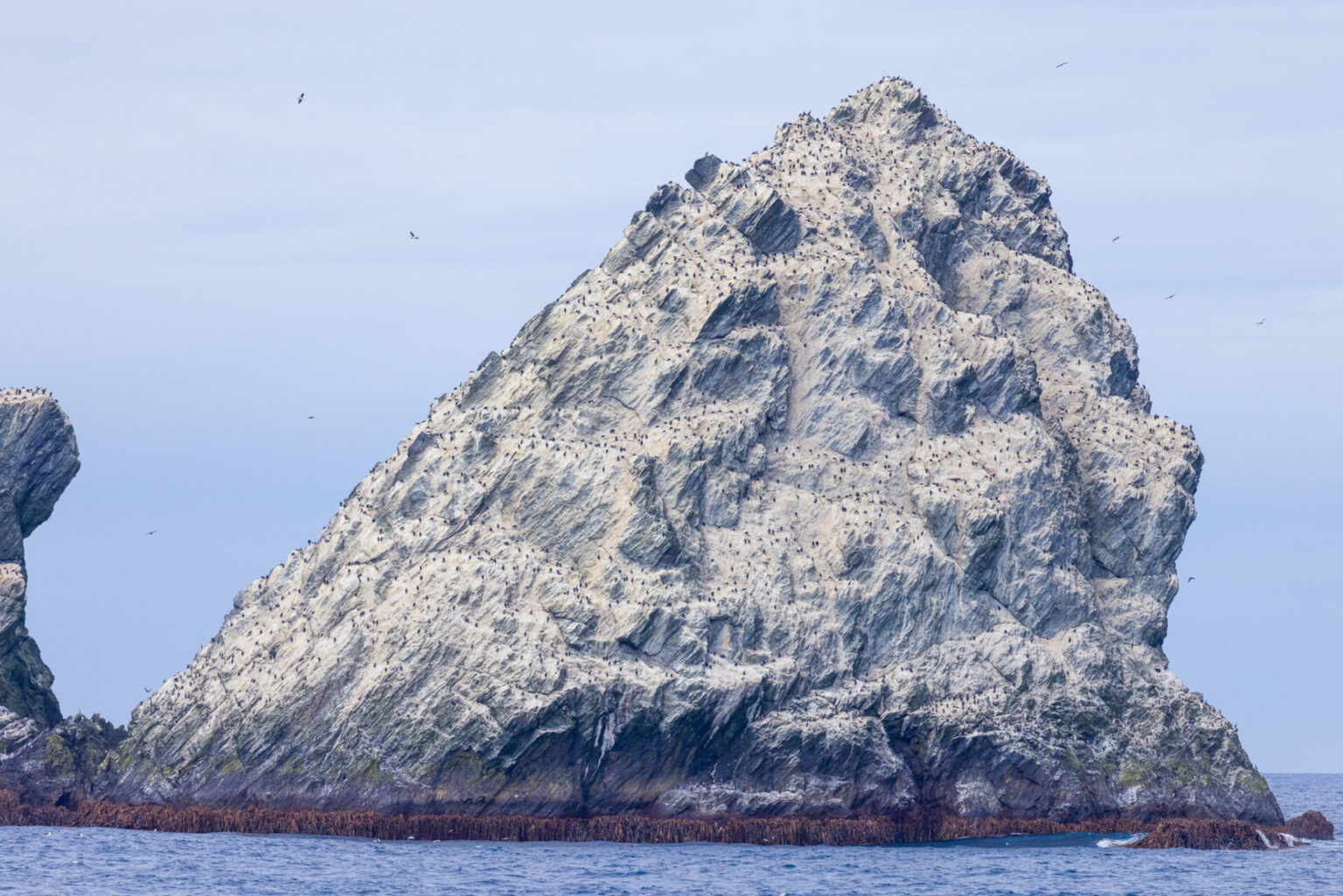
Shag Rocks appeared long before anything else did—sharp, pale peaks rising straight out of the open ocean. At first they looked like nothing more than jagged peaks breaking the horizon, but as we drew closer their strange coloring became impossible to miss. The bases were dark and slick with bull kelp, but everything above that was almost entirely white.
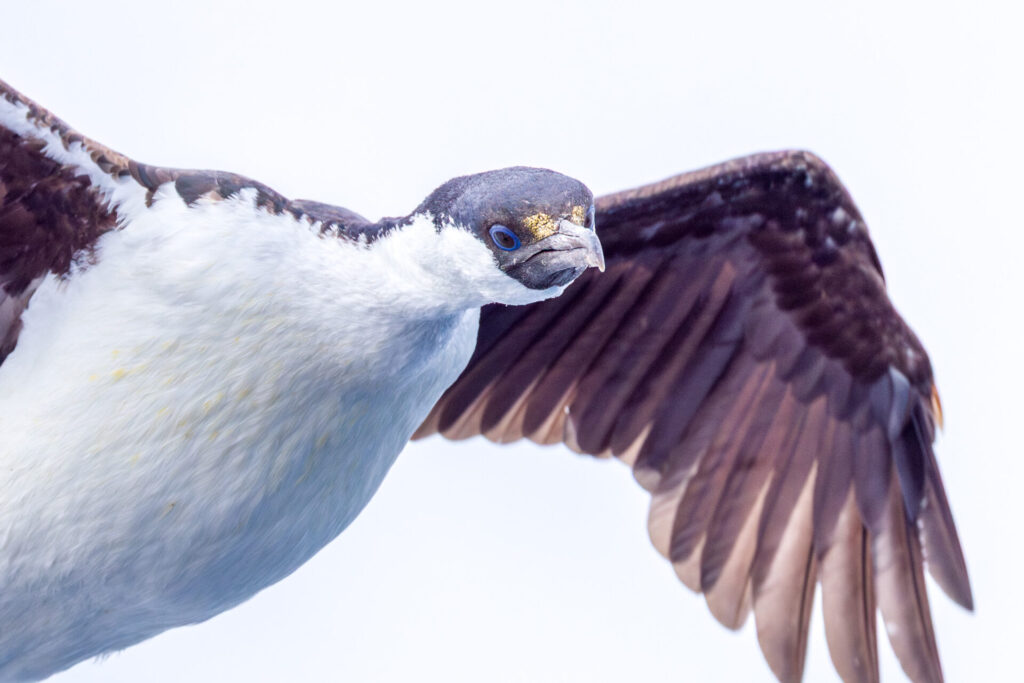
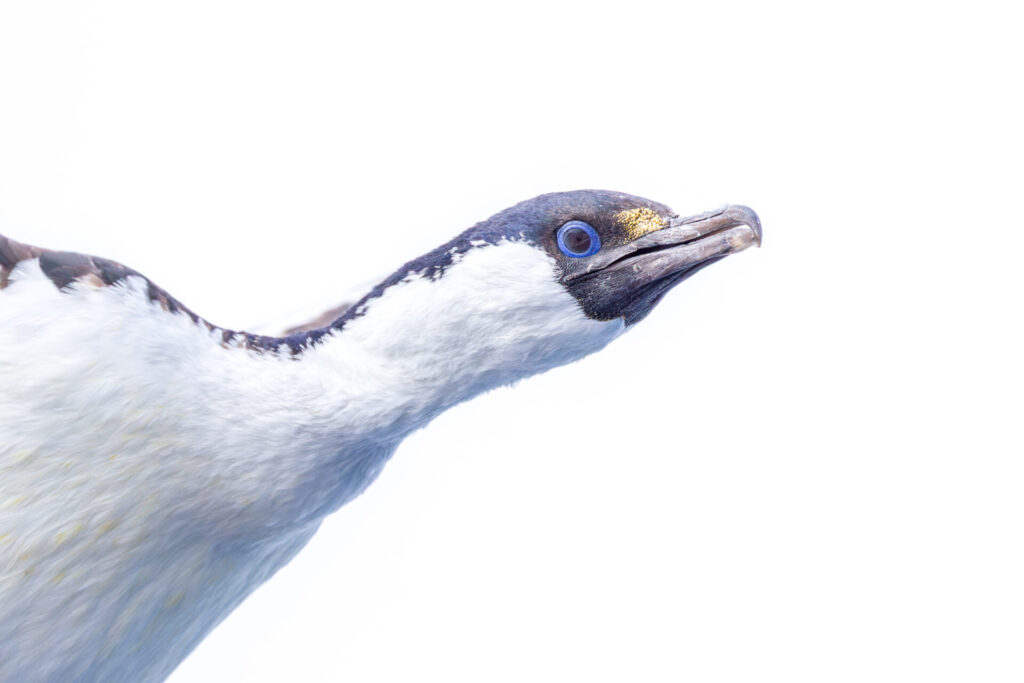
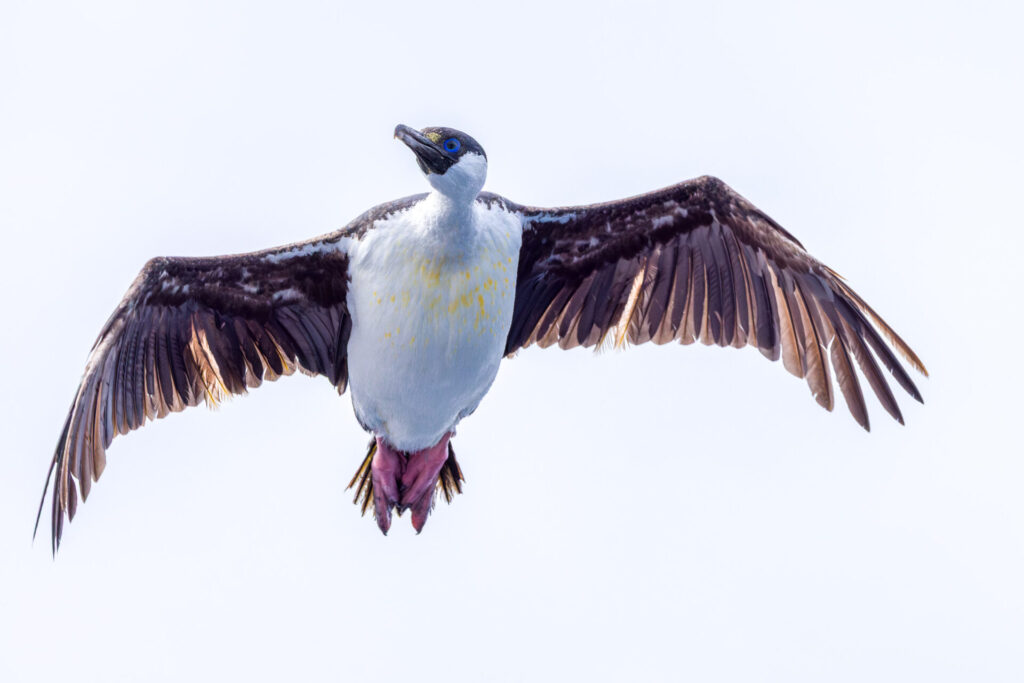
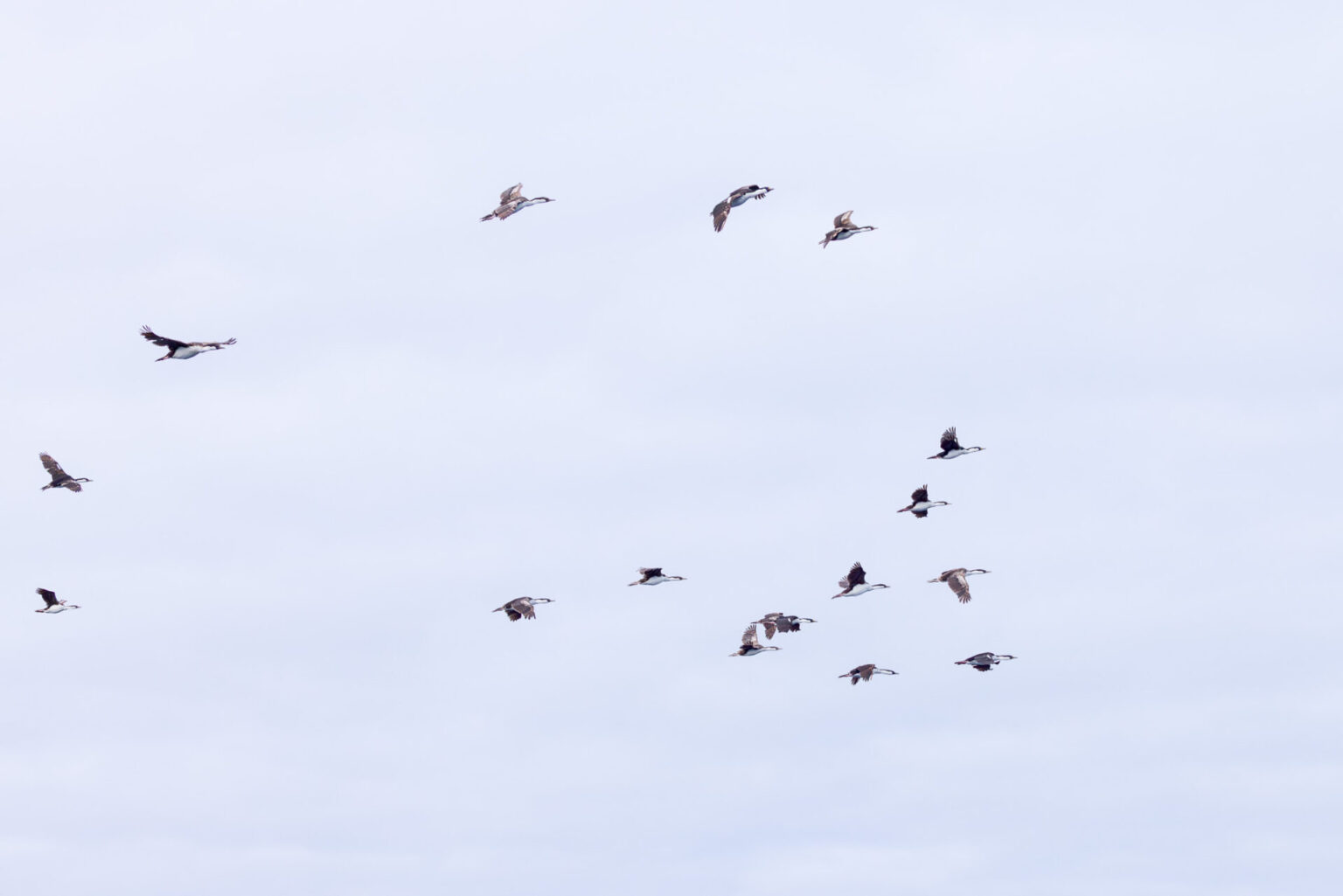
It didn’t take long to understand why they were so white. As the ship approached, the rocks seemed to come alive. Tiny dots covered every ledge and filled the air around them, and soon those dots resolved into hundreds of Antarctic Shags.
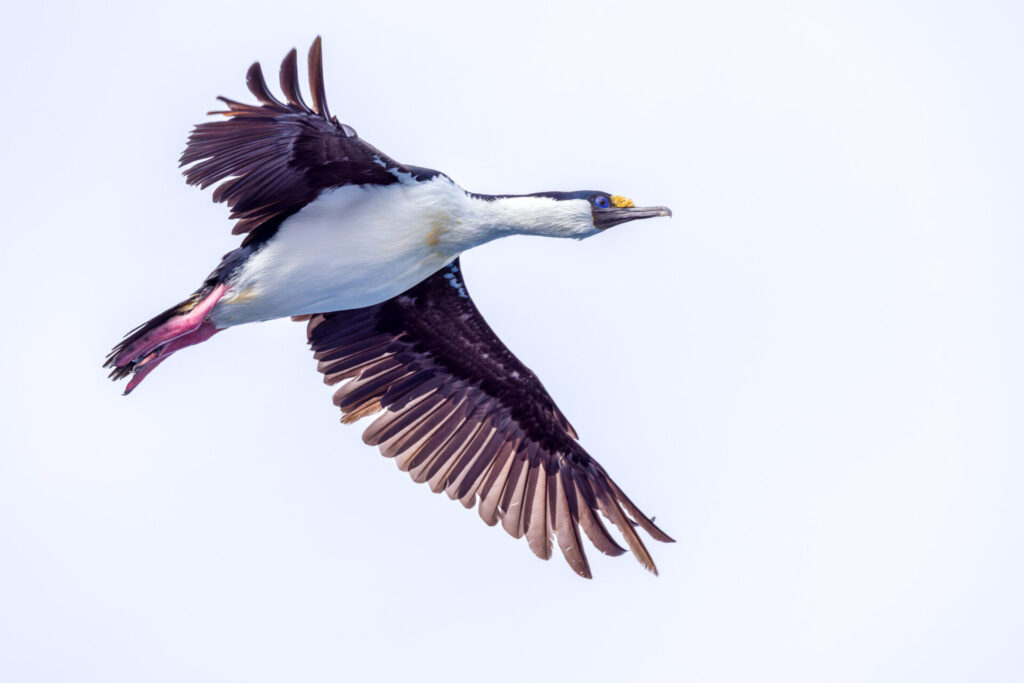
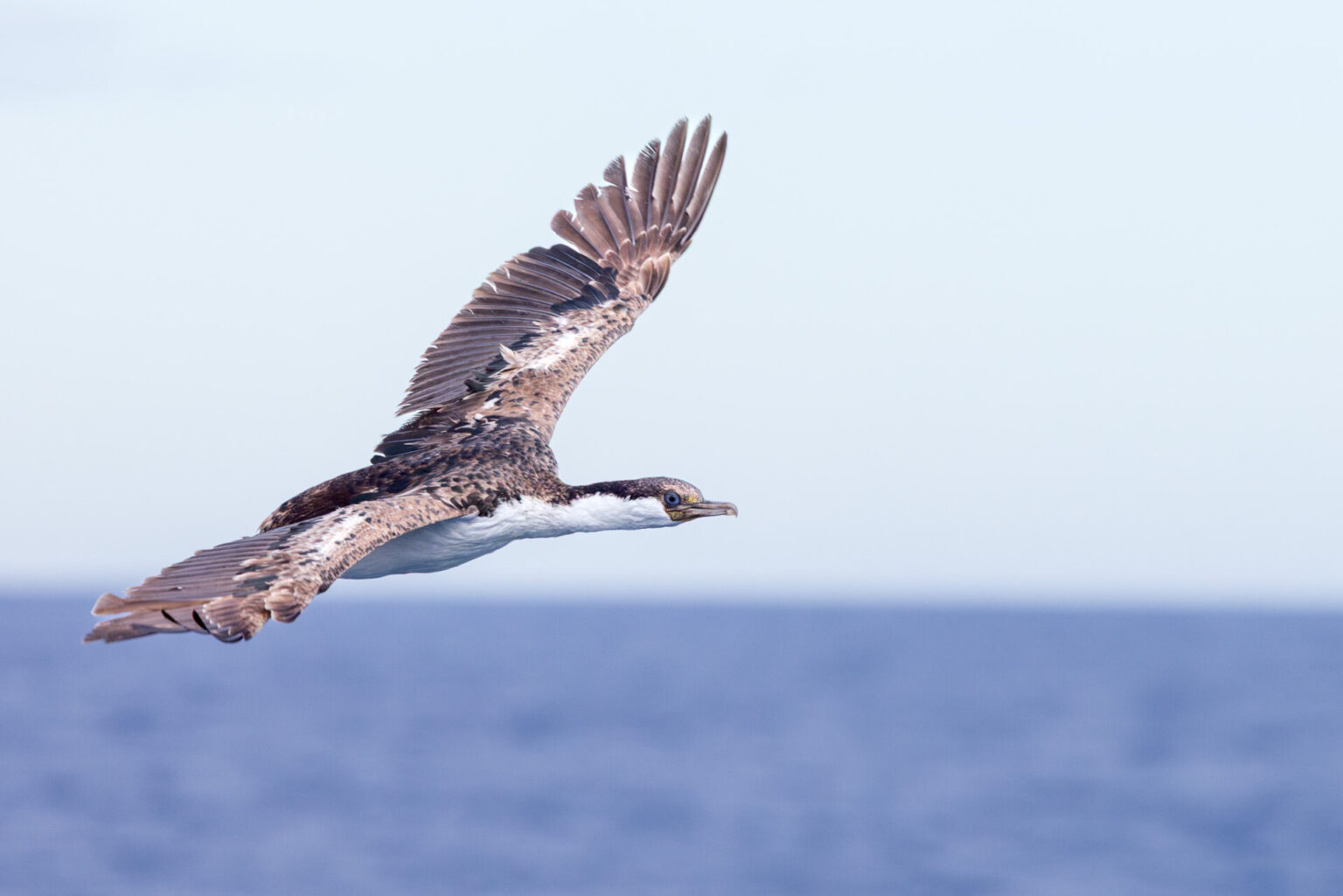
A few birds circled us at first, but within minutes they were streaming past in wave after wave, swooping low over the water and banking around the bow. Photographing them was a challenge. It certainly gave my Canon R5’s animal eye detect feature a workout. But it was also a thrill—each pass offered a new angle, a new burst of motion against the deep blue of the ocean.
One of my favorite shots from the day came during this frenzy, a single shag flying across the frame with the sea behind it. My only regret was never catching one in flight with Shag Rocks in the background; the birds were simply too fast and too many to line up the perfect moment.
As we continued past the rocks and they began to shrink behind us, the shags didn’t disappear. Instead, more and more of them lifted off and followed the ship, filling the air in every direction. It felt as if the entire colony had risen to escort us on our way west.
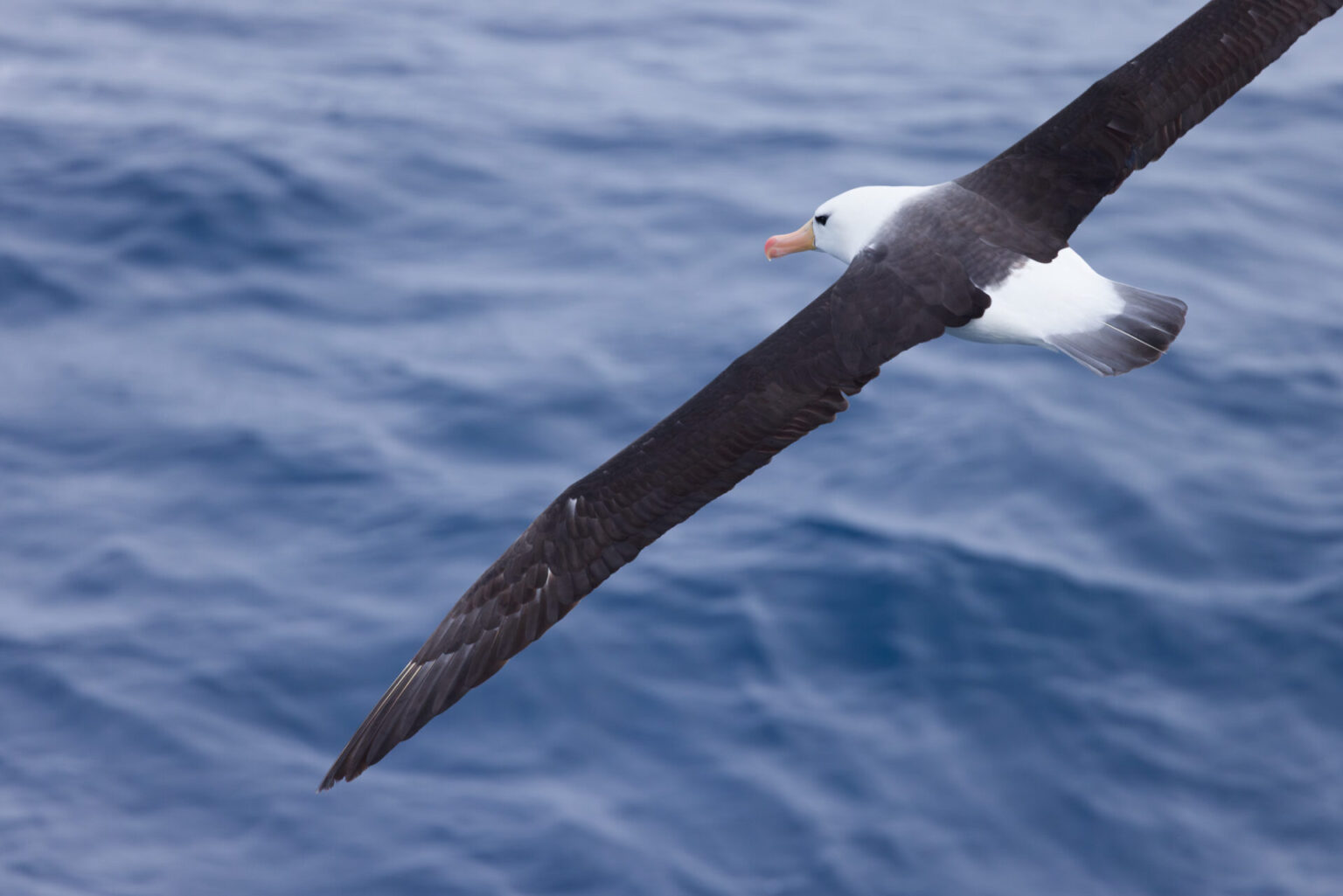
Although the shags definitely stole the show, there were other birds around as well, such as the Black-browed Albatross. I love the photo below because it really shows how long the wing is compared to the body. These birds are built for soaring.
Fin Whales
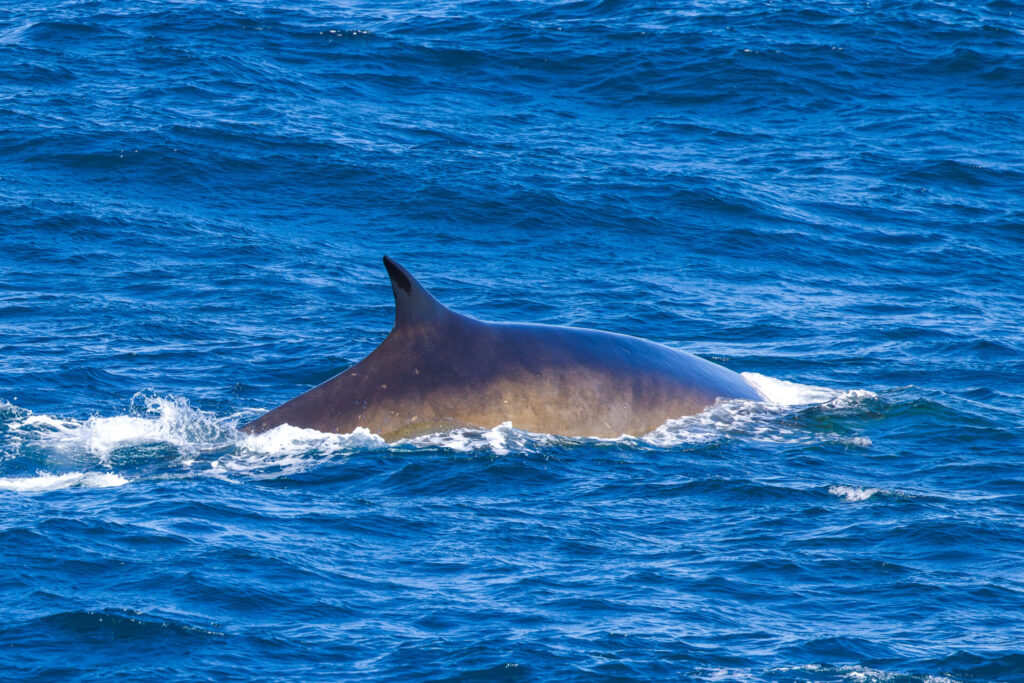
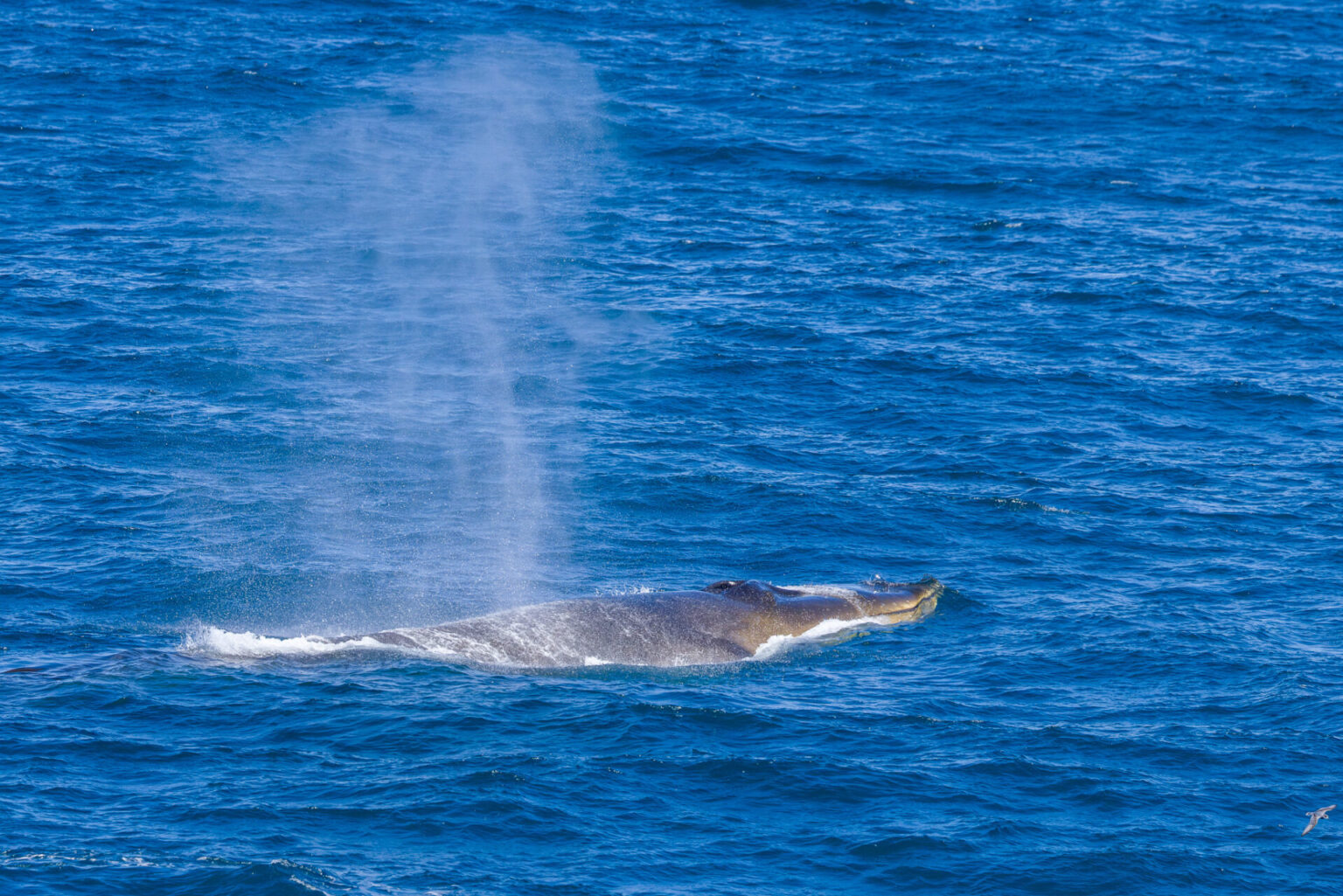
Not long after leaving Shag Rocks behind, the ocean delivered another surprise. We had seen a few Fin Whales earlier in the voyage, usually distant blows or brief glimpses of a back sliding beneath the surface, but this time was different. A large group appeared off the bow, surfacing close enough that we could see the curve of their mouths as they rose for air.
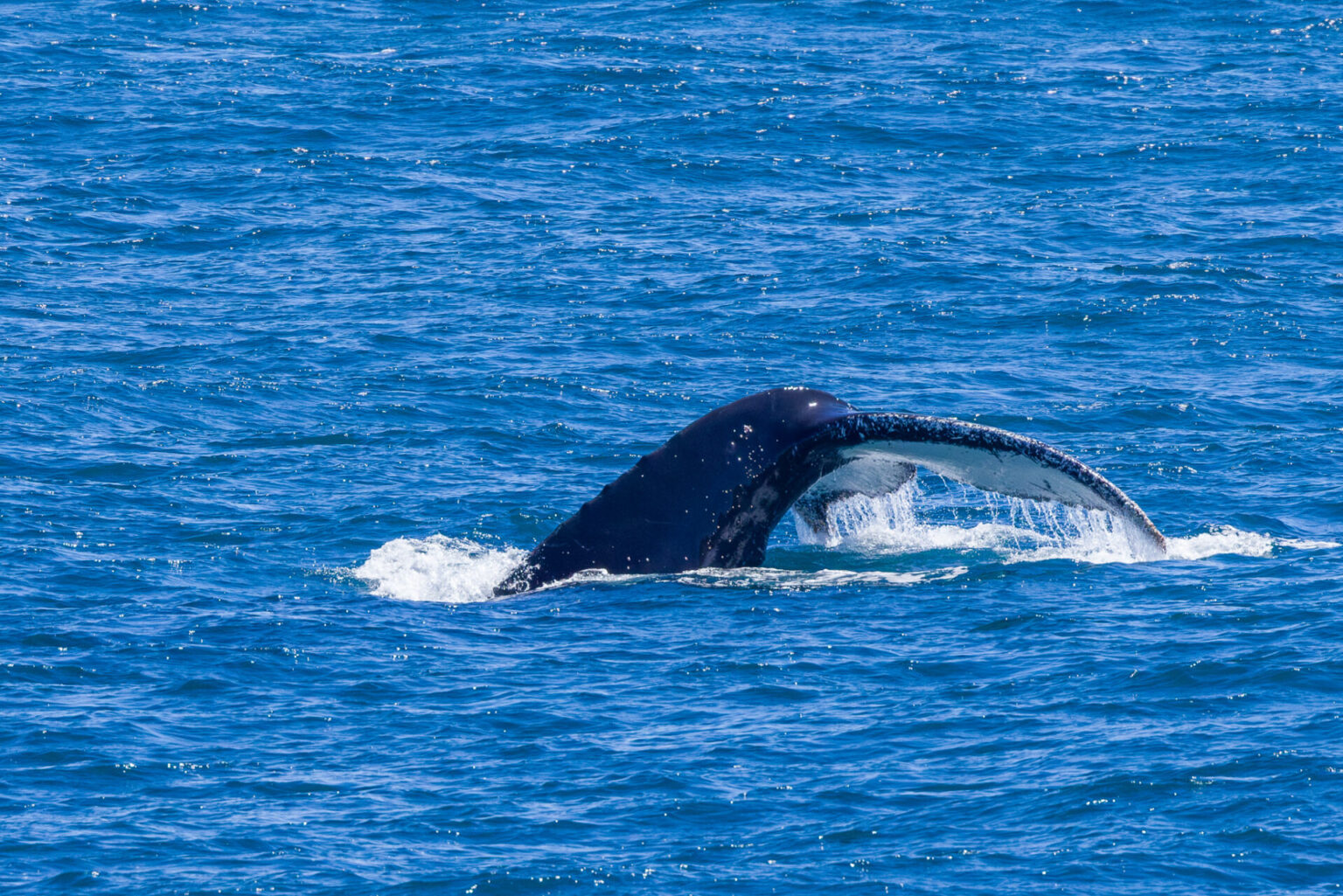
Each breath was slow and deliberate. The whales would break the surface, exhale in a low, heavy burst, and for a moment their long, sleek bodies were visible just beneath the water. Then they’d arch downward again, revealing their tail flukes as they slipped back into the depths. It was mesmerizing to watch the rhythm of it — breath, glide, dive — repeated across several whales at once.
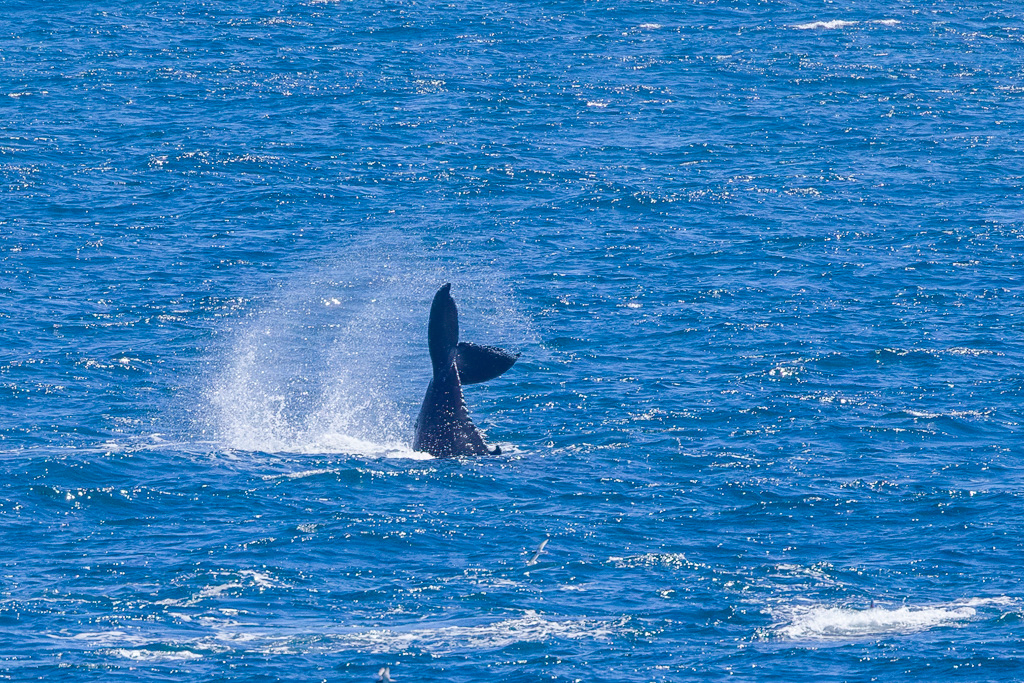
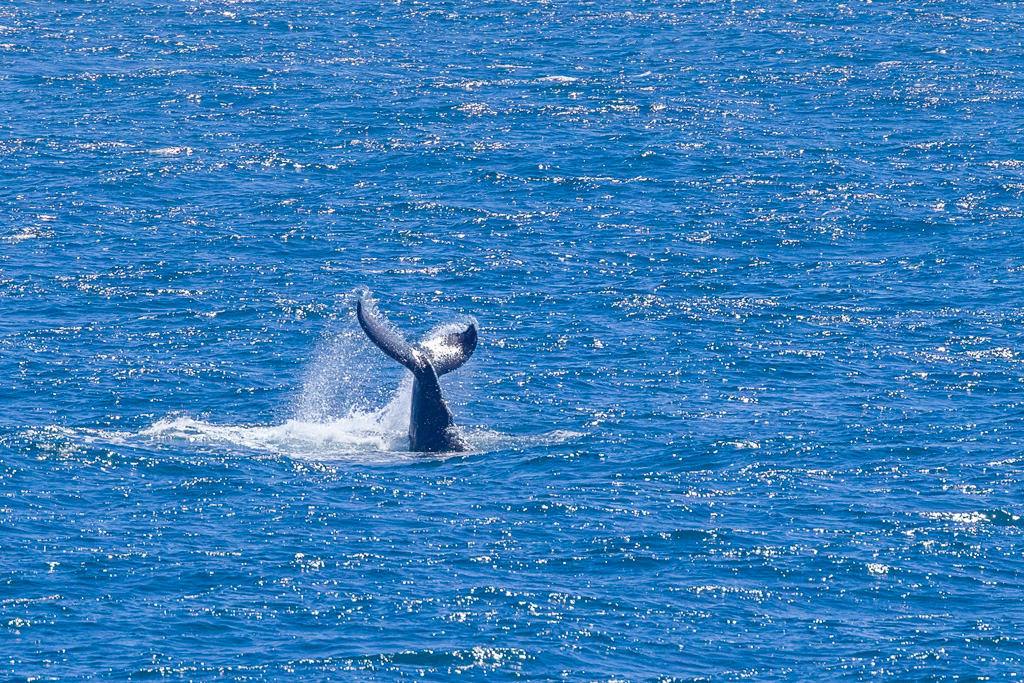
Then the behavior changed. One whale lifted its tail straight up and brought it down hard against the water, sending a sharp crack across the surface. Another followed, and soon several whales were tail‑slapping in different directions around the ship.
Tail slapping is one of the more dramatic surface behaviors Fin Whales perform. They may do it to communicate with other whales — the impact creates a low‑frequency shockwave that travels far underwater — or to express agitation or excitement. Sometimes it’s a way of asserting space within a group, and occasionally it’s simply a burst of energy, a physical gesture in the middle of social interaction. Whatever the reason, seeing it up close was fascinating.
The whales stayed with us for several minutes, surfacing and diving in a loose formation as the ship continued west. It was one of the most memorable wildlife encounters of the entire crossing.
The Falkland Islands (Islas Malvinas)
Two and a half days after leaving South Georgia, the outline of the Falkland Islands finally appeared on the horizon. After so much open ocean, the sight of buildings clustered along the shoreline felt almost surreal. As our zodiac approached Stanley, I found myself unexpectedly sad; the wilderness we’d been immersed in for weeks was giving way to streets, rooftops, and the quiet signs of everyday life. It was a reminder that our voyage was slowly winding toward its end.
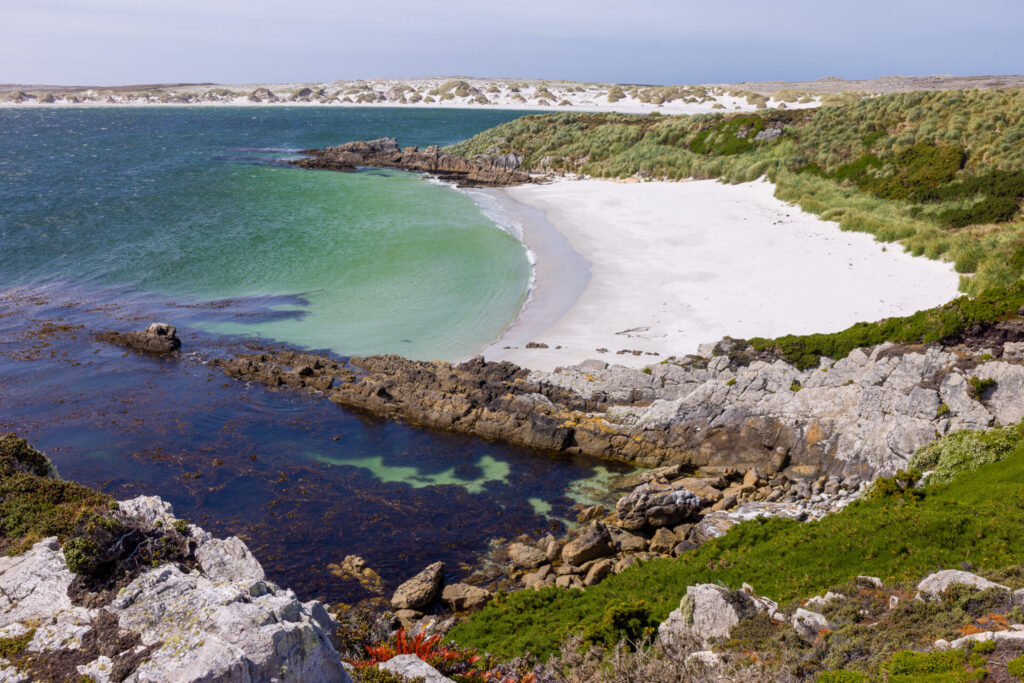
Once ashore, we boarded buses for the short ride to Gypsy Cove. The landscape there was a gentle mix of wind‑shaped grasses, white sand beaches, and low hills.
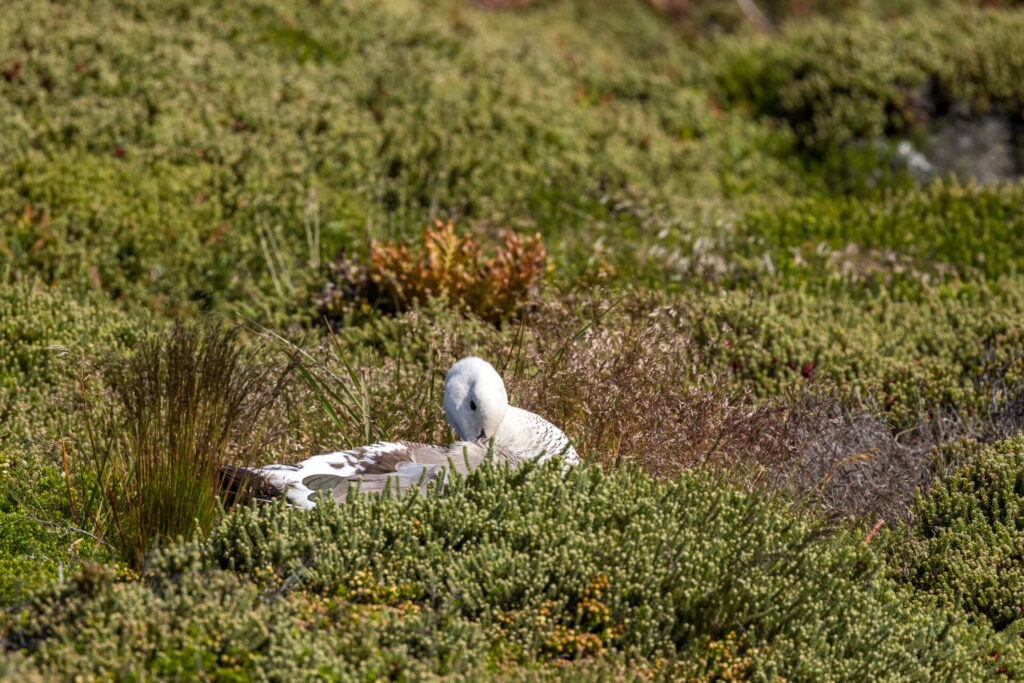
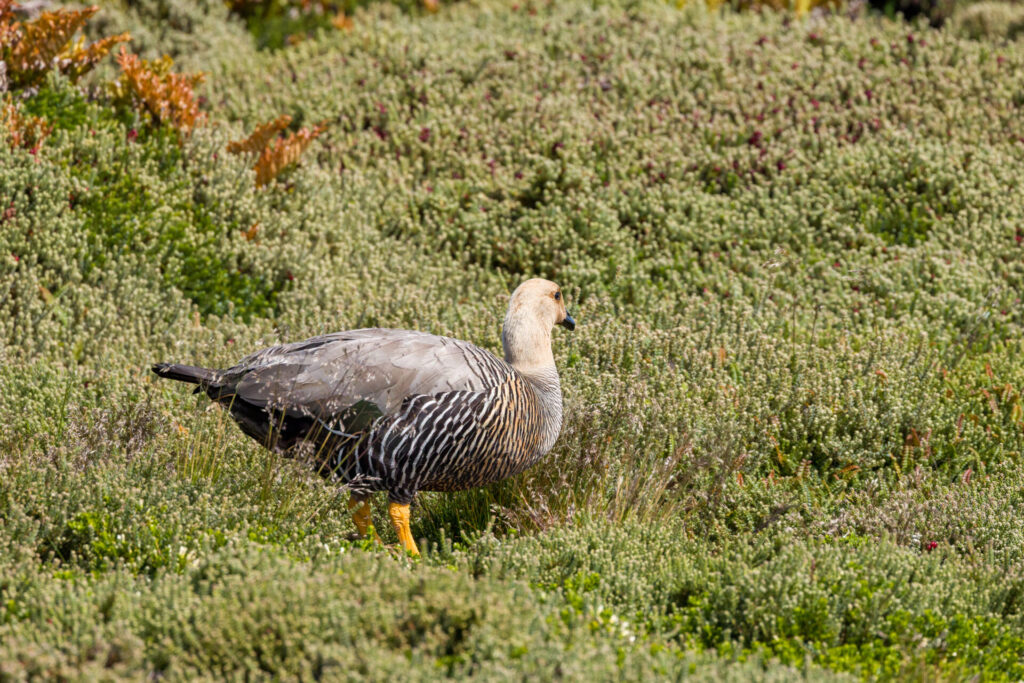
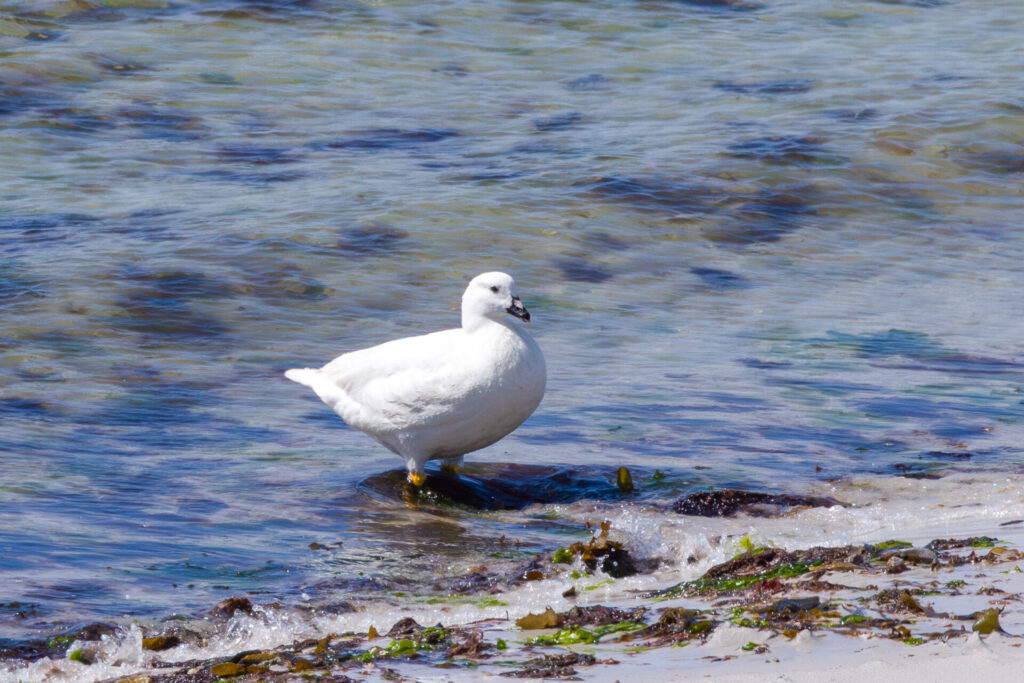
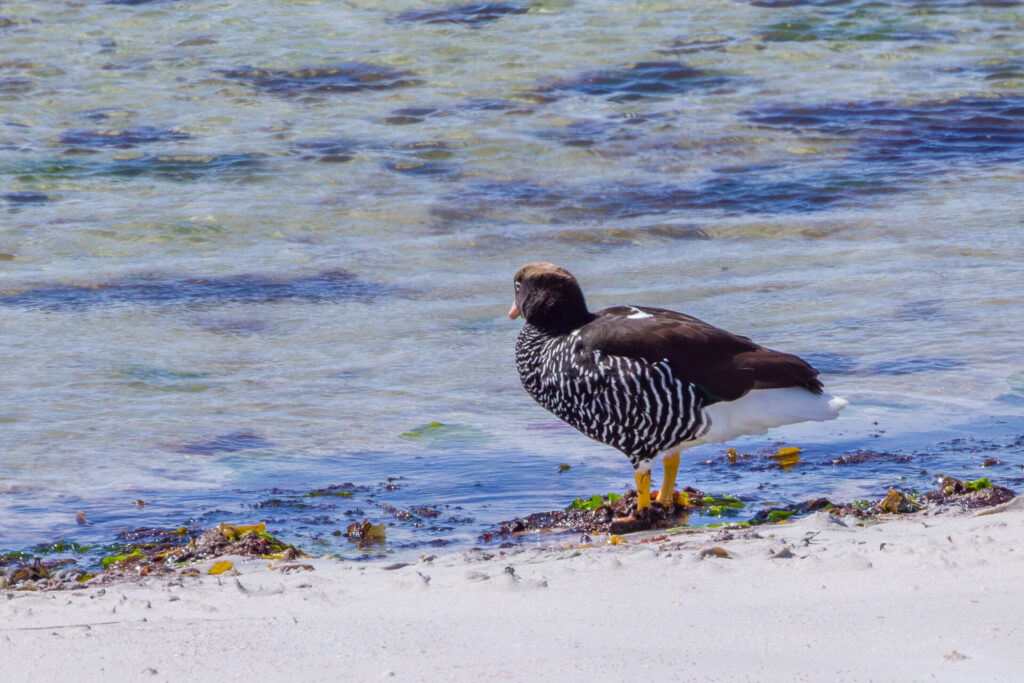
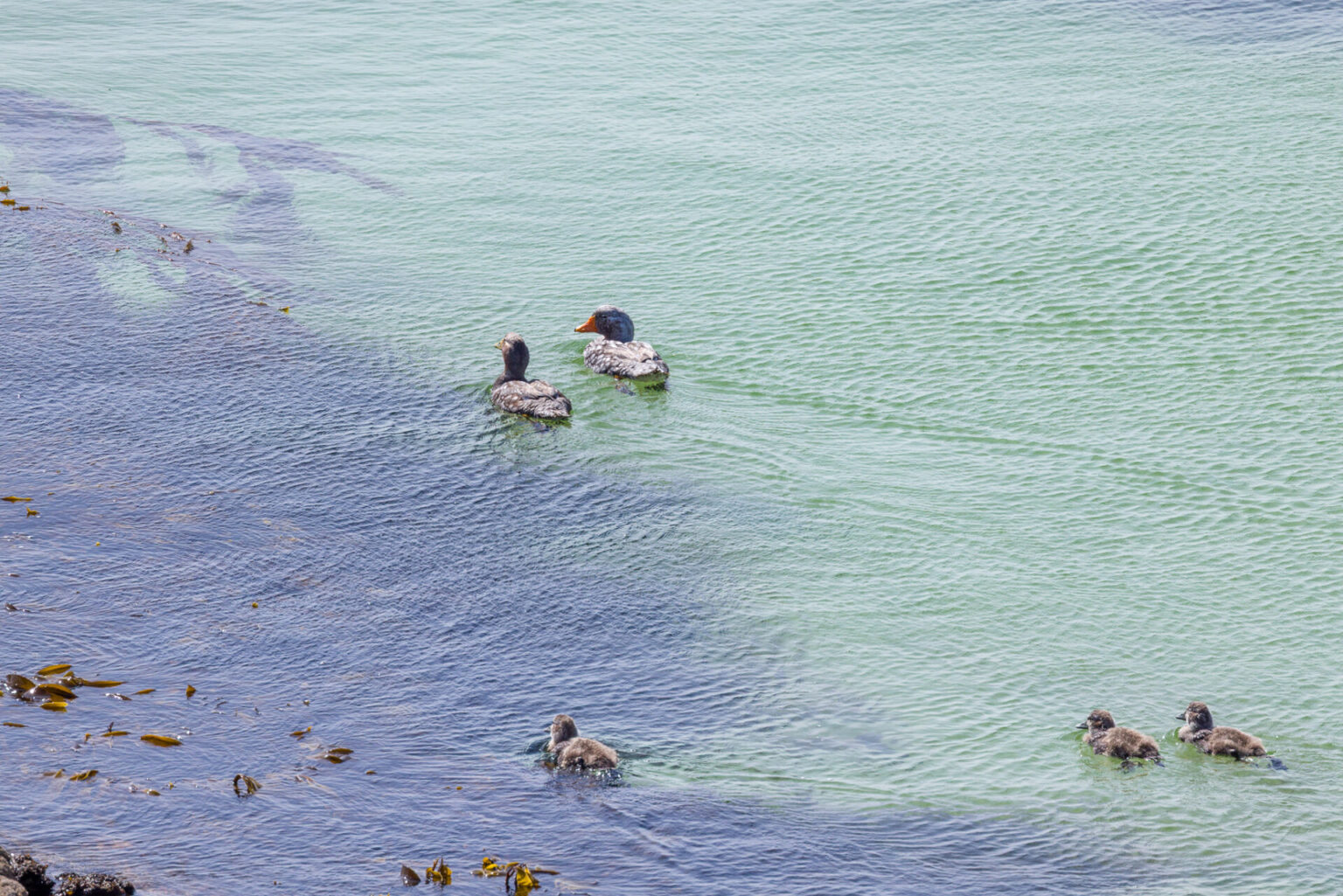
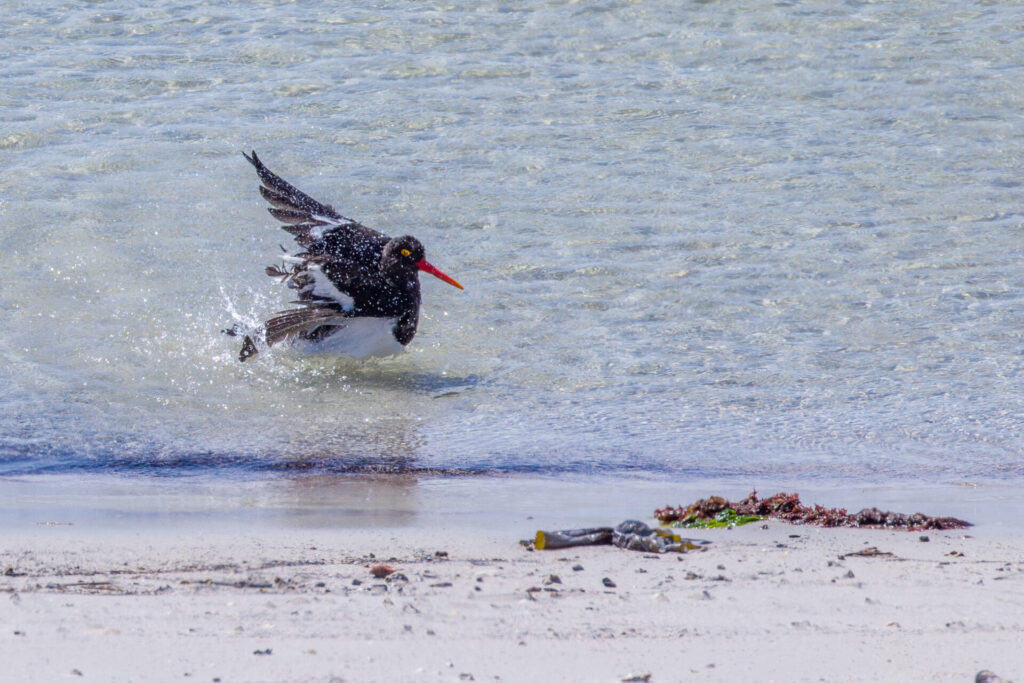
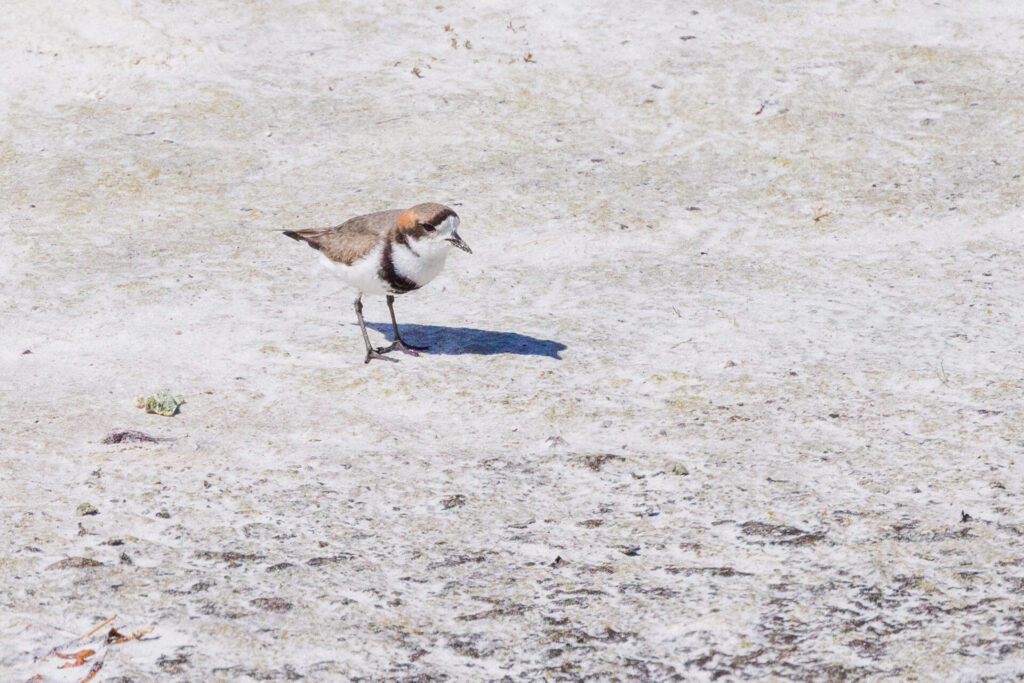
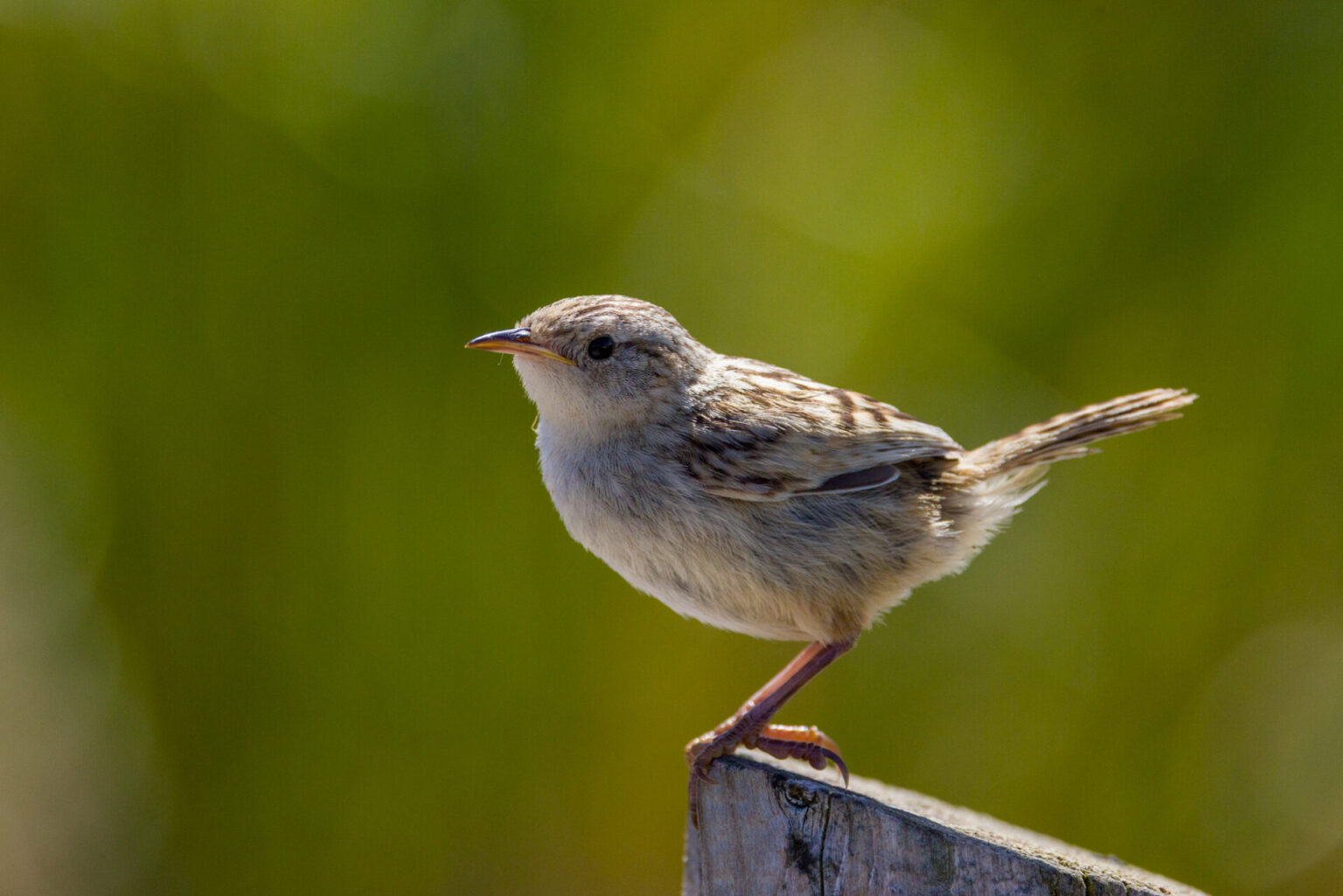
Birds we had first seen back in Ushuaia appeared again: Upland Geese, Kelp Geese, and a family of Falkland Steamer‑Ducks moving calmly along the shore. A Magellanic Oystercatcher bathed in the shallows, a Two‑banded Plover darted across the sand, and then, unexpectedly, a Grass Wren hopped through the brush — the first true songbird we’d seen in quite a while.
Magellanic Penguins
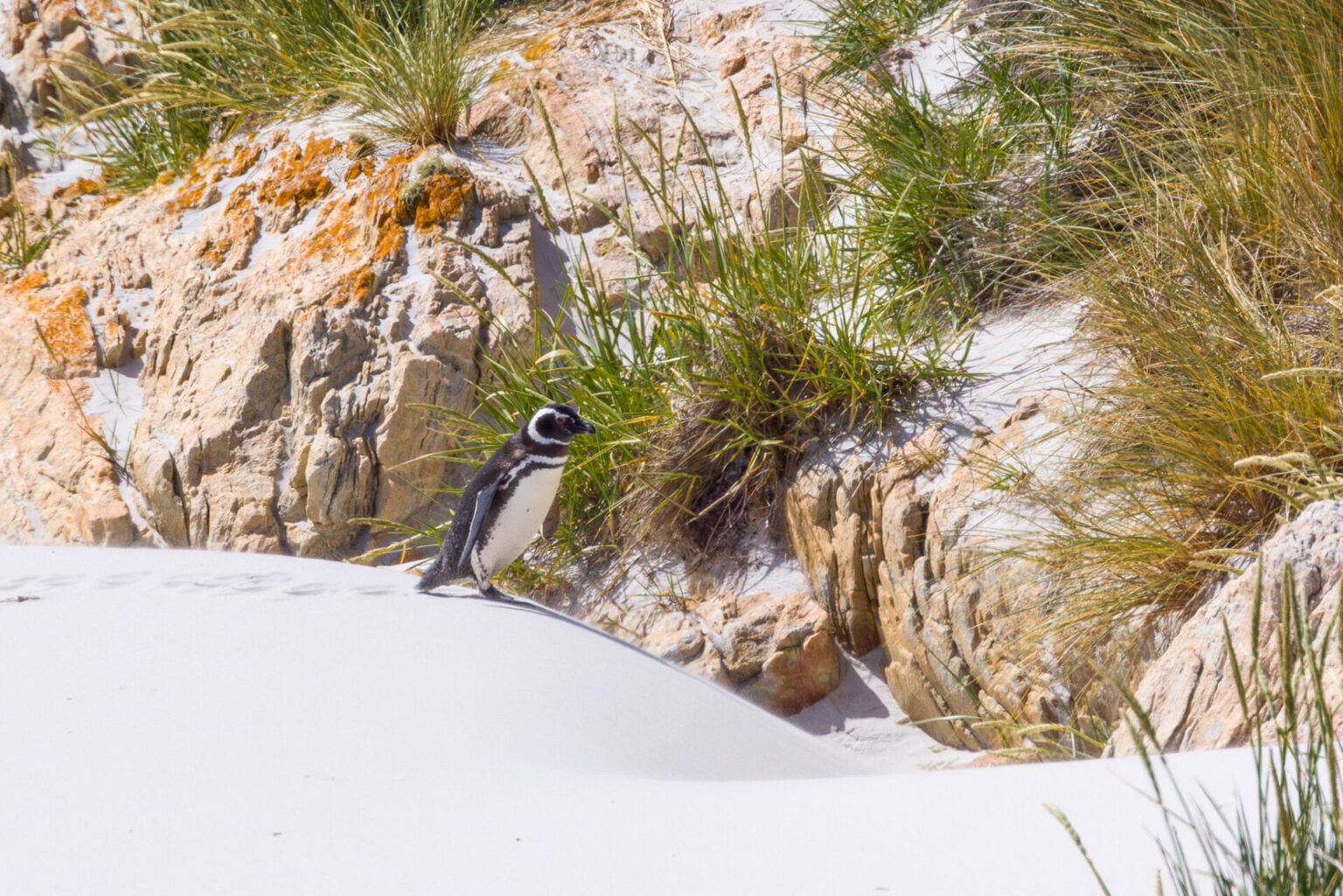
But the moment we were really hoping for came from higher up on the trail. Looking down toward the white sand beach, we spotted our first Magellanic Penguin of the voyage. This sighting marked the seventh penguin species we’d encountered, and the excitement was immediate.
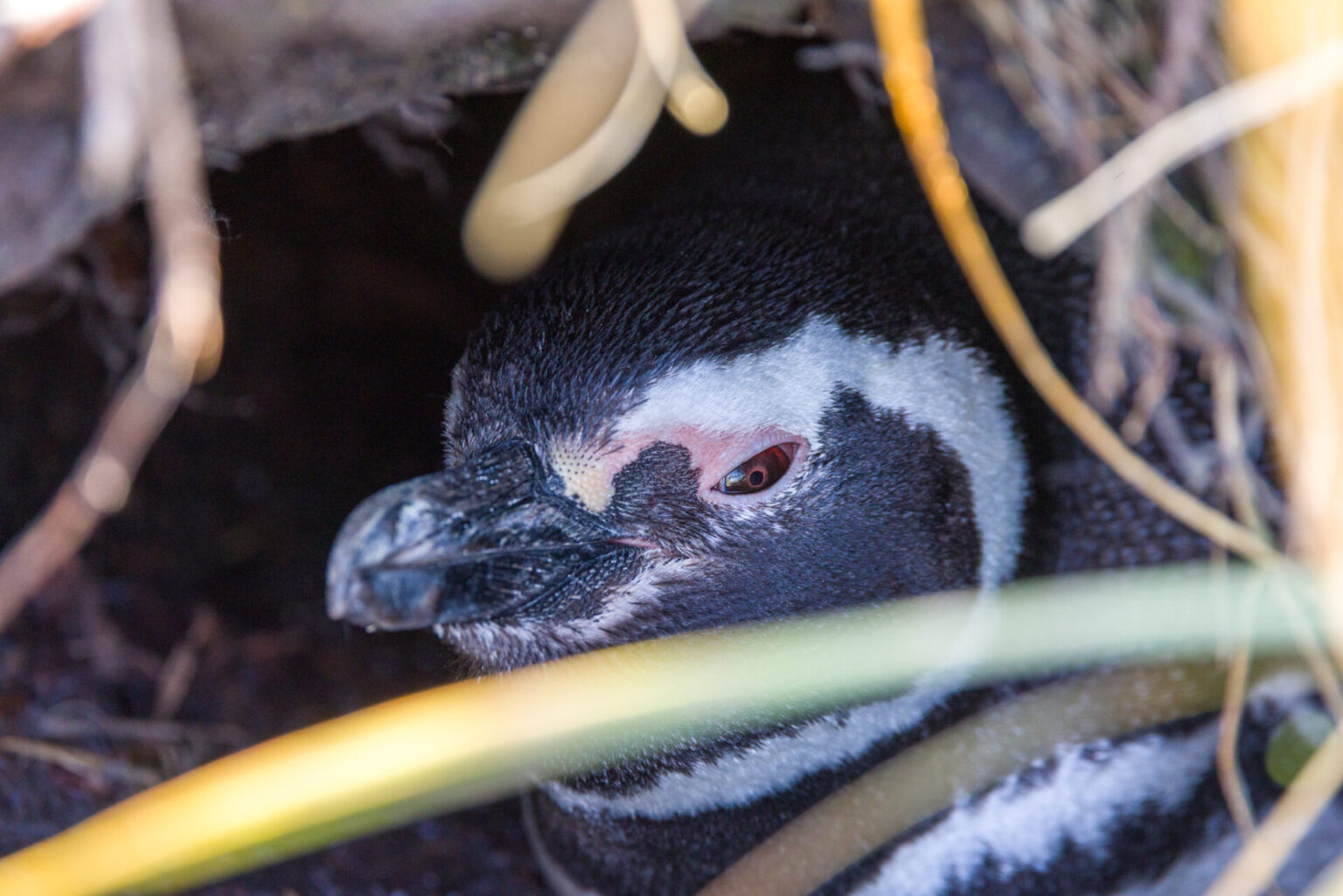
On our second loop of the trail, we noticed a burrow we had missed earlier. Inside, sitting calmly in the shade at the entrance, was another Magellanic Penguin — close enough for detailed photographs and seemingly unbothered by our presence.
The rest of the afternoon passed quietly. Gypsy Cove wasn’t a dramatic place like South Georgia or Antarctica, but it had a calm charm of its own — soft wind, pale sand, and wildlife going about its business as if we weren’t there at all. Eventually we made our way back to the buses for the short ride into Stanley, where the zodiacs waited to take us to the ship.
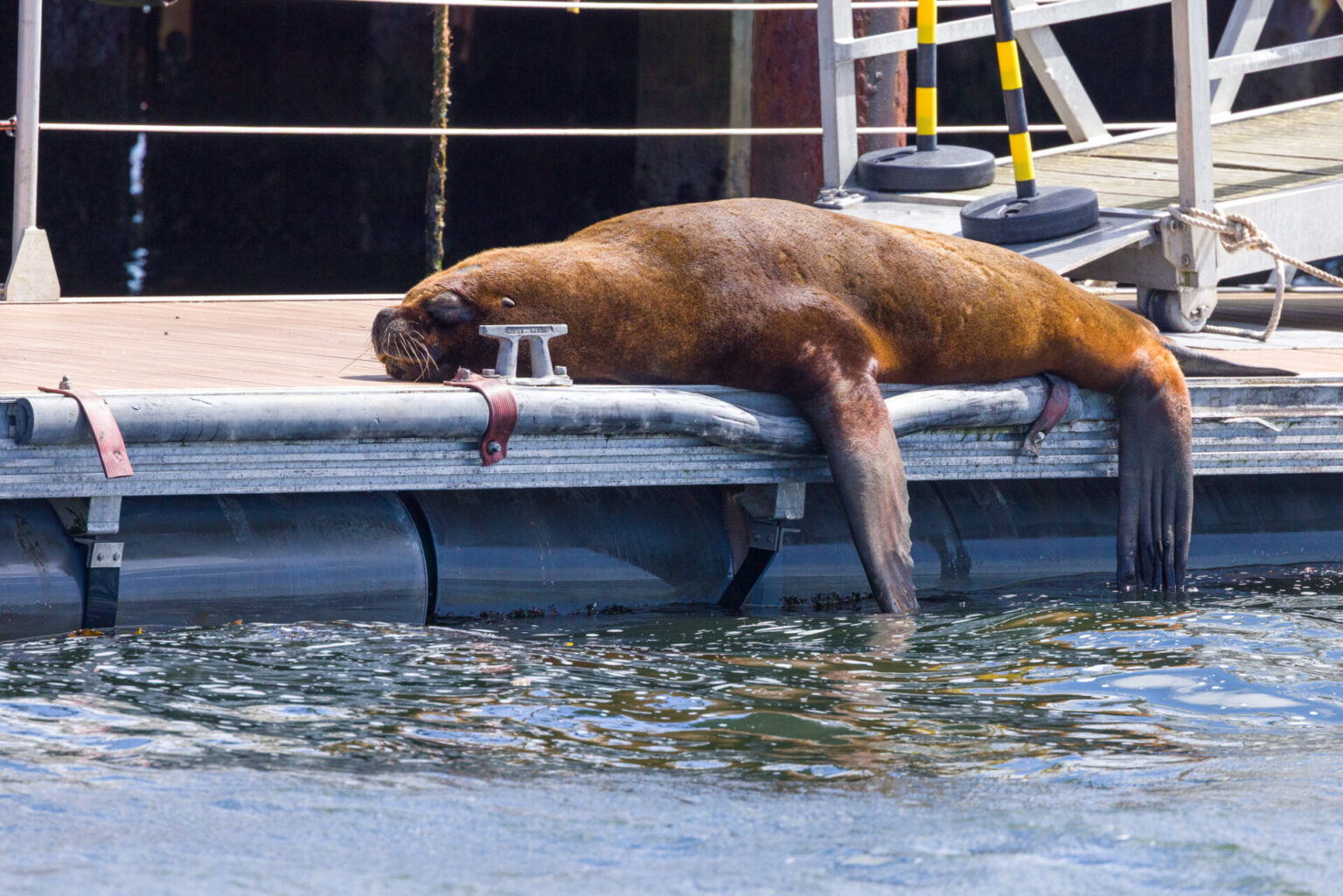
At the harbor, a familiar shape caught my eye: an Antarctic Sea Lion stretched out on the pier, completely relaxed and utterly indifferent to the people walking past. It was a scene that reminded me of visits to the coastal U.S. — something you might see on a quiet morning along the piers in San Francisco — and it added a small, comforting note to the end of the day.
Visiting Stanley and Gypsy Cove wasn’t an eventful stop, but it felt like a gentle reentry into the human world after so much time in remote places.
Stay Tuned for More
The following day we would continue exploring the Falkland Islands, heading west to New Island, where the crowds thin out and the wildlife returns in full force.
To continue to the next post in this series, click here: Coming soon…
To start from the beginning of the series, click here: Antarctica – Ushuaia to the Melchior Islands


Leave a reply