Macaroni Penguins of South Georgia
South Georgia is home to one of the most charismatic and unmistakable penguins on the planet: the Macaroni Penguin. With their bright yellow crests and loud, bustling colonies, these birds bring a burst of color and personality to the island’s rugged coastline. During the austral summer, tens of thousands gather on steep, rocky slopes to breed, molt, and raise their chicks — creating a spectacle of noise, movement, and flamboyant energy that feels almost surreal against the stark subantarctic landscape.
Hercules Bay
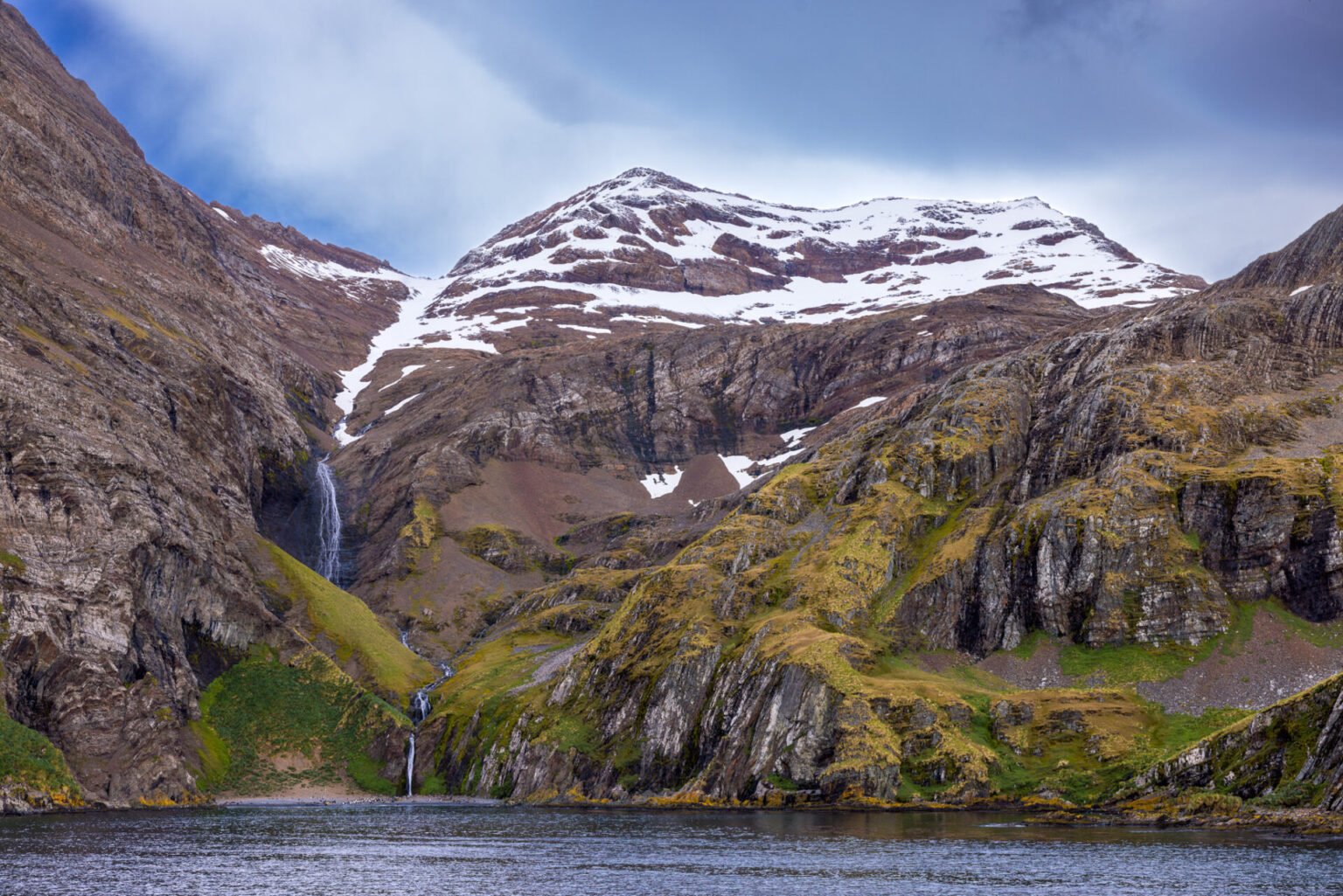
We first encountered Macaroni Penguins on our second morning at South Georgia Island in a place called Hercules Bay — a narrow inlet tucked between Stromness Bay and Fortuna Bay. Use the interactive google map below to zoom in or out to see a more detailed view of the bay itself or to see more clearly where it is on the island.
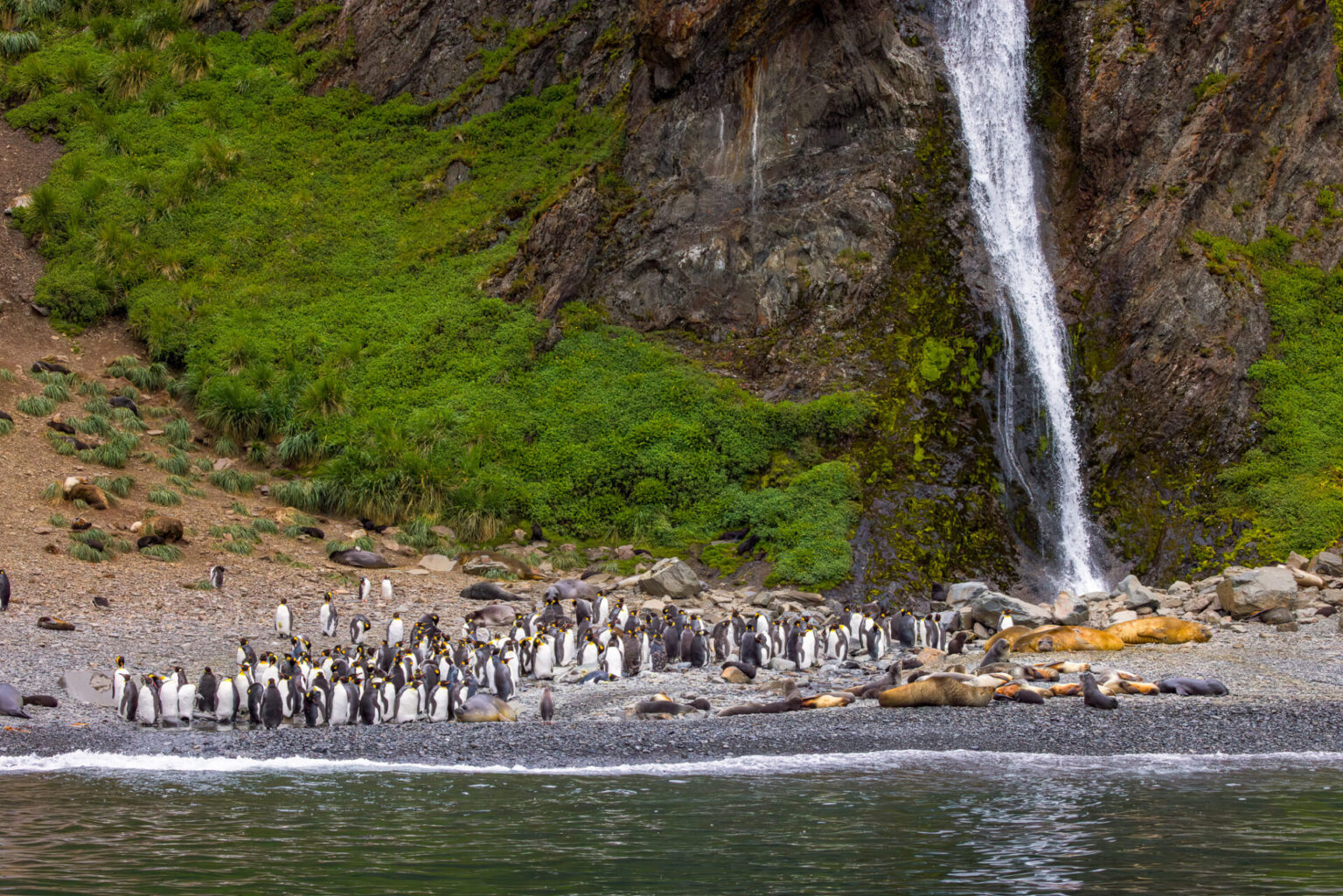
The tall mountains surrounding the bay rise straight out of the water, and a waterfall tumbles down from the cliffs into a tiny beach below. With almost no place to land, we explored the coastline by zodiac.
As we approached the beach, it was clear that there wasn’t much space. King Penguins crowded the shoreline, joined by a few Gentoo Penguins, Elephant Seals, and Fur Seals. But no macaronis. It was far too busy for them — they prefer rocky, remote areas where they can climb, nest, and move with ease.
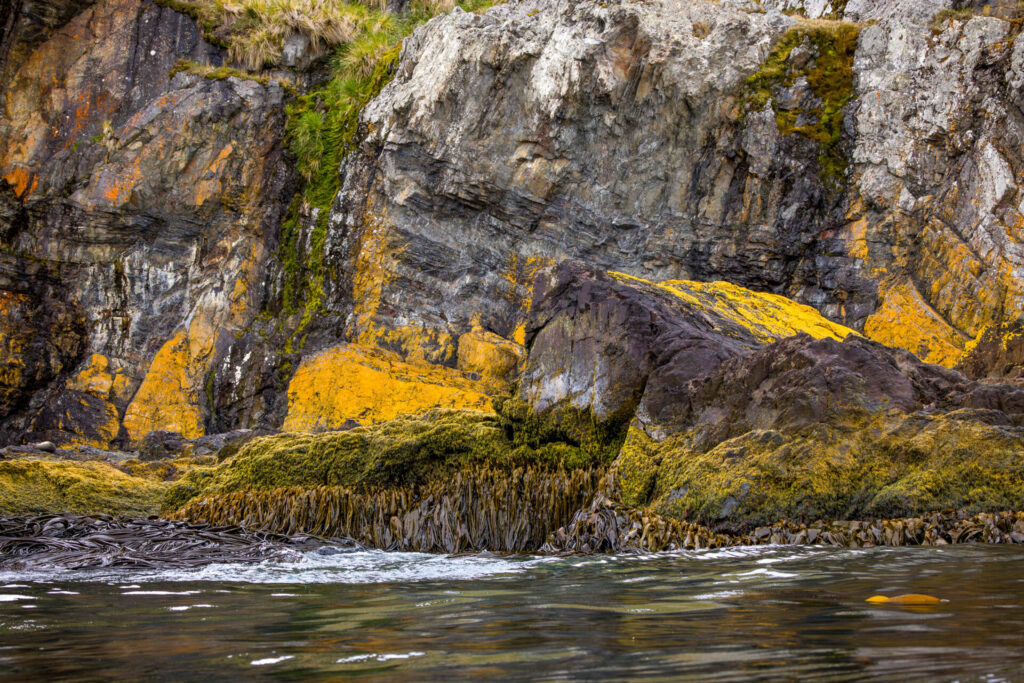
All around the bay, the rocks were lined with bull kelp and it was far more rocky. This is more like habitat for Macaroni Penguins. The bull kelp is quite dynamic, constantly pushed and pulled by the waves. The kelp is incredibly flexible, forming shifting patterns and shapes. For a penguin, getting through it is no small feat.
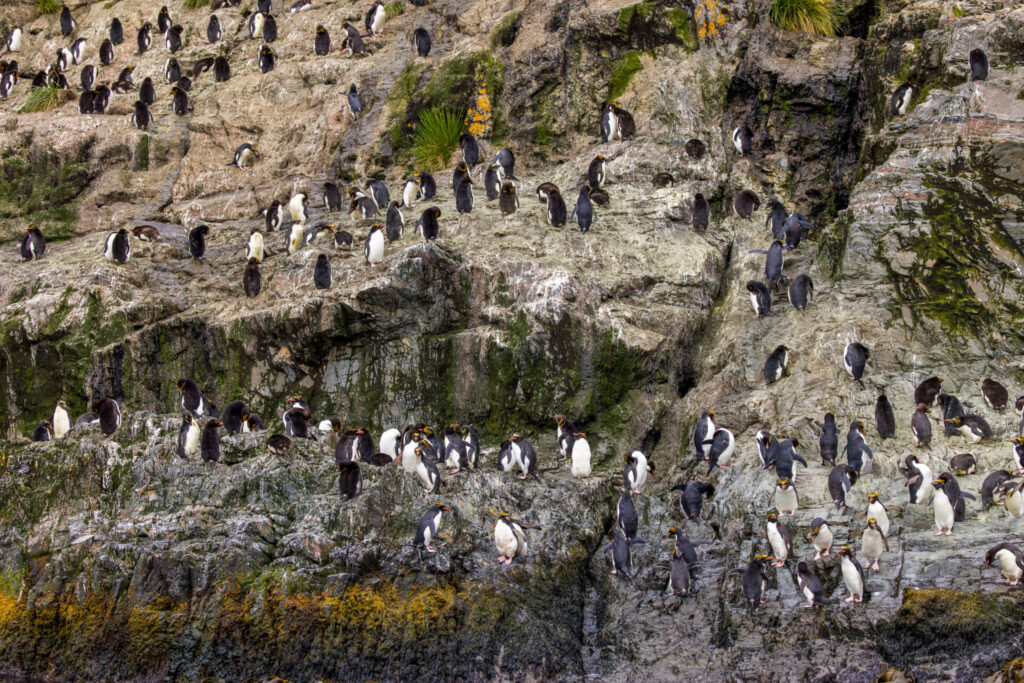
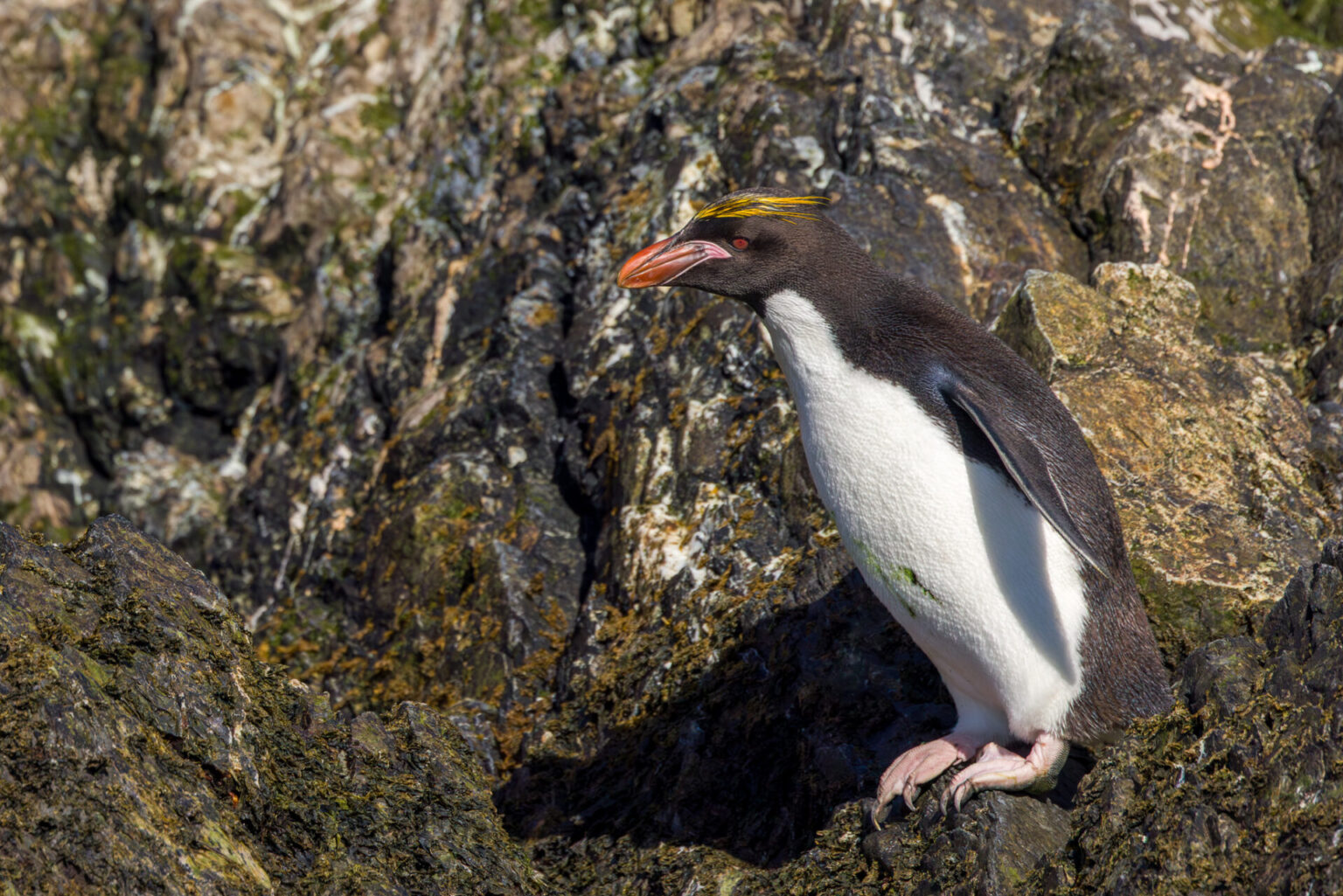
Soon, we found what we were looking for: a full colony perched on the steep rock wall just above the waterline. I’ve said it before, but it still amazes me how penguins can climb these vertical, slippery surfaces. Watching them scale the rocks with those massive feet and claws is something you don’t forget.
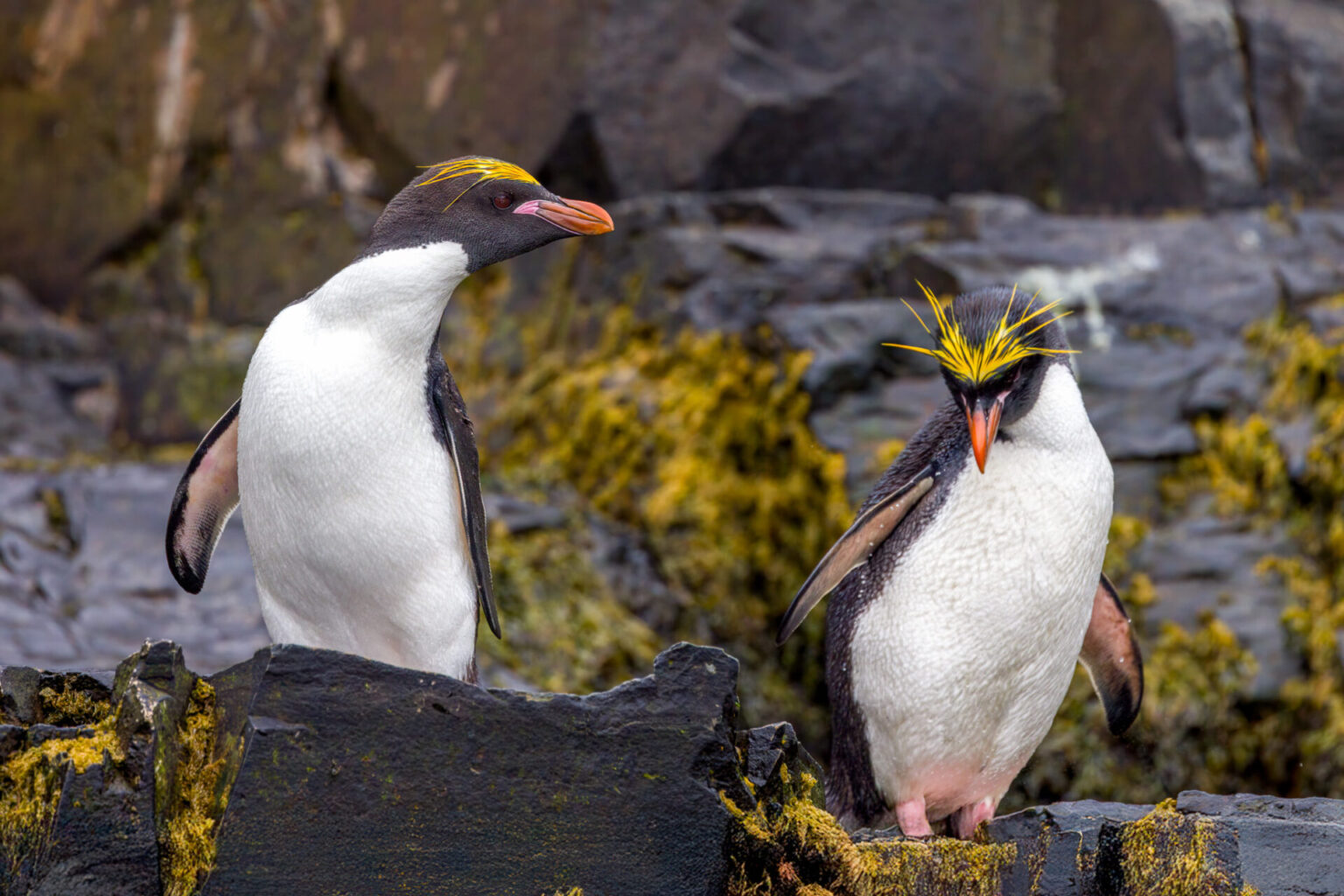
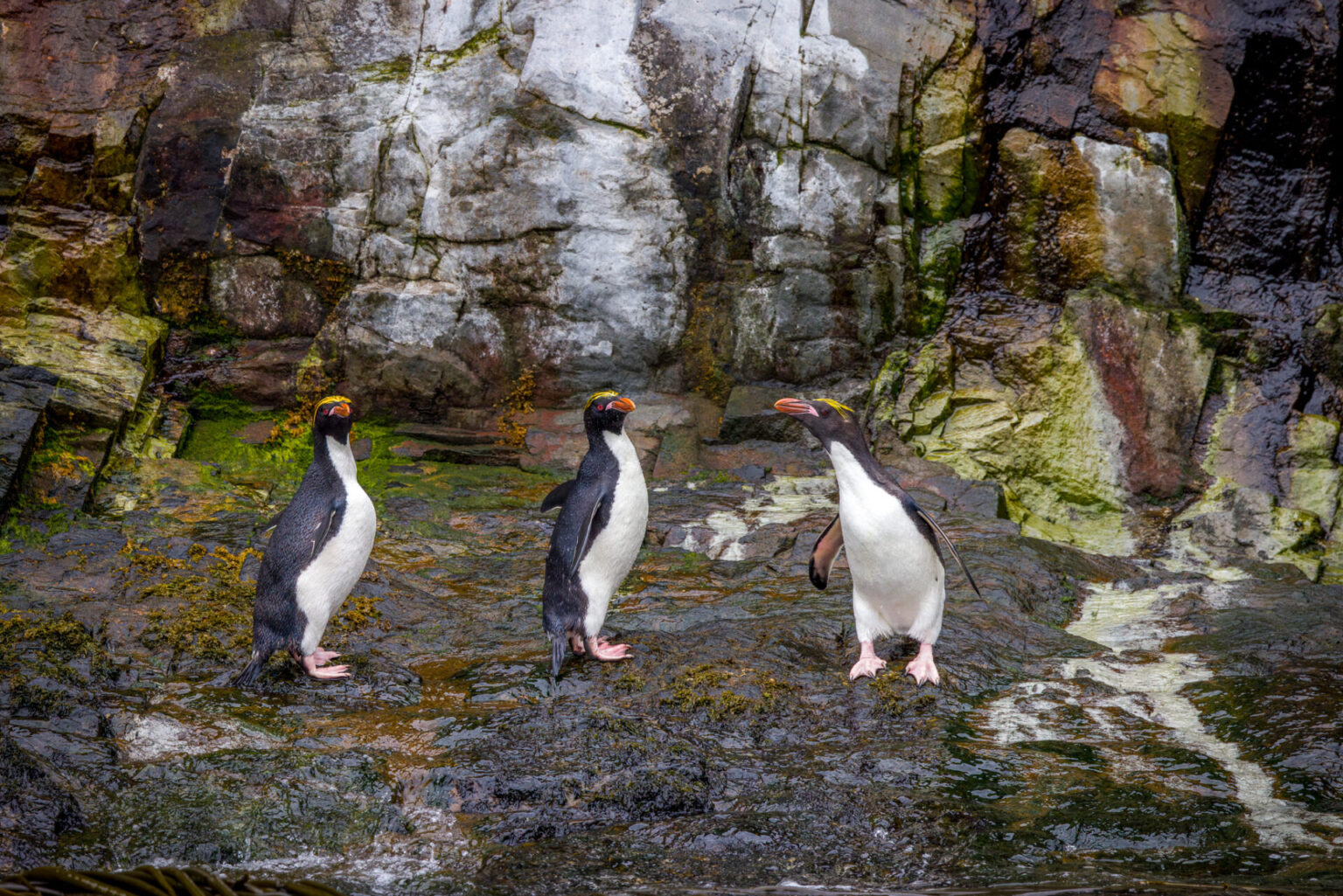
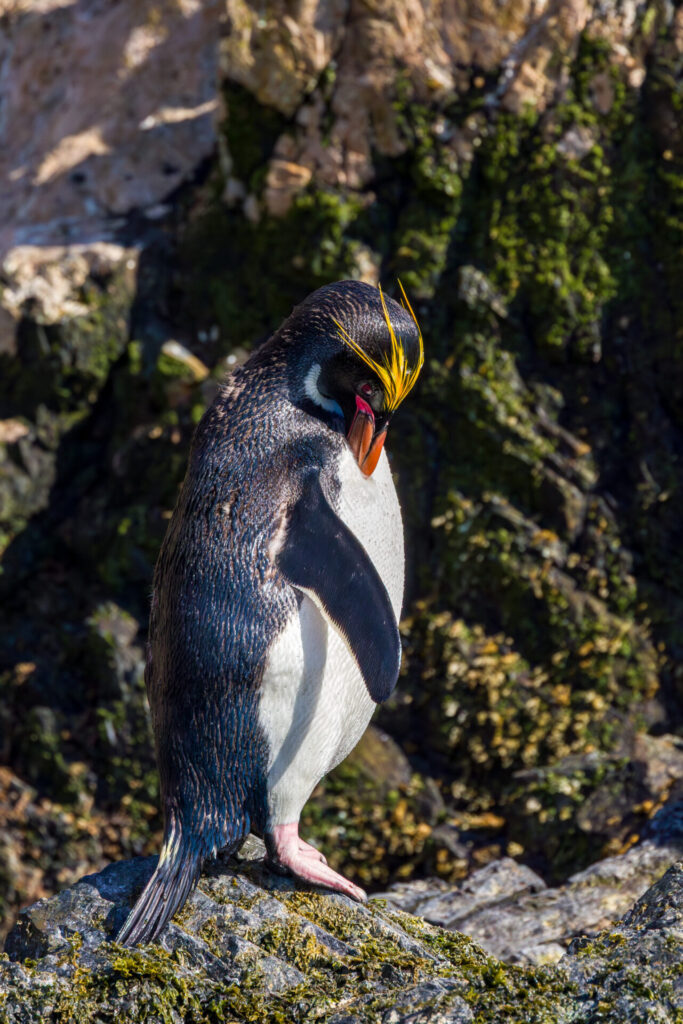
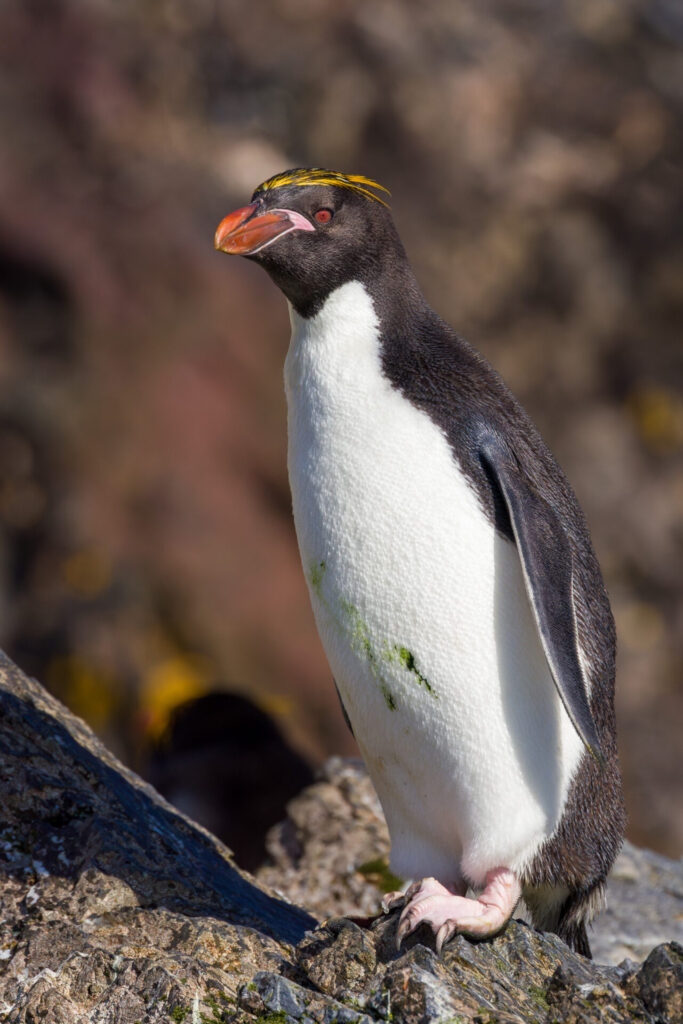
Looking closely at a couple of penguins a short distance away from the colony, you can really see why I referred to them as the most flamboyant penguins. Their bright yellow tufts flare out like wild eyebrows — unmistakable and wonderfully dramatic.
Where the Name "Macaroni" Comes From
You might be wondering how they got the name “Macaroni.” After all, they don’t resemble pasta at all. It turns out, when they were first discovered by British sailors in the 18th century, there was a fashion trend in which some wealthy, young british men would wear overly ornamented clothing, including wigs often with a feather in them.
People derisively called these men “macaronis”. In fact, the lyric “He Stuck a feather in his cap and called it macaroni” from Yankee Doodle refers to exactly that. I never knew that. For the british sailors, the fancy yellow tufts on these penguins reminded them of the macaronis back home in Britain.
Navigating the Bull Kelp
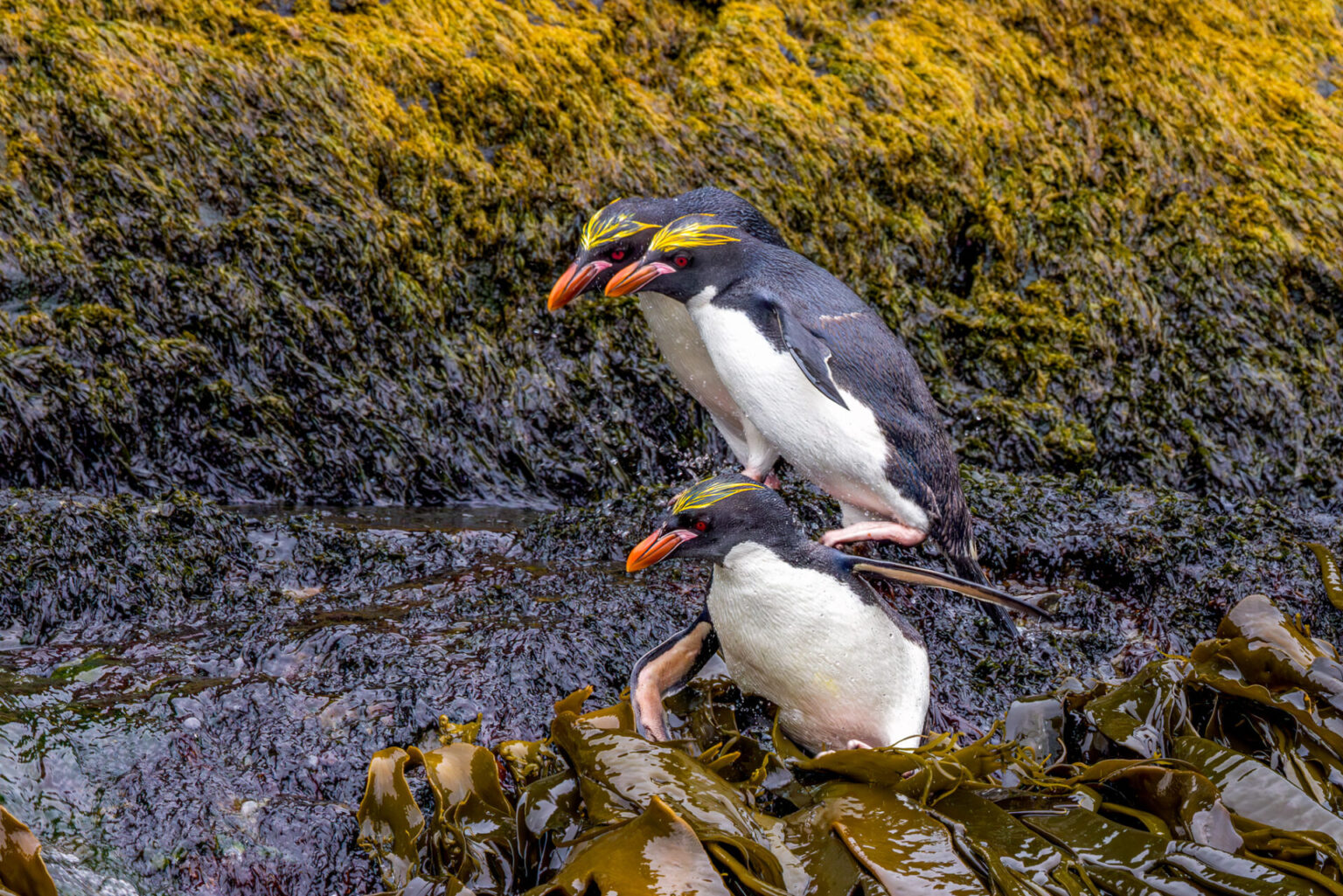
At one point, we watched three penguins trying to make their way from the rocks into the bay. The bull kelp made it a challenge. They wandered back and forth, looking for the best place to enter. Finally, one brave penguin jumped onto the kelp, and the others followed. They struggled through the writhing mass until they finally reached open water.
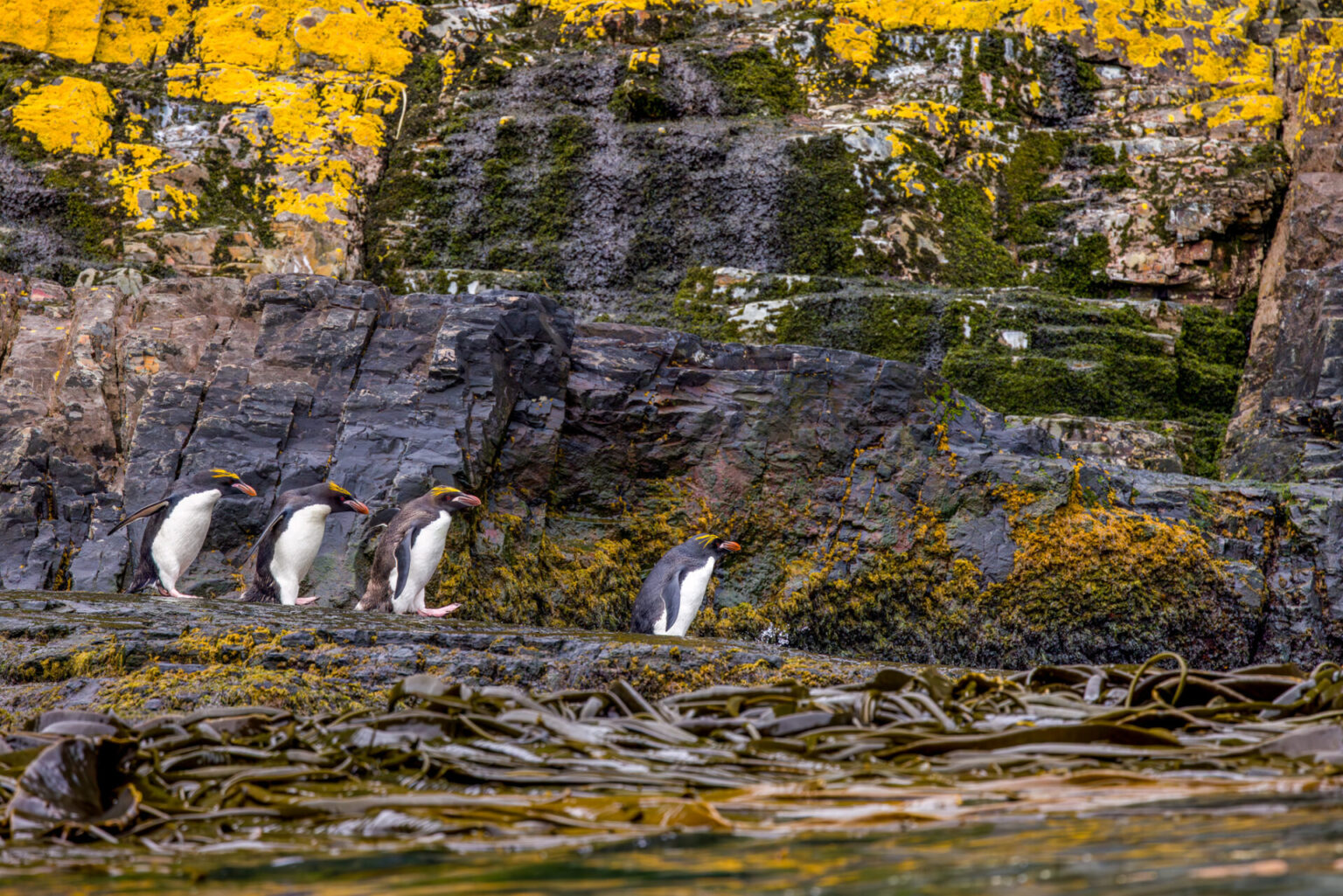
Along the shoreline, flatter sections of rock created natural walking paths. Small groups of penguins — usually three or four — wandered along these ledges, searching for places where they could safely enter the sea. The colors of the rocks, moss, and lichen were stunning, and the penguins fit right into the landscape.
We spent quite a while admiring these penguins. It is often said that when photographing things it is better to have odd numbers. In the photo below, there are four penguins. But photographically, this is really three penguins with another one penguin leading them — odd numbers only. Moments like that make South Georgia unforgettable.
Elsehul
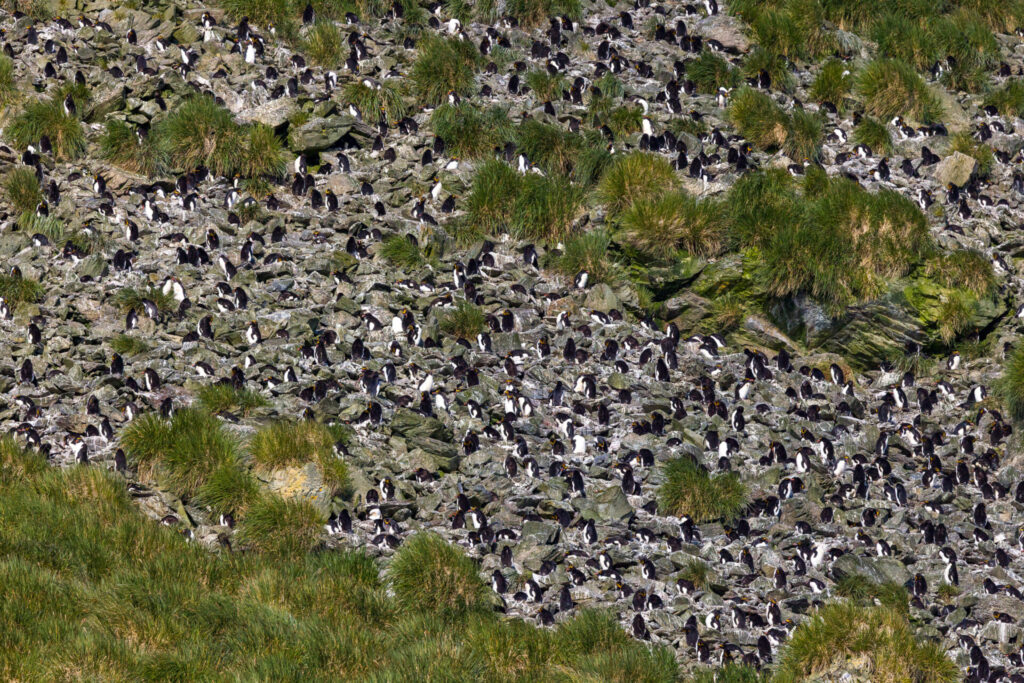
The second place we saw macaroni penguins was Elsehul, another rocky inlet on the island’s northern coast. Again, you can use the interactive google map to zoom in and out.
As at Hercules Bay, the colony was perched on the rocks, but this time there were even more individuals.
While writing this post, I started thinking about chicks. I didn’t notice any during our visit, but South Georgia is subantarctic, not antarctic, so the breeding season is earlier. Macaronis lay eggs in November, the chicks hatch in December, grow rapidly through late December and early January, and fledge in mid to late January.
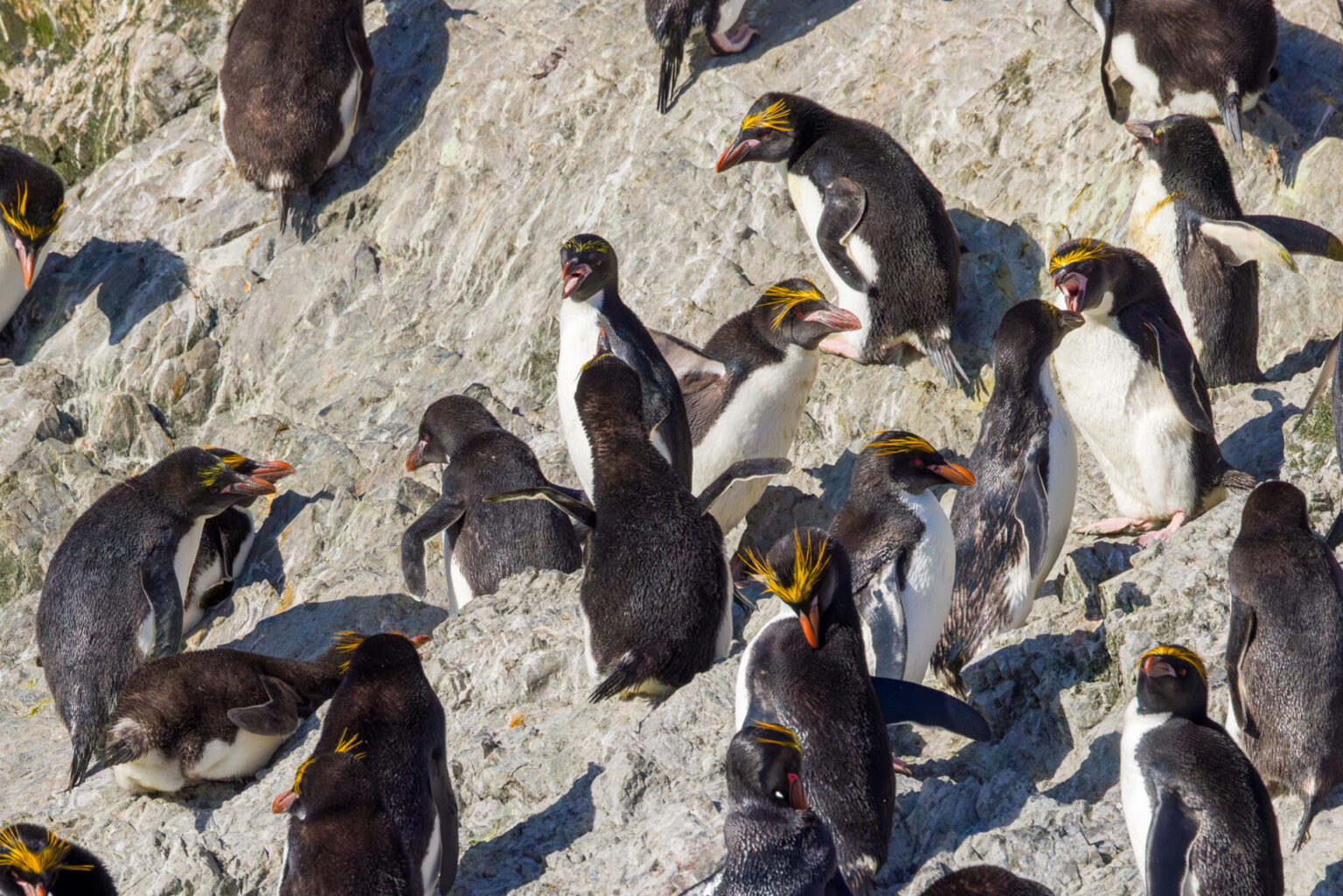
Knowing that fledged juveniles look almost like adults, I looked carefully at one of my photos — and there they were. Adults have long, ornate yellow tufts that flare outward, while juveniles have only a touch of yellow that lies flat. Adults also have bright orange beaks, whereas juveniles have duller, brownish beaks. Once you know what to look for, the difference is clear.
Below are a couple photos of adults at Elsehul showing off their beautiful plumage.
Feet Built for Climbing
One final note: look at their feet. They’re huge, with massive claws. This explains how they climb those steep rock walls so effortlessly. They’re built for it.
To continue to the next exciting post in this series, coming soon…
To start from the beginning of the series, click here: Antarctica – Ushuaia to the Melchior Islands


Leave a reply