South Georgia offers some of the most extraordinary wildlife encounters anywhere on Earth. In an earlier post, I wrote about two of its iconic King Penguin colonies — Gold Harbour and St Andrews Bay. We had one more chance to visit another colony, and this time our destination was Salisbury Plain, home to the island’s second‑largest King Penguin population. Roughly 300,000 penguins gather here on a broad glacial outwash plain framed by towering mountains and two massive glaciers: Grace Glacier and Lucas Glacier.
If you switch the map above to satellite view, you’ll see these glaciers spilling down from the interior of South Georgia, creating one of the most dramatic backdrops of any penguin colony in the world.
Salisbury Plain: Arrival at the Colony
Our ship reached the Bay of Isles in the early morning hours. The night before, we had been asked to turn off cabin lights so we wouldn’t disturb wildlife along the coast as we sailed northwest from Stromness. After a quick briefing, we boarded the zodiacs and headed toward shore.
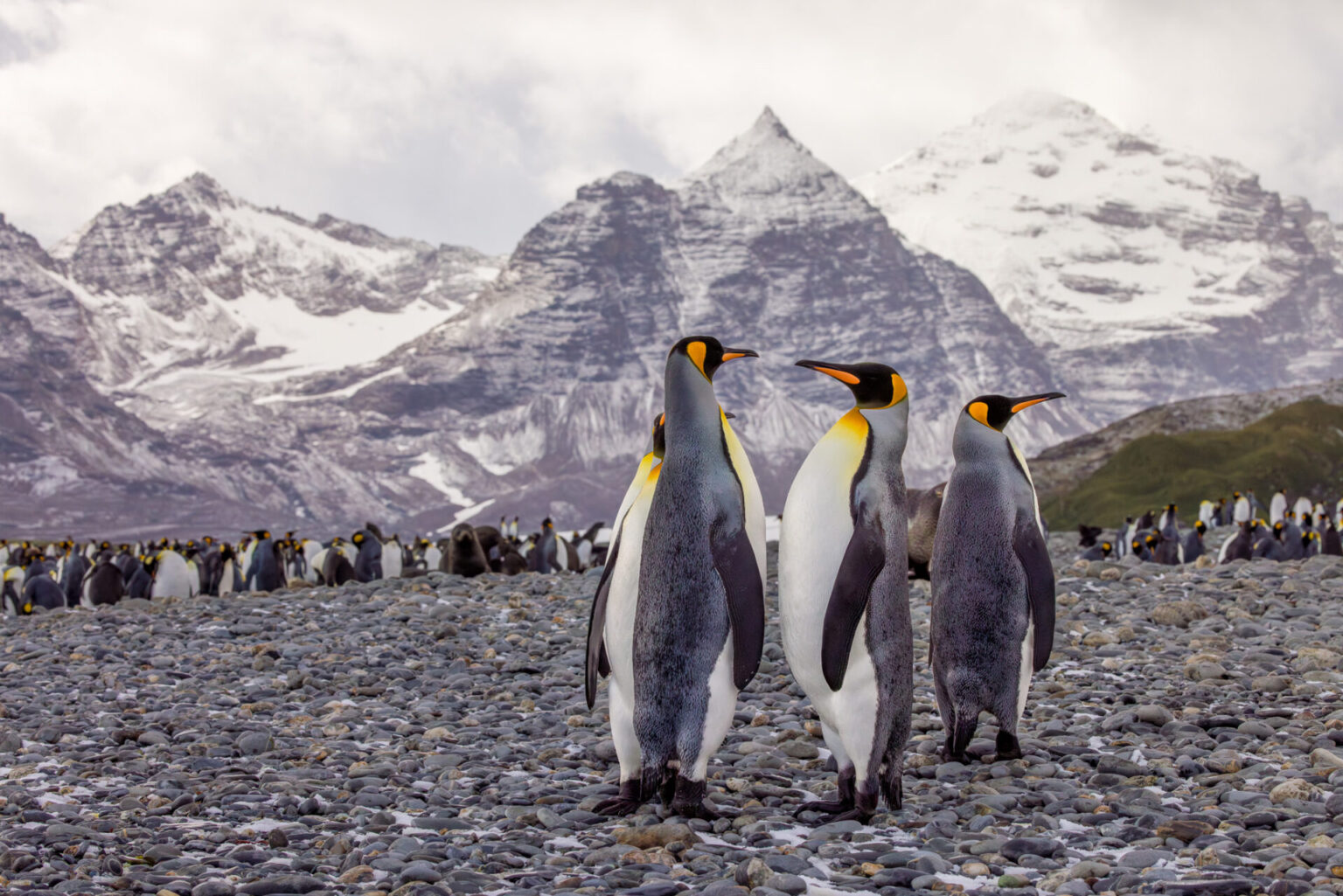
It was a cold, breezy morning when we landed near the colony. Penguins dotted the beach, calling and preening. To the east, rugged mountains rose sharply, their slopes covered in snow and ice. At their base — just behind the penguins in the photo below — lay Grace Glacier, glowing faintly in the muted morning light.
Kings of the Mountains
Kings of the Mountains
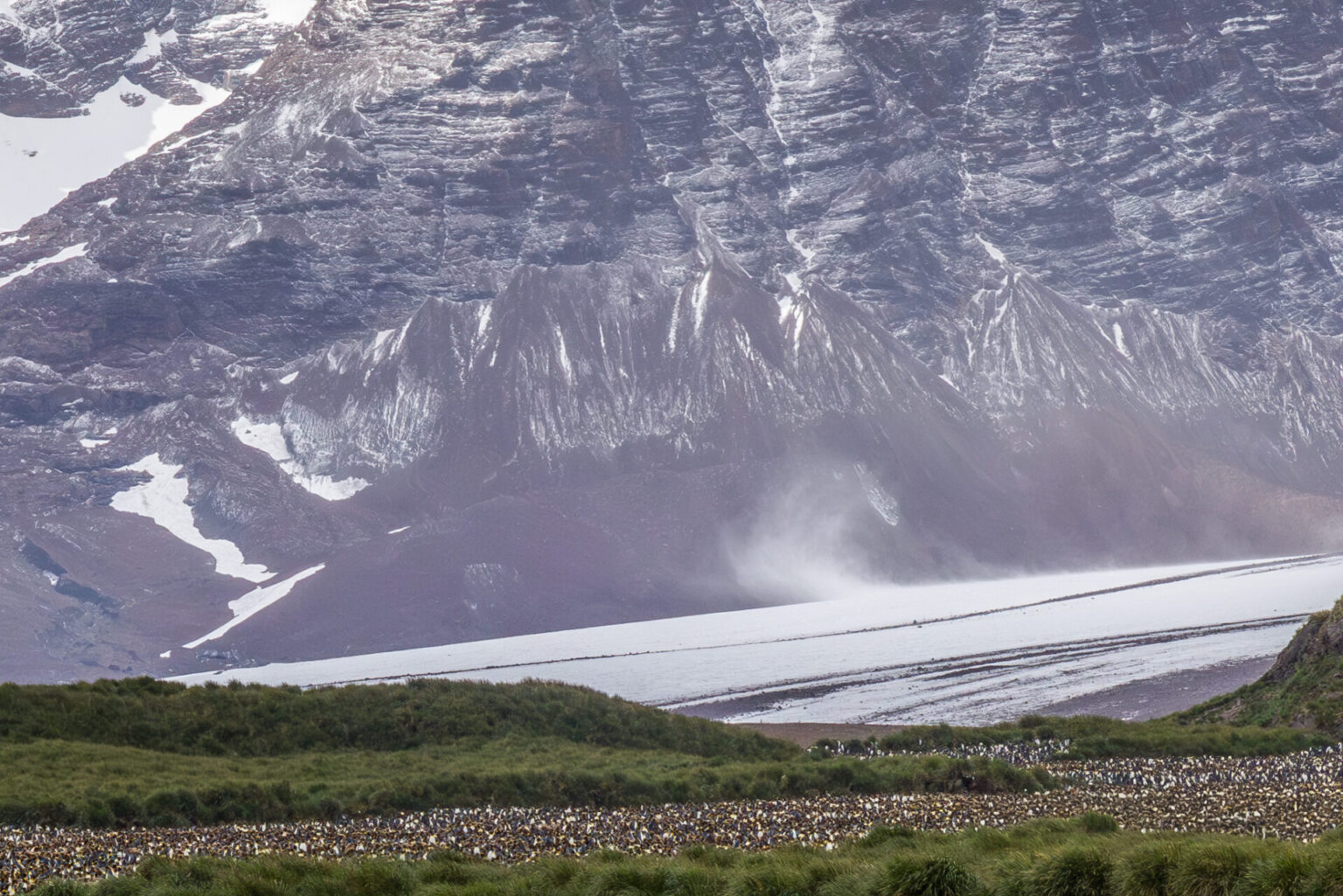
A short walk inland brought us to a vantage point overlooking the colony and the glacier. From here, Grace Glacier looked immense. Wind howled down its face, whipping snow into swirling vortices. In the photo below, you can see how fiercely the wind was blowing — a reminder of the raw, untamed nature of South Georgia. Fortunately, for the penguins, as well as us, a hill blocked the worst of the wind from the colony.
Wind on the Glacier
Turning back toward the island’s interior, Lucas Glacier swept across the horizon in a broad, graceful arc. Together, the two glaciers form a magnificent amphitheater around the colony.
Glacier at Salisbury Plain
How King Penguins Locate Their Mates
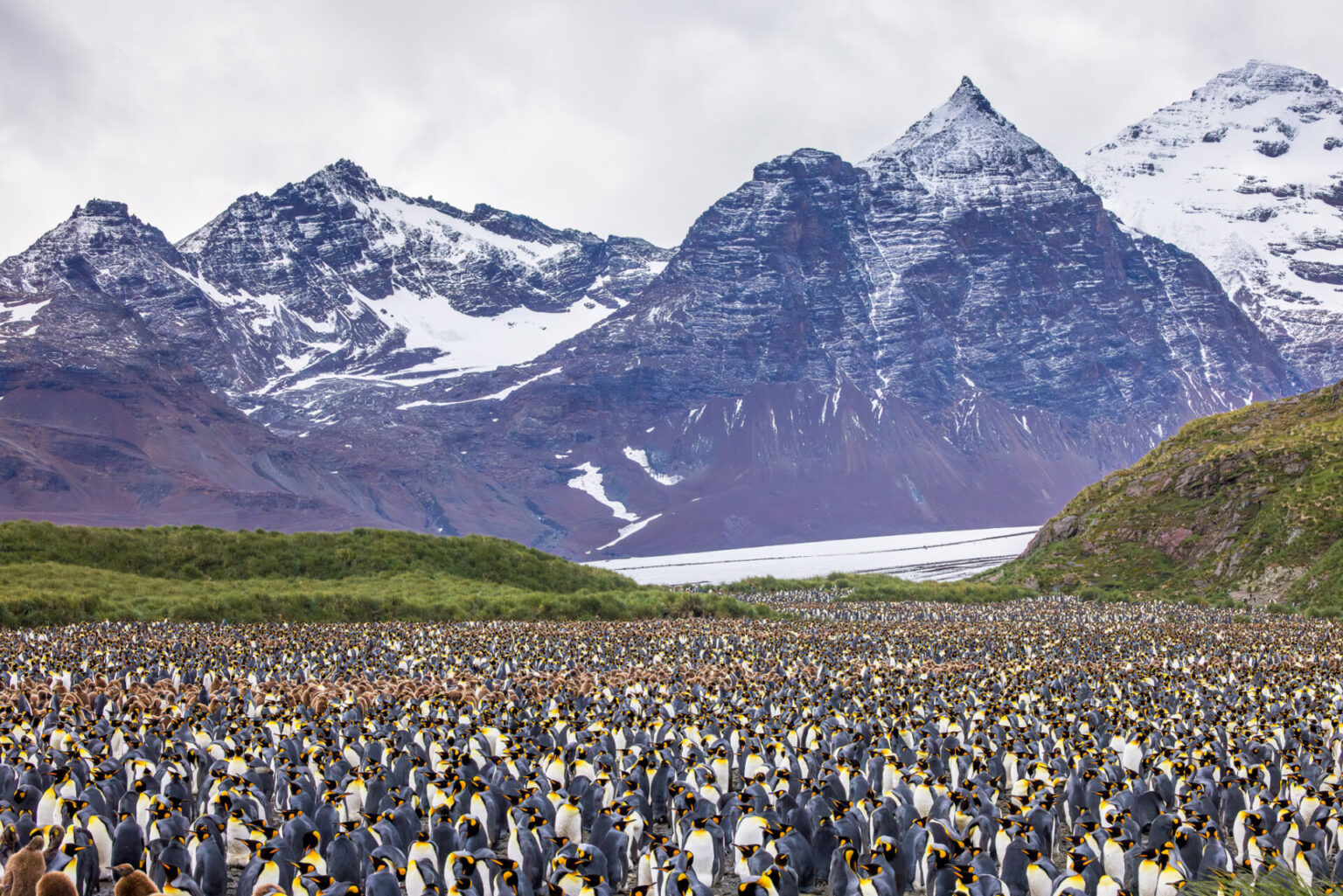
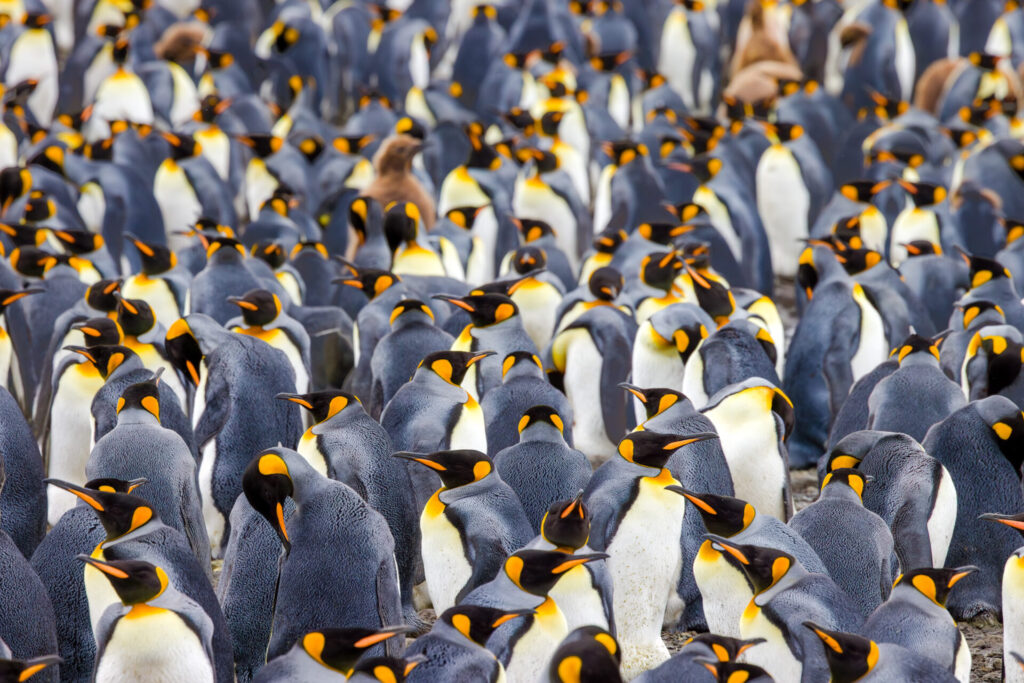
One of the most striking things about Salisbury Plain is the sheer density of penguins. On the surrounding plain, individuals are more spread out, but in the central area they gather shoulder‑to‑shoulder in a tightly packed mass. There are so many penguins here that counting them is impossible.
(The image below is available as a fine art print. Click the image to visit the product page.)
Kings of Salisbury Plain (Click image for product page.)
Inside this dense colony, the sound is overwhelming — a constant cacophony of squawks, whistles, and calls. With thousands of birds packed together, how does a penguin find its mate after returning from a long foraging trip?
King Penguins rely on voice recognition. Each penguin has a unique call, and partners (and chicks) can identify one another even in the middle of the colony’s chaotic noise. They use visual cues to get close, then rely on sound to locate their family.
(The image below is available as a fine art print. Click the image to visit the product page.)
Where's Junior? (Click image for product page.)
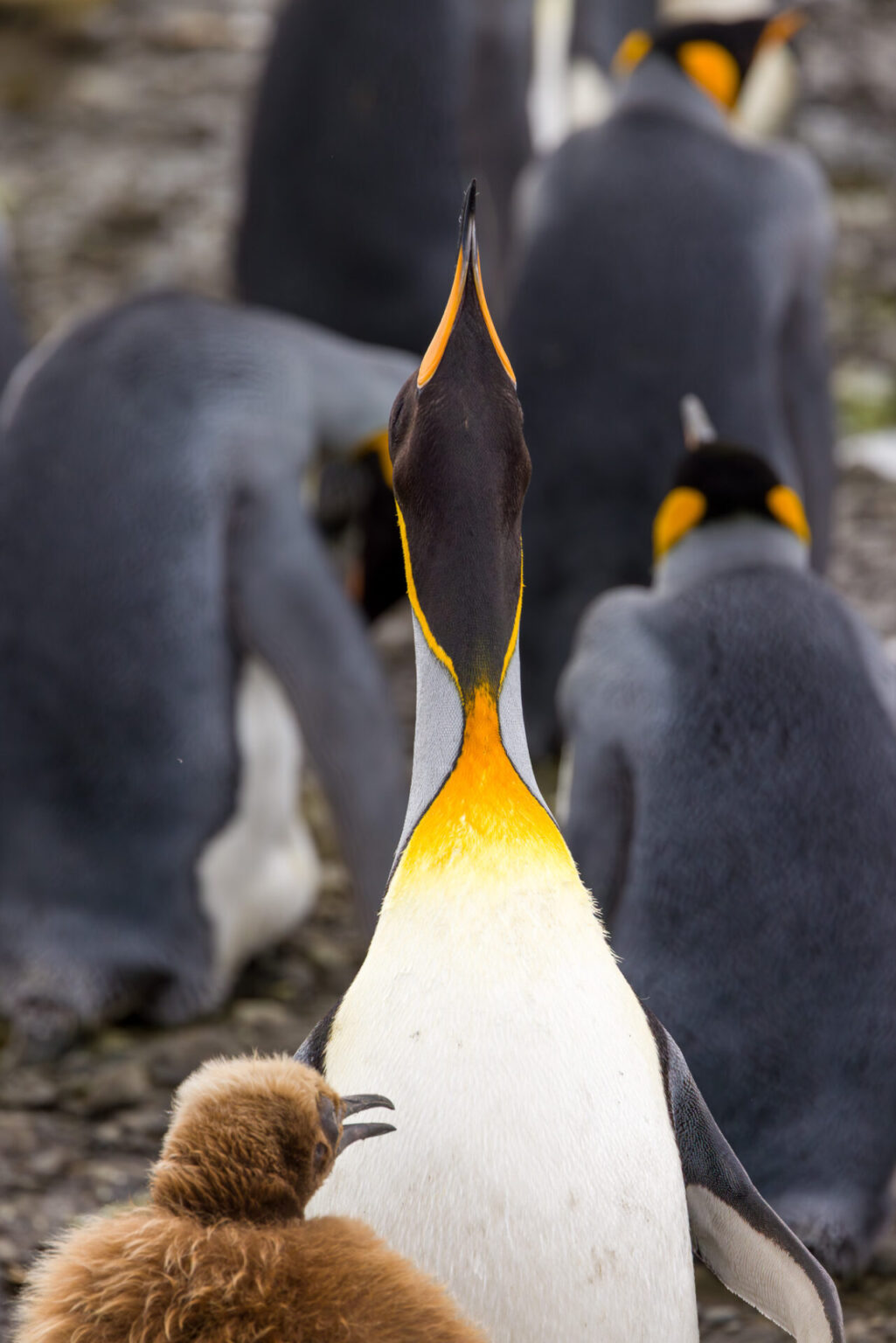
A closeup shot reveals one of many penguins squawking loudly in the colony.
King Penguin Squawking
King Penguin Chicks: A Year in Brown Down
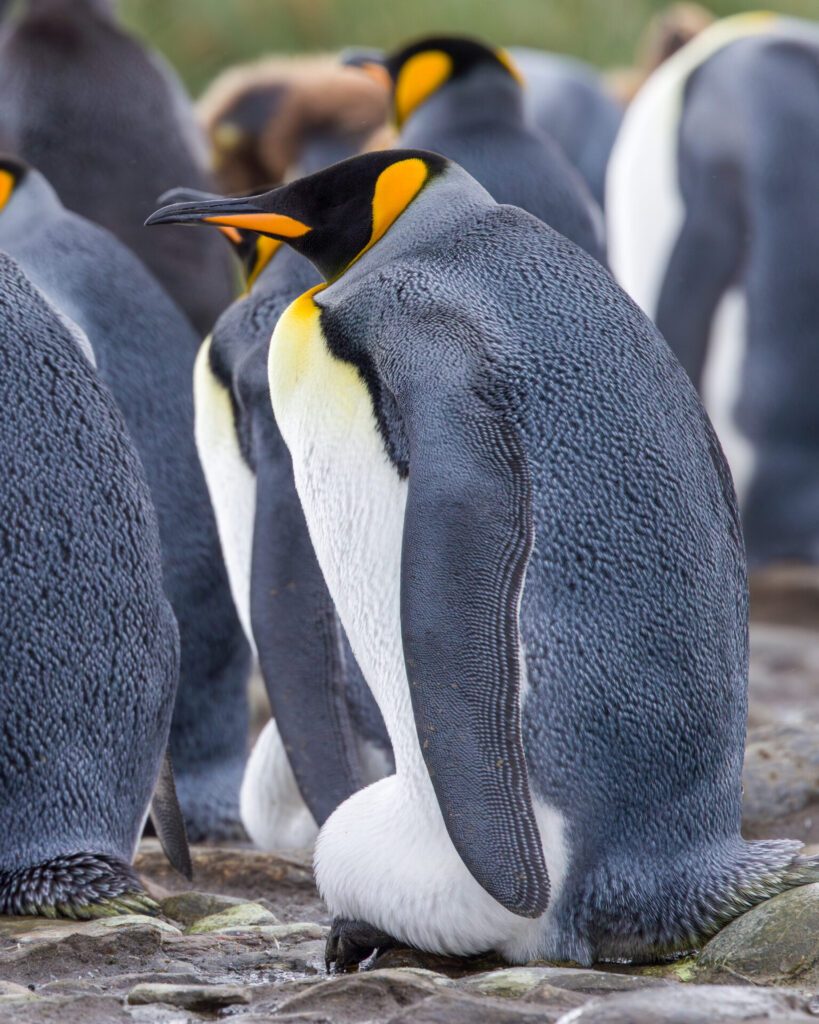
We didn’t see any newly hatched chicks during our visit. It was January 7–10, slightly early in the season, and most chicks in South Georgia hatch between January and February. But many adults were clearly incubating eggs, their large bellies draped over their feet.
Two Penguins Possibly Incubating Eggs
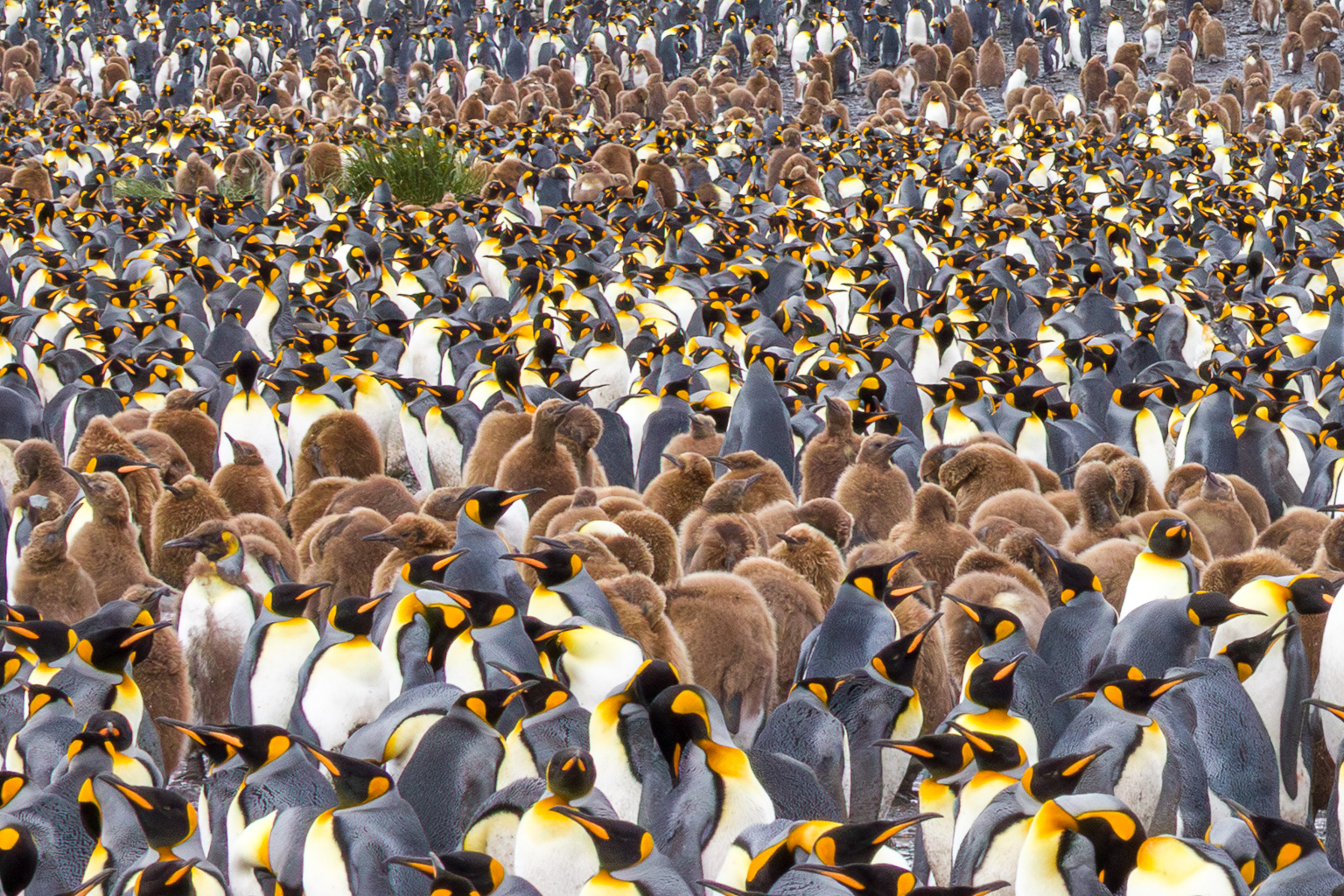
For the first five months, chicks grow rapidly — reaching the size of a football — and their thick brown down coats develop. During this period, they begin forming crèches, groups of chicks that huddle together for warmth and protection while their parents are away feeding.
By 9–11 months, chicks reach nearly adult size. This was the stage we saw: large, fluffy brown youngsters that looked almost comically oversized compared to their parents. Their down is not waterproof, so they cannot enter the ocean yet and remain entirely dependent on their parents for food.
King Penguin Creche
It’s amusing to watch them follow a parent, whistling and begging for a meal. They’re nearly the same size — sometimes appearing even larger because of their thick coats. The first time I saw them from behind, I couldn’t help but think, “That’s cousin Itt from the Addams Family.” The video below shows exactly what I mean.
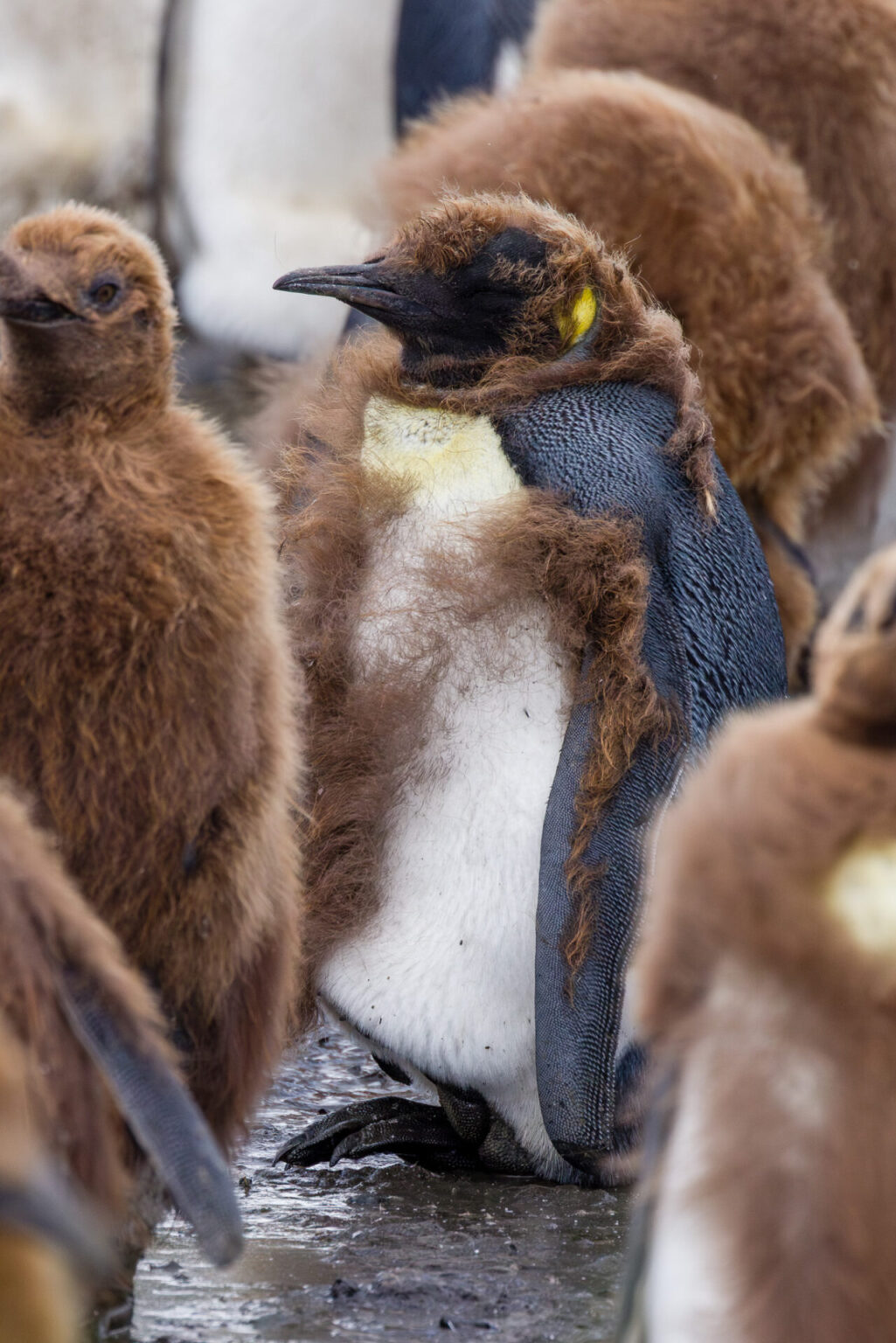
At 10–12 months, chicks begin their first molt. Some had already started. Within a couple of months, most will shed their brown down and reveal sleek juvenile plumage. Their colors are paler than adults, but they finally become waterproof and ready to enter the sea to learn how to swim and hunt.
King Penguin's First Molt
They will remain juveniles for another couple of years before reaching sexual maturity — and then the cycle begins again.
If you would like to read more about King Penguins, click this link from the Antarctic and Southern Ocean Coalition website for a well written article discussing more about King Penguins.
A Last Look Back
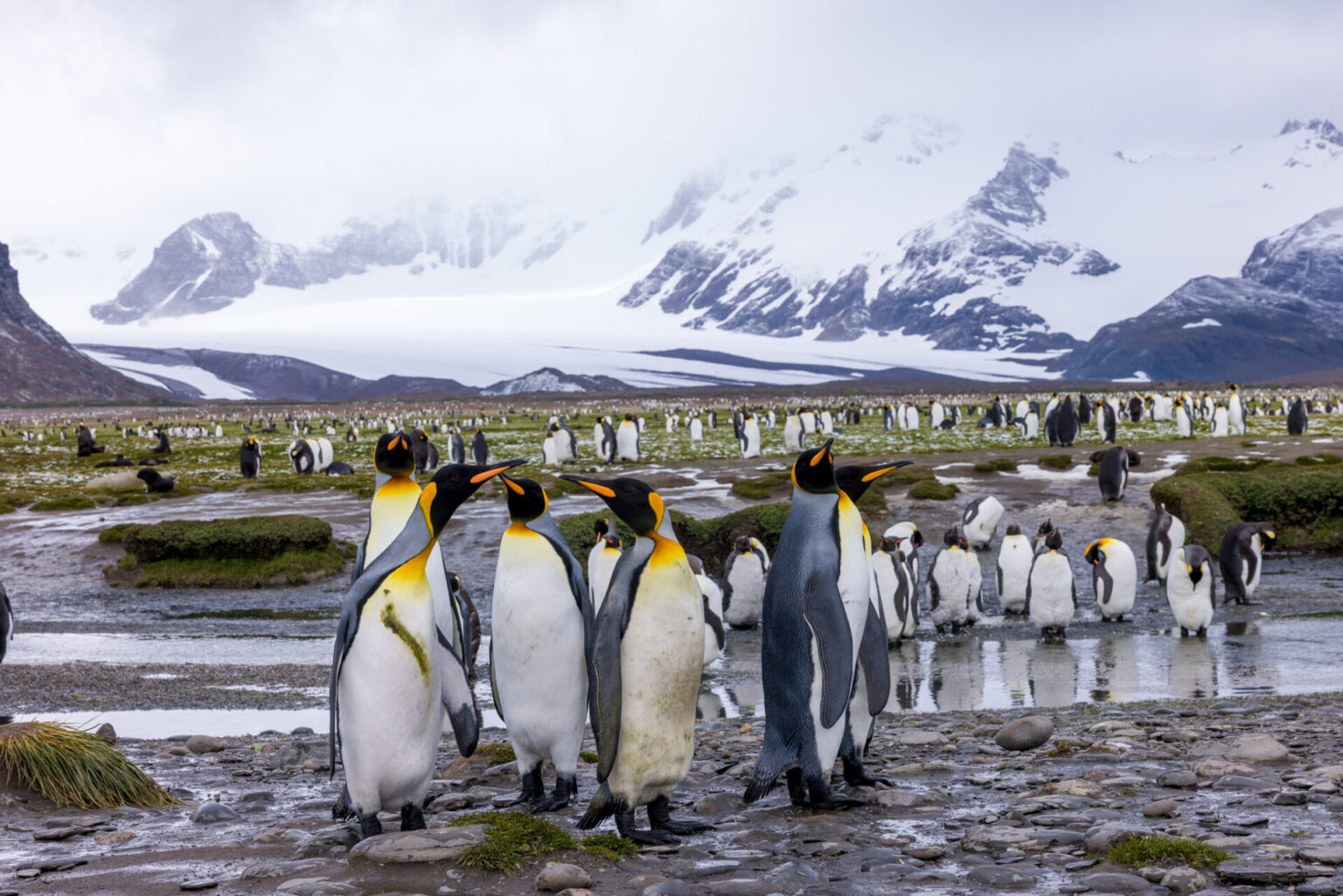
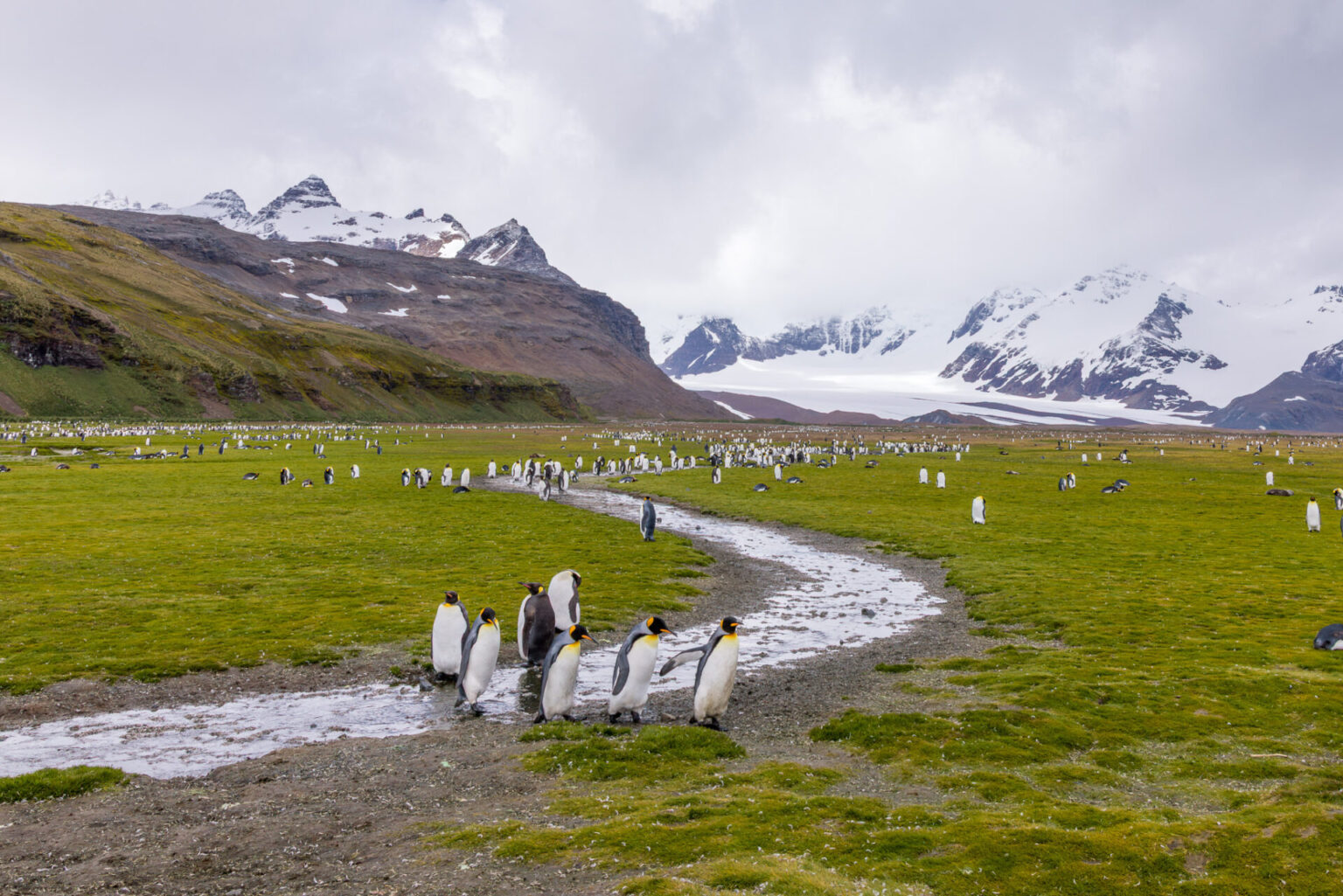
By midday, we reluctantly made our way back to the zodiacs. The clouds had begun to break, sending soft beams of light across the glacier. In the photo below, you can see a hint of sunlight touching the ice.
King Penguins Crossing the Stream
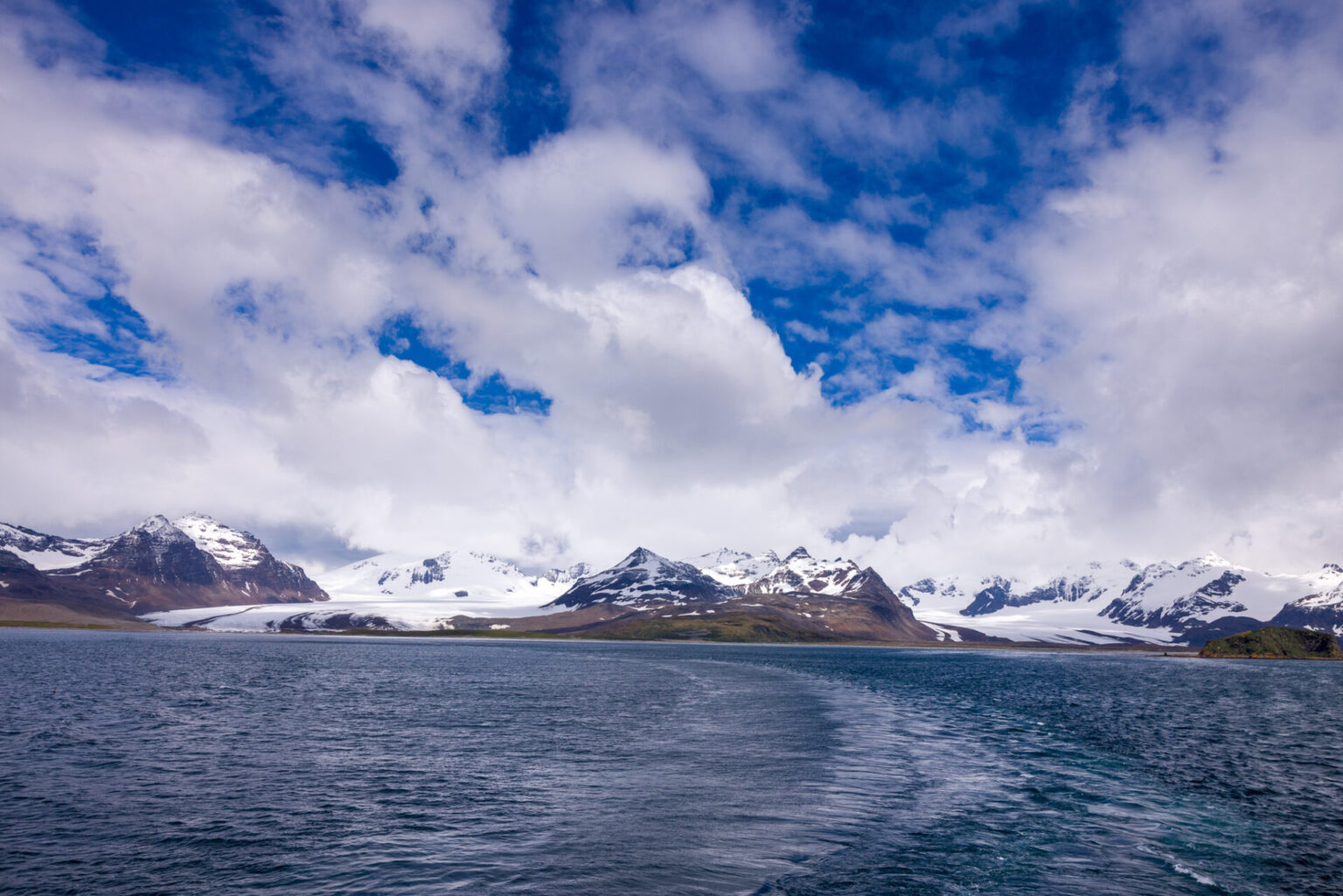
Once aboard the ship, we sailed toward our next destination. As we gained distance, I looked back for one last view of Salisbury Plain. From offshore, the two glaciers — Grace Glacier on the left and Lucas Glacier on the right — stood side by side, framing the vast penguin colony between them.
The Glaciers at Salisbury Plain
Stay Tuned for More
The subject of my next, and last, blog post about South Georgia, will be about other animals besides penguins, including a rare, extremely close up encounter with an unusual whale.






Leave a reply