South Georgia Island
Three days and 700 miles after leaving Elephant Island, our ship arrived at South Georgia Island. When I stepped out of my room to view the scenery at South Georgia Island for the first time, all I could say was “Wow!” This place is awesome. The island is a specially protected area within a British Overseas Territory with no permanent population and is effectively managed as a wildlife sanctuary. The wildlife here is spectacular!
It is filled with King Penguins, Macaroni Penguins, Fur Seals, Elephant Seals, and many types of birds. The scale of the wildlife is almost unbelievable. Colonies of King Penguins with hundreds of thousands of individuals are on the island at several places. Fur Seals can be found practically everywhere you go.
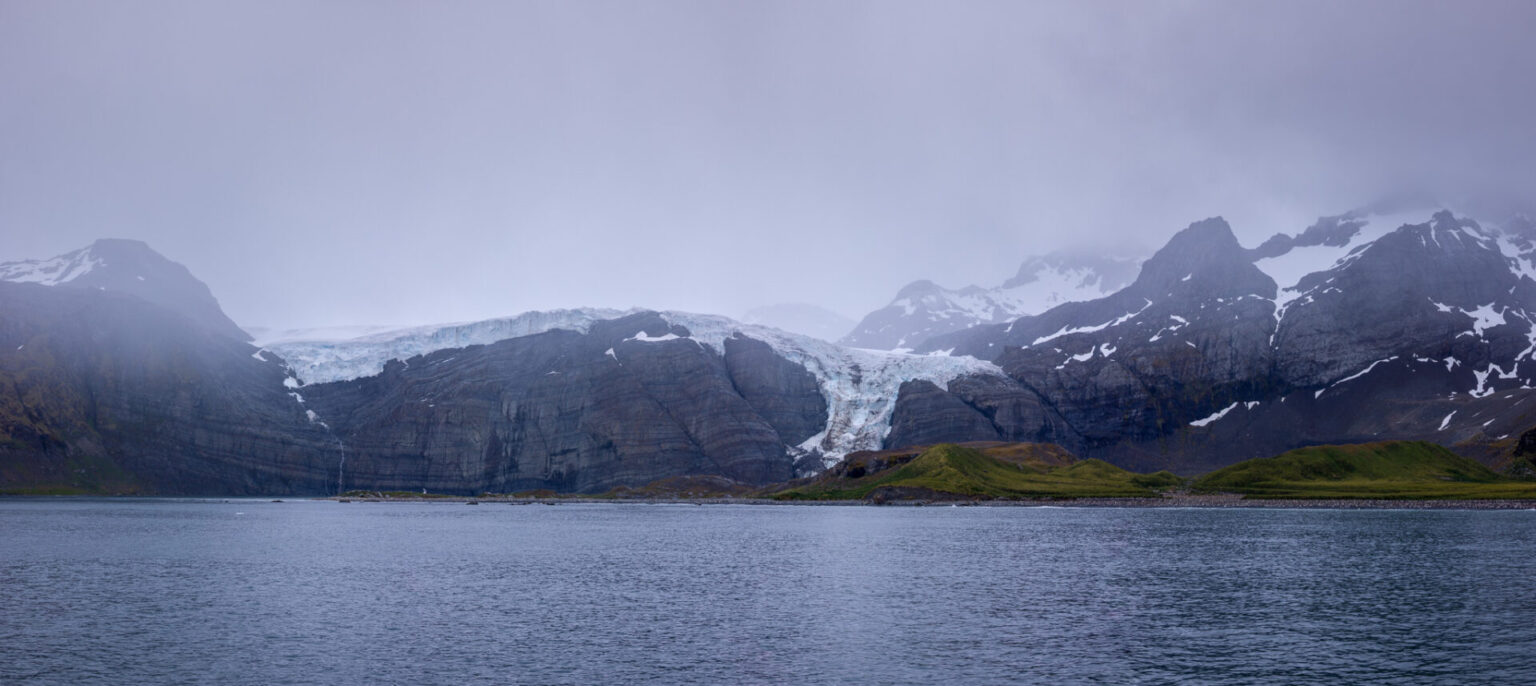
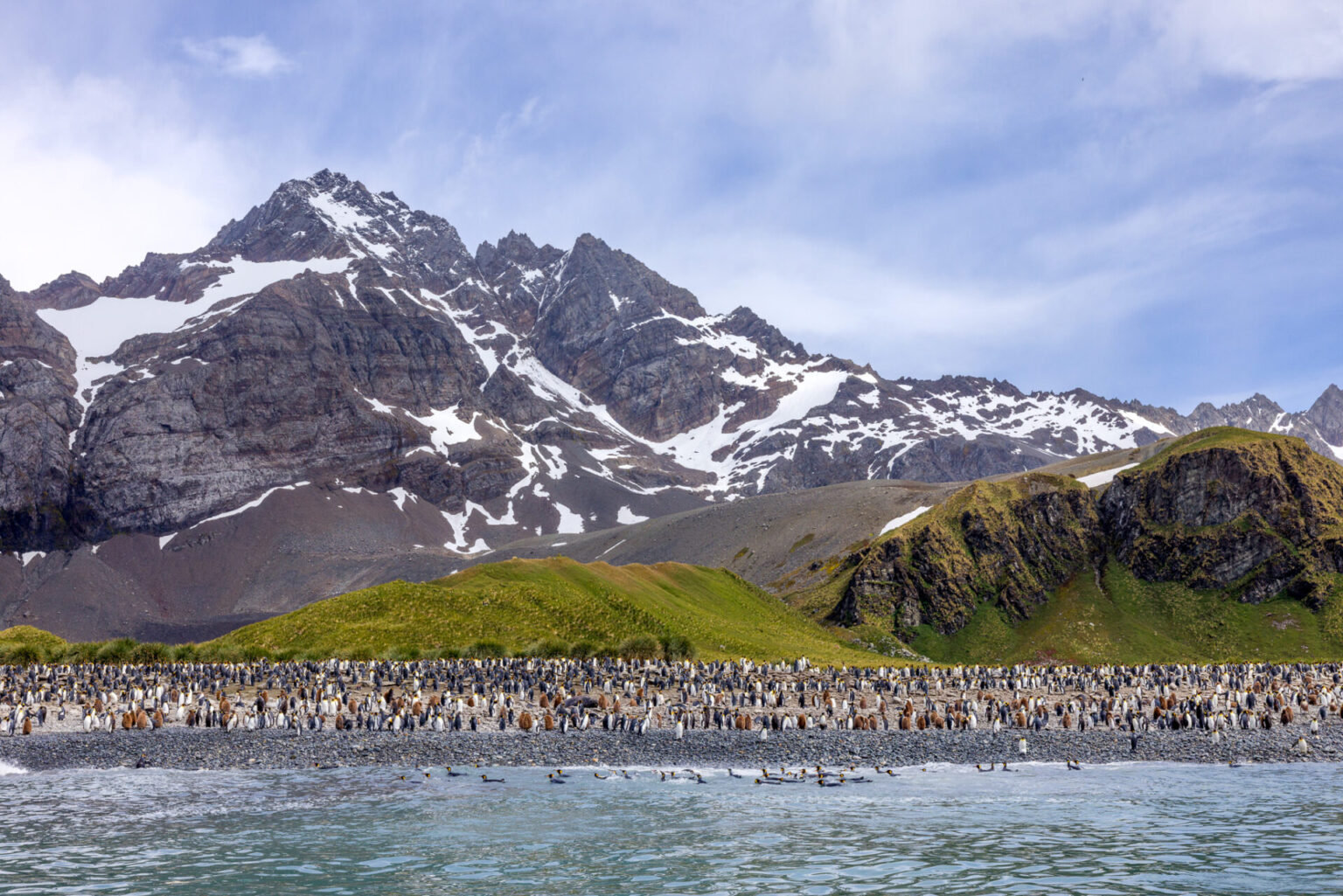
The landscape is also astounding! Glacier covered mountains in the interior rise to almost 10,000 feet. Unlike Antarctica which was entirely plant free, the lowest elevations are covered with plants. The photo below, which gives a good idea of the landscape, shows my first view of South Georgia at Gold Harbour.
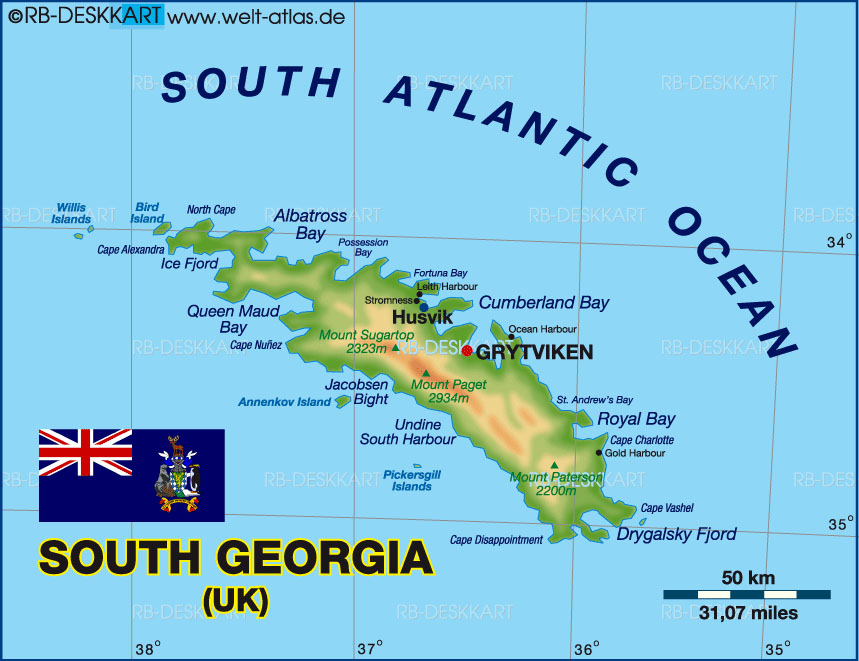
You may be wondering where exactly is South Georgia Island? It is approximately 1,340 miles east of the southern tip of South America and approximately 700 miles northeast of Elephant Island in the Antarctic Peninsula. With the interactive Google map below, you can zoom and move to see where it is more clearly.
On our first day at the island, we visited Gold Harbour and St. Andrews Bay. The map below, obtained from welt-atlas.de shows the island with both of these locations labeled on the right side of the island.
Gold Harbour
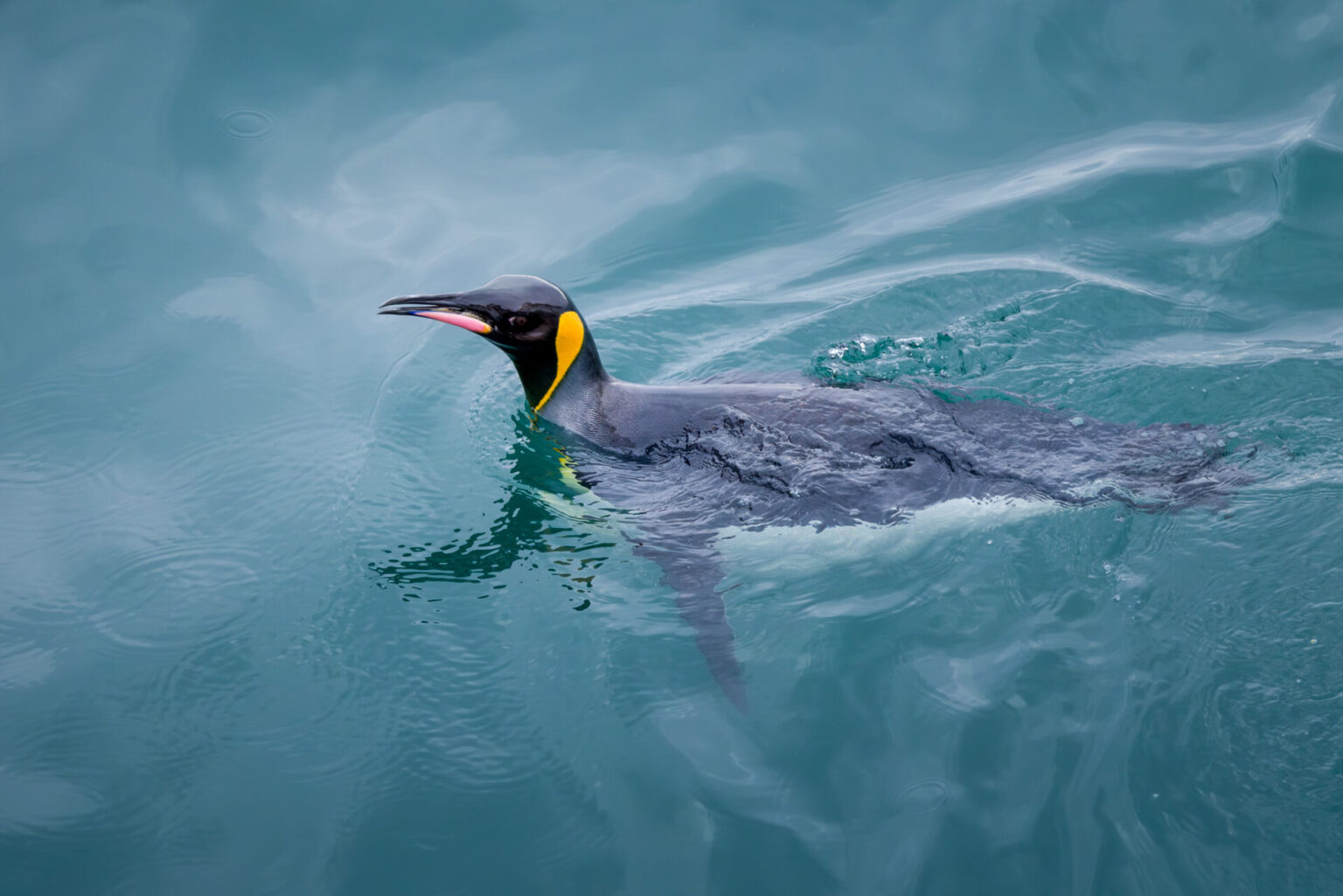
After a wonderful breakfast aboard our expedition ship, we anchored at Gold Harbour for the morning outing. A King Penguin swam over to greet us while we waited to go to shore. This was my first view of a King Penguin ever and they sure do look different from the Adélies, Gentoos, and Chinstraps we had seen in the Antarctic Peninsula.
Zodiac Cruise at Gold Harbour
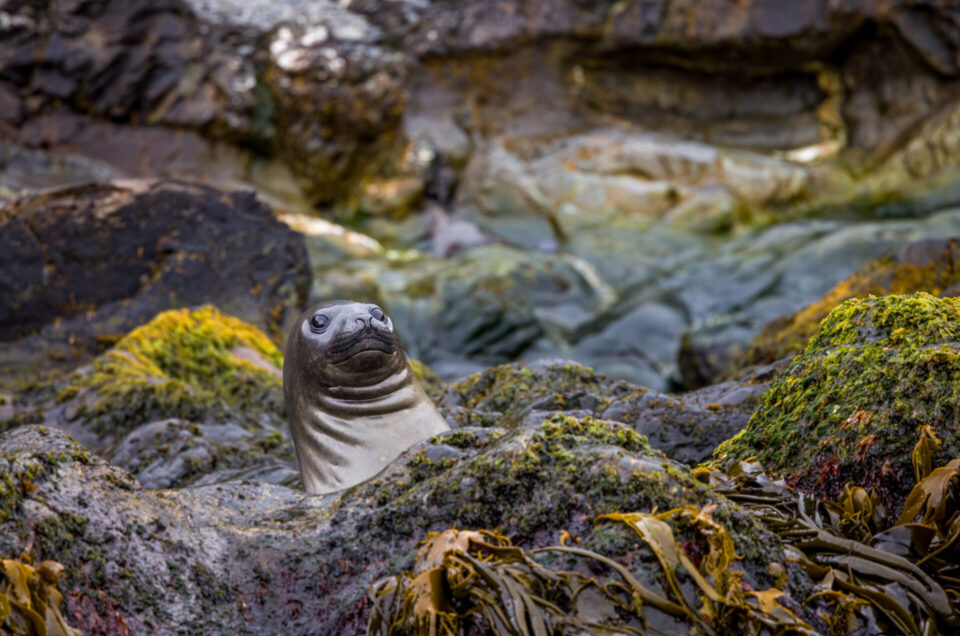
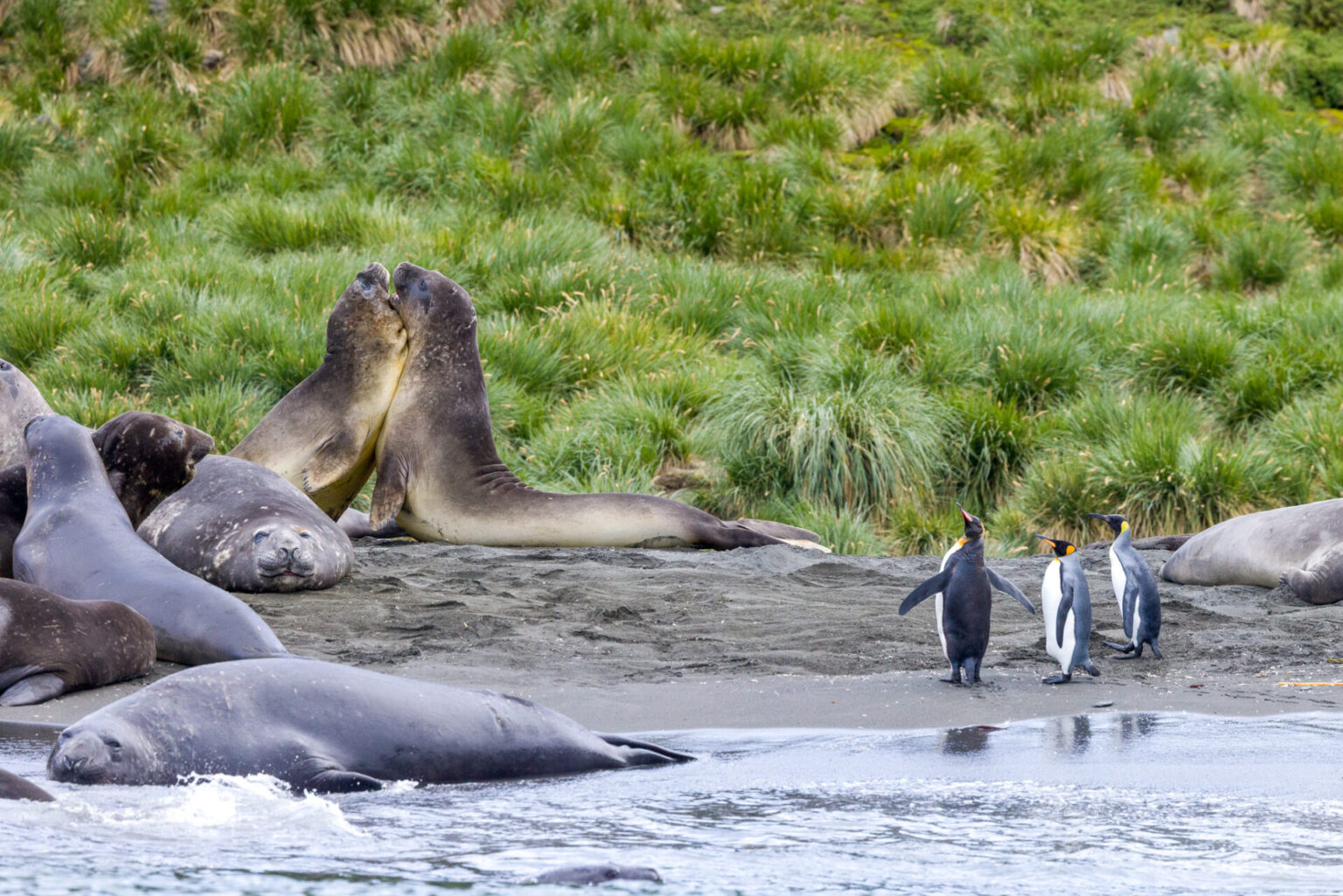
A short time after breakfast we boarded the zodiacs to explore the coastline. On the shore were some Southern Elephant Seals. Most were just lying about resting, but a couple males were wrestling with each other. Meanwhile, three King Penguins paused while walking through, probably thinking how they were going to safely get past without getting crushed. Or perhaps they were taking bets on who would win.
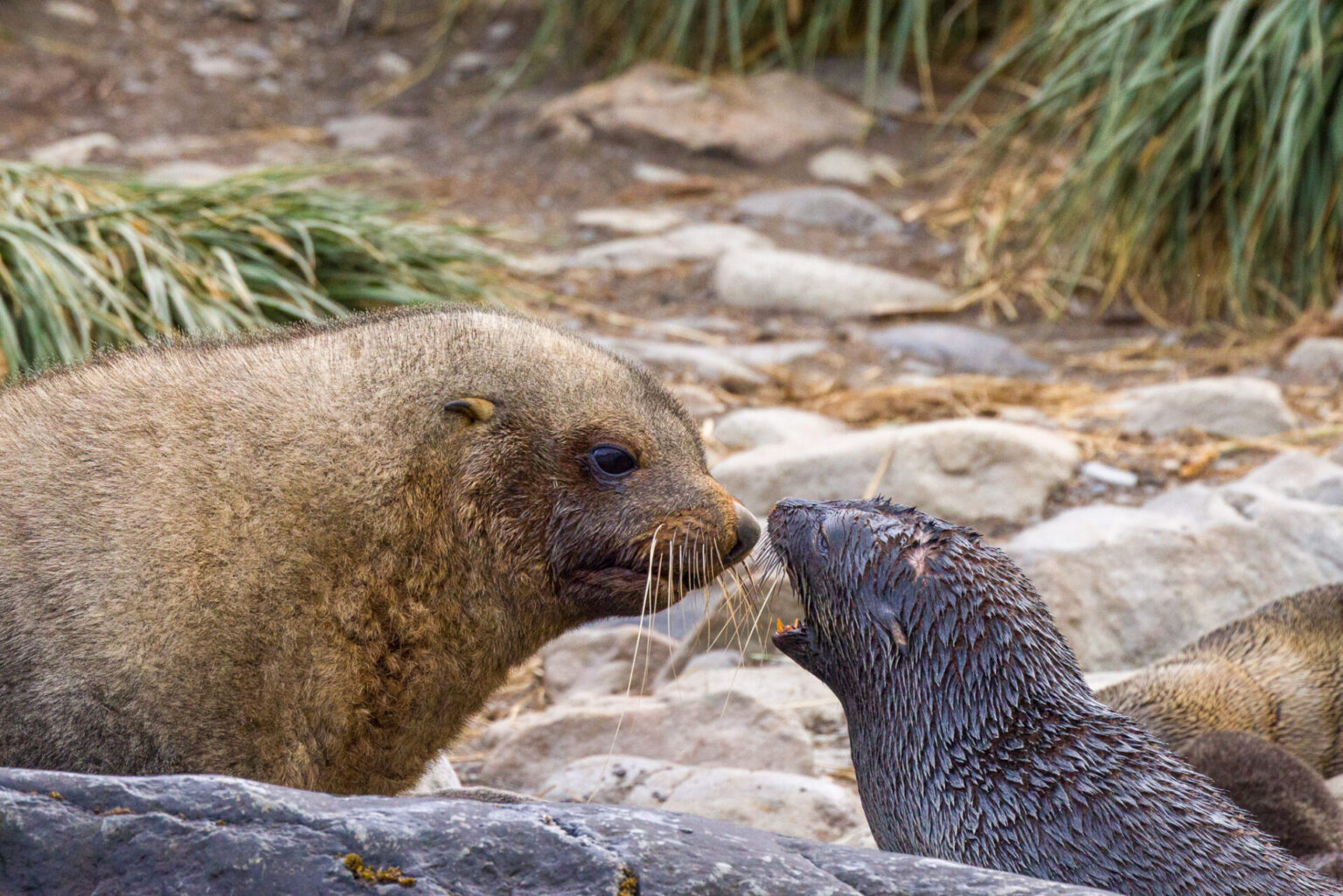
A little further down we came across quite a few Antarctic Fur Seals. While we had seen one or two large males way out at sea on our way from Elephant Island, this was really our best views yet and we could get a really good idea of their behaviors. In the photo below, a Fur Seal and her pup where having a tender moment.
Fur Seals look even cuter when wet. Their thick fur gets matted down such that it actually looks like skin. The outer layer gets very smooth and the oily hair creates a waterproof barrier that keeps the skin dry. It is quite a transformation in how they look.
But the beach is owned by the Kings. Below the majestic mountains, King Penguins line the beach, while others swim in the water looking for food. At approximately three feet tall, these penguins are the tallest we would encounter. The only larger penguin species is the Emperor Penguin.
Landing at Gold Harbour
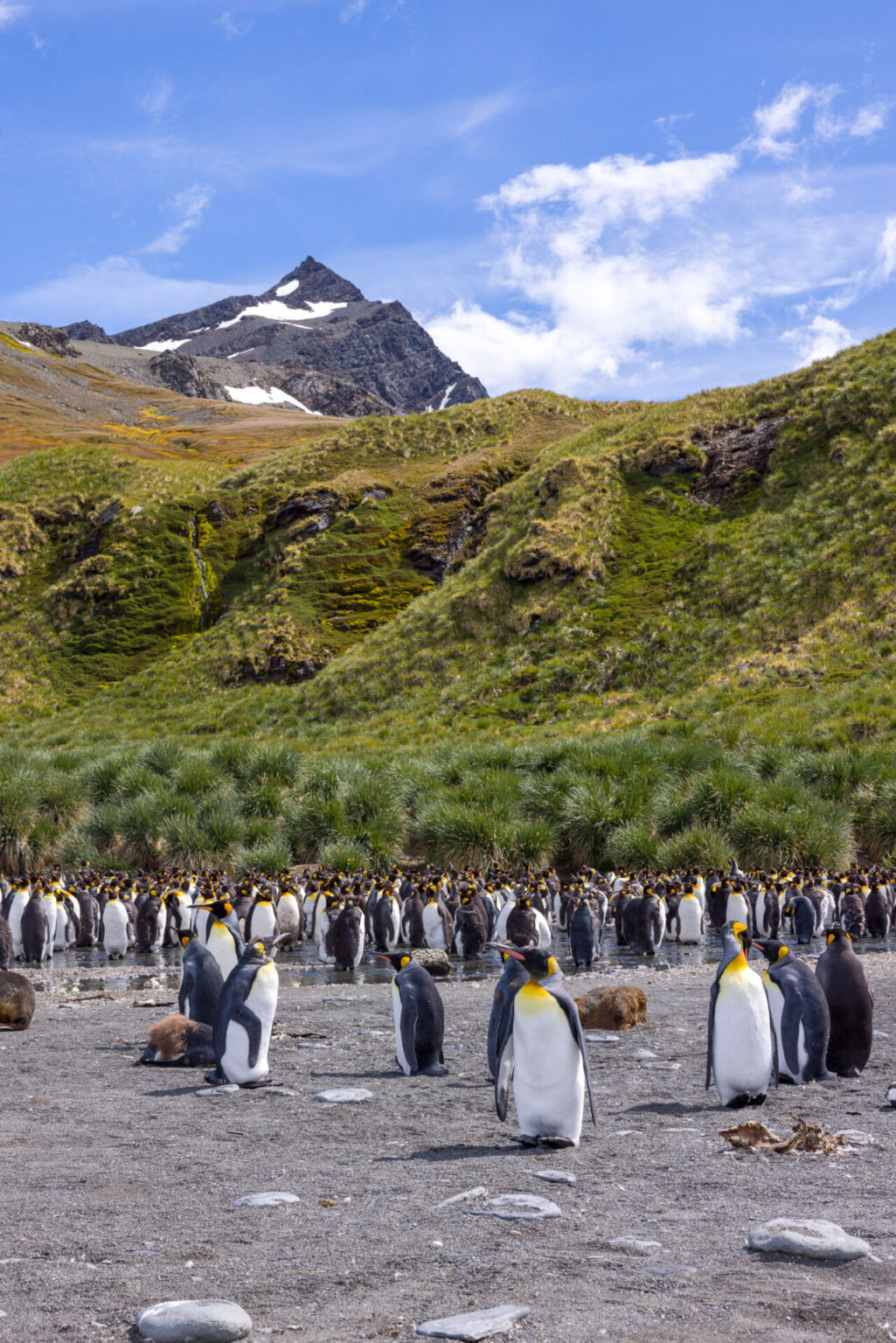
After the zodiac cruise, we came ashore amid the many King Penguins lining the beach. I was struck by how tall they were. Plus they also look so elegant, almost like people wearing tuxedos with a splash of yellow and orange color on back of their necks and upper chest.
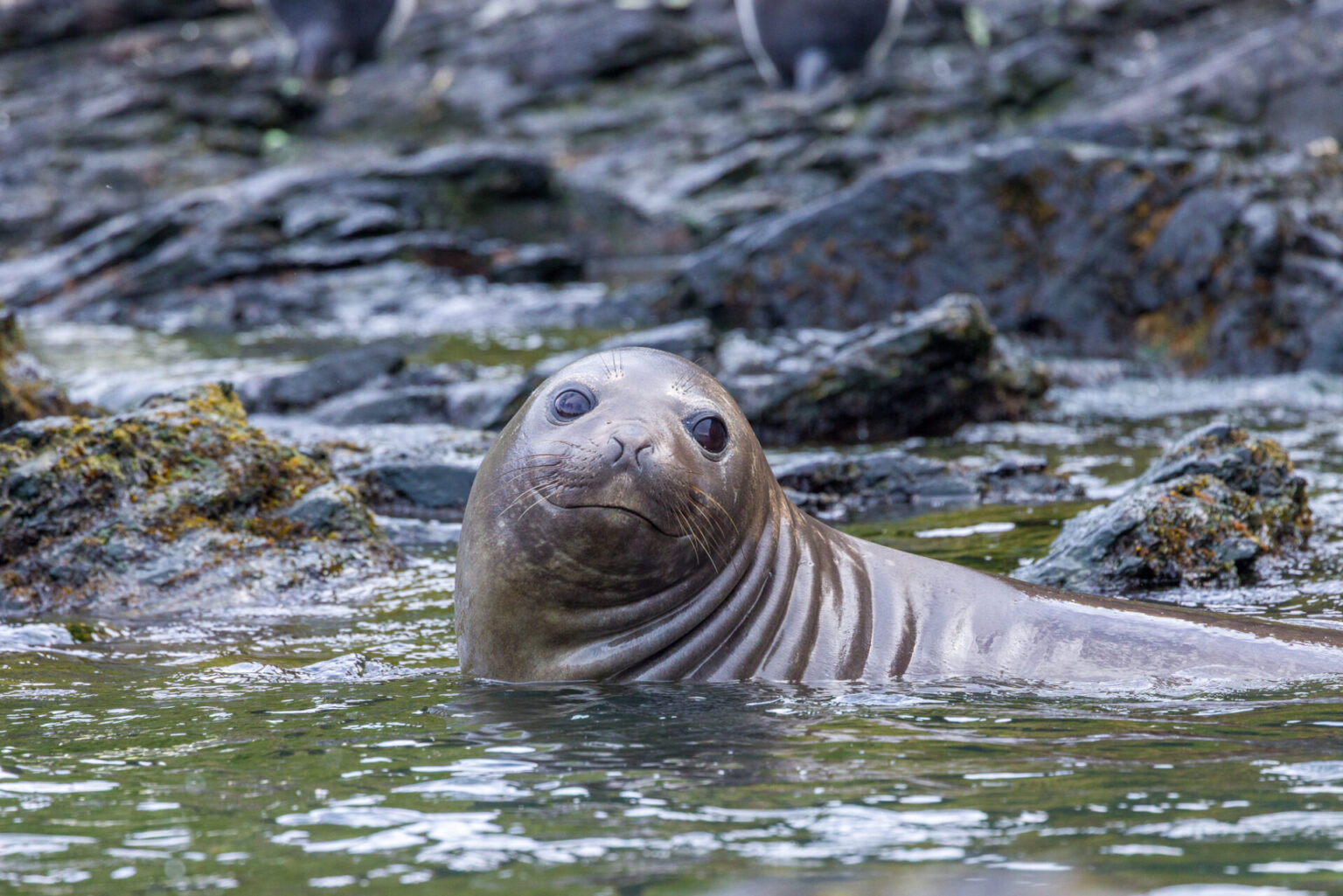
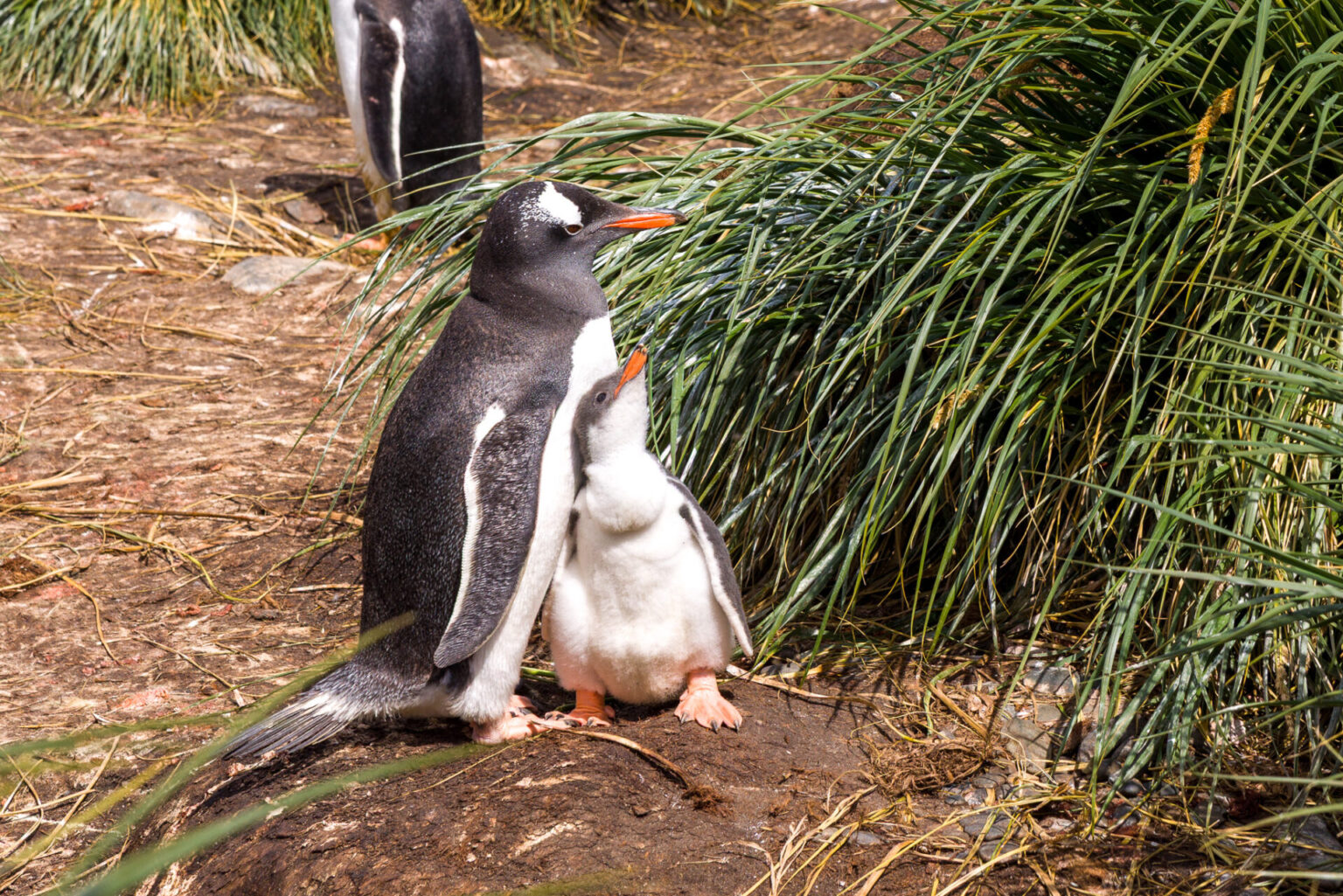
Nestled in the plants, there were also a few Gentoo Penguins with older and larger chicks than we had seen in Antarctica. But you had to be careful walking around the plants because not only were there the cute penguins, but also Fur Seal pups and the odd Elephant Seal. Strangely, the fur seal pups can be quite aggressive, though not likely to injure you.
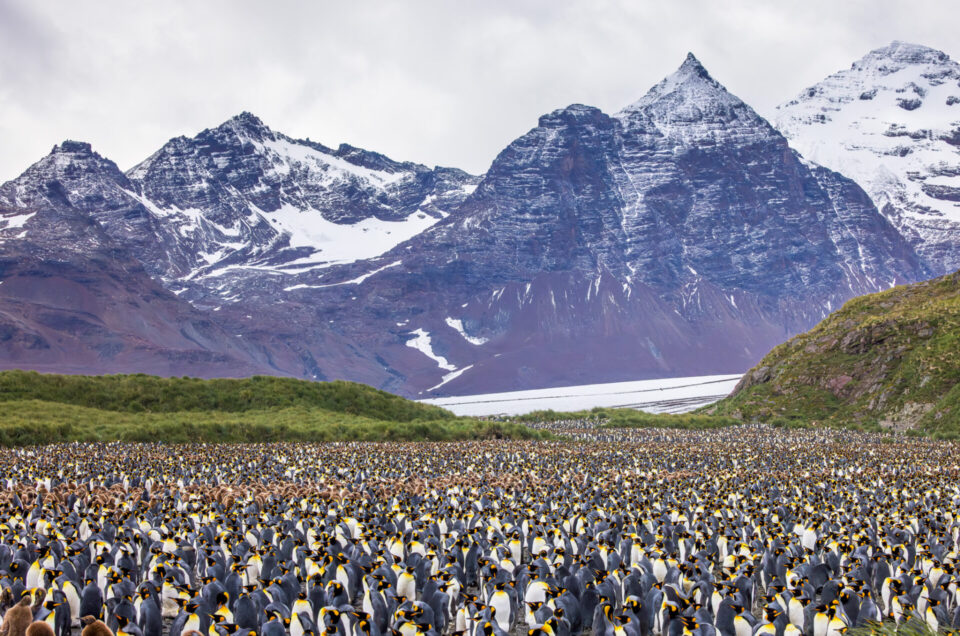
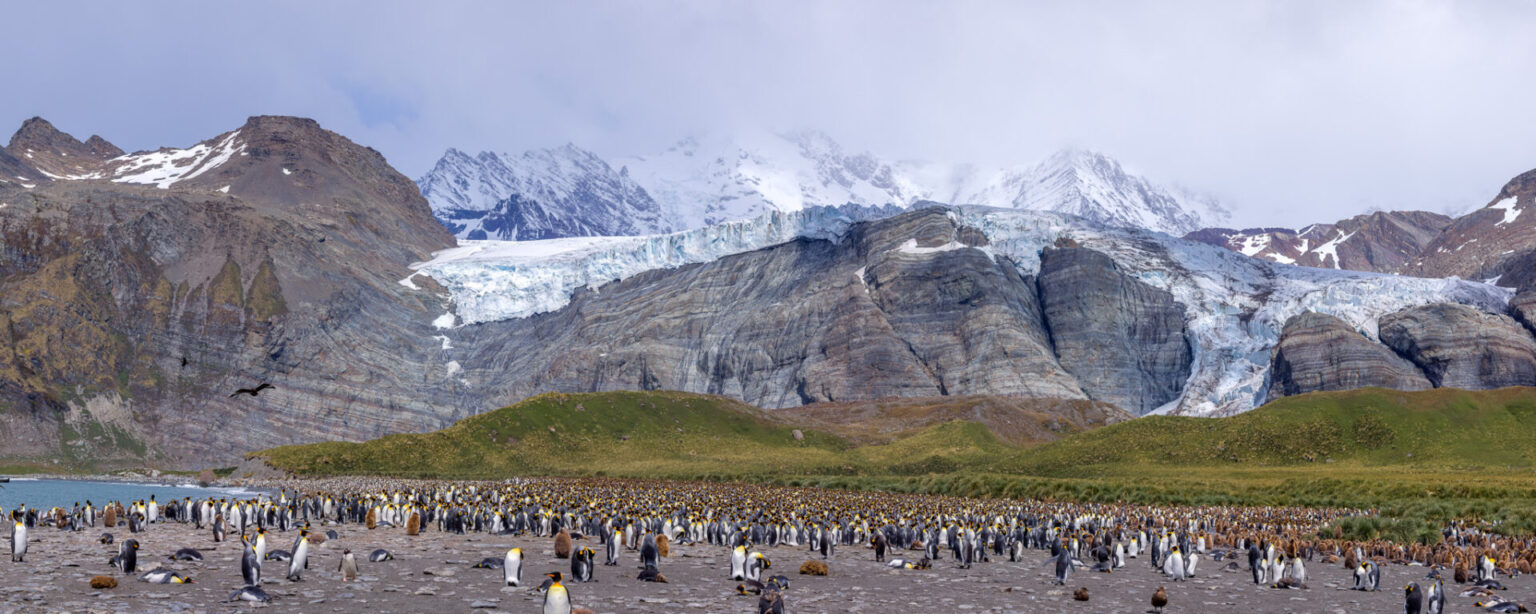
At Gold Harbour is the majestic Bertrab Glacier. This hanging glacier, nestled in the high mountains, made a wonderful backdrop for the King Penguins on shore. The glacier hangs down one side of the final drop to the plain below. The beach in the foreground is filled with elegant King Penguins extending far into the distance. (This beautiful image is available as a fine art photographic print. Click image to purchase.)
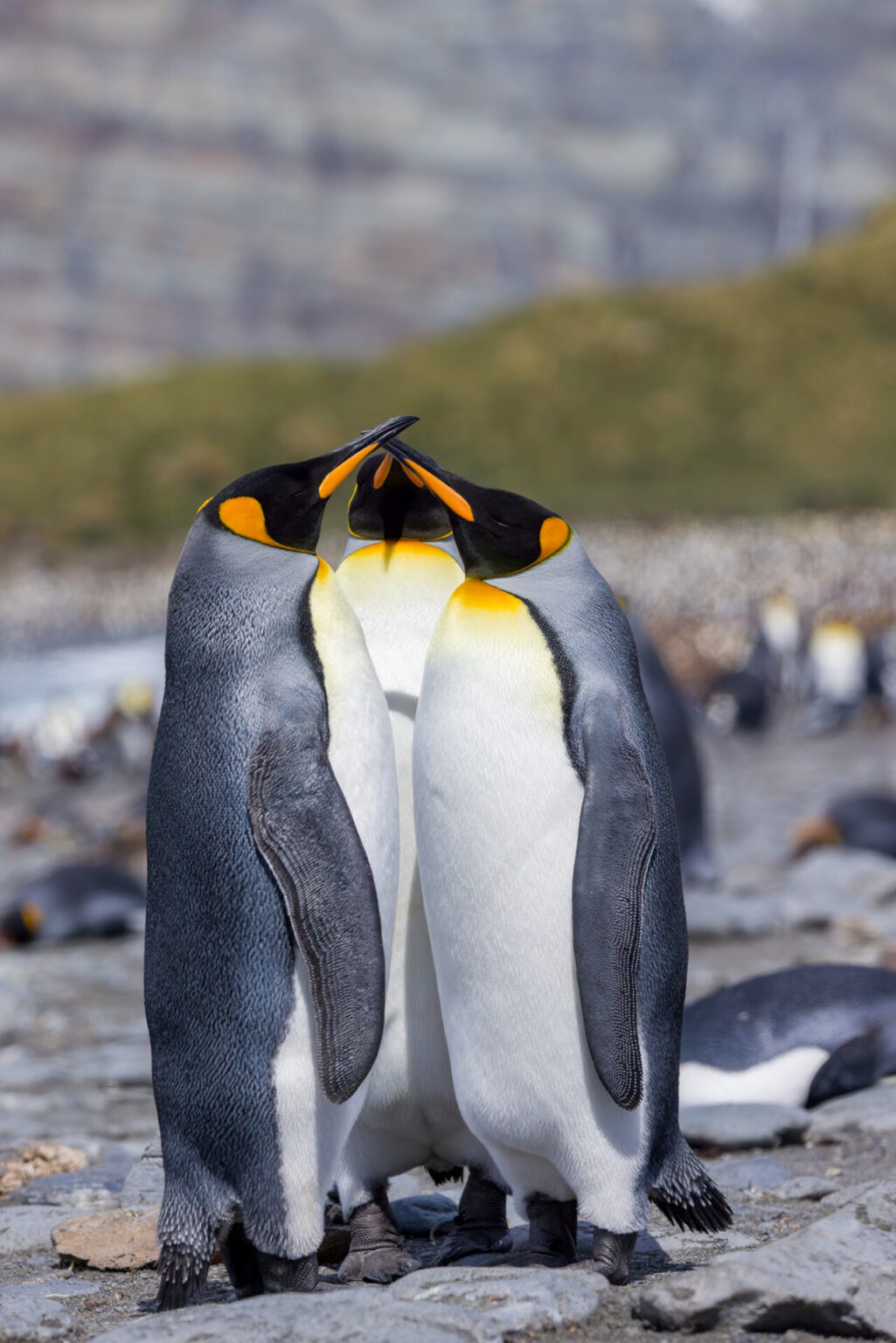
When looking closer at the penguins, often you would find a small group of penguins hanging out together. The three penguins in the photo below somehow remind me of the Three Musketeers. When they formed a group, they would also walk together through the crowd. Did you know that a small group of standing penguins is called a huddle, a small group of walking penguins is called a waddle, and a small group of penguins swimming is called a raft?
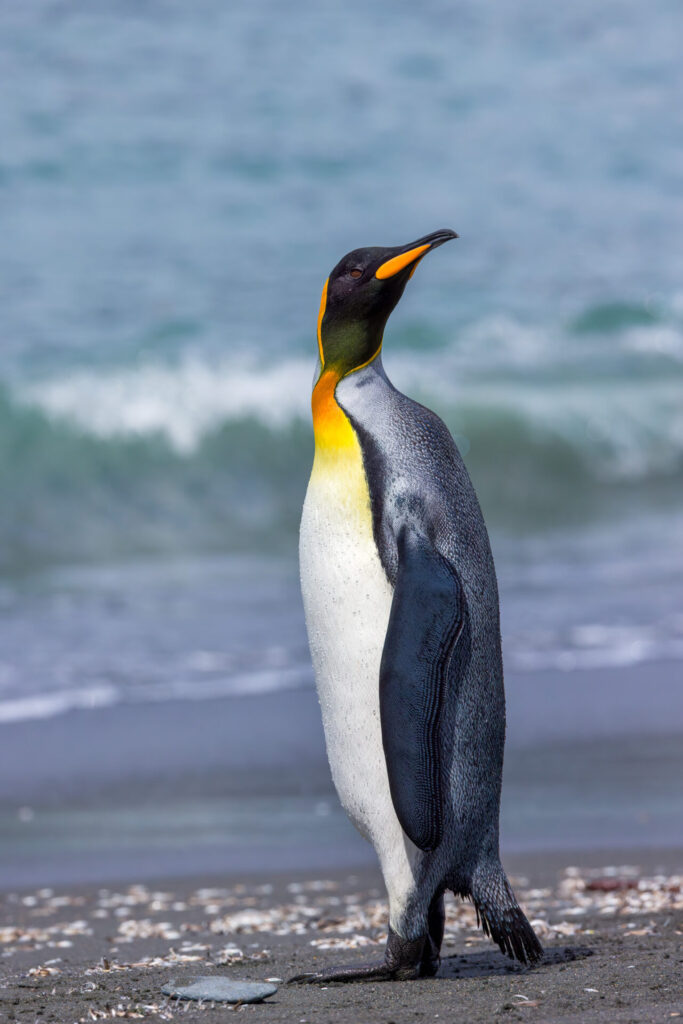
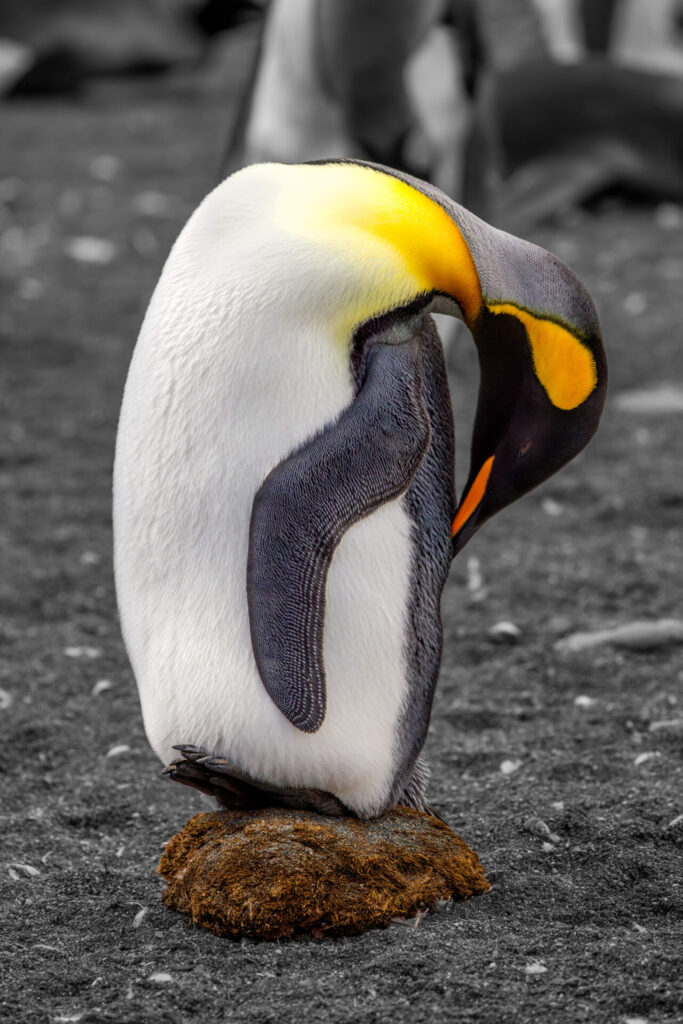
Other times, they were standing alone, making for great closeup shots. The left photo below shows an individual who just came out of the surf, all squeaky clean with water droplets still on his feathers. The right photo shows another individual balancing on a small pedestal while dozing. (Both photos below are available for purchase. Click on the image to view the product pages.)
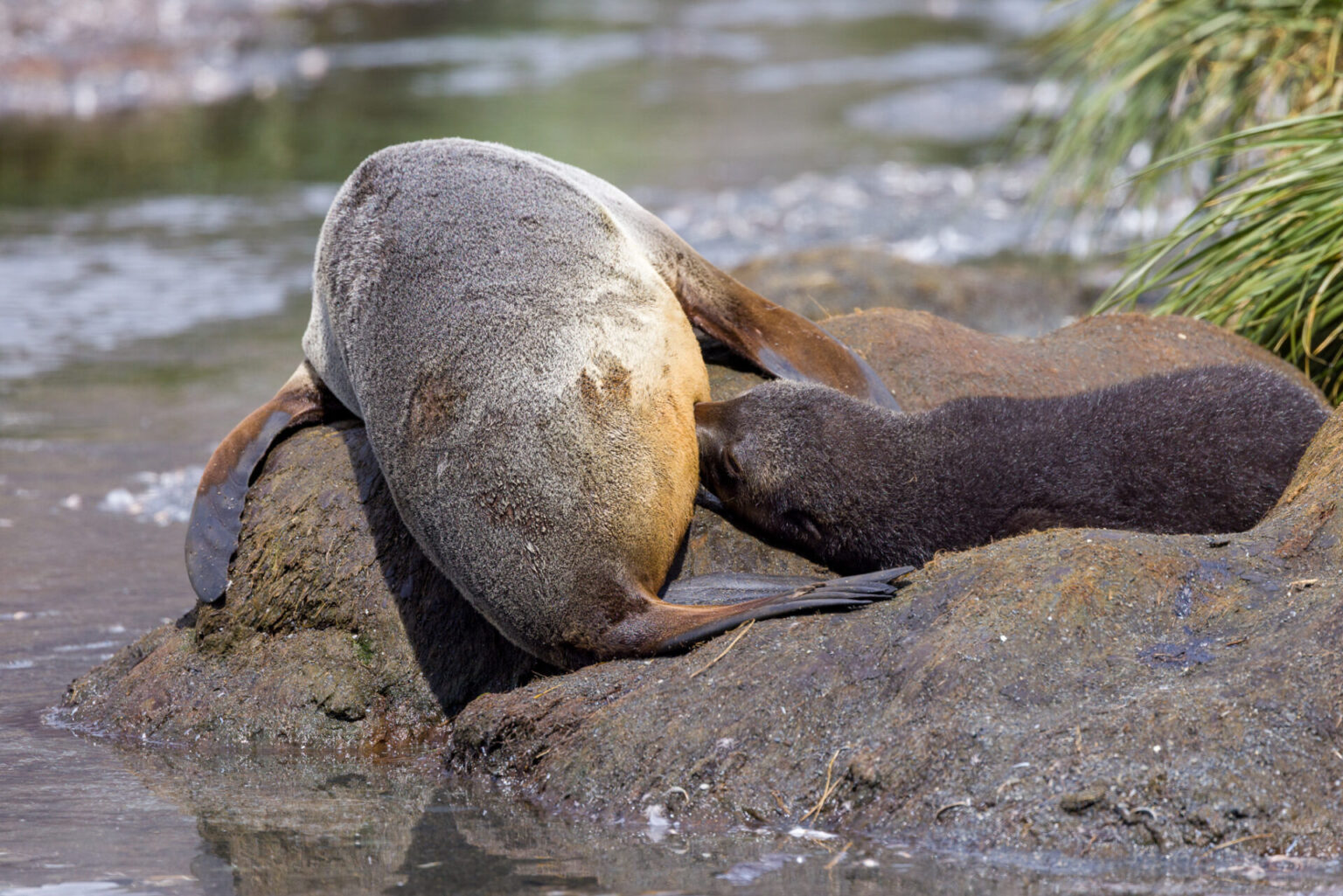
One of the last things I saw before heading back to the ship and on to St Andrews Bay was a tender moment of a mother Fur Seal suckling her pup.
St Andrews Bay
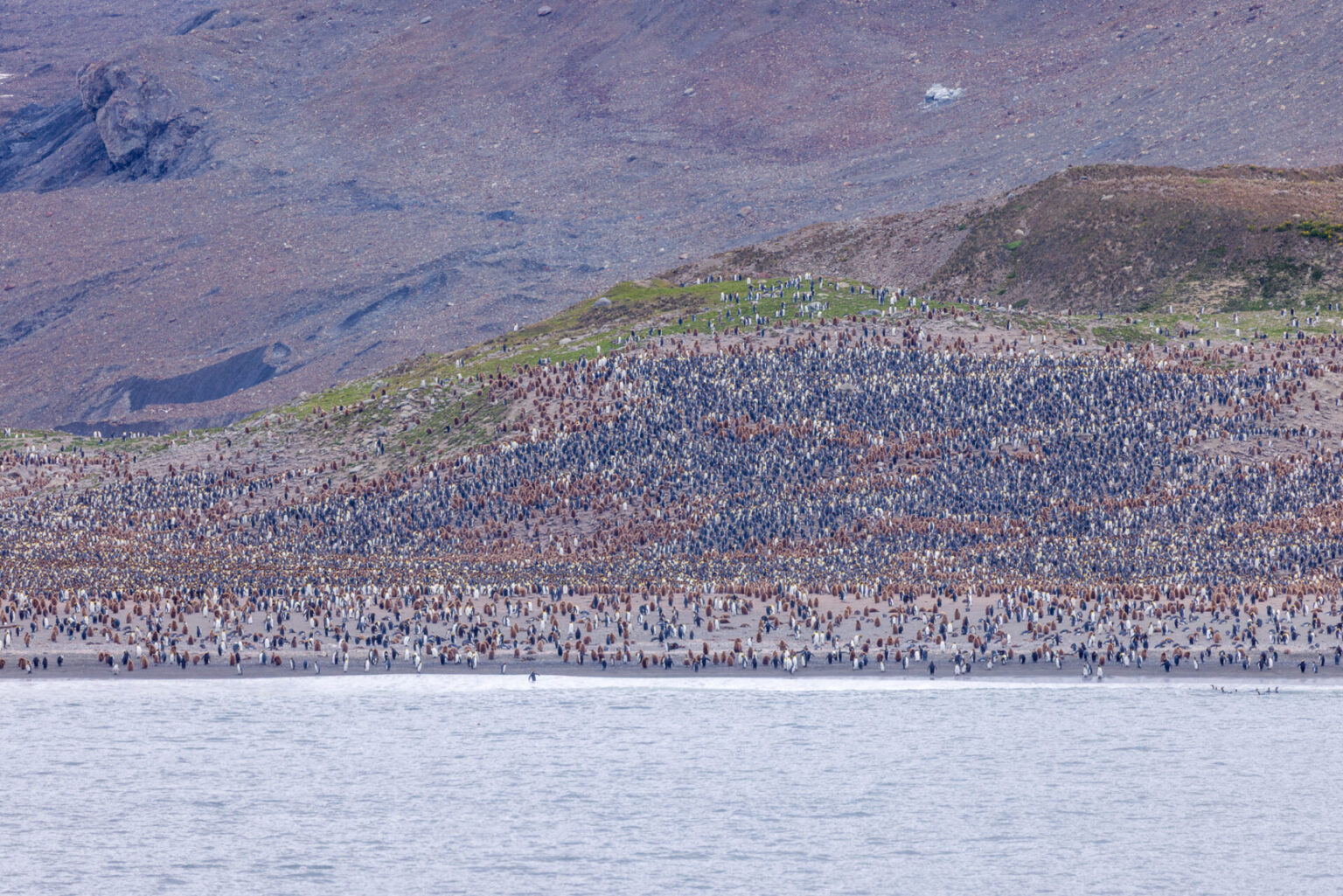
After lunch it was on to St. Andrews Bay for our afternoon adventure. This location is home to the largest King Penguin colony in the world. There are almost half a million penguins here.
Landing at St Andrews Bay
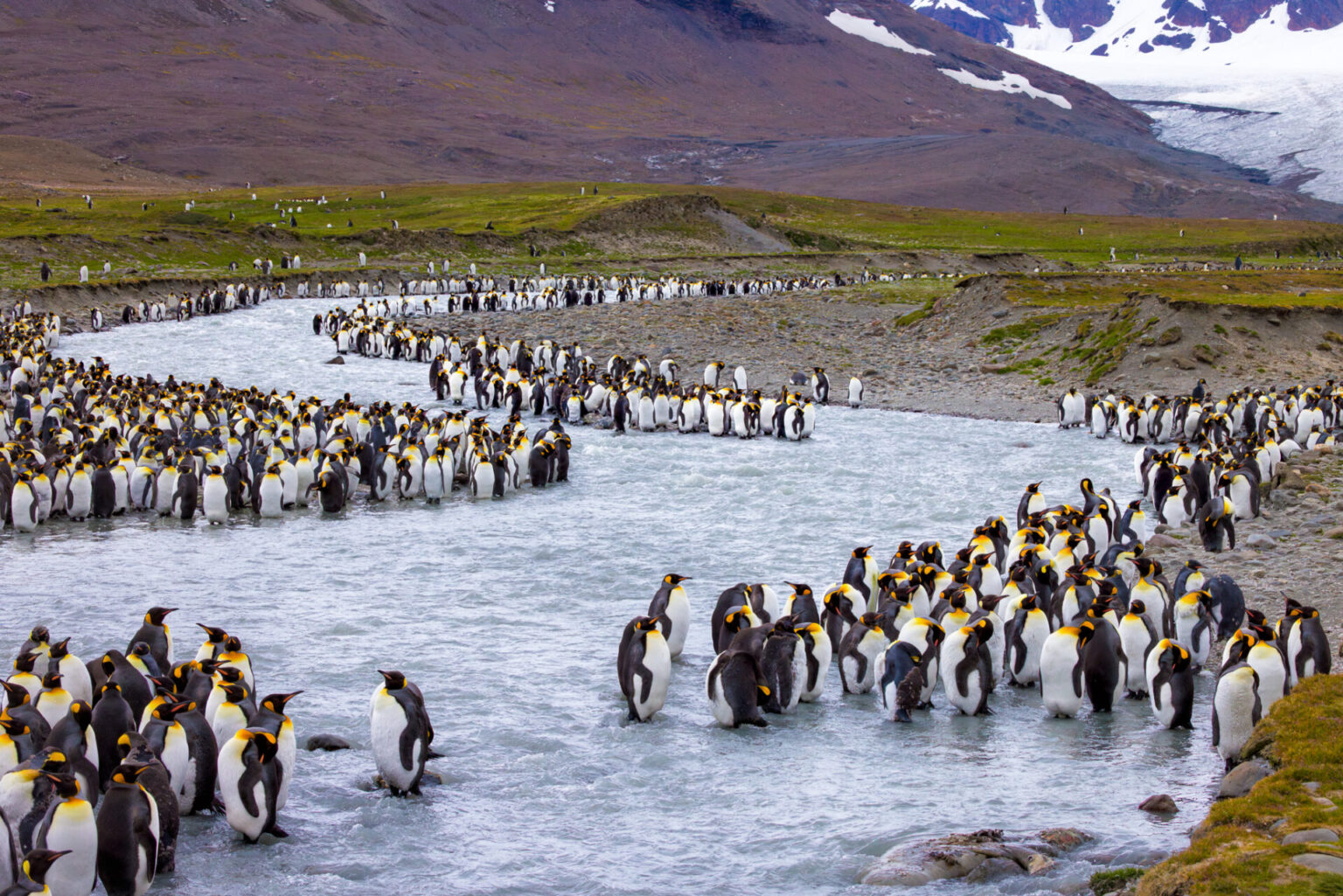
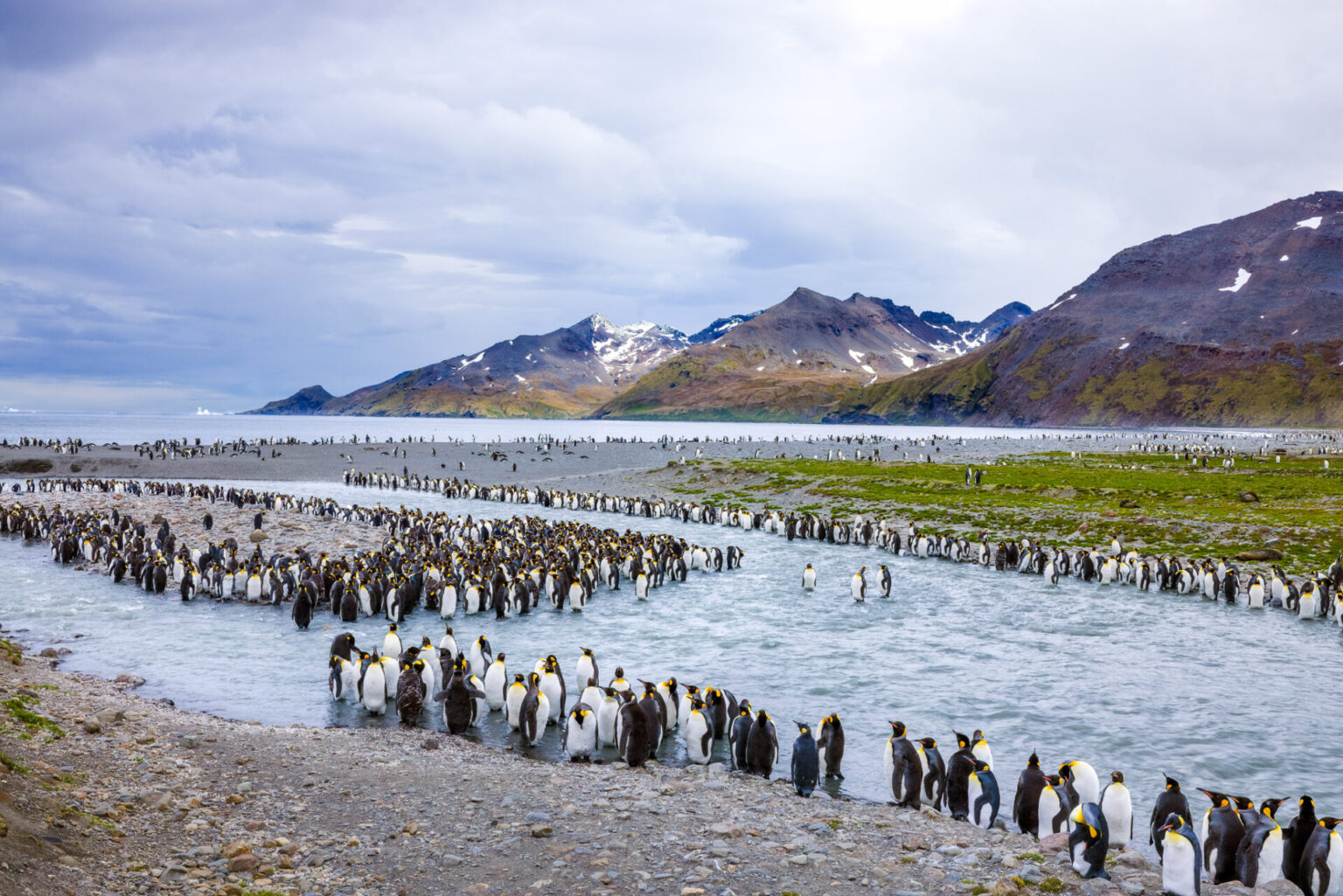
We went ashore and our photography group immediately bolted over to a glacier fed river. The experienced members having been here before knew to get there quickly before the crowds came. Amazingly, King Penguins lined the river standing on the edge as well as in the river as far as the eye could see. Below are two images of river looking in different directions. (The first image below is available as a fine art print. Click on the image to visit the product page.)
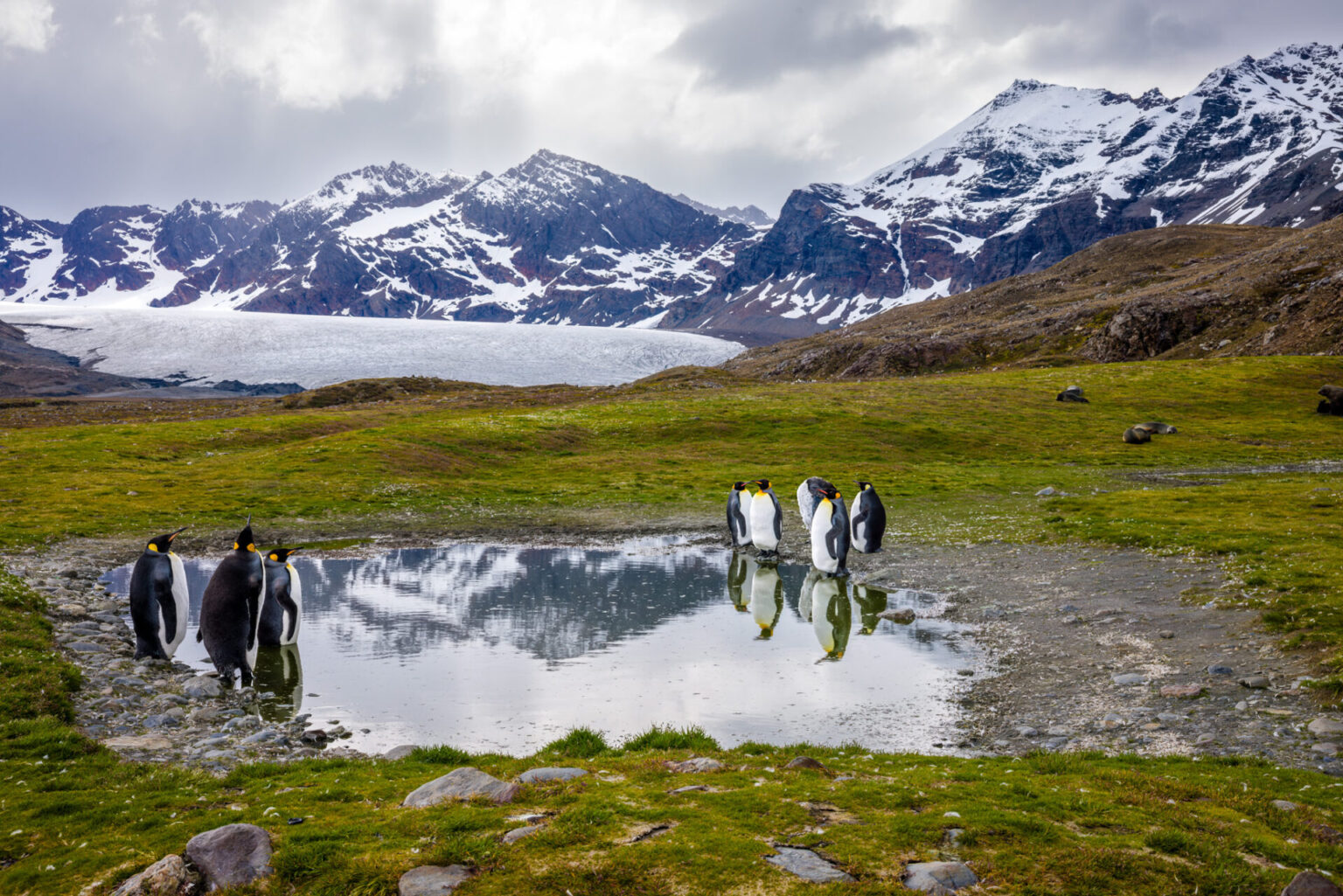
Off the river, on the extended plain were more penguins. They were much less densely packed away from the beach and the river, but also made for good photography. The photo below shows some great landscape of mountains and a glacier in the background with a few penguins with their reflections around a small pool.
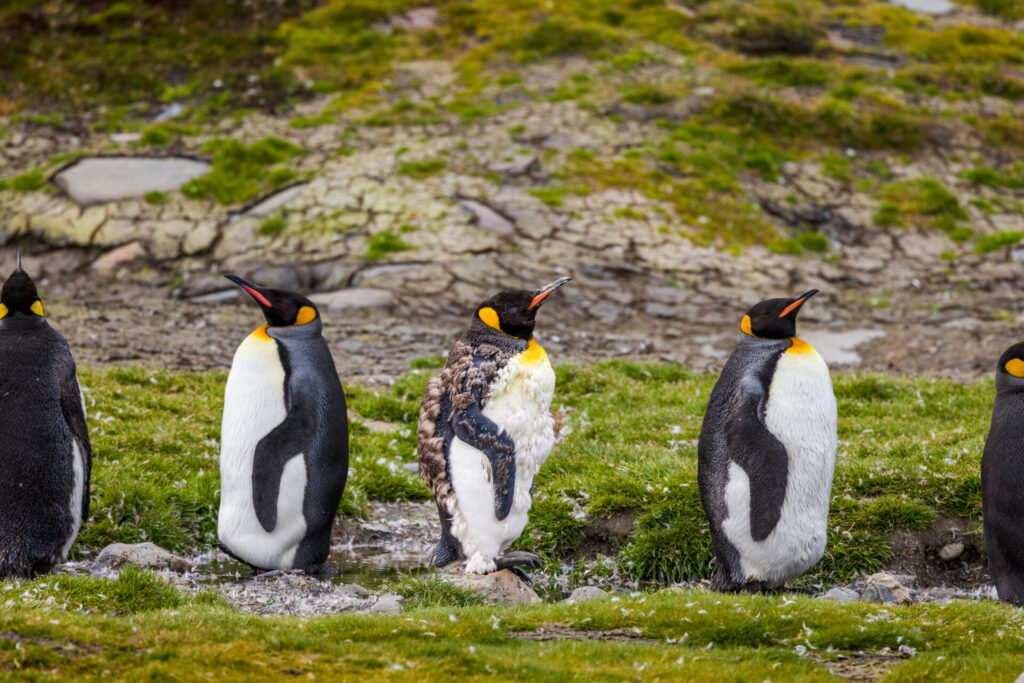
Along a shallow narrow gully were a bunch of penguins all lined up, just standing in the gully. Sometimes you would find one molting. When they molted, they looked pretty funny, almost like they were wearing some avant garde full length jacket.
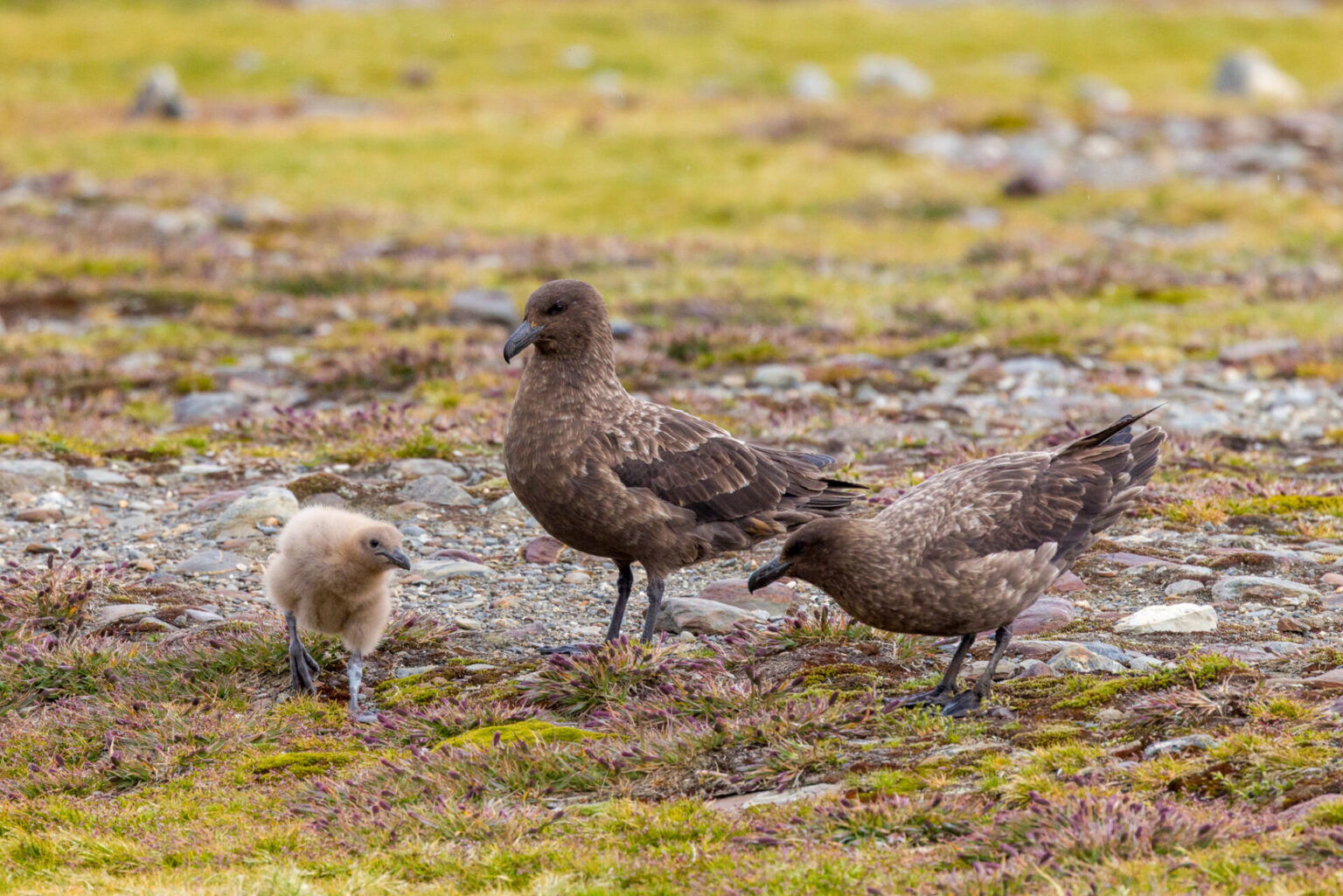
In the large plain, not only were there penguins, but there were also animals scattered about such as this Brown Skua pair with a chick. Skuas may be thought of as “the enemy” because they eat penguin chicks and constantly fly overhead threatening them, but they are also good parents who have to feed and raise their own chicks.
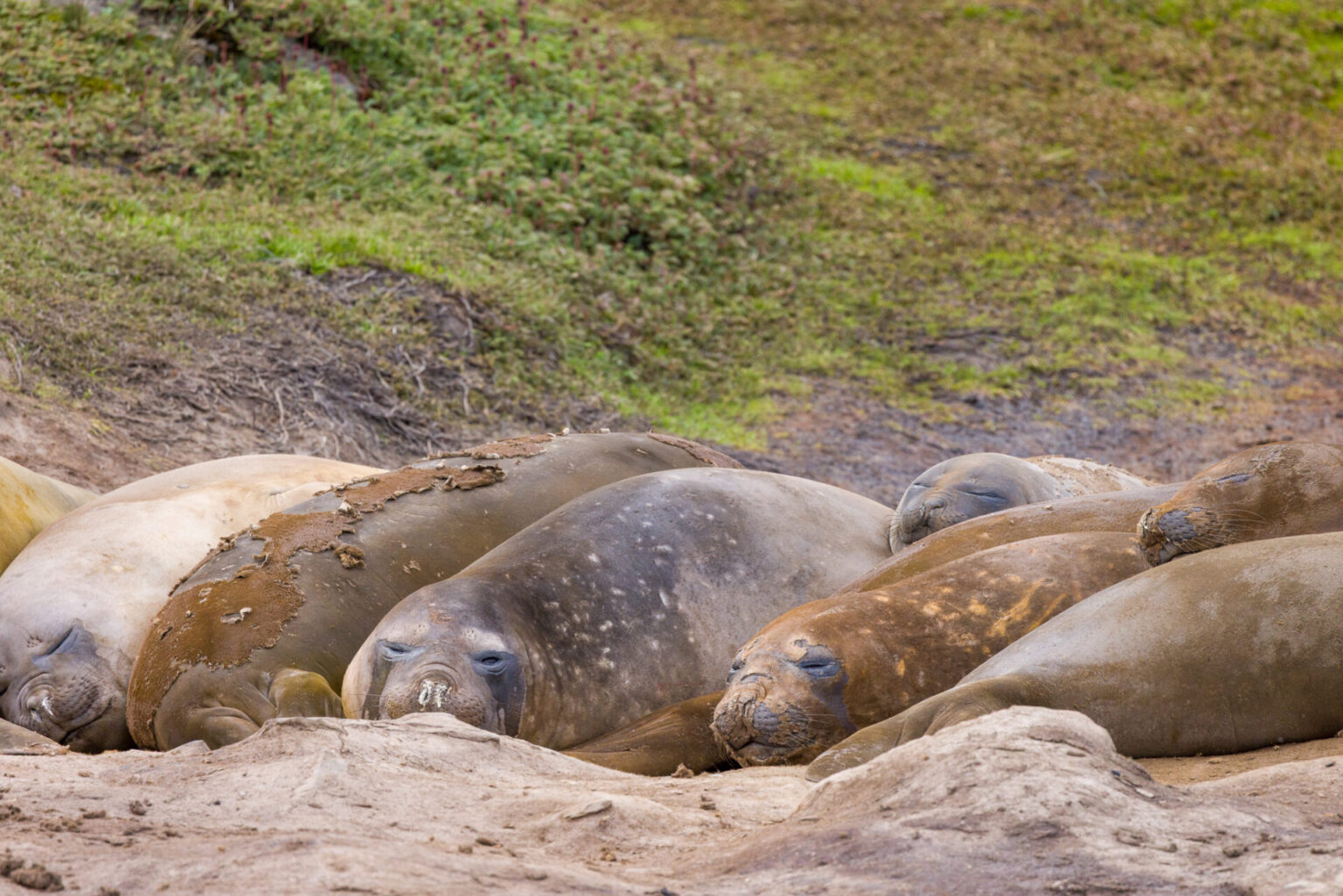
And there were Elephant Seals lazing about on the plain far from the beach. Amazing to think they have to haul their heavy bodies all this way to get away from the crowds to rest in peace.
Zodiac Cruise at St Andrews Bay
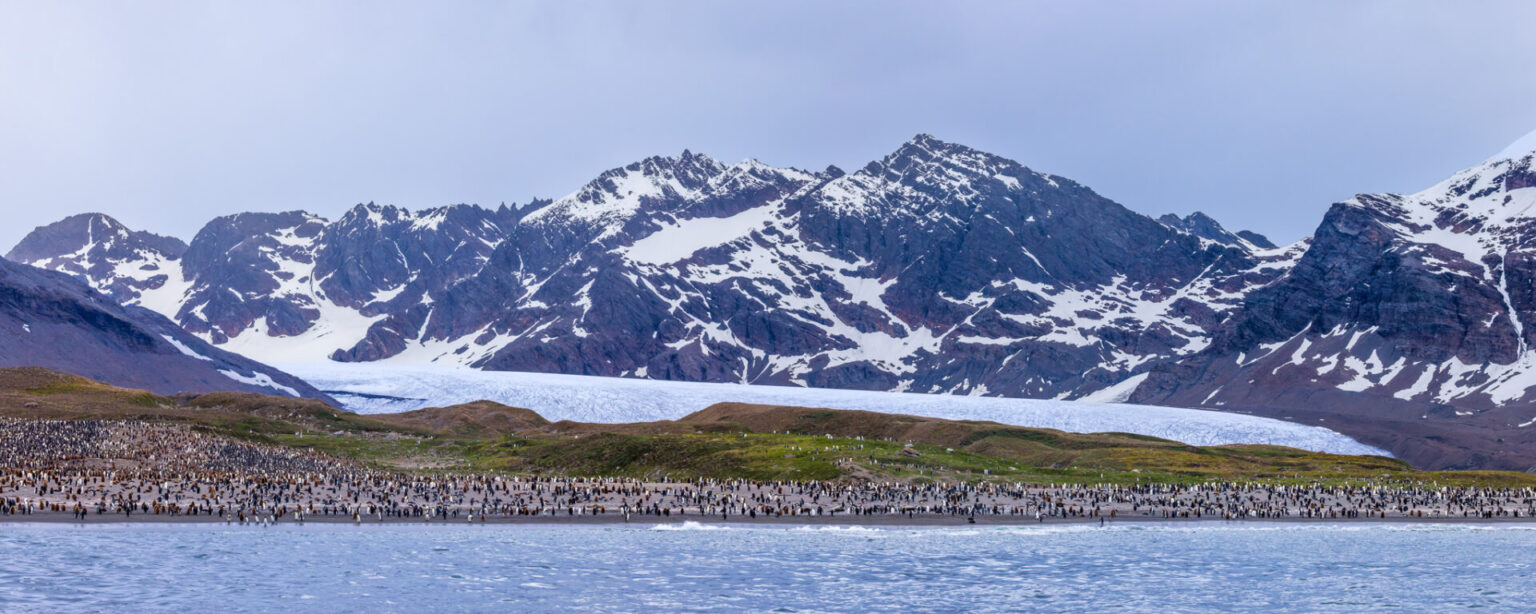
Then it was back in the zodiac for a long ride exploring the long, long beach full of Kings. Amazingly, I managed to get a successful composite shot of the beach while shooting from the zodiac. In the photo below, penguins line the beach and the plains with the Cook Glacier sweeping across the lower portion of the landscape towards the low hills. Meanwhile, the rugged mountains of the Allardyce Range (the tallest in the photo being Mount Roots rising to almost 7,480 feet) tower above the glacier. (The photo below is available as a fine art photographic print. Click image for product page.)
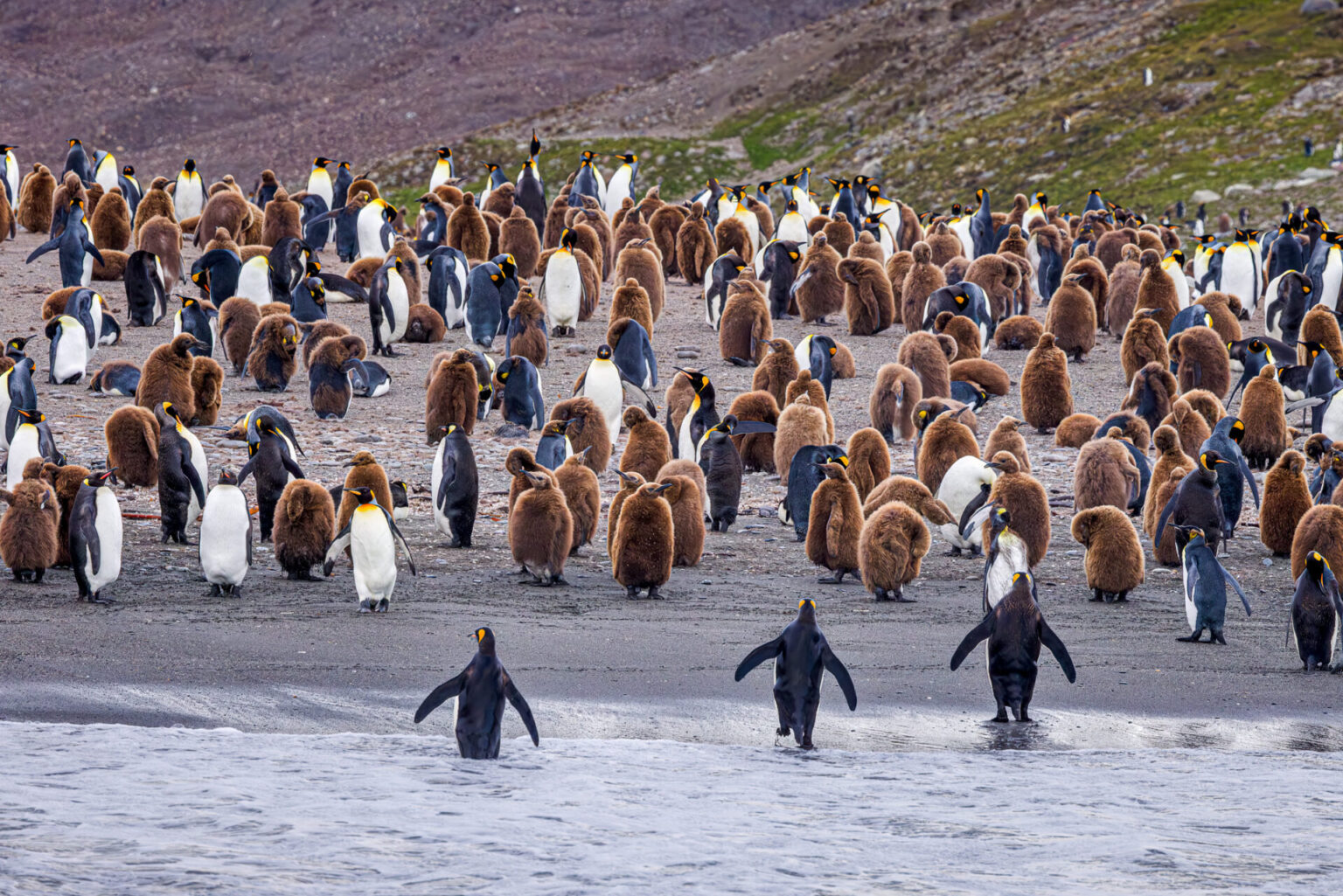
Coming back to the shore, three penguins walk out of the water looking like lifeguards wearing head to toe wet suits. You can now also clearly see the penguins with the brown covering. These are yearlings that hatched the previous year. They are still dependent on their parents for food and follow the parents around constantly begging. It is so funny to watch them do this.
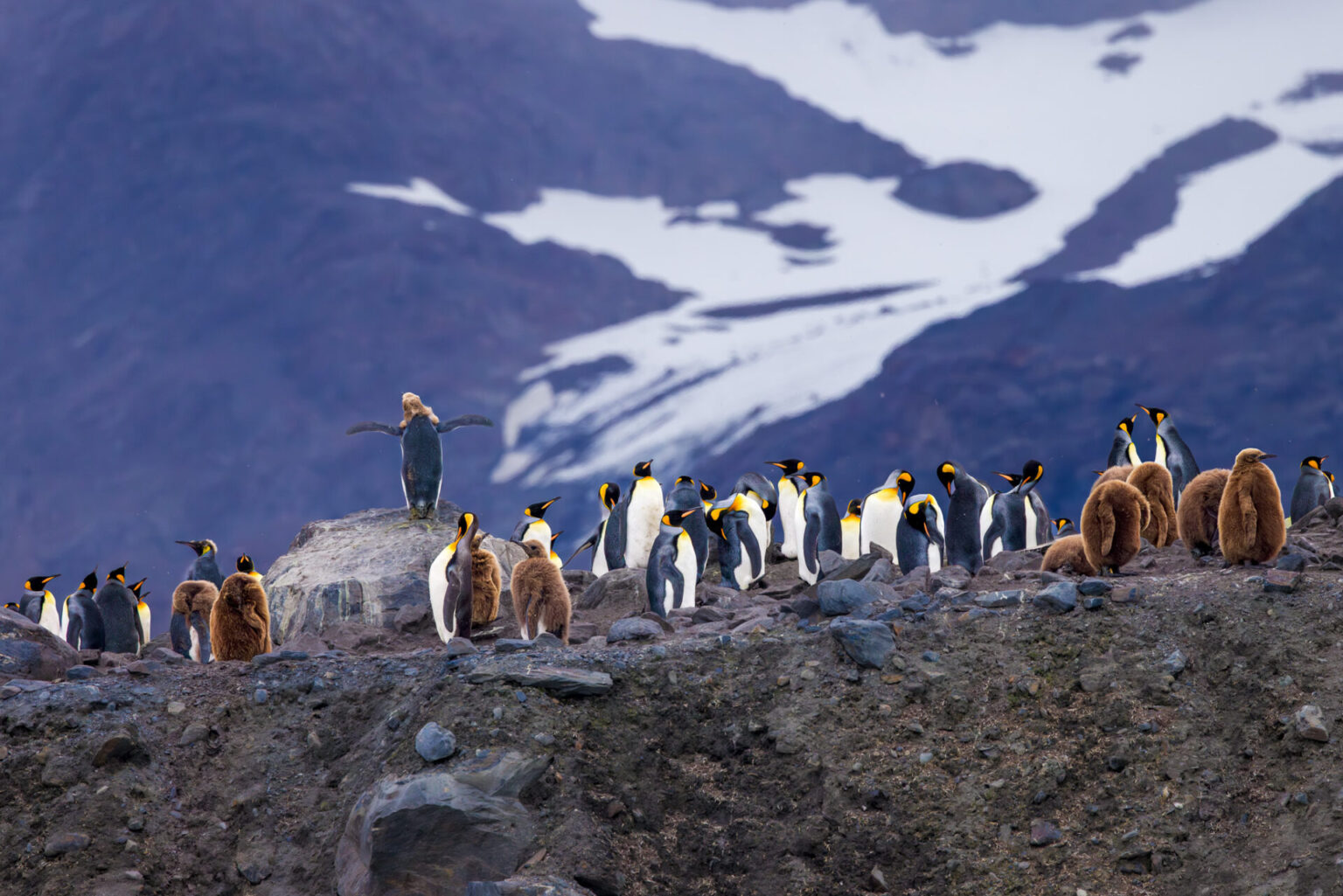
Up on a prominence, one penguin standing on a rock above the others stretches out his arms looking like a preacher facing towards the ice covered face of the mountains in the background.
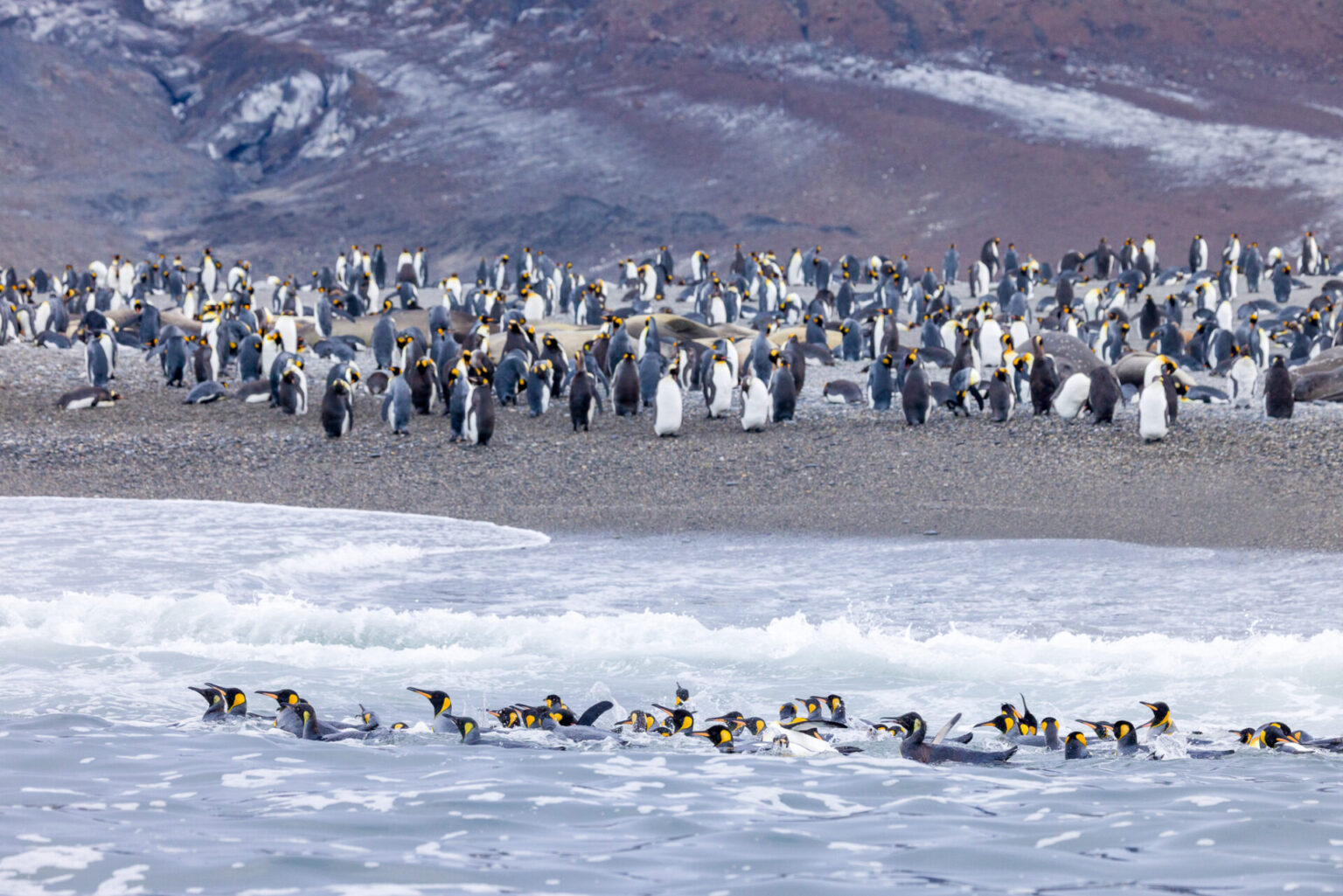
When not resting on shore, many penguins were also in the surf looking for food. The ocean surrounding South Georgia must be very rich in order to support such a large colony. Interestingly, their diet consists more of small fish (mostly latern fish), and squid, and less on krill than other southern ocean species. To catch their food they can easily dive to 200 meters (700 feet), far deeper than most other penguins.
Stay Tuned for More
This concludes this blog post about the first day on South Georgia Island. We explored many other locations over the next three days and experienced many wonderful things. My next blog post will be about Macaroni Penguins at Hercules Bay. Stay tuned for further adventures on the island.


Leave a reply